Loading page, please wait…
What is Land Subsidence? - UPSC Geography
What is What is Land Subsidence? in UPSC Geography?
What is Land Subsidence? is a key topic under Geography for UPSC Civil Services Examination. Key points include: Land subsidence is the sinking of the ground due to underground material movement, as defined by NOAA.. It is caused by both natural factors (earthquakes, soil erosion, compaction) and man-made activities (removal of water, oil, gas, mining).. Subsidence can occur over very large areas (states/provinces) or very small, localized spots.. Understanding this topic is essential for both UPSC Prelims and Mains preparation.
Why is What is Land Subsidence? important for UPSC exam?
What is Land Subsidence? is a Medium-level topic in UPSC Geography. It is tested in both Prelims (factual MCQs) and Mains (analytical answer writing). Previous year UPSC questions have frequently covered aspects of What is Land Subsidence?, making it essential for comprehensive IAS preparation.
How to prepare What is Land Subsidence? for UPSC?
To prepare What is Land Subsidence? for UPSC: (1) Study the comprehensive notes covering all key concepts on Vaidra. (2) Practice previous year questions on this topic. (3) Connect it with current affairs using daily updates. (4) Revise using key takeaways and mind maps available for Geography. (5) Write practice answers linking What is Land Subsidence? to related GS Paper topics.
Key takeaways of What is Land Subsidence? for UPSC
- Land subsidence is the sinking of the ground due to underground material movement, as defined by NOAA.
- It is caused by both natural factors (earthquakes, soil erosion, compaction) and man-made activities (removal of water, oil, gas, mining).
- Subsidence can occur over very large areas (states/provinces) or very small, localized spots.
- Key impacts include severe damage to infrastructure, increased flood risk (especially in coastal areas), and significant environmental degradation.
- Effective mitigation requires sustainable resource management, particularly strict regulation of groundwater extraction and responsible urban planning.
What is Land Subsidence?
Medium⏱️ 7 min read
geography
📖 Introduction
Understanding Land Subsidence
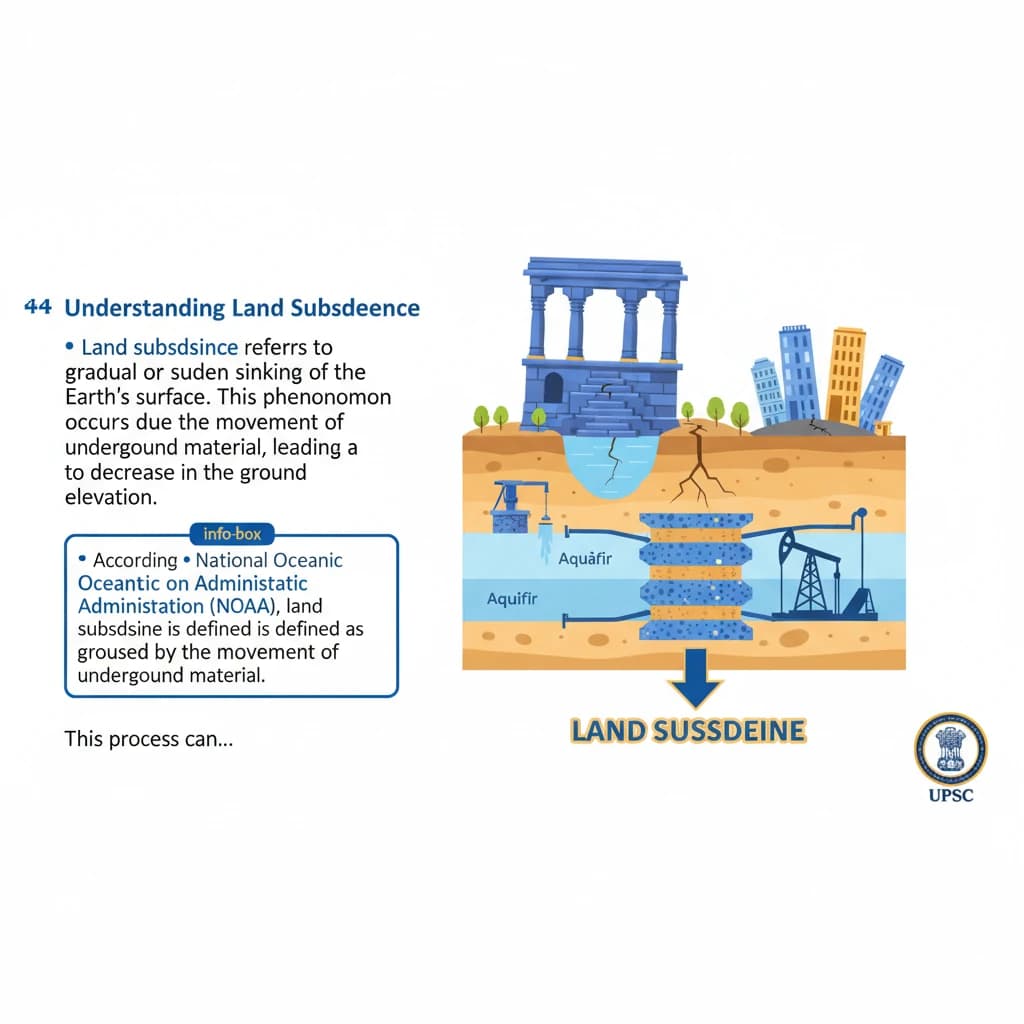
Land subsidence refers to the gradual or sudden sinking of the Earth's surface. This phenomenon occurs due to the movement of underground material, leading to a decrease in ground elevation.
According to the National Oceanic and Atmospheric Administration (NOAA), land subsidence is defined as the sinking of the ground caused by the movement of underground material.
This process can significantly alter landscapes and impact both natural and built environments.
Causes of Land Subsidence
The triggers for land subsidence can be broadly categorized into natural and man-made factors. Both types significantly contribute to the alteration of ground levels.
Understanding the distinction between natural and anthropogenic causes is crucial for effective mitigation strategies and UPSC answer writing.
Man-Made Causes
- Resource Extraction: The removal of underground resources such as water (groundwater depletion), oil, or natural gas creates voids or reduces pore pressure, leading to compaction of the overlying strata.
- Mining Activities: Subsurface mining operations can result in the collapse of abandoned tunnels or supporting pillars, causing the ground above to sink over time.
Natural Causes
- Earthquakes: Seismic activity can cause liquefaction or compaction of unconsolidated sediments, leading to sudden or rapid subsidence in affected areas.
- Soil Erosion: The removal of soil by wind or water, especially in regions with soluble bedrock (karst topography), can create subsurface voids that eventually collapse.
- Soil Compaction: Natural processes, particularly in areas with highly organic soils (e.g., peatlands), can lead to the compaction and oxidation of these soils, resulting in gradual subsidence.
Scale of Occurrence
Land subsidence can manifest across a wide range of geographical scales. It can affect vast regions, encompassing entire states or provinces, or be confined to very localized, small areas such as a single building or a specific sinkhole.
For UPSC, remember that subsidence is not limited to small areas; its large-scale impact on infrastructure and ecosystems is a significant concern, often linked to urbanization and climate change.
💡 Key Takeaways
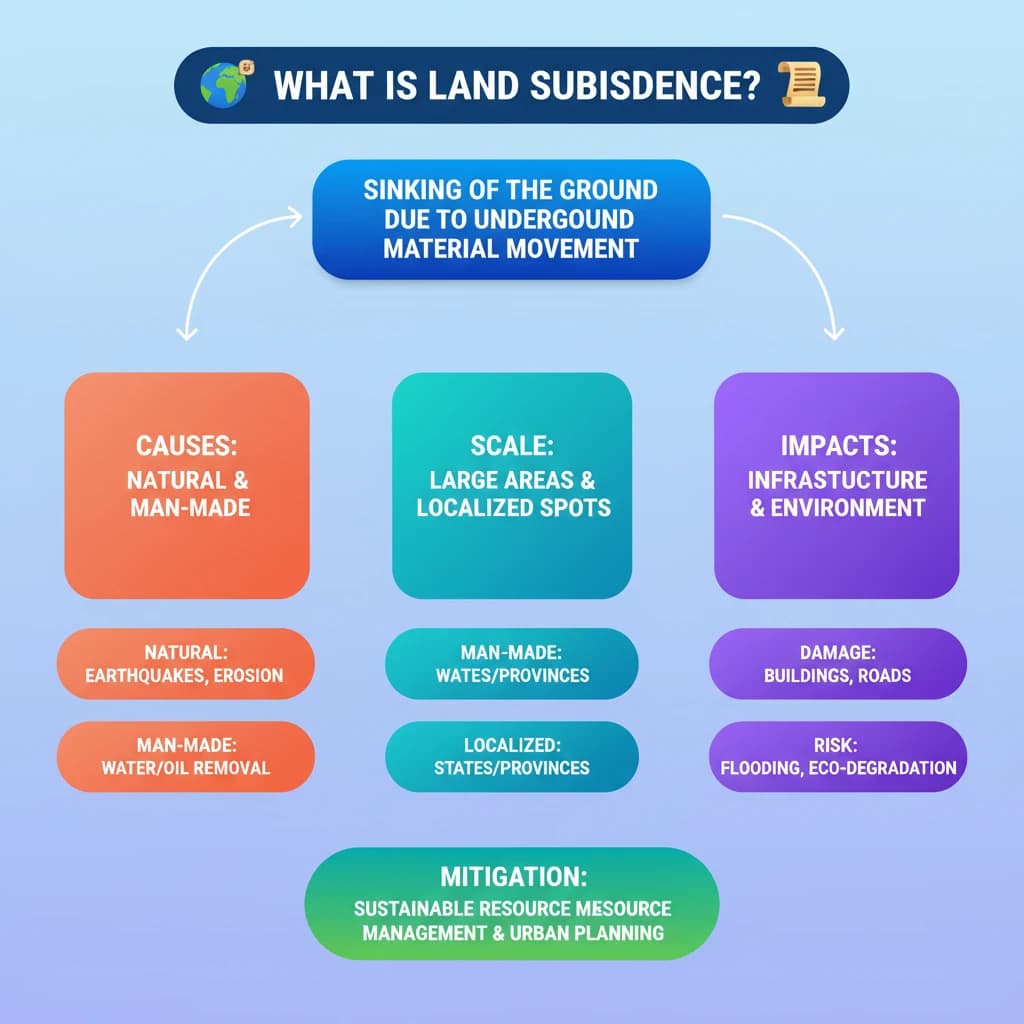
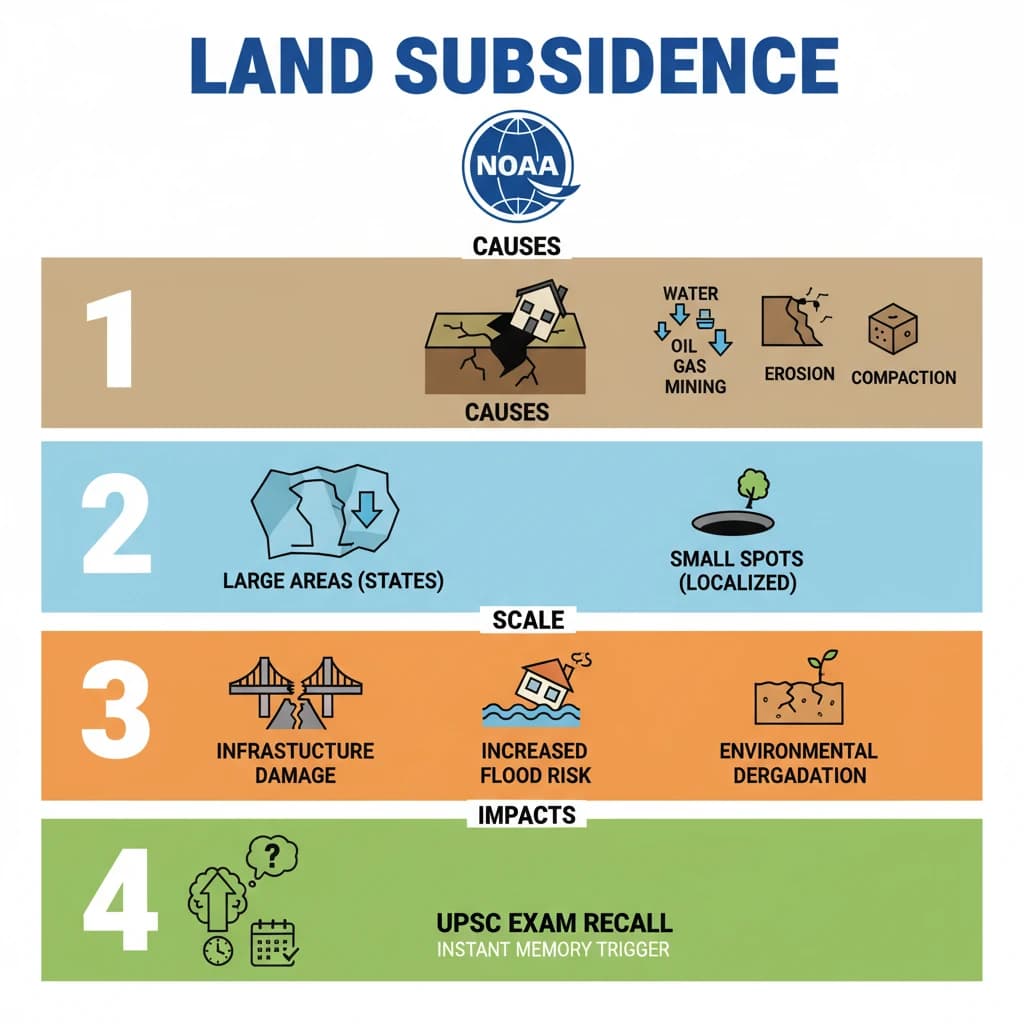
- •Land subsidence is the sinking of the ground due to underground material movement, as defined by NOAA.
- •It is caused by both natural factors (earthquakes, soil erosion, compaction) and man-made activities (removal of water, oil, gas, mining).
- •Subsidence can occur over very large areas (states/provinces) or very small, localized spots.
- •Key impacts include severe damage to infrastructure, increased flood risk (especially in coastal areas), and significant environmental degradation.
- •Effective mitigation requires sustainable resource management, particularly strict regulation of groundwater extraction and responsible urban planning.
🧠 Memory Techniques
95% Verified Content
📚 Reference Sources
•National Oceanic and Atmospheric Administration (NOAA) - for definition