Loading page, please wait…
What is Subduction? - UPSC Geography
What is What is Subduction? in UPSC Geography?
What is Subduction? is a key topic under Geography for UPSC Civil Services Examination. Key points include: Subduction is the process where one tectonic plate is forced beneath another into the Earth's mantle.. It occurs at convergent plate boundaries, typically involving an oceanic plate.. The descending plate releases volatiles, causing flux melting and magma generation.. Understanding this topic is essential for both UPSC Prelims and Mains preparation.
Why is What is Subduction? important for UPSC exam?
What is Subduction? is a Medium-level topic in UPSC Geography. It is tested in both Prelims (factual MCQs) and Mains (analytical answer writing). Previous year UPSC questions have frequently covered aspects of What is Subduction?, making it essential for comprehensive IAS preparation.
How to prepare What is Subduction? for UPSC?
To prepare What is Subduction? for UPSC: (1) Study the comprehensive notes covering all key concepts on Vaidra. (2) Practice previous year questions on this topic. (3) Connect it with current affairs using daily updates. (4) Revise using key takeaways and mind maps available for Geography. (5) Write practice answers linking What is Subduction? to related GS Paper topics.
Key takeaways of What is Subduction? for UPSC
- Subduction is the process where one tectonic plate is forced beneath another into the Earth's mantle.
- It occurs at convergent plate boundaries, typically involving an oceanic plate.
- The descending plate releases volatiles, causing flux melting and magma generation.
- Rising magma leads to volcanic activity and the formation of volcanic arcs.
- Subduction zones are characterized by deep oceanic trenches, frequent earthquakes, and active volcanoes.
- It is a fundamental process for crustal recycling and shapes major Earth features like mountain ranges and island arcs.
What is Subduction?
Medium⏱️ 9 min read
geography
📖 Introduction
What is Subduction?
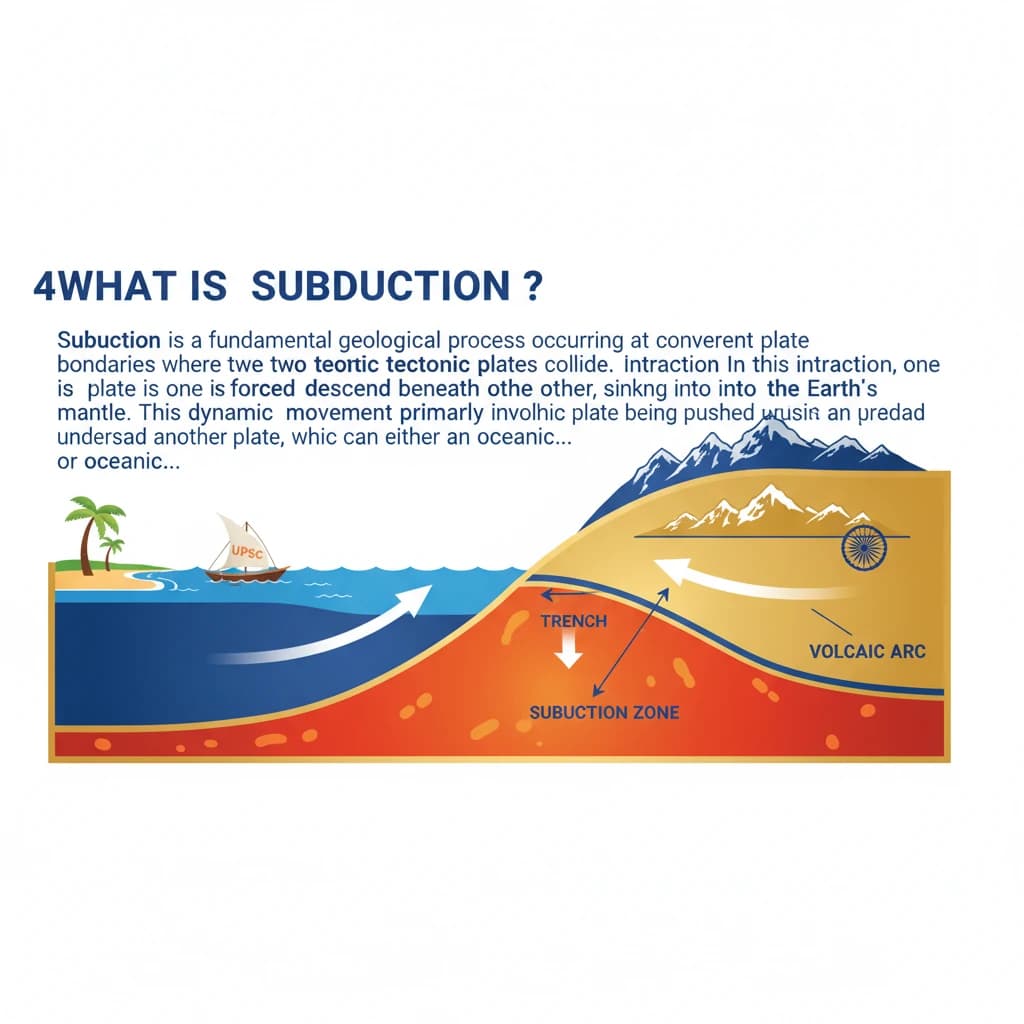
Subduction is a fundamental geological process occurring at convergent plate boundaries where two tectonic plates collide. In this interaction, one plate is forced to descend beneath the other, sinking into the Earth's mantle.
This dynamic movement primarily involves an oceanic plate being pushed underneath another plate, which can be either an oceanic plate or a continental plate. It represents one of the most powerful forces shaping our planet's surface.
The process of subduction involves the downward movement of a relatively cooler, denser oceanic lithosphere into the hotter, less dense asthenosphere (upper mantle).
Mechanism of Subduction and its Effects
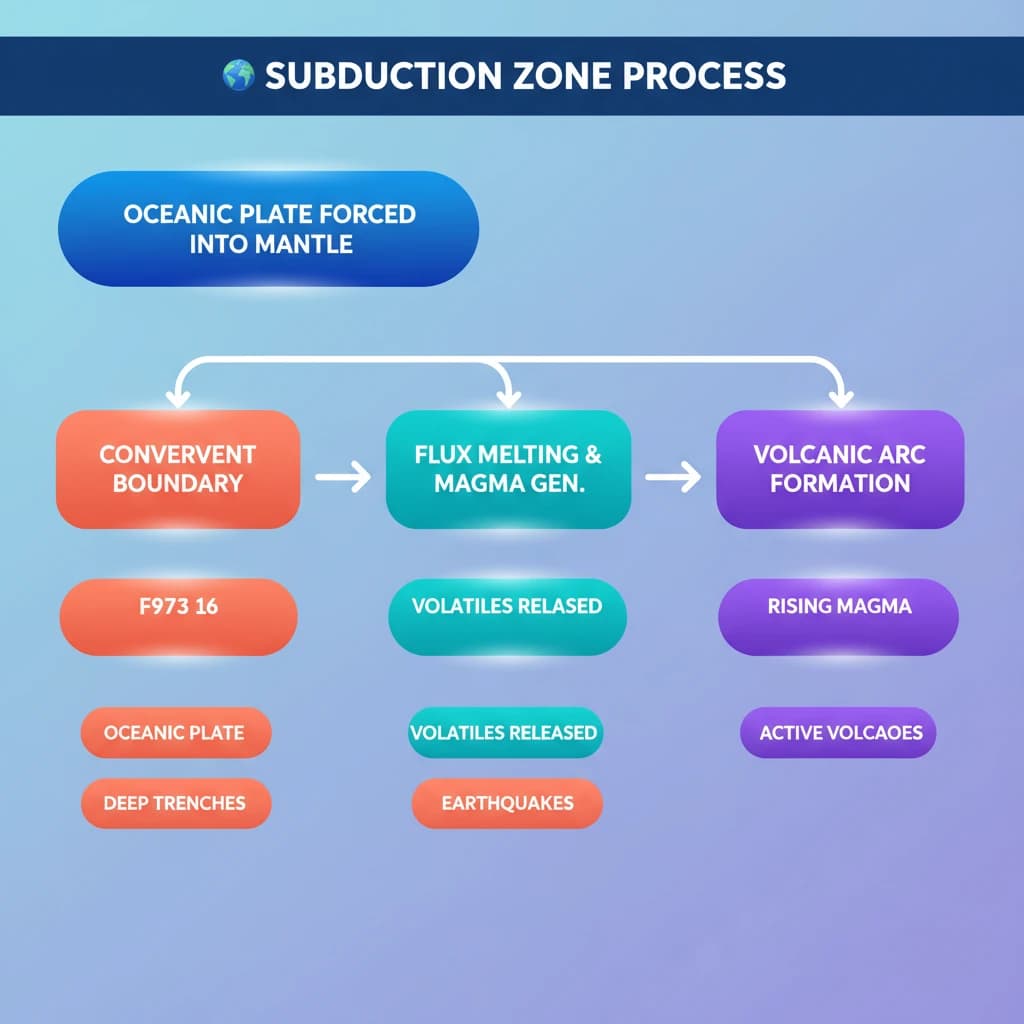
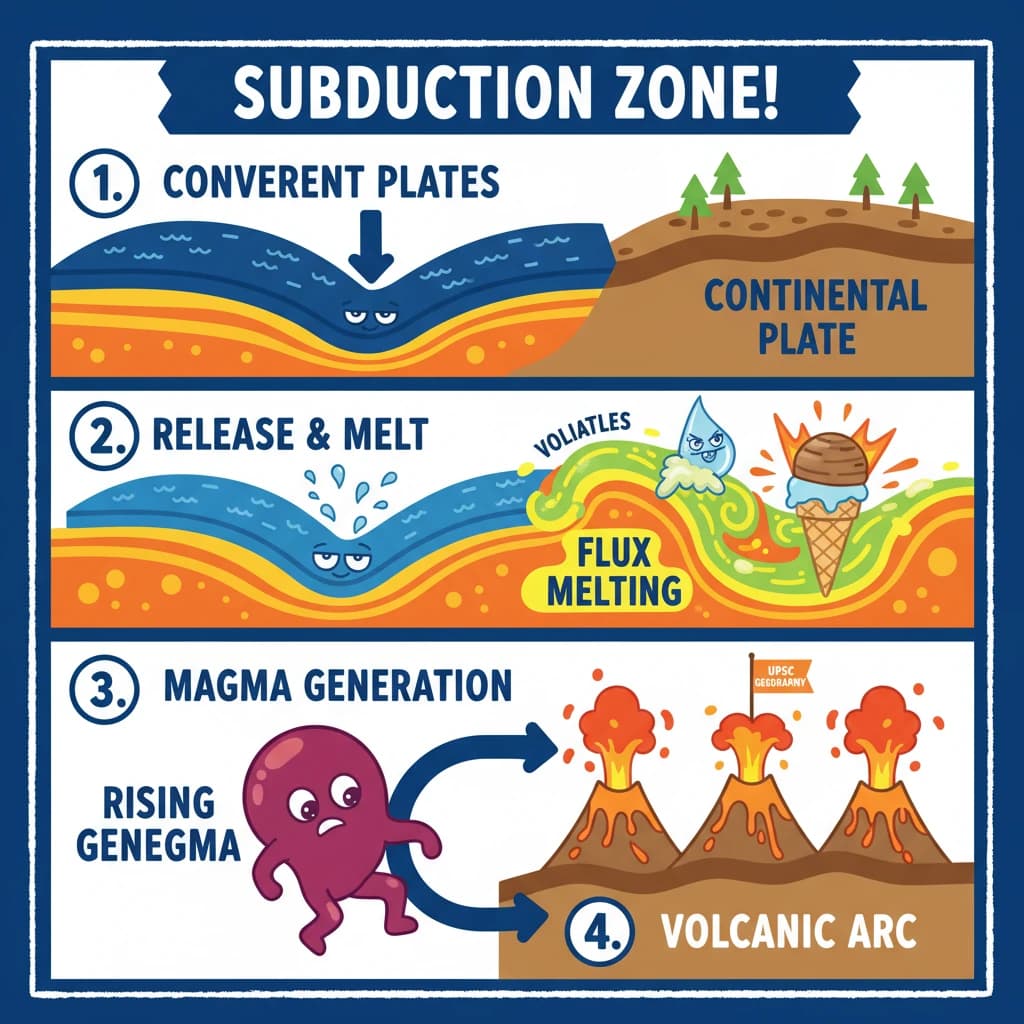
As the 'downgoing' oceanic plate descends into the hotter mantle, it undergoes significant physical and chemical changes. The increasing temperature and pressure cause trapped water and other volatile elements within the plate to be released.
These volatile elements, primarily water, lower the melting point of the surrounding mantle rocks. This leads to a process known as flux melting, generating new magma.
This phenomenon is sometimes referred to as 'mineral transmutation' in simpler terms, describing the transformation of minerals under extreme heat and pressure, contributing to magma generation.
The newly formed magma, being less dense than the surrounding solid rock, rises buoyantly through the overlying plate. If it reaches the surface, it erupts, leading to the formation of volcanoes and volcanic arcs.
Understanding Subduction Zones
A subduction zone is the specific geological location where this collision and descent occur. These zones are characterized by intense geological activity, including frequent earthquakes and active volcanism.
Subduction zones are often described as the 'biggest crash scenes on Earth' due to the immense forces involved in the collision and descent of tectonic plates. They are responsible for creating some of Earth's most dramatic topographical features.
When two tectonic plates meet at a subduction zone, one plate bends and slides underneath the other, curving down into the mantle. This downward curving creates deep oceanic trenches, which are the deepest parts of the ocean floor.
Understanding subduction is crucial for UPSC GS Paper I Geography, particularly for topics related to Geomorphology, Plate Tectonics, Volcanism, and Earthquakes. Focus on the mechanism and associated landforms.
💡 Key Takeaways
- •Subduction is the process where one tectonic plate is forced beneath another into the Earth's mantle.
- •It occurs at convergent plate boundaries, typically involving an oceanic plate.
- •The descending plate releases volatiles, causing flux melting and magma generation.
- •Rising magma leads to volcanic activity and the formation of volcanic arcs.
- •Subduction zones are characterized by deep oceanic trenches, frequent earthquakes, and active volcanoes.
- •It is a fundamental process for crustal recycling and shapes major Earth features like mountain ranges and island arcs.
🧠 Memory Techniques
98% Verified Content
📚 Reference Sources
•NCERT Class XI Fundamentals of Physical Geography
•Physical Geography by Savindra Singh
•USGS (United States Geological Survey) publications on Plate Tectonics