Loading page, please wait…
What is the National Perspective Plan (NPP) for Interlinking Rivers? - UPSC Geography
What is What is the National Perspective Plan (NPP) for Interlinking Rivers? in UPSC Geography?
What is the National Perspective Plan (NPP) for Interlinking Rivers? is a key topic under Geography for UPSC Civil Services Examination. Key points include: National Perspective Plan (NPP) for Interlinking Rivers formulated in 1980 by the Ministry of Irrigation.. Aims for inter-basin water transfer to develop water resources.. National Water Development Agency (NWDA) is responsible for its implementation.. Understanding this topic is essential for both UPSC Prelims and Mains preparation.
Why is What is the National Perspective Plan (NPP) for Interlinking Rivers? important for UPSC exam?
What is the National Perspective Plan (NPP) for Interlinking Rivers? is a Medium-level topic in UPSC Geography. It is tested in both Prelims (factual MCQs) and Mains (analytical answer writing). Previous year UPSC questions have frequently covered aspects of What is the National Perspective Plan (NPP) for Interlinking Rivers?, making it essential for comprehensive IAS preparation.
How to prepare What is the National Perspective Plan (NPP) for Interlinking Rivers? for UPSC?
To prepare What is the National Perspective Plan (NPP) for Interlinking Rivers? for UPSC: (1) Study the comprehensive notes covering all key concepts on Vaidra. (2) Practice previous year questions on this topic. (3) Connect it with current affairs using daily updates. (4) Revise using key takeaways and mind maps available for Geography. (5) Write practice answers linking What is the National Perspective Plan (NPP) for Interlinking Rivers? to related GS Paper topics.
Key takeaways of What is the National Perspective Plan (NPP) for Interlinking Rivers? for UPSC
- National Perspective Plan (NPP) for Interlinking Rivers formulated in 1980 by the Ministry of Irrigation.
- Aims for inter-basin water transfer to develop water resources.
- National Water Development Agency (NWDA) is responsible for its implementation.
- Comprises two main components: Himalayan Rivers and Peninsular Rivers Development.
- Identifies 30 link projects (16 Peninsular, 14 Himalayan).
- Key Peninsular projects include Mahanadi-Godavari, Godavari-Krishna, and Ken-Betwa links.
- Himalayan component aims to divert surplus water from eastern Ganga/Brahmaputra tributaries to western regions.
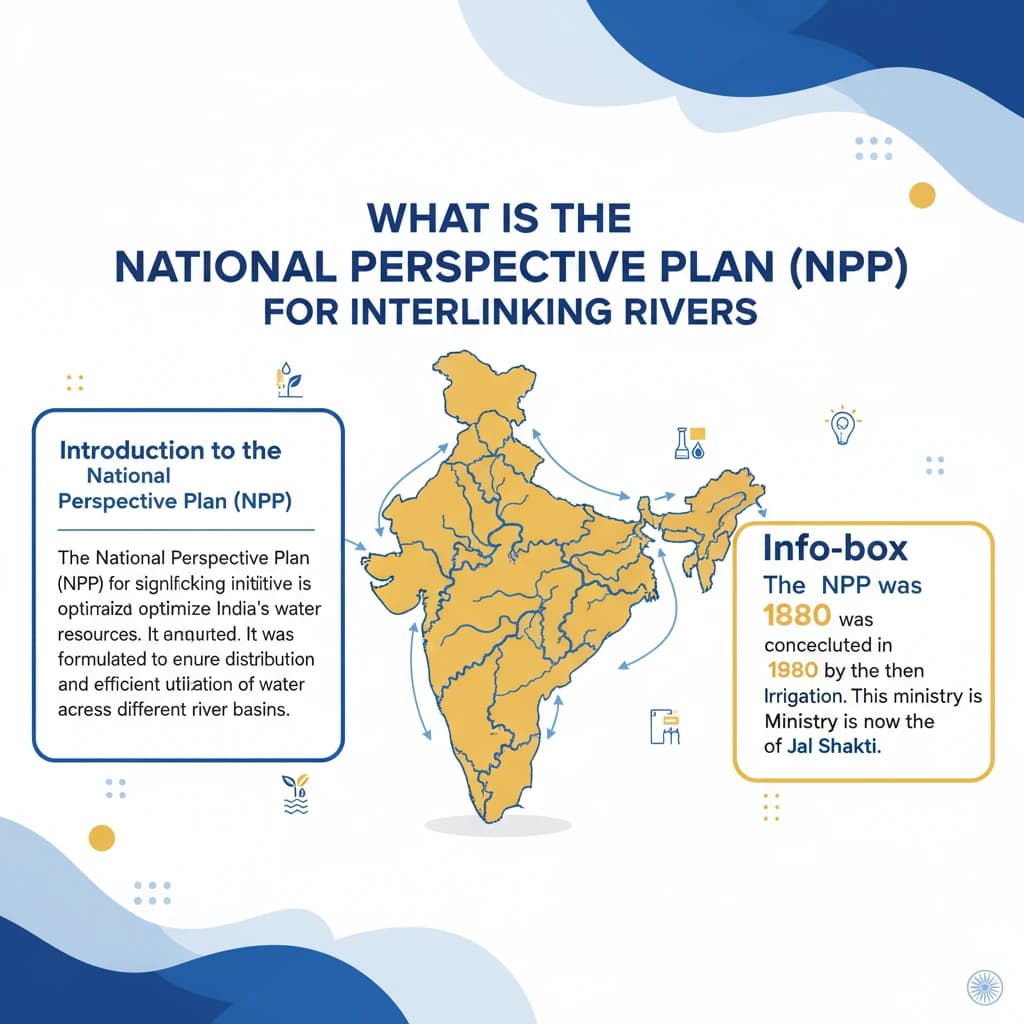
What is the National Perspective Plan (NPP) for Interlinking Rivers?
Medium⏱️ 5 min read
geography
📖 Introduction
Introduction to the National Perspective Plan (NPP)
The National Perspective Plan (NPP) for Interlinking Rivers is a significant initiative aimed at optimizing India's water resources. It was formulated to ensure equitable distribution and efficient utilization of water across different river basins.
The NPP was conceptualized in 1980 by the then Ministry of Irrigation. This ministry is now known as the Ministry of Jal Shakti, reflecting a broader focus on water management.
The primary objective of the NPP is the comprehensive development of water resources through the inter-basin transfer of water. This involves diverting surplus water from water-rich basins to water-deficit regions.
The National Water Development Agency (NWDA) has been specifically entrusted with the crucial task of implementing the Interlinking of Rivers (ILR) projects under the overarching framework of the NPP.
Key Components of the NPP
The National Perspective Plan is structured around two major components, each addressing distinct geographical and hydrological characteristics of India's river systems.
- Himalayan Rivers Development Component
- Peninsular Rivers Development Component
Collectively, these components encompass a vast network of proposed river links designed to create a national water grid.
Under the NPP, a total of 30 link projects have been identified for implementation. These projects are strategically divided between the two main components:
- 16 link projects fall under the Peninsular Component.
- 14 link projects are part of the Himalayan Component.
Peninsular Rivers Development Component
This component specifically focuses on connecting rivers situated in the southern and central parts of India. The aim is to transfer water from river basins with surplus flows to those experiencing deficits, particularly during dry seasons.
Key projects under the Peninsular Rivers Development Component include vital links designed to address regional water imbalances and enhance irrigation potential.
- The Mahanadi-Godavari link.
- The Godavari-Krishna link.
- The Ken-Betwa link.
Himalayan Rivers Development Component
The Himalayan Rivers Development Component is designed to manage the substantial water resources originating from the Himalayan ranges. Its primary goal is to harness and redistribute surplus water effectively.
This component aims to divert excess water from the eastern tributaries of the Ganga and Brahmaputra rivers. The diverted water is intended to benefit the more arid western regions of India, addressing their water needs and mitigating flood risks in the east.
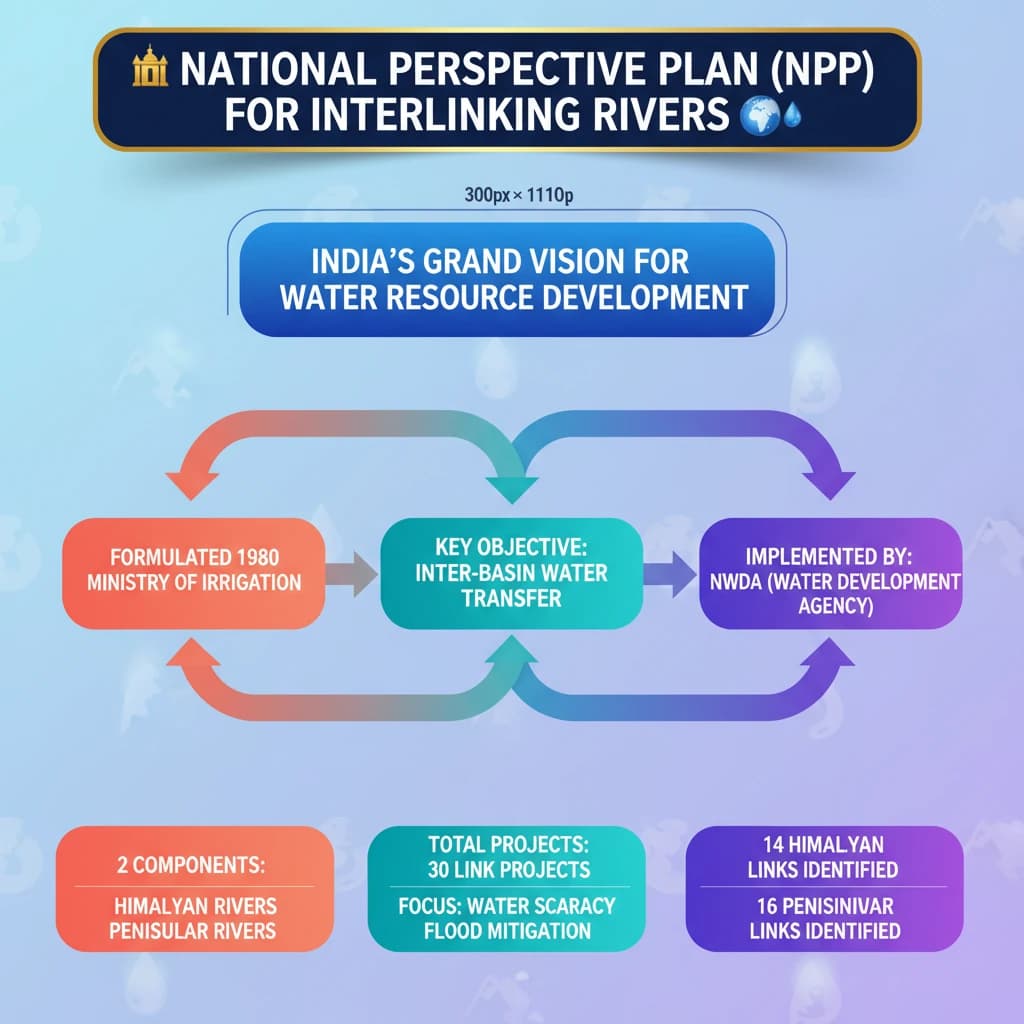
💡 Key Takeaways
- •National Perspective Plan (NPP) for Interlinking Rivers formulated in 1980 by the Ministry of Irrigation.
- •Aims for inter-basin water transfer to develop water resources.
- •National Water Development Agency (NWDA) is responsible for its implementation.
- •Comprises two main components: Himalayan Rivers and Peninsular Rivers Development.
- •Identifies 30 link projects (16 Peninsular, 14 Himalayan).
- •Key Peninsular projects include Mahanadi-Godavari, Godavari-Krishna, and Ken-Betwa links.
- •Himalayan component aims to divert surplus water from eastern Ganga/Brahmaputra tributaries to western regions.
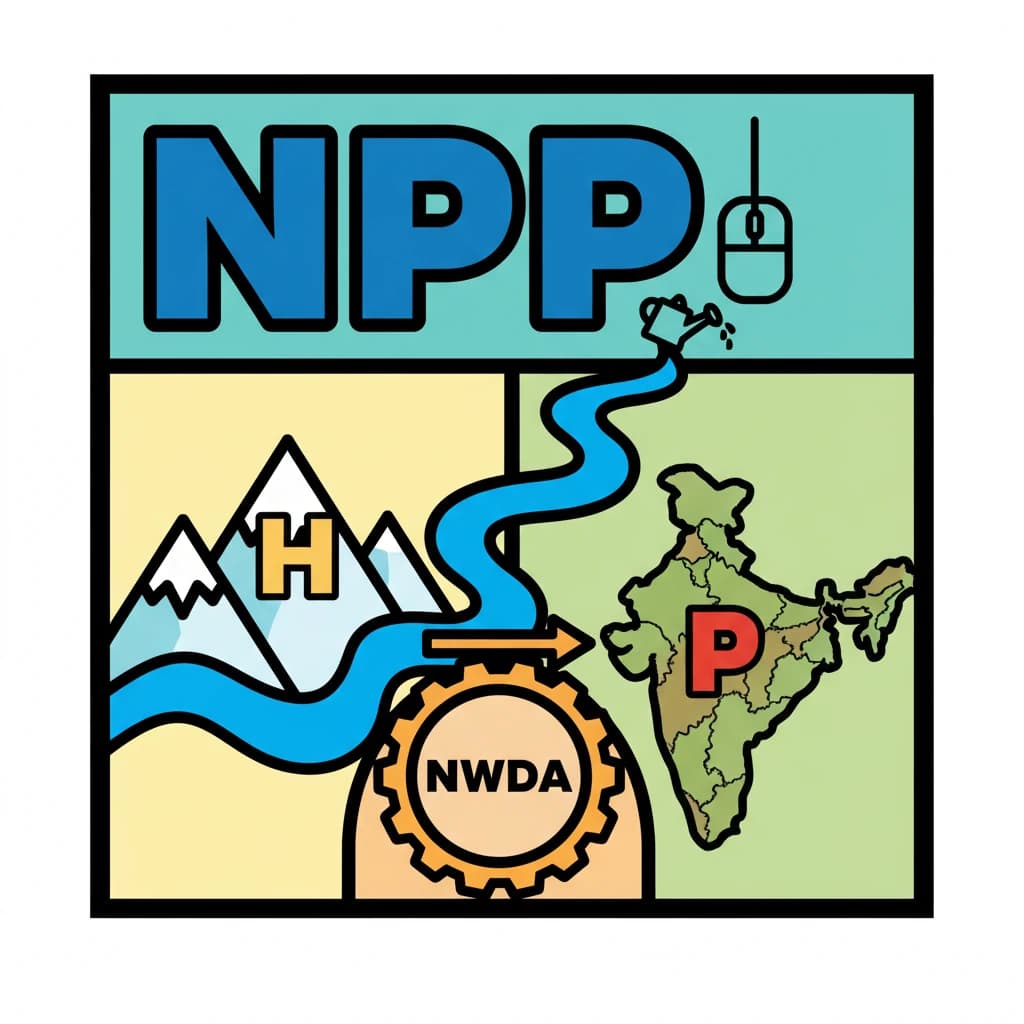
🧠 Memory Techniques
100% Verified Content
📚 Reference Sources
•Ministry of Jal Shakti, Government of India official website
•National Water Development Agency (NWDA) official reports and documents
•Press Information Bureau (PIB) releases regarding ILR projects