Loading page, please wait…
Vaidra Logo
Vaidra

Top 4 items + smart groups

UPSC GPT
New
Current Affairs
Daily Solutions
Daily Puzzle
Mains Evaluator

Version 2.0.0 • Built with ❤️ for UPSC aspirants

Loading...
Loading...
Loading...
Loading...
Loading...
Loading...
Loading...
Loading...
Loading...
Loading...
Loading...
Loading...
Loading...
Wooden Artifacts of Stone Age - UPSC History
Back
All Subjects

Topics

0 topics • 0 completed

Loading topics...
Loading...
Loading...
Loading...
Loading...
Loading...
Overall Progress0%

Wooden Artifacts of Stone Age - UPSC History

What is Wooden Artifacts of Stone Age in UPSC History?

Wooden Artifacts of Stone Age is a key topic under History for UPSC Civil Services Examination. Key points include: The 'Stone Age' may be more accurately termed the 'Wood Age' due to widespread use of wood.. Discoveries in Schöningen, Germany (300,000-400,000 years old wooden spears) challenge stone-centric views.. Ghugwa, Madhya Pradesh, India, shows use of fossil wood tools (over 10,000 years old) in Mesolithic period.. Understanding this topic is essential for both UPSC Prelims and Mains preparation.

Why is Wooden Artifacts of Stone Age important for UPSC exam?

Wooden Artifacts of Stone Age is a Medium-level topic in UPSC History. It is tested in both Prelims (factual MCQs) and Mains (analytical answer writing). Previous year UPSC questions have frequently covered aspects of Wooden Artifacts of Stone Age, making it essential for comprehensive IAS preparation.

How to prepare Wooden Artifacts of Stone Age for UPSC?

To prepare Wooden Artifacts of Stone Age for UPSC: (1) Study the comprehensive notes covering all key concepts on Vaidra. (2) Practice previous year questions on this topic. (3) Connect it with current affairs using daily updates. (4) Revise using key takeaways and mind maps available for History. (5) Write practice answers linking Wooden Artifacts of Stone Age to related GS Paper topics.

Key takeaways of Wooden Artifacts of Stone Age for UPSC

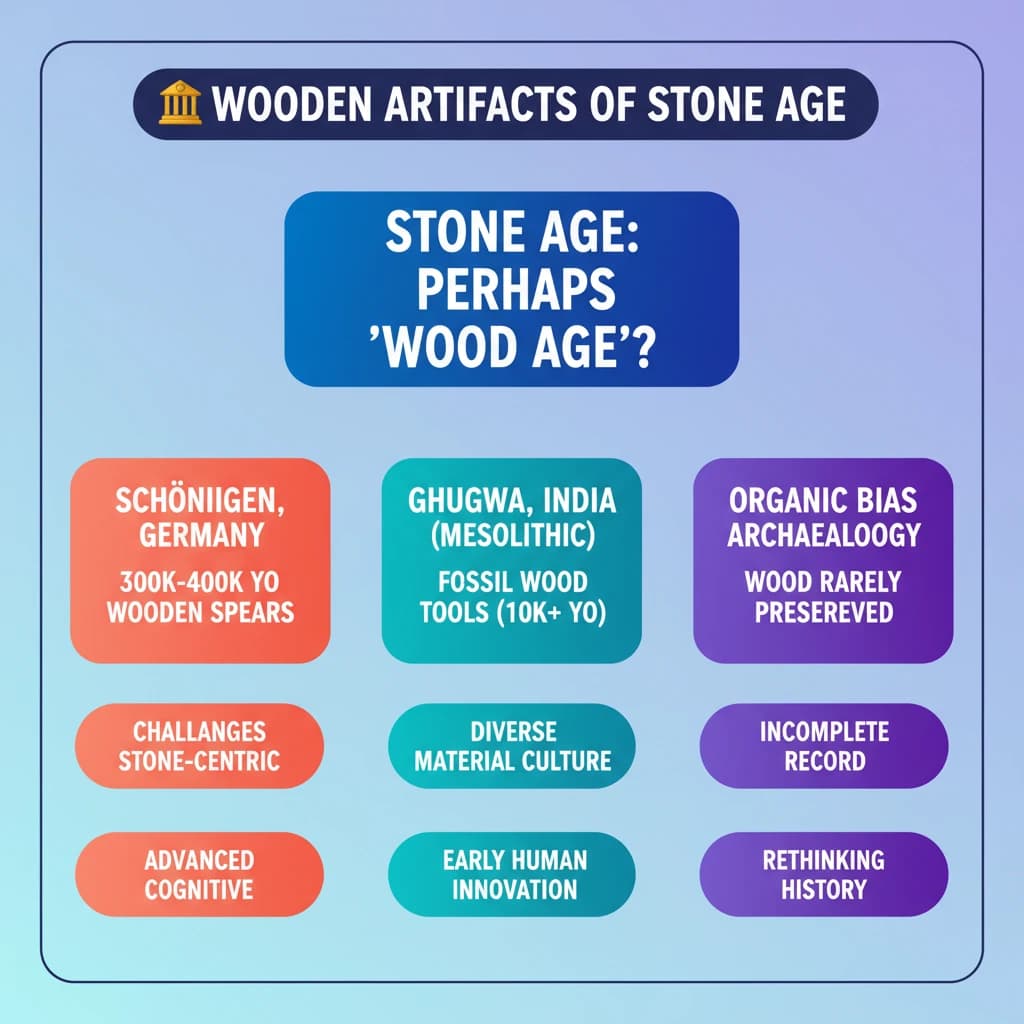
  • The 'Stone Age' may be more accurately termed the 'Wood Age' due to widespread use of wood.
  • Discoveries in Schöningen, Germany (300,000-400,000 years old wooden spears) challenge stone-centric views.
  • Ghugwa, Madhya Pradesh, India, shows use of fossil wood tools (over 10,000 years old) in Mesolithic period.
  • Organic materials like wood were crucial but rarely preserved, leading to a biased archaeological record.
  • These findings highlight advanced cognitive abilities and diverse material culture of early humans.
  • Modern archaeology requires interdisciplinary approaches to uncover and preserve perishable artifacts.
Wooden Artifacts
of Stone Age

Wooden Artifacts of Stone Age

Medium⏱️ 6 min read✓ 95% Verified
history

📖 Introduction

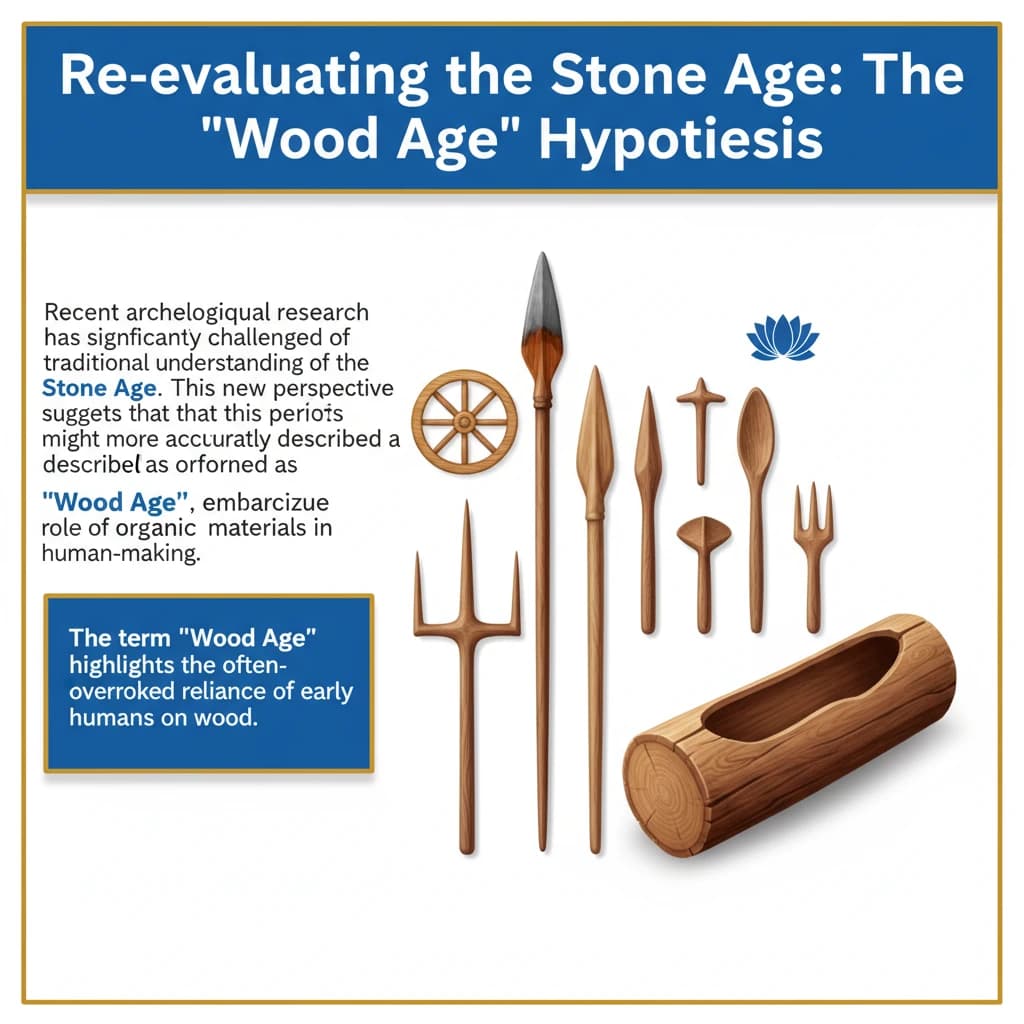
<h4>Re-evaluating the Stone Age: The 'Wood Age' Hypothesis</h4><p>Recent archaeological research has significantly challenged the traditional understanding of the <strong>Stone Age</strong>. This new perspective suggests that this period might be more accurately described as the <strong>'Wood Age'</strong>, emphasizing the crucial role of organic materials in early human tool-making.</p><div class='key-point-box'><p>The term <strong>'Wood Age'</strong> highlights the often-overlooked reliance of prehistoric humans on <strong>wood</strong> for tools and other artifacts, a material that rarely survives in the archaeological record compared to stone.</p></div><h4>Discovery in Schöningen, Germany</h4><p>This re-evaluation is largely driven by groundbreaking discoveries made in <strong>Schöningen, Germany</strong>. Archaeologists unearthed a remarkable collection of well-preserved wooden artifacts at this site.</p><div class='info-box'><ul><li><strong>Location:</strong> Schöningen, Germany 🇩🇪</li><li><strong>Age:</strong> Dating back approximately <strong>300,000 to 400,000 years</strong>.</li><li><strong>Significance:</strong> These findings provide direct evidence of sophisticated wooden tool technology from the <strong>Lower Palaeolithic period</strong>.</li></ul></div><p>The artifacts from Schöningen include spears and other implements, demonstrating advanced woodworking skills and strategic hunting techniques by early hominins.</p><h4>Discovery in Ghugwa, Madhya Pradesh, India</h4><p>Further supporting this revised view is the discovery of prehistoric artifacts at <strong>Ghugwa, Madhya Pradesh</strong>, in India. This site provides evidence of ancient human-gatherers utilizing a different type of organic material.</p><div class='info-box'><ul><li><strong>Location:</strong> Ghugwa, Madhya Pradesh, India 🇮🇳</li><li><strong>Material:</strong> Tools fashioned from <strong>fossil wood</strong>.</li><li><strong>Age:</strong> Estimated to be over <strong>10,000 years old</strong>.</li><li><strong>Tool Types:</strong> Comprising <strong>mid-sized flakes</strong> and <strong>microliths</strong>, found alongside other stone tools.</li></ul></div><p>The use of fossil wood, which is more durable than fresh wood, allowed these tools to survive, offering rare insights into the material culture of the <strong>Mesolithic period</strong> in India.</p><div class='exam-tip-box'><p>UPSC often asks about new archaeological findings and their implications. Understanding sites like <strong>Schöningen</strong> and <strong>Ghugwa</strong> is crucial for questions on <strong>Palaeolithic</strong> and <strong>Mesolithic</strong> cultures and the evolution of human technology.</p></div>
Concept Diagram

💡 Key Takeaways

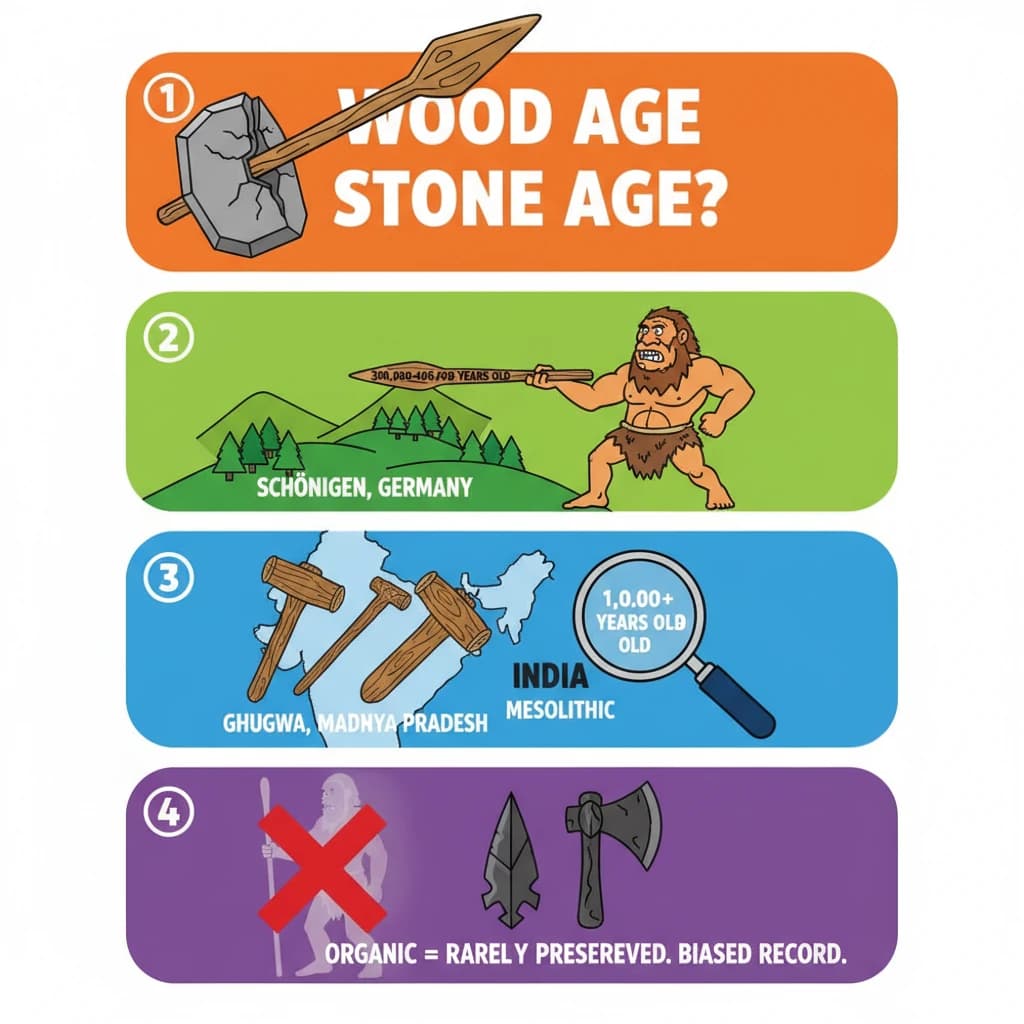
  • •The 'Stone Age' may be more accurately termed the 'Wood Age' due to widespread use of wood.
  • •Discoveries in Schöningen, Germany (300,000-400,000 years old wooden spears) challenge stone-centric views.
  • •Ghugwa, Madhya Pradesh, India, shows use of fossil wood tools (over 10,000 years old) in Mesolithic period.
  • •Organic materials like wood were crucial but rarely preserved, leading to a biased archaeological record.
  • •These findings highlight advanced cognitive abilities and diverse material culture of early humans.
  • •Modern archaeology requires interdisciplinary approaches to uncover and preserve perishable artifacts.

🧠 Memory Techniques
Memory Aid
95% Verified Content

📚 Reference Sources

•Academic archaeological research on Schöningen (e.g., publications by J. Richter, N. Conard)
•Academic archaeological research on Ghugwa (e.g., relevant journal articles on Indian Mesolithic)

Related Topics

Loading related topics...
Explore:History Topics·All Subjects·Daily Current Affairs·Editorial Analysis·Previous Year Questions·UPSC GPT