Loading page, please wait…
100 years of the Belgaum Congress Session - UPSC History
What is 100 years of the Belgaum Congress Session in UPSC History?
100 years of the Belgaum Congress Session is a key topic under History for UPSC Civil Services Examination. Key points include: The 1924 Belgaum Session was the only INC session presided over by Mahatma Gandhi.. Gandhi used the session to integrate social reform (untouchability, khadi) with political independence.. He emphasized Hindu-Muslim unity and economic upliftment of villages.. Understanding this topic is essential for both UPSC Prelims and Mains preparation.
Why is 100 years of the Belgaum Congress Session important for UPSC exam?
100 years of the Belgaum Congress Session is a Medium-level topic in UPSC History. It is tested in both Prelims (factual MCQs) and Mains (analytical answer writing). Previous year UPSC questions have frequently covered aspects of 100 years of the Belgaum Congress Session, making it essential for comprehensive IAS preparation.
How to prepare 100 years of the Belgaum Congress Session for UPSC?
To prepare 100 years of the Belgaum Congress Session for UPSC: (1) Study the comprehensive notes covering all key concepts on Vaidra. (2) Practice previous year questions on this topic. (3) Connect it with current affairs using daily updates. (4) Revise using key takeaways and mind maps available for History. (5) Write practice answers linking 100 years of the Belgaum Congress Session to related GS Paper topics.
Key takeaways of 100 years of the Belgaum Congress Session for UPSC
- The 1924 Belgaum Session was the only INC session presided over by Mahatma Gandhi.
- Gandhi used the session to integrate social reform (untouchability, khadi) with political independence.
- He emphasized Hindu-Muslim unity and economic upliftment of villages.
- Gandhi introduced organizational reforms, like reducing membership fees, to make Congress a mass movement.
- The session's legacy includes enduring infrastructure (Pampa Sarovara well) and cultural significance.
- It reflects Gandhi's commitment to ethical leadership and inclusivity within the nationalist movement.
100 years of the Belgaum Congress Session
Medium⏱️ 7 min read
history
📖 Introduction
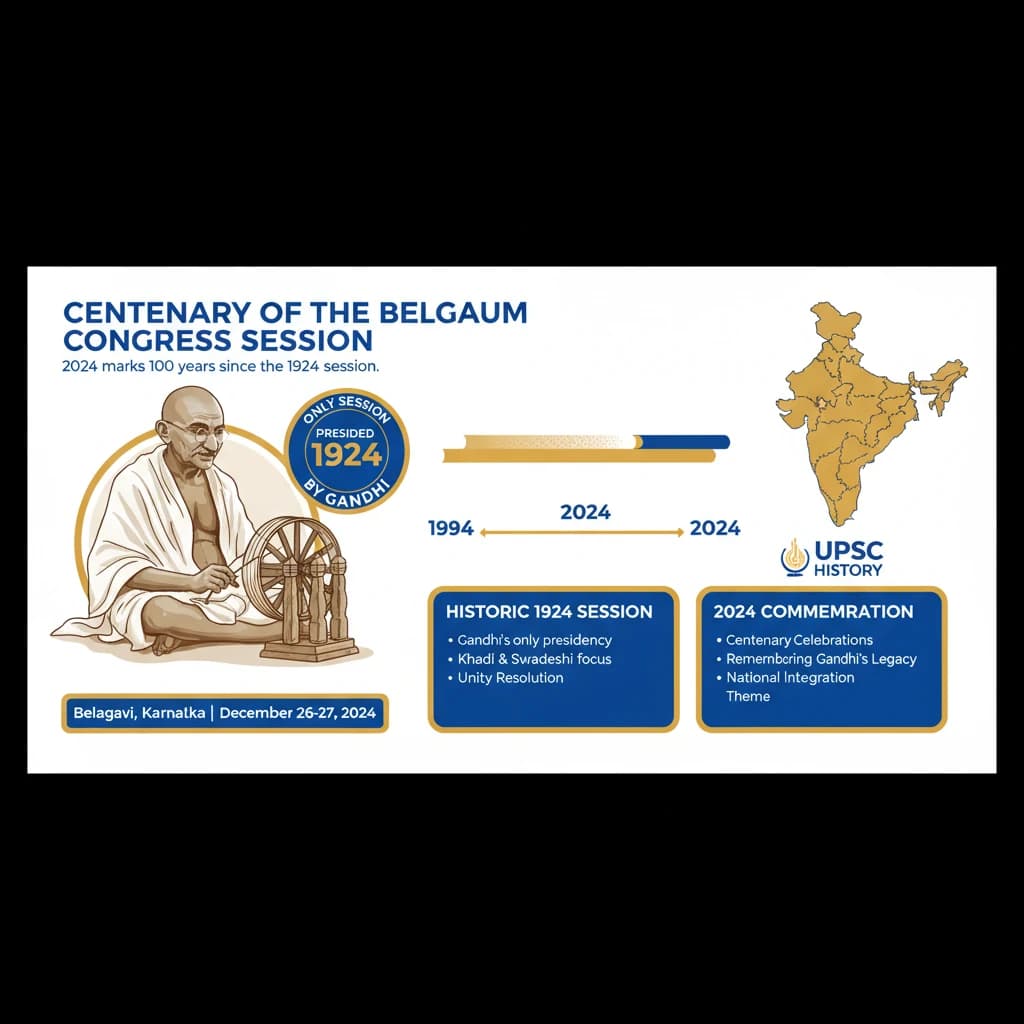
Centenary of the Belgaum Congress Session
The year 2024 marks the centenary of the historic 1924 Belgaum Congress session. This significant event is being commemorated in Belagavi, Karnataka, on December 26-27, 2024.
The session is particularly remembered for being the only All-India Congress session presided over by Mahatma Gandhi. His leadership brought pivotal changes to the party's ideology and organizational structure.
Event: Centenary of 1924 Belgaum Congress Session
Location: Belagavi, Karnataka
Date: December 26-27, 2024
Gandhi's Unique Leadership at Belgaum
Mahatma Gandhi served as the Congress President from December 1924 to April 1925, with the Belgaum session being his sole presidential tenure. His presence elevated the session's importance, making it a landmark event in the freedom struggle.
Gandhi's first visit to Belgaum was in 1916, at the invitation of local leader Gangadharrao Deshpande. This laid the groundwork for his later association with the region.
Key Fact: The 1924 Belgaum session was the only Indian National Congress session ever presided over by Mahatma Gandhi.
Emphasis on Social Change and Reform
Under Gandhi's leadership, the Belgaum session transformed the Indian National Congress into a movement for both political independence and profound social reform. He advocated for several key social initiatives.
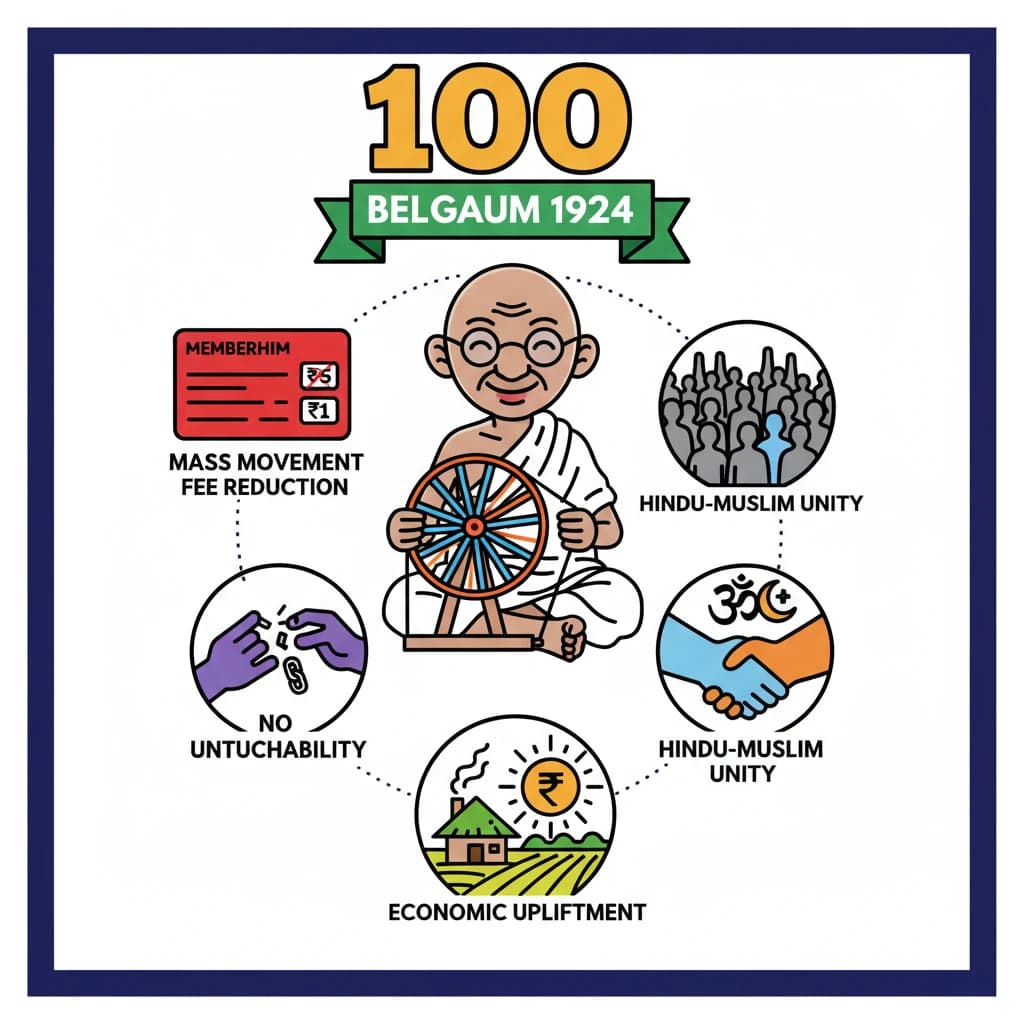
- Combating Untouchability: Gandhi strongly emphasized the eradication of untouchability, integrating social equality into the national movement.
- Promoting Khadi: The session mandated khadi spinning for all Congress members, requiring the submission of 2,000 yards of khadi cloth monthly.
- Supporting Village Industries: Gandhi championed village industries as a means of economic self-reliance and empowerment for the masses.
Organizational Reforms by Gandhi
Gandhi also introduced significant organizational changes within the Congress to make it more inclusive and grassroots-oriented. He aimed to broaden the party's appeal and membership.
He drastically reduced Congress membership fees by 90%. This move made the party more accessible to ordinary people, strengthening its base across various sections of society.
Advocacy for Hindu-Muslim Unity
A crucial aspect of Gandhi's address at Belgaum was his fervent appeal for Hindu-Muslim unity. He recognized this unity as indispensable for the success of the broader freedom movement against British rule.
Gandhi also addressed the sensitive issue of cow protection, clarifying that his advocacy was rooted in economic upliftment for farmers and was not linked to religious conversion or violence against Muslims.
Focus on Social and Economic Upliftment
Beyond political and social reforms, Gandhi also highlighted practical aspects of community welfare. His vision encompassed a holistic development approach for Indian villages.
- Sanitation and Town Planning: He focused on improving sanitation and promoting better town planning, recognizing their importance for public health and quality of life.
- Economic Use of Cows: Gandhi emphasized the economic utility of cows for farmers, advocating for their protection as an agricultural asset rather than solely a religious symbol.
He lauded the sanitation volunteers at the session, noting that 40 out of 70 were Brahmins. This highlighted the importance of social service transcending caste barriers.
Critique of Extravagance and Call for Equality
Gandhi, ever the advocate for simplicity and equality, openly criticized the excessive expenditure on VIPs during the session. He called for equal treatment for all members in future Congress sessions.
UPSC Insight: Gandhi's actions at Belgaum demonstrate his commitment to inclusive politics, social justice, and ethical leadership, which are recurring themes in UPSC Mains GS Paper I (Modern Indian History) and GS Paper IV (Ethics).
Cultural Significance of the Session
The Belgaum session was not just a political gathering but also a cultural landmark. It showcased the rich artistic heritage of India, integrating culture into the national movement.
Notable musical performances graced the session, including those by Hindustani maestro Vishnu Digambar Paluskar and a young Gangubai Hangal. The Kannada song “Udayavagali Namma Chaluva Kannada Nadu” was also sung, celebrating regional identity.
Legacy of the Session
The practical legacy of the session endures in Belagavi. The Pampa Sarovara well, dug specifically for the 1924 session, continues to provide water to parts of south Belagavi even today.
💡 Key Takeaways
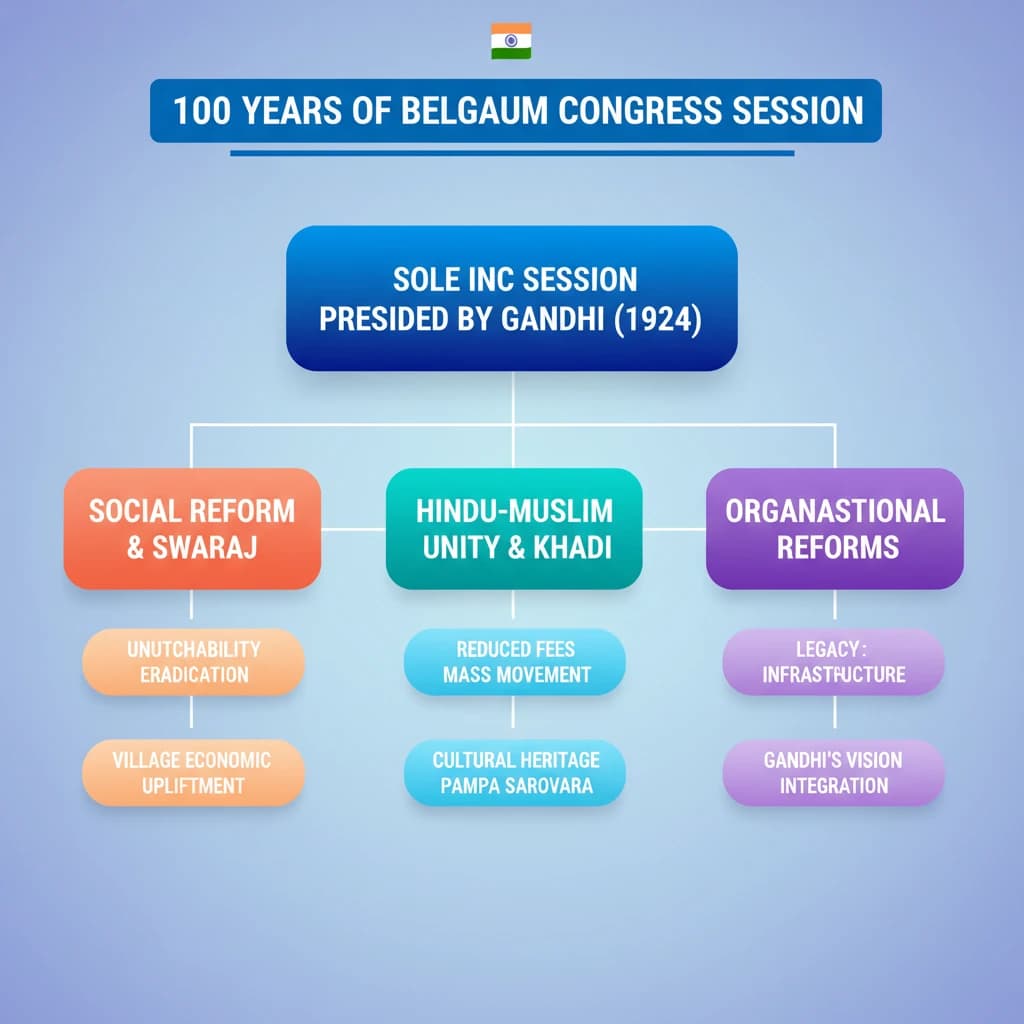
- •The 1924 Belgaum Session was the only INC session presided over by Mahatma Gandhi.
- •Gandhi used the session to integrate social reform (untouchability, khadi) with political independence.
- •He emphasized Hindu-Muslim unity and economic upliftment of villages.
- •Gandhi introduced organizational reforms, like reducing membership fees, to make Congress a mass movement.
- •The session's legacy includes enduring infrastructure (Pampa Sarovara well) and cultural significance.
- •It reflects Gandhi's commitment to ethical leadership and inclusivity within the nationalist movement.
🧠 Memory Techniques
98% Verified Content
📚 Reference Sources
•Standard textbooks on Modern Indian History (e.g., Bipan Chandra, Spectrum)