Read More: Sikhism - UPSC History
What is Read More: Sikhism in UPSC History?
Read More: Sikhism is a key topic under History for UPSC Civil Services Examination. Key points include: Sikhism, founded by Guru Nanak Dev Ji, is a monotheistic religion emphasizing one God (Ik Onkar) and universal equality.. The teachings are enshrined in the Guru Granth Sahib, the eternal living Guru, and propagated by ten Gurus.. Core tenets include Naam Japna (meditation), Kirat Karni (honest living), and Vand Chhakna (sharing).. Understanding this topic is essential for both UPSC Prelims and Mains preparation.
Why is Read More: Sikhism important for UPSC exam?
Read More: Sikhism is a Medium-level topic in UPSC History. It is tested in both Prelims (factual MCQs) and Mains (analytical answer writing). Previous year UPSC questions have frequently covered aspects of Read More: Sikhism, making it essential for comprehensive IAS preparation.
How to prepare Read More: Sikhism for UPSC?
To prepare Read More: Sikhism for UPSC: (1) Study the comprehensive notes covering all key concepts on Vaidra. (2) Practice previous year questions on this topic. (3) Connect it with current affairs using daily updates. (4) Revise using key takeaways and mind maps available for History. (5) Write practice answers linking Read More: Sikhism to related GS Paper topics.
Key takeaways of Read More: Sikhism for UPSC
- Sikhism, founded by Guru Nanak Dev Ji, is a monotheistic religion emphasizing one God (Ik Onkar) and universal equality.
- The teachings are enshrined in the Guru Granth Sahib, the eternal living Guru, and propagated by ten Gurus.
- Core tenets include Naam Japna (meditation), Kirat Karni (honest living), and Vand Chhakna (sharing).
- The Khalsa Panth, established by Guru Gobind Singh Ji, created a distinct identity and martial tradition.
- Key institutions like Langar (community kitchen) promote social equality and selfless service (Sewa).
- Sikh history includes periods of Mughal persecution, the rise of Misls, and the powerful Sikh Empire under Maharaja Ranjit Singh.
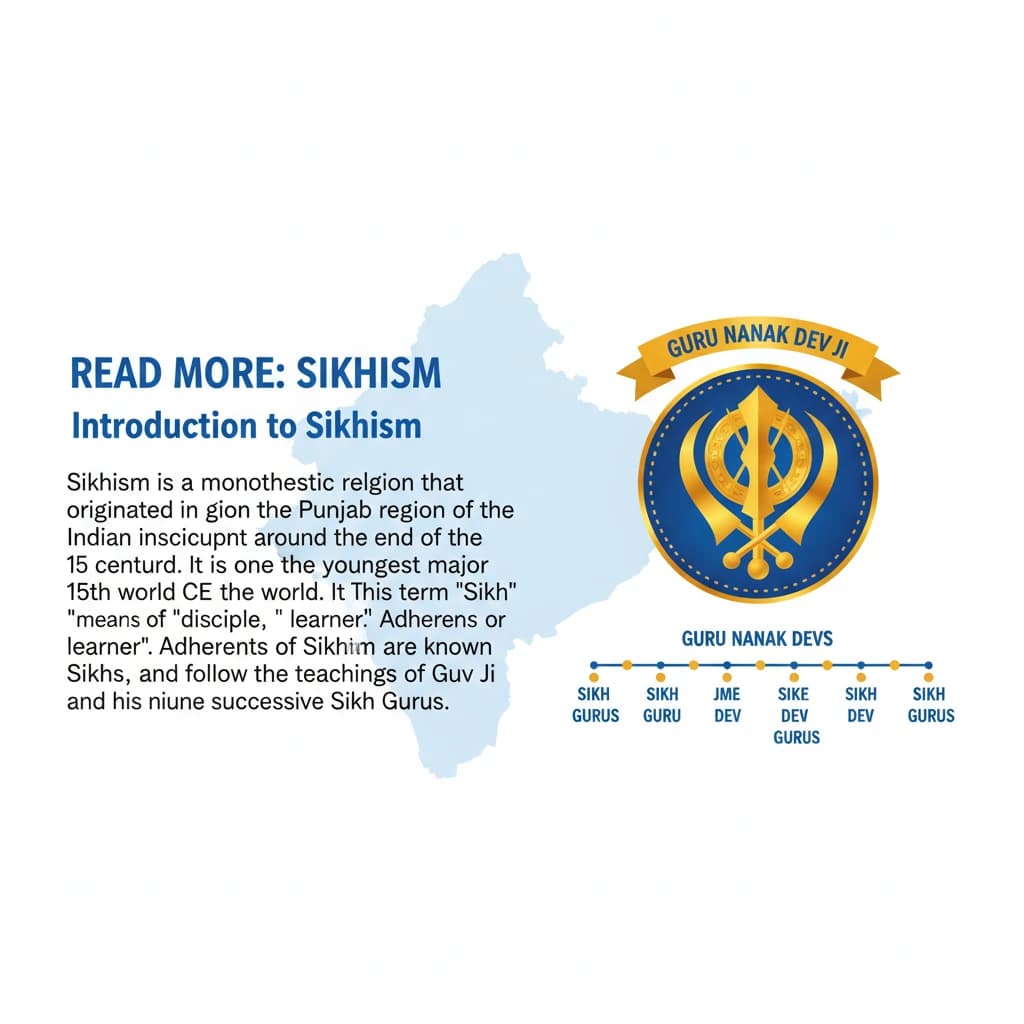
Read More: Sikhism
📖 Introduction
💡 Key Takeaways
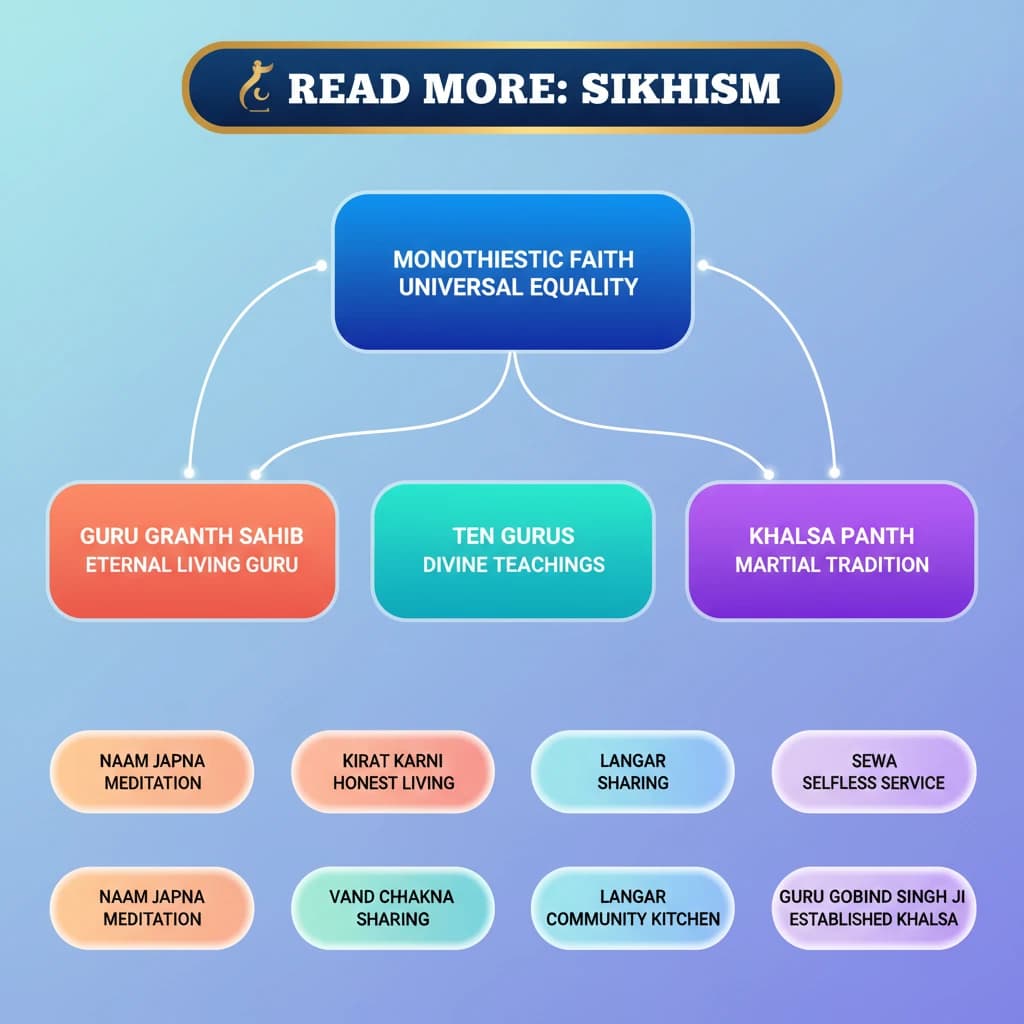
- •Sikhism, founded by Guru Nanak Dev Ji, is a monotheistic religion emphasizing one God (Ik Onkar) and universal equality.
- •The teachings are enshrined in the Guru Granth Sahib, the eternal living Guru, and propagated by ten Gurus.
- •Core tenets include Naam Japna (meditation), Kirat Karni (honest living), and Vand Chhakna (sharing).
- •The Khalsa Panth, established by Guru Gobind Singh Ji, created a distinct identity and martial tradition.
- •Key institutions like Langar (community kitchen) promote social equality and selfless service (Sewa).
- •Sikh history includes periods of Mughal persecution, the rise of Misls, and the powerful Sikh Empire under Maharaja Ranjit Singh.
🧠 Memory Techniques