Loading page, please wait…
Vaidra Logo
Vaidra

Top 4 items + smart groups

UPSC GPT
New
Current Affairs
Daily Solutions
Daily Puzzle
Mains Evaluator

Version 2.0.0 • Built with ❤️ for UPSC aspirants

Loading...
Loading...
Loading...
Loading...
Loading...
Loading...
Loading...
Loading...
Loading...
Loading...
Loading...
Loading...
Loading...
Back
All Subjects

Topics

0 topics • 0 completed

Loading topics...
Loading...
Loading...
Loading...
Loading...
Loading...
Overall Progress0%

900-Year-Old Chalukyan Inscription - UPSC History

What is 900-Year-Old Chalukyan Inscription in UPSC History?

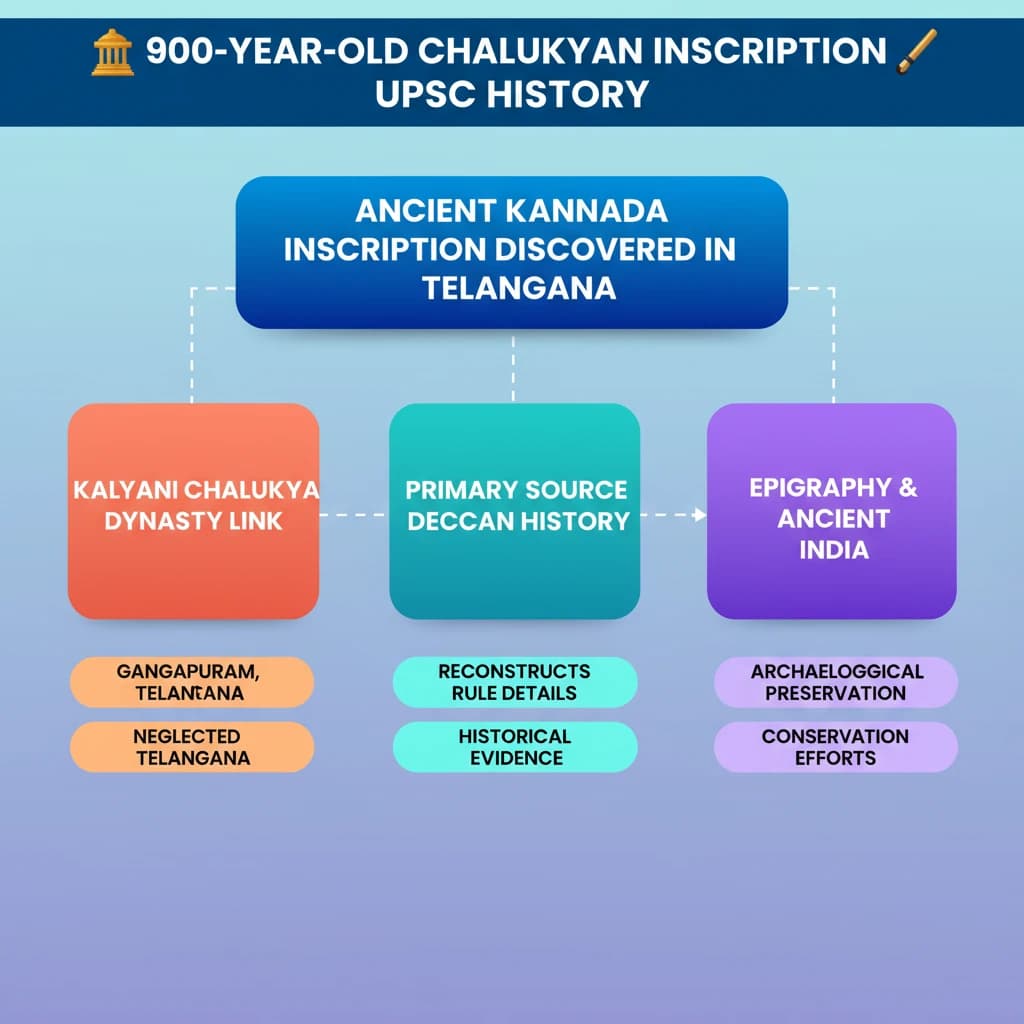
900-Year-Old Chalukyan Inscription is a key topic under History for UPSC Civil Services Examination. Key points include: A 900-year-old Kannada inscription linked to the Kalyani Chalukya dynasty was found.. The discovery occurred in Gangapuram, Telangana, in a neglected state.. The inscription is a primary source for understanding the Kalyani Chalukyas' rule in the Deccan.. Understanding this topic is essential for both UPSC Prelims and Mains preparation.

Why is 900-Year-Old Chalukyan Inscription important for UPSC exam?

900-Year-Old Chalukyan Inscription is a Medium-level topic in UPSC History. It is tested in both Prelims (factual MCQs) and Mains (analytical answer writing). Previous year UPSC questions have frequently covered aspects of 900-Year-Old Chalukyan Inscription, making it essential for comprehensive IAS preparation.

How to prepare 900-Year-Old Chalukyan Inscription for UPSC?

To prepare 900-Year-Old Chalukyan Inscription for UPSC: (1) Study the comprehensive notes covering all key concepts on Vaidra. (2) Practice previous year questions on this topic. (3) Connect it with current affairs using daily updates. (4) Revise using key takeaways and mind maps available for History. (5) Write practice answers linking 900-Year-Old Chalukyan Inscription to related GS Paper topics.

Key takeaways of 900-Year-Old Chalukyan Inscription for UPSC

  • A 900-year-old Kannada inscription linked to the Kalyani Chalukya dynasty was found.
  • The discovery occurred in Gangapuram, Telangana, in a neglected state.
  • The inscription is a primary source for understanding the Kalyani Chalukyas' rule in the Deccan.
  • Highlights the importance of epigraphy in reconstructing ancient Indian history.
  • Underscores the critical need for archaeological preservation and conservation efforts.
  • Contributes to the study of Kannada language evolution and regional history.
900-Year-Old Chalukyan Inscription

900-Year-Old Chalukyan Inscription

Medium⏱️ 8 min read✓ 98% Verified
history

📖 Introduction

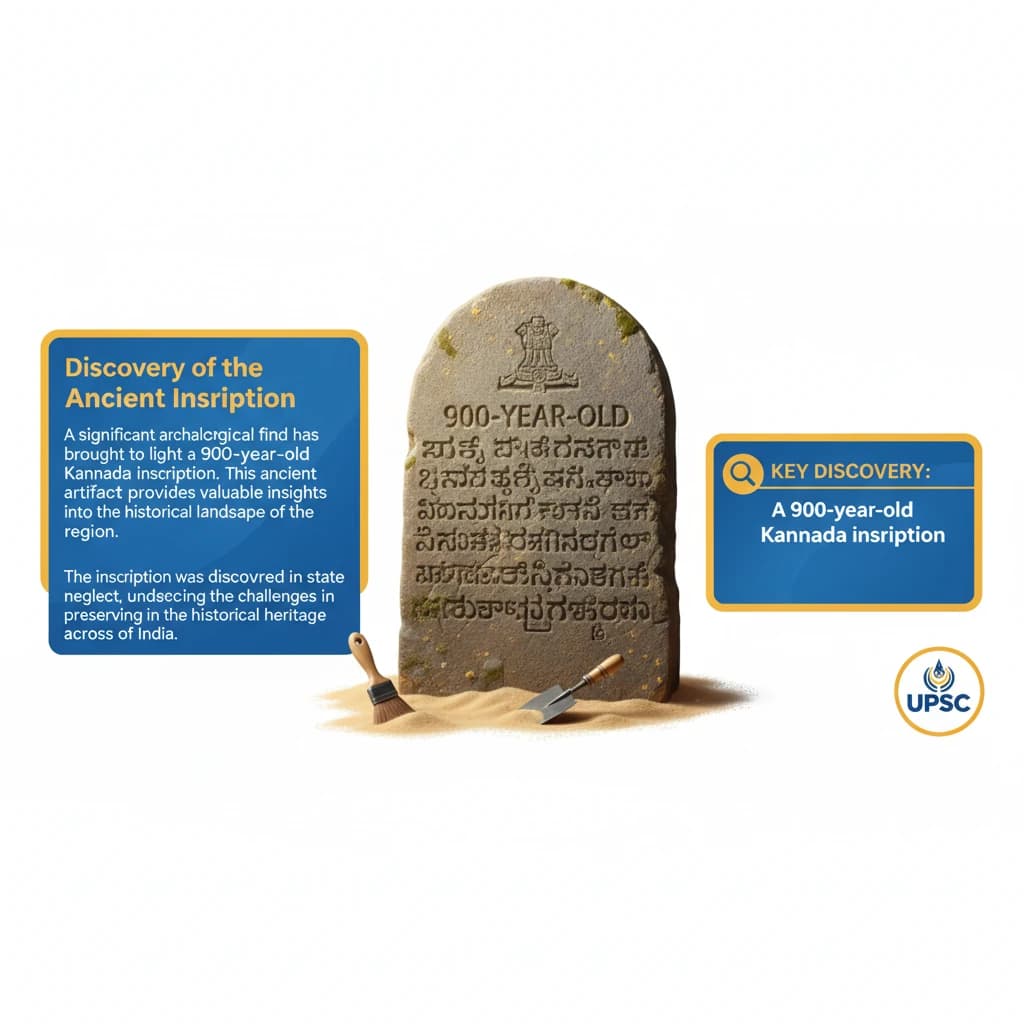
<h4>Discovery of the Ancient Inscription</h4><p>A significant archaeological find has brought to light a <strong>900-year-old Kannada inscription</strong>. This ancient artifact provides valuable insights into the historical landscape of the region.</p><p>The inscription was discovered in a state of neglect, underscoring the challenges in preserving historical heritage across India.</p><div class='key-point-box'><p><strong>Key Discovery:</strong> A <strong>900-year-old Kannada inscription</strong>.</p><p><strong>Associated Dynasty:</strong> <strong>Kalyani Chalukya dynasty</strong>.</p><p><strong>Location of Find:</strong> <strong>Gangapuram</strong>, <strong>Telangana</strong>.</p></div><h4>Details of the Inscription</h4><p>The inscription is attributed to the powerful <strong>Kalyani Chalukya dynasty</strong>, also known as the <strong>Western Chalukyas</strong>. This dynasty was prominent in the Deccan region of South India.</p><p>Its language is <strong>Kannada</strong>, indicating the prevalence and development of the language during that period in the region. Such inscriptions are crucial for tracing linguistic evolution.</p><div class='info-box'><p><strong>Language:</strong> <strong>Kannada</strong>.</p><p><strong>Age:</strong> Approximately <strong>900 years old</strong>.</p><p><strong>Current State:</strong> Found in a <strong>neglected state</strong>.</p></div><h4>Location of Discovery</h4><p>The inscription was found in <strong>Gangapuram</strong>, a village located in the present-day state of <strong>Telangana</strong>. This area has historically been a significant cultural and political hub.</p><p>The discovery adds to the rich tapestry of historical sites and artifacts found within <strong>Telangana</strong>, contributing to its archaeological importance.</p><div class='exam-tip-box'><p><strong>UPSC Insight:</strong> Questions on ancient Indian history often focus on <strong>inscriptions</strong> as primary sources. Be prepared to discuss their significance, associated dynasties, and geographical distribution. Knowing the <strong>Kalyani Chalukyas</strong> and their influence in the <strong>Deccan</strong> is vital for <strong>GS Paper I</strong>.</p></div>
Concept Diagram

💡 Key Takeaways

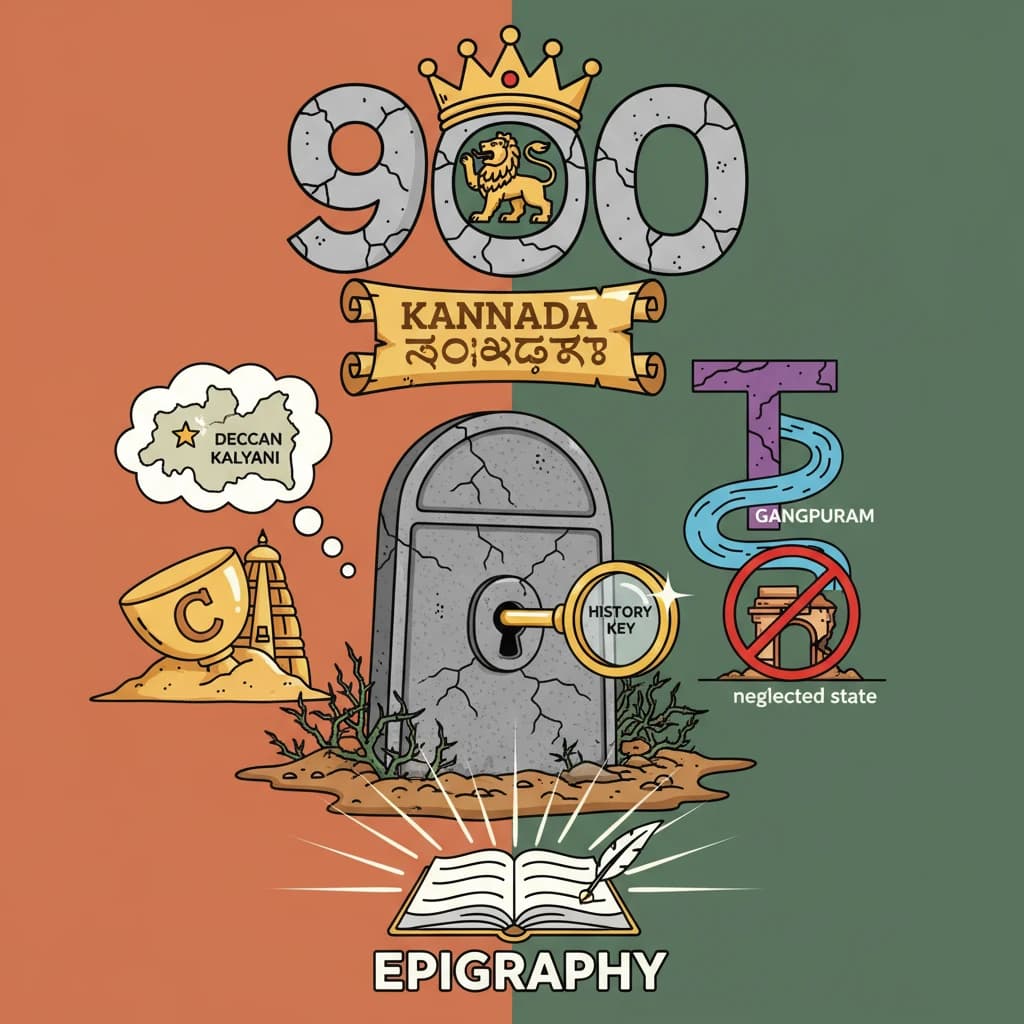
  • •A 900-year-old Kannada inscription linked to the Kalyani Chalukya dynasty was found.
  • •The discovery occurred in Gangapuram, Telangana, in a neglected state.
  • •The inscription is a primary source for understanding the Kalyani Chalukyas' rule in the Deccan.
  • •Highlights the importance of epigraphy in reconstructing ancient Indian history.
  • •Underscores the critical need for archaeological preservation and conservation efforts.
  • •Contributes to the study of Kannada language evolution and regional history.

🧠 Memory Techniques
Memory Aid
98% Verified Content

📚 Reference Sources

•Archaeological Survey of India (ASI) publications on Chalukyan sites
•NCERT History Textbooks (Ancient and Medieval India)
•Academic historical texts on South Indian Dynasties

Related Topics

Loading related topics...
Explore:History Topics·All Subjects·Daily Current Affairs·Editorial Analysis·Previous Year Questions·UPSC GPT
900-Year-Old Chalukyan Inscription - UPSC History