Loading page, please wait…
Vaidra Logo
Vaidra

Top 4 items + smart groups

UPSC GPT
New
Current Affairs
Daily Solutions
Daily Puzzle
Mains Evaluator

Version 2.0.0 • Built with ❤️ for UPSC aspirants

Loading...
Loading...
Loading...
Loading...
Loading...
Loading...
Loading...
Loading...
Loading...
Loading...
Loading...
Loading...
Loading...
Back
All Subjects

Topics

0 topics • 0 completed

Loading topics...
Loading...
Loading...
Loading...
Loading...
Loading...
Overall Progress0%

What are the Key Features of Lodi Architecture? - UPSC History

What is What are the Key Features of Lodi Architecture? in UPSC History?

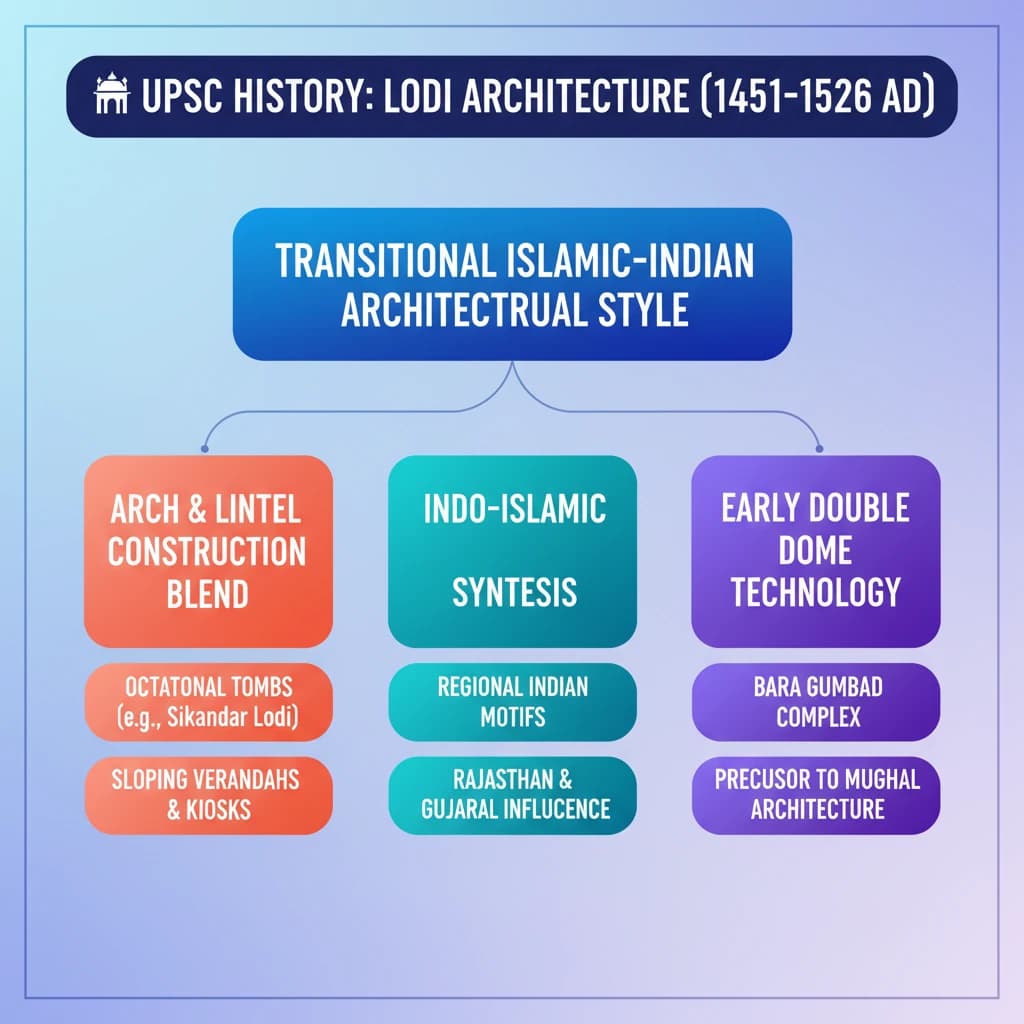
What are the Key Features of Lodi Architecture? is a key topic under History for UPSC Civil Services Examination. Key points include: Lodi architecture (1451-1526 AD) is known for its blend of arch and lintel-and-beam construction methods.. It incorporated regional Indian architectural elements like balconies, kiosks, and eaves from Rajasthan and Gujarat.. The period primarily saw the construction of tombs, often octagonal, about 15 meters in diameter, with sloping verandahs.. Understanding this topic is essential for both UPSC Prelims and Mains preparation.

Why is What are the Key Features of Lodi Architecture? important for UPSC exam?

What are the Key Features of Lodi Architecture? is a Medium-level topic in UPSC History. It is tested in both Prelims (factual MCQs) and Mains (analytical answer writing). Previous year UPSC questions have frequently covered aspects of What are the Key Features of Lodi Architecture?, making it essential for comprehensive IAS preparation.

How to prepare What are the Key Features of Lodi Architecture? for UPSC?

To prepare What are the Key Features of Lodi Architecture? for UPSC: (1) Study the comprehensive notes covering all key concepts on Vaidra. (2) Practice previous year questions on this topic. (3) Connect it with current affairs using daily updates. (4) Revise using key takeaways and mind maps available for History. (5) Write practice answers linking What are the Key Features of Lodi Architecture? to related GS Paper topics.

Key takeaways of What are the Key Features of Lodi Architecture? for UPSC

  • Lodi architecture (1451-1526 AD) is known for its blend of arch and lintel-and-beam construction methods.
  • It incorporated regional Indian architectural elements like balconies, kiosks, and eaves from Rajasthan and Gujarat.
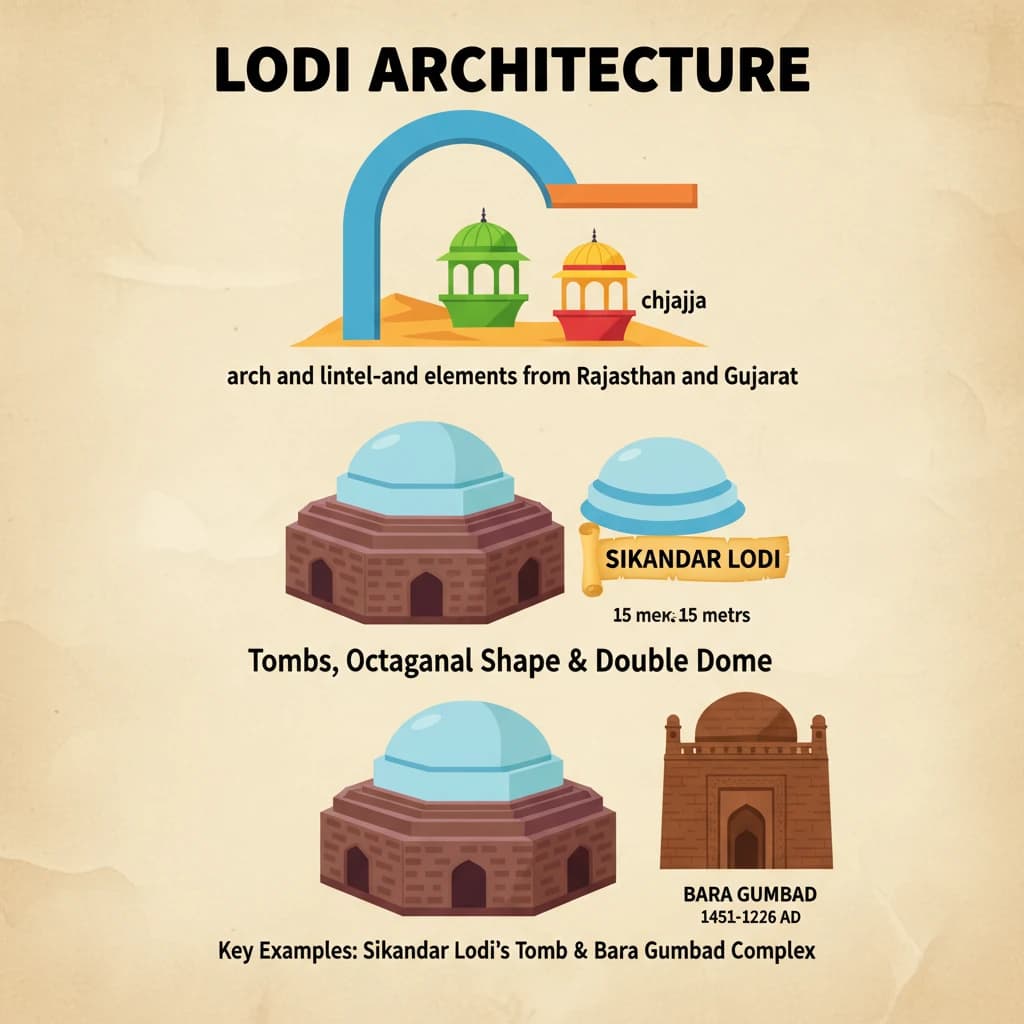
  • The period primarily saw the construction of tombs, often octagonal, about 15 meters in diameter, with sloping verandahs.
  • Key examples include the Tomb of Sikandar Lodi (featuring an early double dome) and the Bara Gumbad complex.
  • Lodi architecture represents a transitional phase, influencing later Mughal architectural innovations.
What are the Key Features of Lodi Architecture?

What are the Key Features of Lodi Architecture?

Medium⏱️ 8 min read✓ 95% Verified
history

📖 Introduction

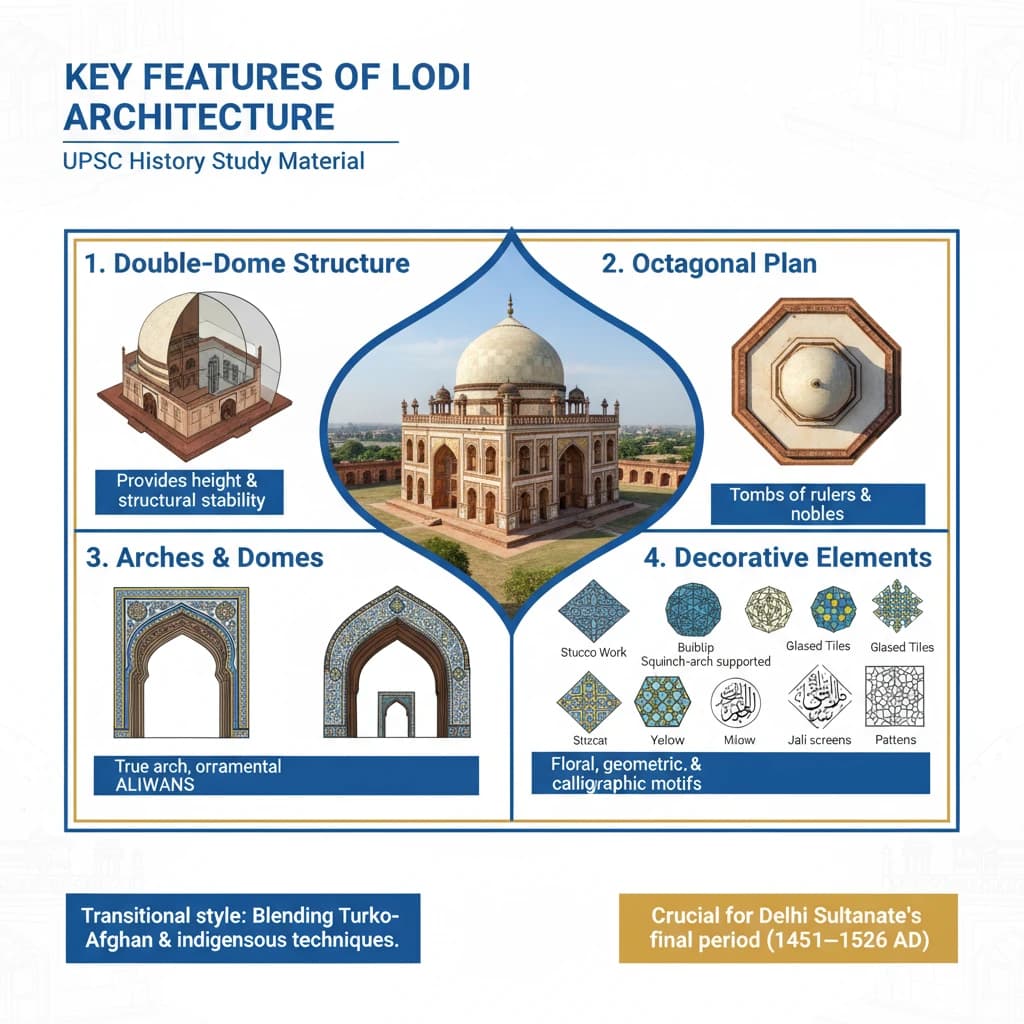
<h4>Introduction to Lodi Architecture</h4><p><strong>Lodi architecture</strong>, flourishing during the <strong>Lodi Dynasty</strong> (<strong>1451–1526 AD</strong>), marks a distinct phase in <strong>Indo-Islamic architectural history</strong>. It is characterized by a unique blend of structural techniques and decorative elements, reflecting the cultural synthesis prevalent in the <strong>Delhi Sultanate</strong>'s final period.</p><p>This style served as a crucial transitional bridge, incorporating elements from earlier Sultanate periods while foreshadowing the grandeur of subsequent <strong>Mughal architecture</strong>.</p><h4>Architectural Synthesis: Arch and Lintel-and-Beam</h4><p>A defining feature of <strong>Lodi constructions</strong> was their sophisticated approach to structural design. The architects skillfully employed both the <strong>arch</strong> and the <strong>lintel-and-beam methods</strong> in their buildings.</p><p>This dual mastery allowed for greater flexibility and strength, demonstrating an advanced understanding of engineering principles. It represented a fusion of Islamic arched construction with indigenous Indian trabeate (lintel-and-beam) systems.</p><div class='info-box'><p><strong>Arch Method:</strong> Utilizes curved structural members to span an opening, transferring weight outwards and downwards. Common in Islamic architecture.</p><p><strong>Lintel-and-Beam Method:</strong> Employs horizontal beams (lintels) supported by vertical columns (beams) to span openings. Prevalent in traditional Indian architecture.</p></div><h4>Regional Influences and Adaptations</h4><p><strong>Lodi architecture</strong> was not insular; it actively adopted and integrated elements from various regional Indian styles. Notably, influences from <strong>Rajasthani</strong> and <strong>Gujarati architecture</strong> are clearly discernible.</p><p>These adaptations enriched the visual vocabulary and aesthetic appeal of Lodi buildings, creating a truly syncretic style.</p><ul><li><strong>Balconies:</strong> Often projecting, providing ventilation and aesthetic relief.</li><li><strong>Kiosks (Chhatris):</strong> Small, open, domed pavilions, typically supported by pillars.</li><li><strong>Eaves (Chhajjas):</strong> Projecting ornamental or protective overhangs, common in Indian temple architecture.</li></ul><h4>The Dominance of Tomb Construction</h4><p>A striking characteristic of the <strong>Lodi period</strong> is the almost exclusive focus on the construction of <strong>tombs</strong>. Unlike earlier Sultanate periods that saw mosques and madrasas, the Lodi era primarily commissioned funerary architecture.</p><div class='key-point-box'><p>During the entire <strong>Lodi period (1451–1526 AD)</strong>, almost <strong>only tombs were commissioned</strong>, making them the quintessential architectural expression of the dynasty.</p></div><p>These tombs were typically designed with specific features, reflecting both functional requirements and symbolic significance.</p><div class='info-box'><p><strong>Lodi Tombs Specifications:</strong></p><ul><li><strong>Hard, Bare Design:</strong> Emphasized solidity and simplicity over elaborate ornamentation.</li><li><strong>Octagonal Plan:</strong> Many prominent tombs adopted an <strong>octagonal design</strong>, a departure from earlier square plans.</li><li><strong>Diameter:</strong> Often about <strong>15 meters in diameter</strong>, indicating a substantial scale.</li><li><strong>Sloping Verandah:</strong> Characterized by a distinctive <strong>sloping verandah</strong> encircling the central structure, adding to its unique silhouette.</li></ul></div><div class='exam-tip-box'><p><strong>UPSC Insight:</strong> When asked about <strong>Lodi architecture</strong>, remember to highlight the <strong>fusion of arch and lintel-and-beam</strong>, the incorporation of <strong>regional elements</strong>, and the <strong>predominance of octagonal tombs</strong>. This demonstrates a comprehensive understanding of its unique identity.</p></div>
Concept Diagram

💡 Key Takeaways

  • •Lodi architecture (1451-1526 AD) is known for its blend of arch and lintel-and-beam construction methods.
  • •It incorporated regional Indian architectural elements like balconies, kiosks, and eaves from Rajasthan and Gujarat.
  • •The period primarily saw the construction of tombs, often octagonal, about 15 meters in diameter, with sloping verandahs.
  • •Key examples include the Tomb of Sikandar Lodi (featuring an early double dome) and the Bara Gumbad complex.
  • •Lodi architecture represents a transitional phase, influencing later Mughal architectural innovations.

🧠 Memory Techniques
Memory Aid
95% Verified Content

📚 Reference Sources

•Archaeological Survey of India (ASI) official records for Lodi Garden monuments
•NCERT textbooks on Indian History and Art & Culture

Related Topics

Loading related topics...
Explore:History Topics·All Subjects·Daily Current Affairs·Editorial Analysis·Previous Year Questions·UPSC GPT
What are the Key Features of Lodi Architecture? - UPSC History