Rani Chennamma: Rebellion Against British & "Naanoo Rani Chennamma" Campaign - UPSC History
What is Rani Chennamma: Rebellion Against British & "Naanoo Rani Chennamma" Campaign in UPSC History?
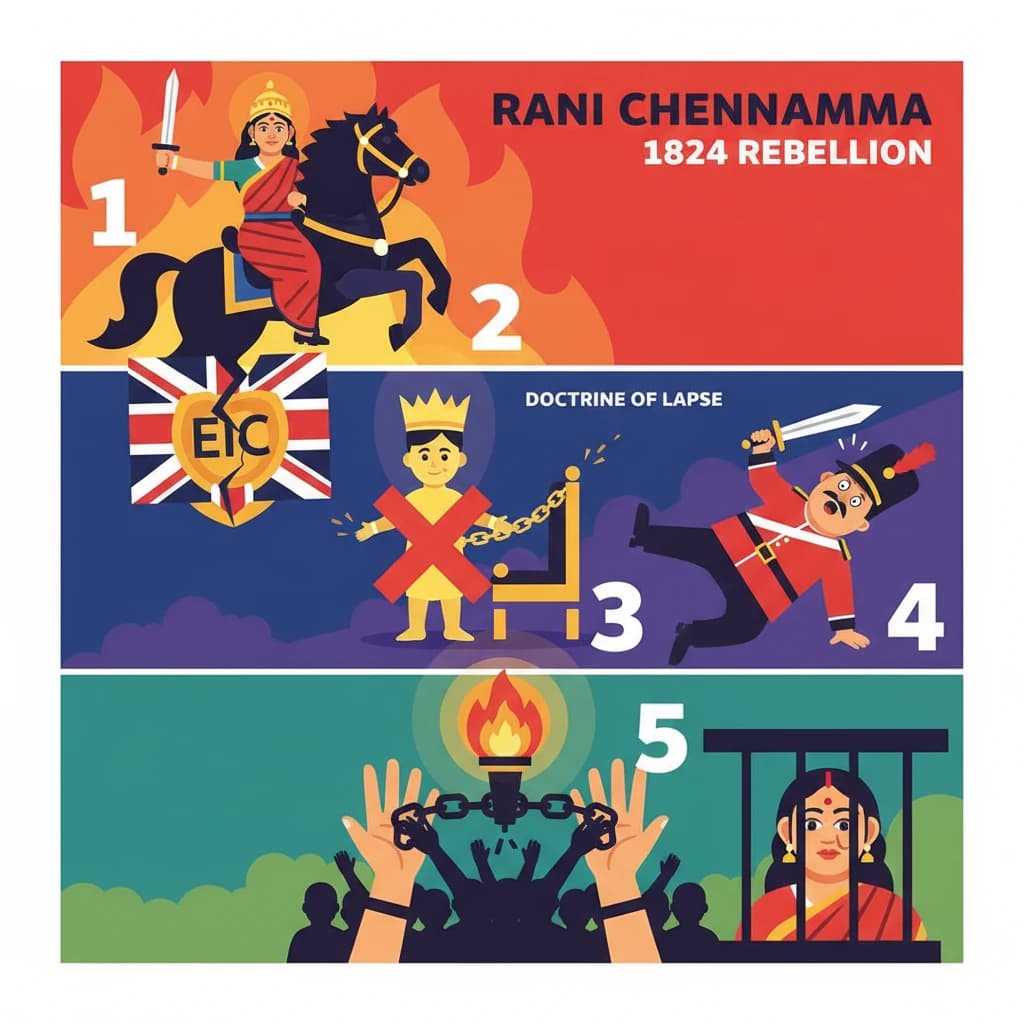
Rani Chennamma: Rebellion Against British & "Naanoo Rani Chennamma" Campaign is a key topic under History for UPSC Civil Services Examination. Key points include: Rani Chennamma of Kittur led a rebellion against the British East India Company in 1824.. Her resistance was primarily triggered by the British application of the Doctrine of Lapse, refusing to recognize her adopted heir.. She was a formidable leader, skilled in martial arts and guerrilla warfare, and killed a British official during the conflict.. Understanding this topic is essential for both UPSC Prelims and Mains preparation.
Why is Rani Chennamma: Rebellion Against British & "Naanoo Rani Chennamma" Campaign important for UPSC exam?
Rani Chennamma: Rebellion Against British & "Naanoo Rani Chennamma" Campaign is a Medium-level topic in UPSC History. It is tested in both Prelims (factual MCQs) and Mains (analytical answer writing). Previous year UPSC questions have frequently covered aspects of Rani Chennamma: Rebellion Against British & "Naanoo Rani Chennamma" Campaign, making it essential for comprehensive IAS preparation.
How to prepare Rani Chennamma: Rebellion Against British & "Naanoo Rani Chennamma" Campaign for UPSC?
To prepare Rani Chennamma: Rebellion Against British & "Naanoo Rani Chennamma" Campaign for UPSC: (1) Study the comprehensive notes covering all key concepts on Vaidra. (2) Practice previous year questions on this topic. (3) Connect it with current affairs using daily updates. (4) Revise using key takeaways and mind maps available for History. (5) Write practice answers linking Rani Chennamma: Rebellion Against British & "Naanoo Rani Chennamma" Campaign to related GS Paper topics.
Key takeaways of Rani Chennamma: Rebellion Against British & "Naanoo Rani Chennamma" Campaign for UPSC
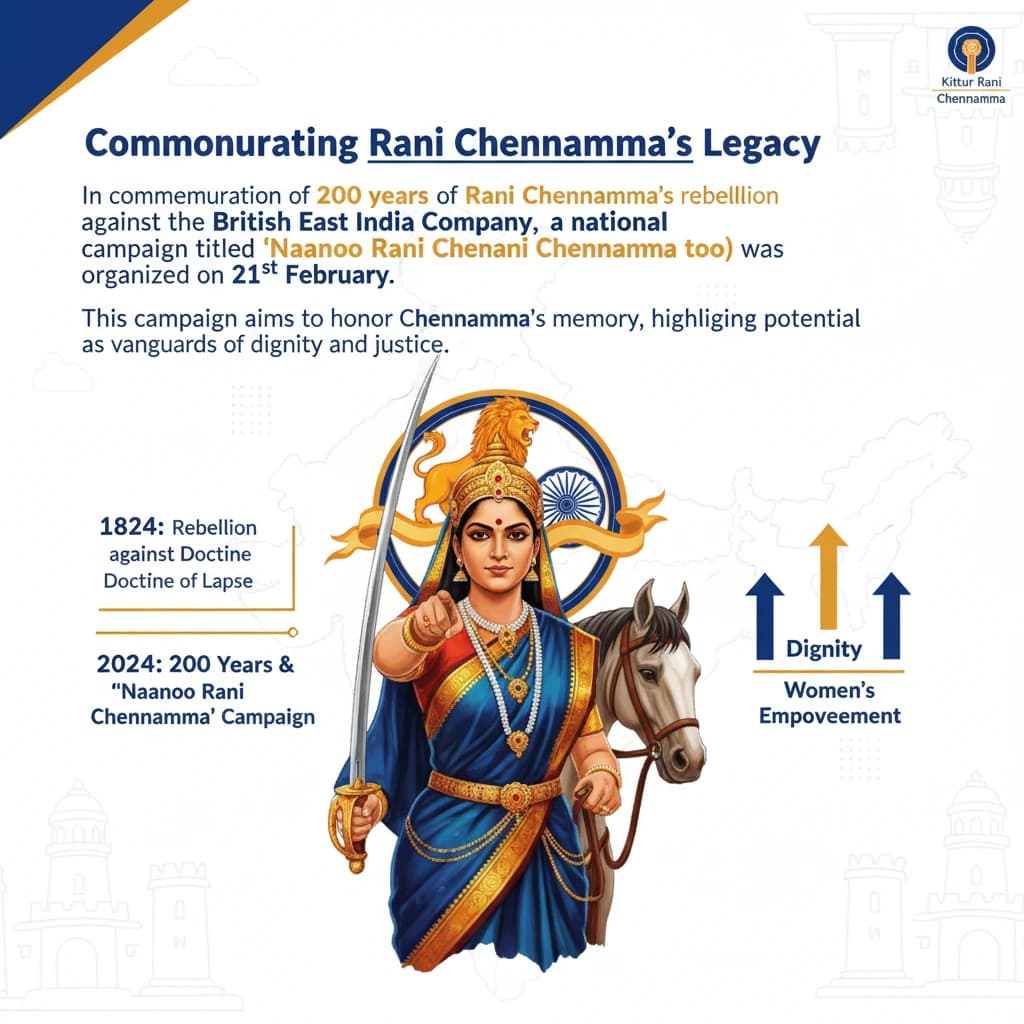
- Rani Chennamma of Kittur led a rebellion against the British East India Company in 1824.
- Her resistance was primarily triggered by the British application of the Doctrine of Lapse, refusing to recognize her adopted heir.
- She was a formidable leader, skilled in martial arts and guerrilla warfare, and killed a British official during the conflict.
- Despite her bravery, she was eventually captured and imprisoned, but her rebellion inspired many.
- The Doctrine of Lapse, formalized by Lord Dalhousie, was a key British annexation policy used to absorb princely states.
- Rani Chennamma remains a powerful symbol of courage, defiance, and women's empowerment in India.
Rani Chennamma: Rebellion Against British & "Naanoo Rani Chennamma" Campaign
📖 Introduction
💡 Key Takeaways
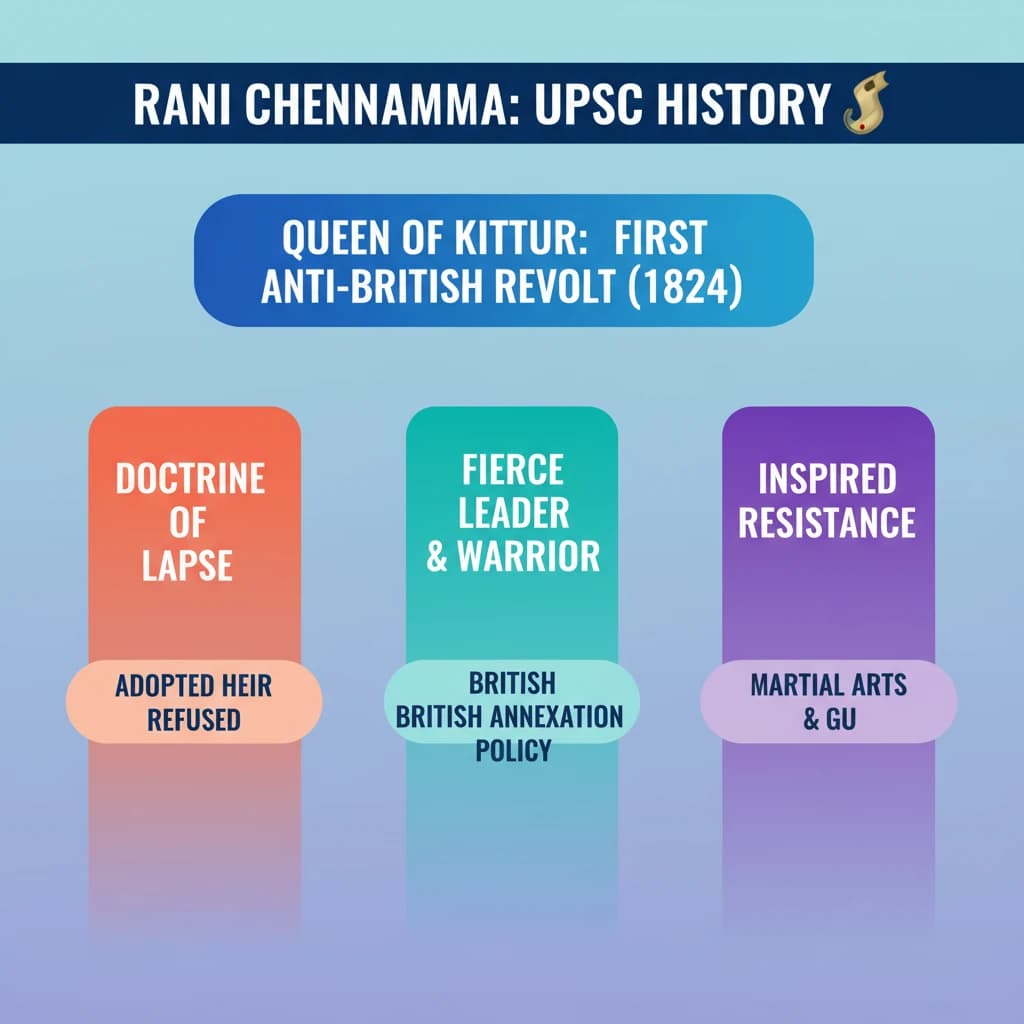
- •Rani Chennamma of Kittur led a rebellion against the British East India Company in 1824.
- •Her resistance was primarily triggered by the British application of the Doctrine of Lapse, refusing to recognize her adopted heir.
- •She was a formidable leader, skilled in martial arts and guerrilla warfare, and killed a British official during the conflict.
- •Despite her bravery, she was eventually captured and imprisoned, but her rebellion inspired many.
- •The Doctrine of Lapse, formalized by Lord Dalhousie, was a key British annexation policy used to absorb princely states.
- •Rani Chennamma remains a powerful symbol of courage, defiance, and women's empowerment in India.
🧠 Memory Techniques