Loading page, please wait…
Vaidra Logo
Vaidra

Top 4 items + smart groups

UPSC GPT
New
Current Affairs
Daily Solutions
Daily Puzzle
Mains Evaluator

Version 2.0.0 • Built with ❤️ for UPSC aspirants

Loading...
Loading...
Loading...
Loading...
Loading...
Loading...
Loading...
Loading...
Loading...
Loading...
Loading...
Loading...
Loading...
Back
All Subjects

Topics

0 topics • 0 completed

Loading topics...
Loading...
Loading...
Loading...
Loading...
Loading...
Overall Progress0%

Aihole Inscription: Pulakesin II, Ravikirti, and Chalukya History - UPSC History

What is Aihole Inscription: Pulakesin II, Ravikirti, and Chalukya History in UPSC History?

Aihole Inscription: Pulakesin II, Ravikirti, and Chalukya History is a key topic under History for UPSC Civil Services Examination. Key points include: Aihole Inscription is at Meguti temple, Aihole, Karnataka.. Composed by Ravikirti, praises Chalukya King Pulakesin II (Sathyasraya).. Chronicles Pulakesin II's victory over Harsha of Harshavardhana.. Understanding this topic is essential for both UPSC Prelims and Mains preparation.

Why is Aihole Inscription: Pulakesin II, Ravikirti, and Chalukya History important for UPSC exam?

Aihole Inscription: Pulakesin II, Ravikirti, and Chalukya History is a Medium-level topic in UPSC History. It is tested in both Prelims (factual MCQs) and Mains (analytical answer writing). Previous year UPSC questions have frequently covered aspects of Aihole Inscription: Pulakesin II, Ravikirti, and Chalukya History, making it essential for comprehensive IAS preparation.

How to prepare Aihole Inscription: Pulakesin II, Ravikirti, and Chalukya History for UPSC?

To prepare Aihole Inscription: Pulakesin II, Ravikirti, and Chalukya History for UPSC: (1) Study the comprehensive notes covering all key concepts on Vaidra. (2) Practice previous year questions on this topic. (3) Connect it with current affairs using daily updates. (4) Revise using key takeaways and mind maps available for History. (5) Write practice answers linking Aihole Inscription: Pulakesin II, Ravikirti, and Chalukya History to related GS Paper topics.

Key takeaways of Aihole Inscription: Pulakesin II, Ravikirti, and Chalukya History for UPSC

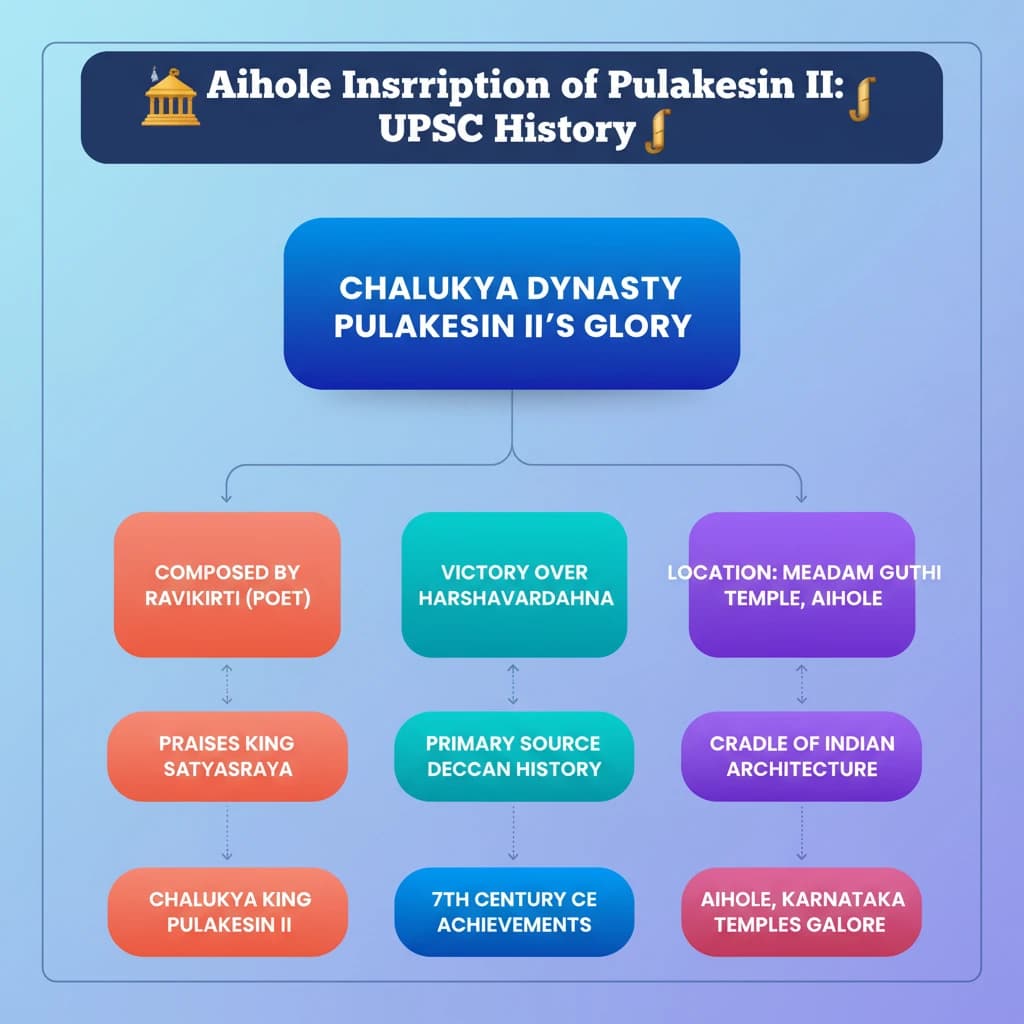
  • Aihole Inscription is at Meguti temple, Aihole, Karnataka.
  • Composed by Ravikirti, praises Chalukya King Pulakesin II (Sathyasraya).
  • Chronicles Pulakesin II's victory over Harsha of Harshavardhana.
  • Aihole is known as the "Cradle of Indian temple architecture."
  • Primary source for 7th-century CE Deccan history and Chalukya achievements.
Aihole Inscription: Pulakesin II, Ravikirti, and Chalukya History

Aihole Inscription: Pulakesin II, Ravikirti, and Chalukya History

Medium⏱️ 5 min read✓ 95% Verified
history

📖 Introduction

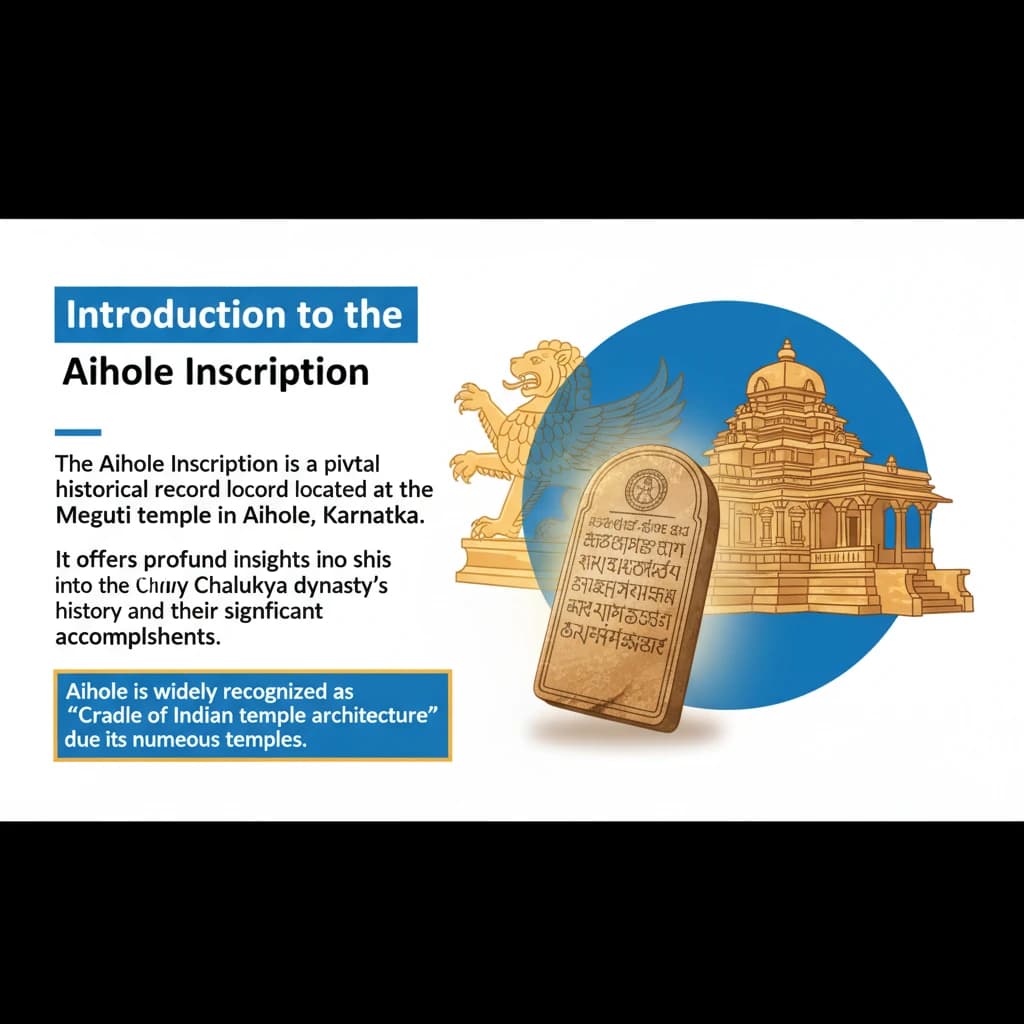
<h4>Introduction to the Aihole Inscription</h4><p>The <strong>Aihole Inscription</strong> is a pivotal historical record located at the <strong>Meguti temple</strong> in <strong>Aihole</strong>, <strong>Karnataka</strong>. It offers profound insights into the <strong>Chalukya dynasty's</strong> history and their significant accomplishments.</p><div class='info-box'><p><strong>Aihole</strong> is widely recognized as the <strong>“Cradle of Indian temple architecture”</strong> due to its numerous early experiments in temple construction.</p></div><h4>Authorship and Dedication</h4><p>This significant inscription was composed by the celebrated court poet, <strong>Ravikirti</strong>. It serves as a poetic eulogy, dedicated primarily to the illustrious <strong>Chalukya dynasty</strong>.</p><p>The inscription particularly praises <strong>King Pulakesin II</strong>, highlighting his virtues and military prowess. He is famously referred to as <strong>Sathyasraya</strong>, meaning the <strong>“embodiment of truth”</strong>.</p><h4>Key Historical Narratives</h4><p>The <strong>Aihole Inscription</strong> meticulously chronicles the various triumphs and military victories of the <strong>Chalukya dynasty</strong> against their formidable adversaries.</p><p>A most notable event detailed is the decisive victory of <strong>Pulakesin II</strong> over the powerful North Indian emperor, <strong>Harsha of Harshavardhana</strong>. This event is a crucial marker in ancient Indian history.</p><div class='key-point-box'><p>The inscription provides primary evidence for the <strong>Chalukya-Harsha conflict</strong>, confirming <strong>Pulakesin II's</strong> supremacy in the Deccan region.</p></div><div class='exam-tip-box'><p>Understanding the <strong>Aihole Inscription's</strong> content is vital for questions on <strong>Chalukya history</strong>, <strong>Pulakesin II</strong>, and the interactions between North and South Indian powers in the <strong>7th century CE</strong>.</p></div>
Concept Diagram

💡 Key Takeaways

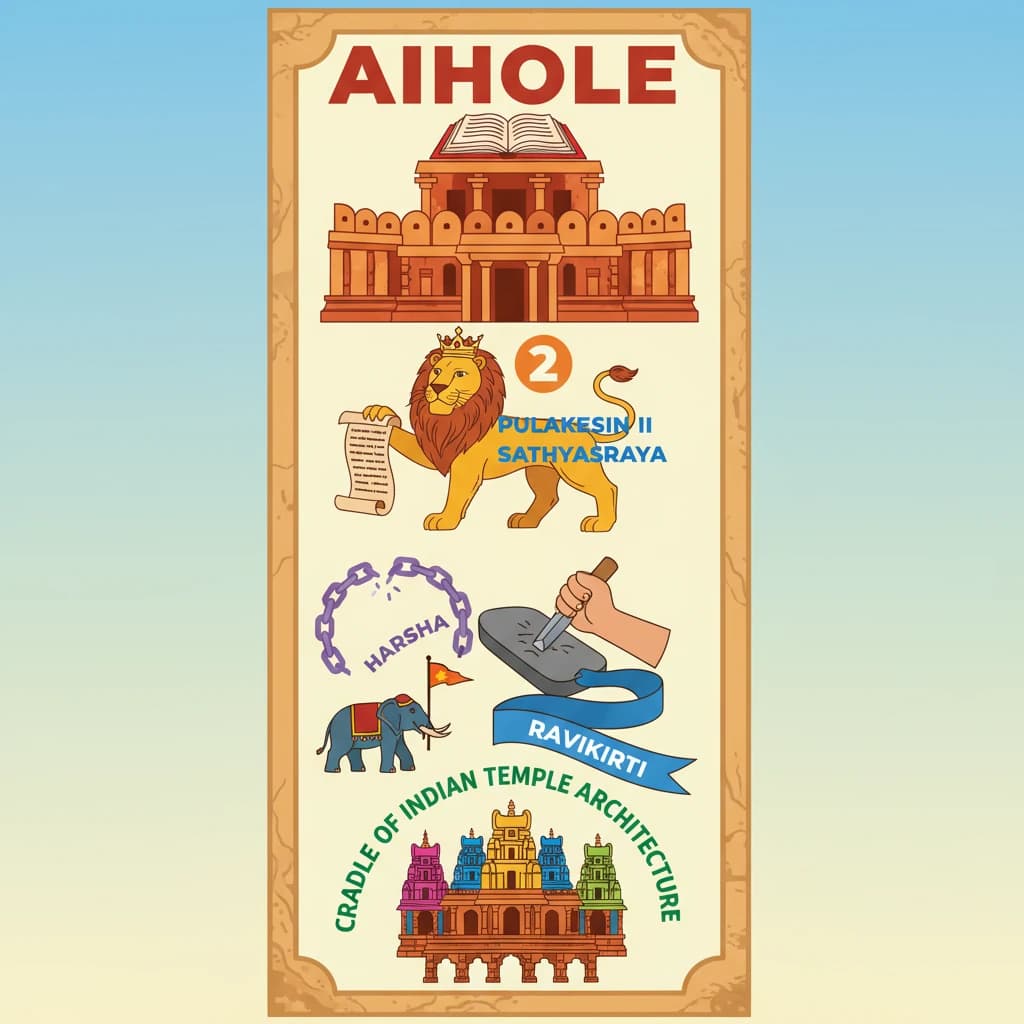
  • •Aihole Inscription is at Meguti temple, Aihole, Karnataka.
  • •Composed by Ravikirti, praises Chalukya King Pulakesin II (Sathyasraya).
  • •Chronicles Pulakesin II's victory over Harsha of Harshavardhana.
  • •Aihole is known as the "Cradle of Indian temple architecture."
  • •Primary source for 7th-century CE Deccan history and Chalukya achievements.

🧠 Memory Techniques
Memory Aid
95% Verified Content

📚 Reference Sources

•NCERT Textbooks (Ancient Indian History)
•Standard academic texts on Chalukyan history and epigraphy

Related Topics

Loading related topics...
Explore:History Topics·All Subjects·Daily Current Affairs·Editorial Analysis·Previous Year Questions·UPSC GPT
Aihole Inscription: Pulakesin II, Ravikirti, and Chalukya History - UPSC History