Loading page, please wait…
450th Jyoti Jot Diwas of Sri Guru Amardas - UPSC History
What is 450th Jyoti Jot Diwas of Sri Guru Amardas in UPSC History?
450th Jyoti Jot Diwas of Sri Guru Amardas is a key topic under History for UPSC Civil Services Examination. Key points include: <strong>Sri Guru Amardas Ji</strong> was the <strong>third Sikh Guru</strong>, born in <strong>1479</strong> in Basarke, Amritsar.. He succeeded <strong>Guru Angad Dev Ji</strong> in <strong>1552</strong> and established headquarters at <strong>Goindwal</strong>.. Key reforms include abolishing <strong>Sati</strong> and <strong>Purdah</strong> among Sikhs, and introducing the <strong>Anand Karaj</strong> marriage ceremony.. Understanding this topic is essential for both UPSC Prelims and Mains preparation.
Why is 450th Jyoti Jot Diwas of Sri Guru Amardas important for UPSC exam?
450th Jyoti Jot Diwas of Sri Guru Amardas is a Medium-level topic in UPSC History. It is tested in both Prelims (factual MCQs) and Mains (analytical answer writing). Previous year UPSC questions have frequently covered aspects of 450th Jyoti Jot Diwas of Sri Guru Amardas, making it essential for comprehensive IAS preparation.
How to prepare 450th Jyoti Jot Diwas of Sri Guru Amardas for UPSC?
To prepare 450th Jyoti Jot Diwas of Sri Guru Amardas for UPSC: (1) Study the comprehensive notes covering all key concepts on Vaidra. (2) Practice previous year questions on this topic. (3) Connect it with current affairs using daily updates. (4) Revise using key takeaways and mind maps available for History. (5) Write practice answers linking 450th Jyoti Jot Diwas of Sri Guru Amardas to related GS Paper topics.
Key takeaways of 450th Jyoti Jot Diwas of Sri Guru Amardas for UPSC
- <strong>Sri Guru Amardas Ji</strong> was the <strong>third Sikh Guru</strong>, born in <strong>1479</strong> in Basarke, Amritsar.
- He succeeded <strong>Guru Angad Dev Ji</strong> in <strong>1552</strong> and established headquarters at <strong>Goindwal</strong>.
- Key reforms include abolishing <strong>Sati</strong> and <strong>Purdah</strong> among Sikhs, and introducing the <strong>Anand Karaj</strong> marriage ceremony.
- He organized the Sikh community into <strong>22 Manjis</strong> and reinforced <strong>Guru ka Langar</strong> for equality.
- His interaction with <strong>Emperor Akbar</strong> led to the abolition of the <strong>pilgrim's tax</strong>.
- Composed <strong>869 verses</strong>, including <strong>Anand Sahib</strong>, later incorporated into <strong>Guru Granth Sahib</strong>.
- Passed away on <strong>1st September 1574</strong>, leaving a profound legacy of social justice and community building.
450th Jyoti Jot Diwas of Sri Guru Amardas
Medium⏱️ 7 min read
history
📖 Introduction
Introduction: 450th Jyoti Jot Diwas of Sri Guru Amardas Ji
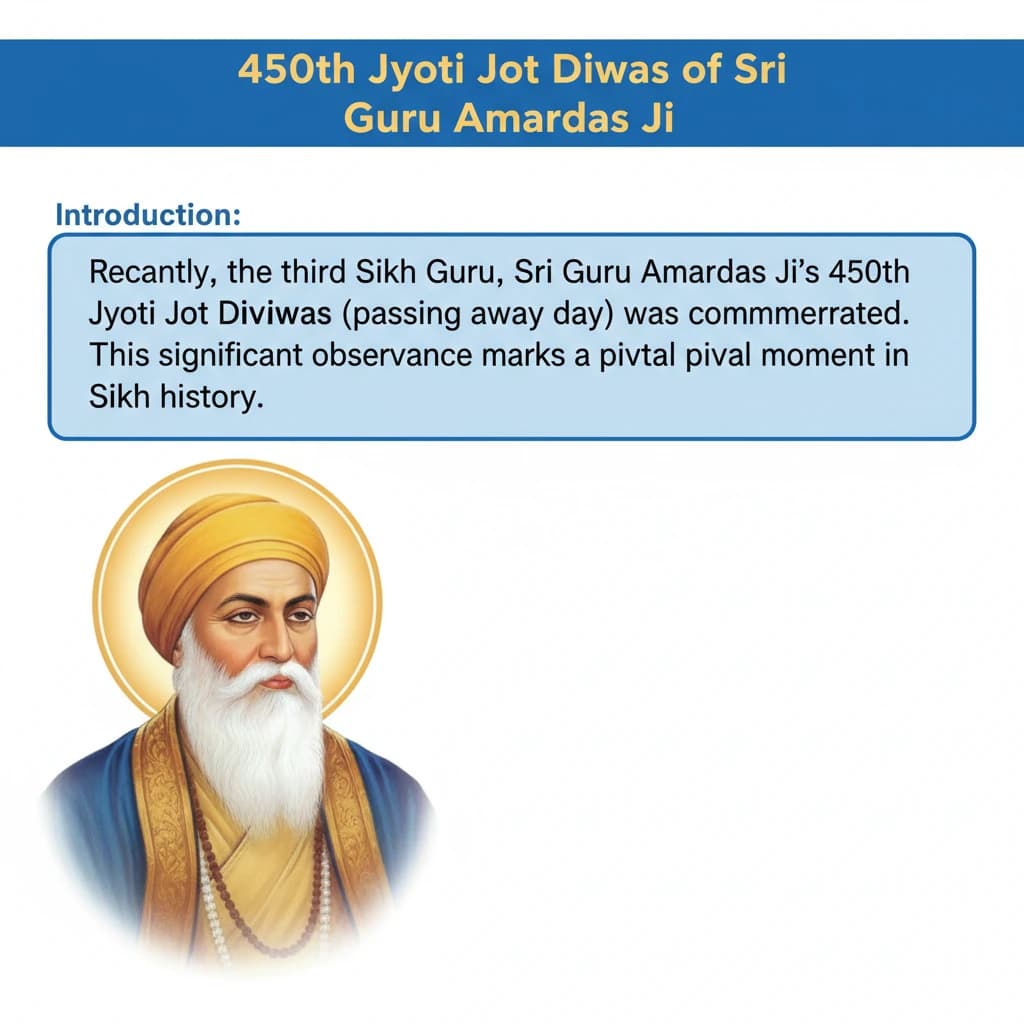
Recently, the 450th Jyoti Jot Diwas (passing away day) of Sri Guru Amardas Ji, the third Sikh Guru, was commemorated. This significant observance marks a pivotal moment in Sikh history.
The term Jyoti Jot Diwas signifies the sacred day when a Sikh Guru merges with the divine light, marking their earthly departure and spiritual ascension.
About Sri Guru Amardas Ji
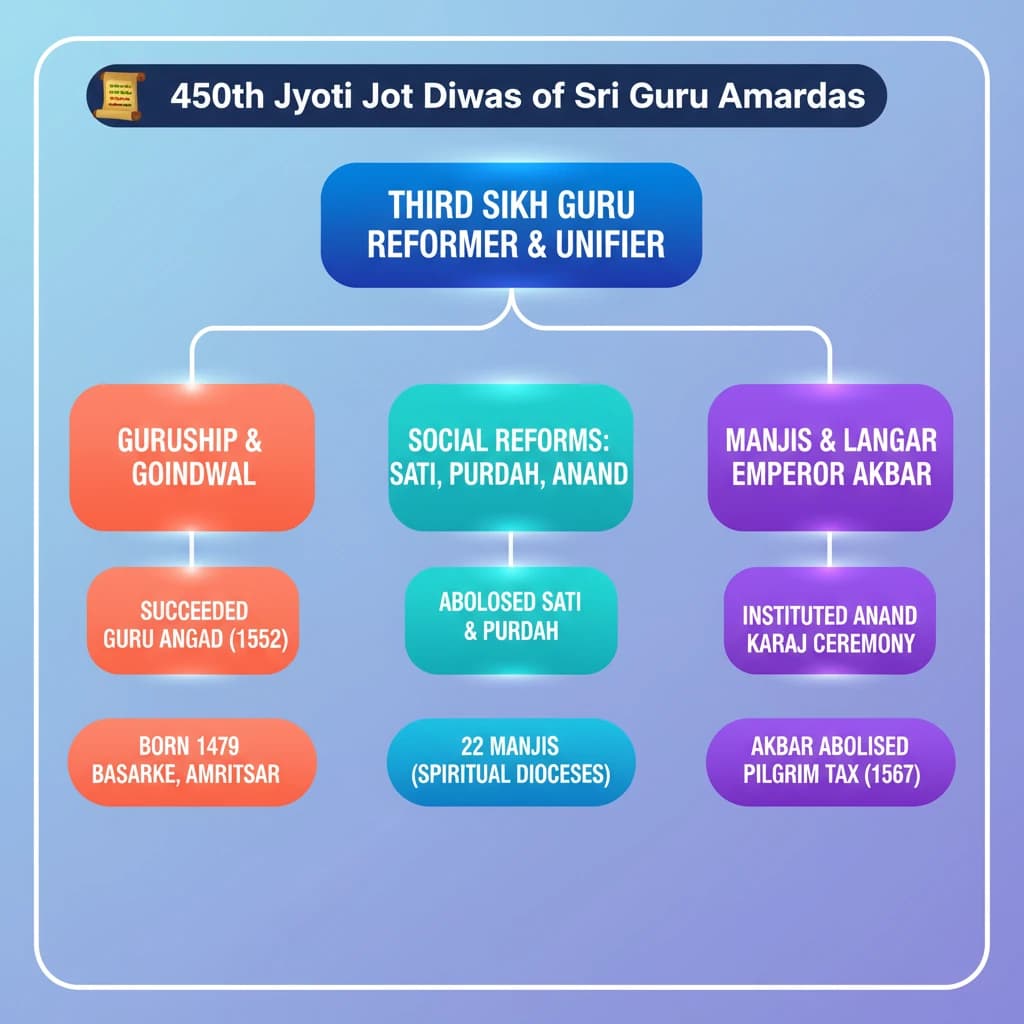
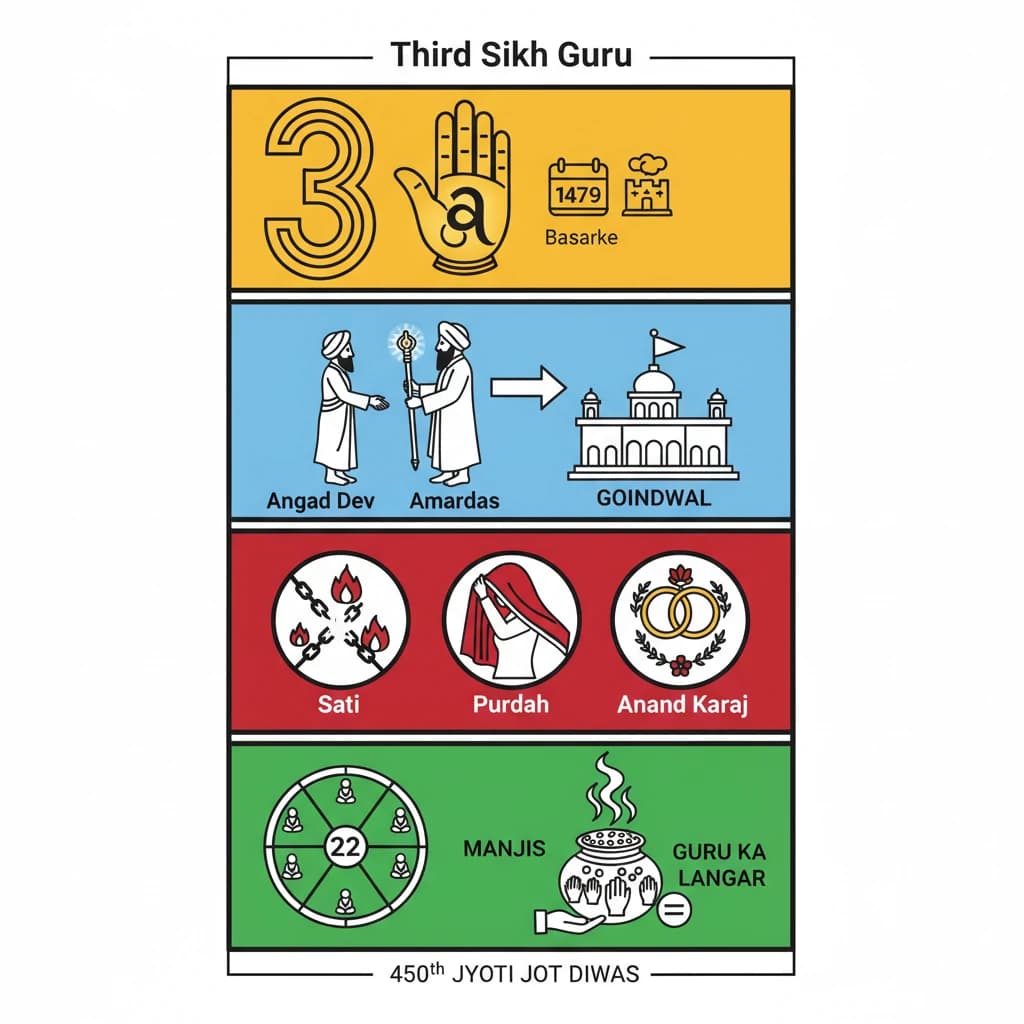
Sri Guru Amardas Ji was born in 1479 at Basarke in the Amritsar district. He was raised within an orthodox Hindu family before embarking on his spiritual journey.
He was profoundly inspired by the divine hymns of Sri Guru Nanak Dev Ji. This inspiration led him to adopt Sri Guru Angad Dev Ji as his revered spiritual guide and mentor.
- Birth Year: 1479
- Birthplace: Basarke, Amritsar district
- Inspired by: Sri Guru Nanak Dev Ji
- Spiritual Guide: Sri Guru Angad Dev Ji
In March 1552, at the age of 73, he was appointed as the third Sikh Guru, succeeding Guru Angad Dev Ji. He subsequently established his primary spiritual and administrative headquarters in Goindwal.
Key Contributions of Guru Amardas Ji
Administrative and Community Reforms
Guru Amardas Ji played a crucial role in organizing the nascent Sikh community. He divided it into 22 administrative districts, known as Manjis, to facilitate the widespread dissemination of Sikh teachings.
He significantly reinforced the tradition of ‘Guru ka Langar’ (communal kitchen). He insisted that all visitors partake in the communal meal before meeting him, thereby actively promoting equality and fostering a strong sense of community among all.
Social Justice and Inter-faith Relations
His notable interaction with the Mughal Emperor Akbar led to a significant reform: the abolition of the toll-tax (pilgrim's tax) for non-Muslims. This interaction helped solidify a respectful relationship between the Sikh community and the imperial power.
A staunch advocate for social justice, Guru Amardas Ji actively campaigned against and successfully abolished regressive social customs. Among Sikhs, he eliminated the practice of Sati (widow immolation) and the Purdah system (veiling of women).
Sikh Ceremonial Practices
Guru Amardas Ji introduced the distinct Sikh marriage ceremony known as Anand Karaj. This ceremony remains a foundational and revered practice within the Sikh faith today.
- Manjis: Established 22 administrative districts for Sikh teachings.
- Guru ka Langar: Strengthened tradition, promoting equality.
- Emperor Akbar: Influenced abolition of pilgrim's tax.
- Social Reforms: Abolished Sati and Purdah system among Sikhs.
- Marriage: Introduced Anand Karaj ceremony.
Legacy and Final Years of Guru Amardas Ji
Guru Amardas Ji oversaw the construction of a sacred Baoli (step-well) at Goindwal Sahib. This structural endeavor transformed Goindwal into a significant and revered Sikh pilgrimage site.
He composed a substantial body of sacred verses, with accounts stating 869 Shabads (some suggest 709), including the highly revered composition, Anand Sahib. All these sacred verses were later incorporated into the Guru Granth Sahib by Sri Guru Arjan Dev Ji.
- Baoli Construction: At Goindwal Sahib, making it a pilgrimage site.
- Compositions: Authored 869 verses (Shabads), including Anand Sahib.
- Incorporation: His Shabads were included in Guru Granth Sahib by Sri Guru Arjan Dev Ji.
Guru Amardas Ji passed away on 1st September 1574, at the advanced age of 95. His profound spiritual and social legacy continues to inspire the Sikh community and humanity at large.
💡 Key Takeaways
- •<strong>Sri Guru Amardas Ji</strong> was the <strong>third Sikh Guru</strong>, born in <strong>1479</strong> in Basarke, Amritsar.
- •He succeeded <strong>Guru Angad Dev Ji</strong> in <strong>1552</strong> and established headquarters at <strong>Goindwal</strong>.
- •Key reforms include abolishing <strong>Sati</strong> and <strong>Purdah</strong> among Sikhs, and introducing the <strong>Anand Karaj</strong> marriage ceremony.
- •He organized the Sikh community into <strong>22 Manjis</strong> and reinforced <strong>Guru ka Langar</strong> for equality.
- •His interaction with <strong>Emperor Akbar</strong> led to the abolition of the <strong>pilgrim's tax</strong>.
- •Composed <strong>869 verses</strong>, including <strong>Anand Sahib</strong>, later incorporated into <strong>Guru Granth Sahib</strong>.
- •Passed away on <strong>1st September 1574</strong>, leaving a profound legacy of social justice and community building.
🧠 Memory Techniques
95% Verified Content