Loading page, please wait…
Vaidra Logo
Vaidra

Top 4 items + smart groups

UPSC GPT
New
Current Affairs
Daily Solutions
Daily Puzzle
Mains Evaluator

Version 2.0.0 • Built with ❤️ for UPSC aspirants

Loading...
Loading...
Loading...
Loading...
Loading...
Loading...
Loading...
Loading...
Loading...
Loading...
Loading...
Loading...
Loading...
Mauryan Pillars: Features, Structure, and Significance - UPSC History
Back
All Subjects

Topics

0 topics • 0 completed

Loading topics...
Loading...
Loading...
Loading...
Loading...
Loading...
Overall Progress0%

Mauryan Pillars: Features, Structure, and Significance - UPSC History

What is Mauryan Pillars: Features, Structure, and Significance in UPSC History?

Mauryan Pillars: Features, Structure, and Significance is a key topic under History for UPSC Civil Services Examination. Key points include: Mauryan art was largely state-sponsored, especially under Emperor Ashoka, for imperial and religious purposes.. Mauryan pillars are distinctive for being monolithic, made of Chunar sandstone, and having a lustrous polish, showing Achaemenian influence.. Stupas like Sanchi were key Buddhist monuments, featuring a specific structural anatomy (anda, harmika, chhatra).. Understanding this topic is essential for both UPSC Prelims and Mains preparation.

Why is Mauryan Pillars: Features, Structure, and Significance important for UPSC exam?

Mauryan Pillars: Features, Structure, and Significance is a Medium-level topic in UPSC History. It is tested in both Prelims (factual MCQs) and Mains (analytical answer writing). Previous year UPSC questions have frequently covered aspects of Mauryan Pillars: Features, Structure, and Significance, making it essential for comprehensive IAS preparation.

How to prepare Mauryan Pillars: Features, Structure, and Significance for UPSC?

To prepare Mauryan Pillars: Features, Structure, and Significance for UPSC: (1) Study the comprehensive notes covering all key concepts on Vaidra. (2) Practice previous year questions on this topic. (3) Connect it with current affairs using daily updates. (4) Revise using key takeaways and mind maps available for History. (5) Write practice answers linking Mauryan Pillars: Features, Structure, and Significance to related GS Paper topics.

Key takeaways of Mauryan Pillars: Features, Structure, and Significance for UPSC

  • Mauryan art was largely state-sponsored, especially under Emperor Ashoka, for imperial and religious purposes.
  • Mauryan pillars are distinctive for being monolithic, made of Chunar sandstone, and having a lustrous polish, showing Achaemenian influence.
  • Stupas like Sanchi were key Buddhist monuments, featuring a specific structural anatomy (anda, harmika, chhatra).
  • Popular art included highly polished rock-cut caves (viharas) for monks, demonstrating advanced craftsmanship.
  • The Lion Capital of Sarnath is the most iconic Mauryan sculpture and serves as India's National Emblem.
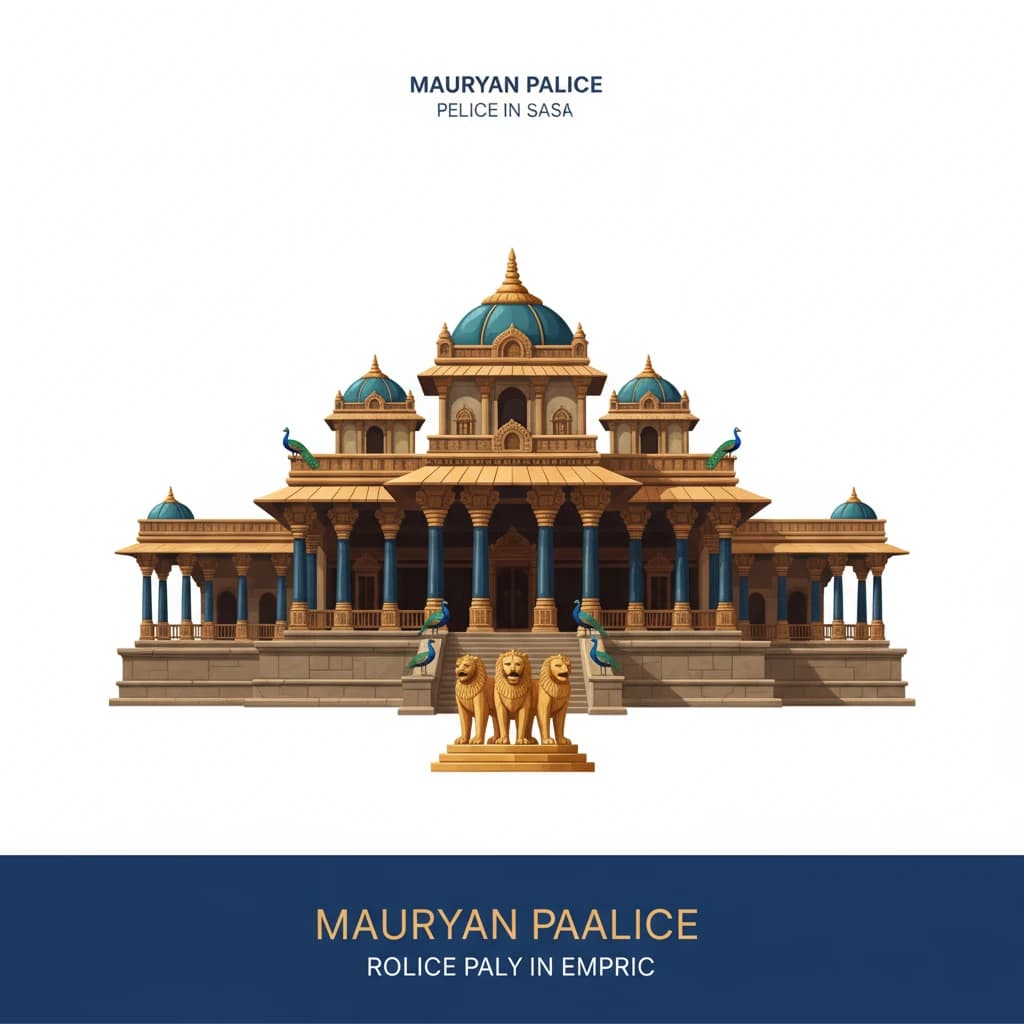
Mauryan Pillars: Features, Structure, and Significance

Mauryan Pillars: Features, Structure, and Significance

Medium⏱️ 7 min read✓ 98% Verified
history

📖 Introduction

<h4>Mauryan Palaces: Grandeur and Scale</h4><p>The <strong>Mauryan period</strong> saw the construction of magnificent palaces, reflecting the imperial power and sophisticated administration of the empire. These structures were primarily associated with the rulers like <strong>Ashoka</strong> and <strong>Chandragupta Maurya</strong>.</p><div class='info-box'><p><strong>Notable Examples:</strong></p><ul><li><strong>Ashoka’s palace at Kumrahar</strong> (near Pataliputra)</li><li><strong>Chandragupta’s palace</strong></li></ul></div><p>These palaces were known for their grand scale, often incorporating elements of wood and brick, though little remains due to the perishable nature of the materials.</p><h4>Mauryan Pillars: A Symbol of State and Dhamma</h4><p><strong>Mauryan pillars</strong> are among the most distinctive and enduring examples of <strong>Mauryan art</strong>. They are renowned for their unique architectural and artistic characteristics.</p><div class='info-box'><p><strong>Key Features of Mauryan Pillars:</strong></p><ul><li><strong>Tall</strong> and <strong>free-standing</strong> structures.</li><li>Predominantly <strong>monolithic</strong>, meaning carved from a single block of stone.</li><li>Made of <strong>sandstone</strong>, often quarried from <strong>Chunar</strong>.</li><li>Feature a distinctive <strong>lustrous polish</strong>, known as 'Mauryan polish'.</li></ul></div><div class='key-point-box'><p><strong>Mauryan vs. Achaemenian Pillars:</strong></p><ul><li><strong>Mauryan pillars</strong> are <strong>rock-cut</strong>, showcasing exceptional carving skills from a single stone.</li><li><strong>Achaemenian pillars</strong> were constructed in <strong>pieces</strong> and then assembled.</li><li>Similarities include <strong>polished stones</strong>, motifs like the <strong>lotus</strong>, and the practice of inscribing <strong>proclamations</strong>.</li></ul></div><p><strong>Ashoka’s pillars</strong> were erected across <strong>north India</strong>, serving as a medium for disseminating <strong>Buddhist teachings</strong> (Dhamma) and <strong>court orders</strong>.</p><div class='info-box'><p><strong>Inscriptions and Capitals:</strong></p><ul><li>Inscriptions were typically in <strong>Pali</strong>, <strong>Prakrit</strong>, <strong>Greek</strong>, and <strong>Aramaic</strong>.</li><li>Capitals often featured intricate <strong>animal figures</strong> such as <strong>lions</strong> and <strong>bulls</strong>, symbolizing the state's power and authority.</li></ul></div><p>The structure of a <strong>Mauryan pillar</strong> typically comprises four main parts, demonstrating advanced engineering and artistic execution.</p><div class='info-box'><p><strong>Structure of Mauryan Pillars:</strong></p><ol><li>A <strong>monolithic shaft</strong> (the main body).</li><li>A <strong>lotus- or bell-shaped capital</strong> (inverted lotus).</li><li>An <strong>abacus</strong> (a square or round slab above the capital).</li><li>A <strong>capital figure</strong> (animal sculpture, e.g., Lion Capital).</li></ol></div><h4>Stupas: Sacred Buddhist Monuments</h4><p><strong>Stupas</strong> are hemispherical structures containing relics, primarily associated with <strong>Buddhism</strong>. They served as places of meditation and veneration.</p><div class='info-box'><p><strong>Typical Stupa Structure:</strong></p><ul><li><strong>Cylindrical drum</strong> (base).</li><li><strong>Hemispherical mound (anda)</strong>, representing the cosmos.</li><li><strong>Harmika</strong> (a square railing on top of the anda).</li><li><strong>Chhatra</strong> (a central pillar supporting a triple umbrella form), symbolizing the three jewels of Buddhism.</li></ul></div><p>The construction of <strong>stupas</strong> involved specific materials and decorative techniques. The core was made of <strong>unburnt bricks</strong>, while the outer surface used <strong>burnt bricks</strong>, covered with plaster and adorned with <strong>wooden sculptures</strong>.</p><div class='info-box'><p><strong>Famous Mauryan Stupas:</strong></p><ul><li><strong>Sanchi Stupa</strong> (Madhya Pradesh): Most famous <strong>Ashokan stupa</strong>.</li><li><strong>Piprahwa Stupa</strong> (Uttar Pradesh): Considered the <strong>oldest stupa</strong>.</li></ul></div><p>Numerous stupas were built after <strong>Buddha’s death</strong> to enshrine his relics and spread his teachings across the subcontinent.</p><div class='info-box'><p><strong>Other Post-Buddha Stupas:</strong></p><ul><li><strong>Rajagriha</strong></li><li><strong>Vaishali</strong></li><li><strong>Kapilavastu</strong></li><li><strong>Allakappa</strong></li><li><strong>Ramagrama</strong></li><li><strong>Veṭhadipa</strong></li><li><strong>Pava</strong></li><li><strong>Kushinagar</strong></li><li><strong>Pippalivana</strong></li></ul></div><h4>Mauryan Popular Art: Cave Architecture</h4><p>Beyond royal patronage, the <strong>Mauryan period</strong> also witnessed the emergence of popular art forms, most notably <strong>cave architecture</strong>.</p><p>These caves were primarily excavated to serve as <strong>viharas</strong> (dwelling places) for <strong>Jain</strong> and <strong>Buddhist monks</strong>, providing them with shelter and solitude for meditation.</p><div class='info-box'><p><strong>Characteristics of Mauryan Caves:</strong></p><ul><li>Known for their <strong>highly polished interiors</strong>, mimicking the polish seen on Mauryan pillars.</li><li>Often featured <strong>decorative gateways</strong>, showcasing early rock-cut architectural embellishments.</li></ul></div><div class='exam-tip-box'><p><strong>UPSC Insight:</strong> Differentiate between <strong>state-sponsored art</strong> (palaces, pillars, stupas) and <strong>popular art</strong> (cave architecture, terracotta figures, pottery) in the Mauryan period. Emphasize the religious motivations behind popular art forms.</p></div>
Concept Diagram

💡 Key Takeaways

  • •Mauryan art was largely state-sponsored, especially under Emperor Ashoka, for imperial and religious purposes.
  • •Mauryan pillars are distinctive for being monolithic, made of Chunar sandstone, and having a lustrous polish, showing Achaemenian influence.
  • •Stupas like Sanchi were key Buddhist monuments, featuring a specific structural anatomy (anda, harmika, chhatra).
  • •Popular art included highly polished rock-cut caves (viharas) for monks, demonstrating advanced craftsmanship.
  • •The Lion Capital of Sarnath is the most iconic Mauryan sculpture and serves as India's National Emblem.

🧠 Memory Techniques
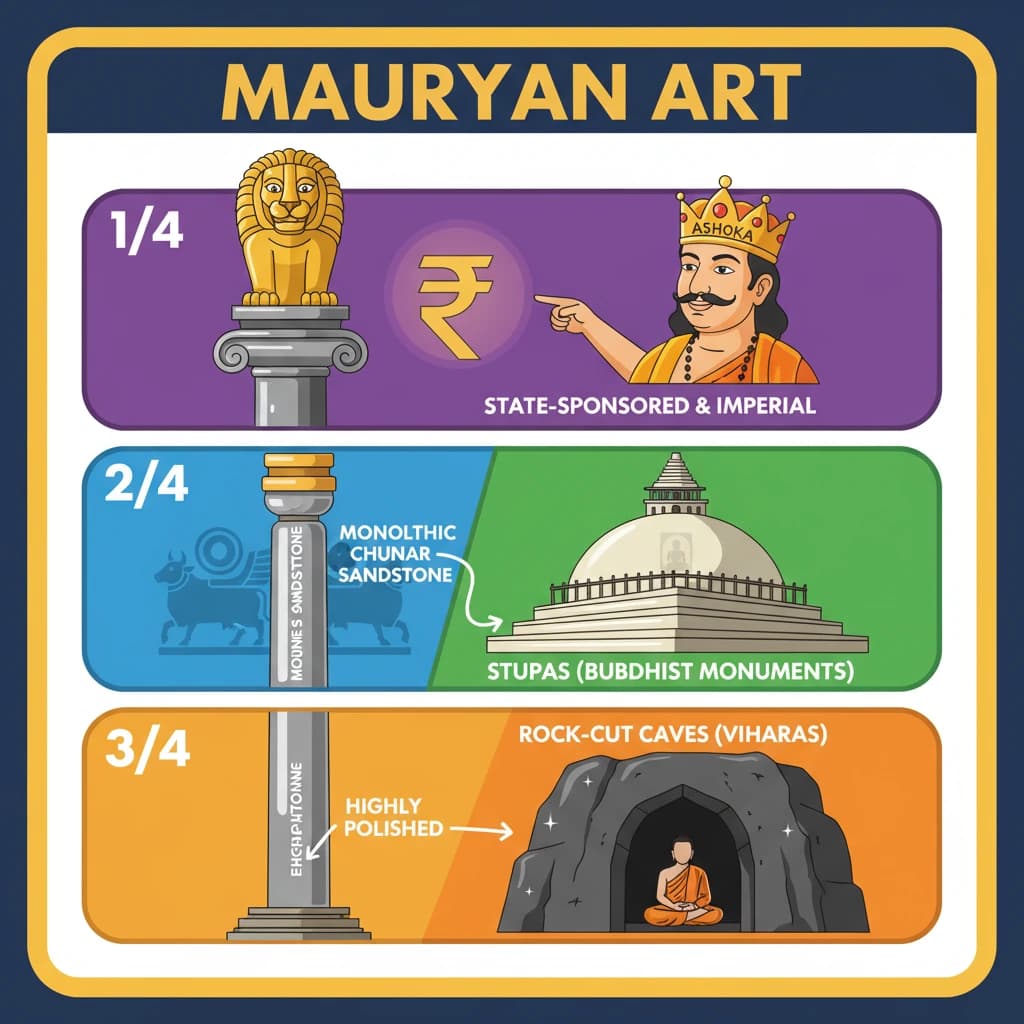
Memory Aid
98% Verified Content

📚 Reference Sources

•NCERT Class XI - An Introduction to Indian Art, Chapter 3: Arts of the Mauryan Period
•Indian Art and Culture by Nitin Singhania

Related Topics

Loading related topics...
Explore:History Topics·All Subjects·Daily Current Affairs·Editorial Analysis·Previous Year Questions·UPSC GPT