Loading page, please wait…
Vaidra Logo
Vaidra

Top 4 items + smart groups

UPSC GPT
New
Current Affairs
Daily Solutions
Daily Puzzle
Mains Evaluator

Version 2.0.0 • Built with ❤️ for UPSC aspirants

Loading...
Loading...
Loading...
Loading...
Loading...
Loading...
Loading...
Loading...
Loading...
Loading...
Loading...
Loading...
Loading...
Back
All Subjects

Topics

0 topics • 0 completed

Loading topics...
Loading...
Loading...
Loading...
Loading...
Loading...
Overall Progress0%

What were the Key Features of Harappan Civilization? - UPSC History

What is What were the Key Features of Harappan Civilization? in UPSC History?

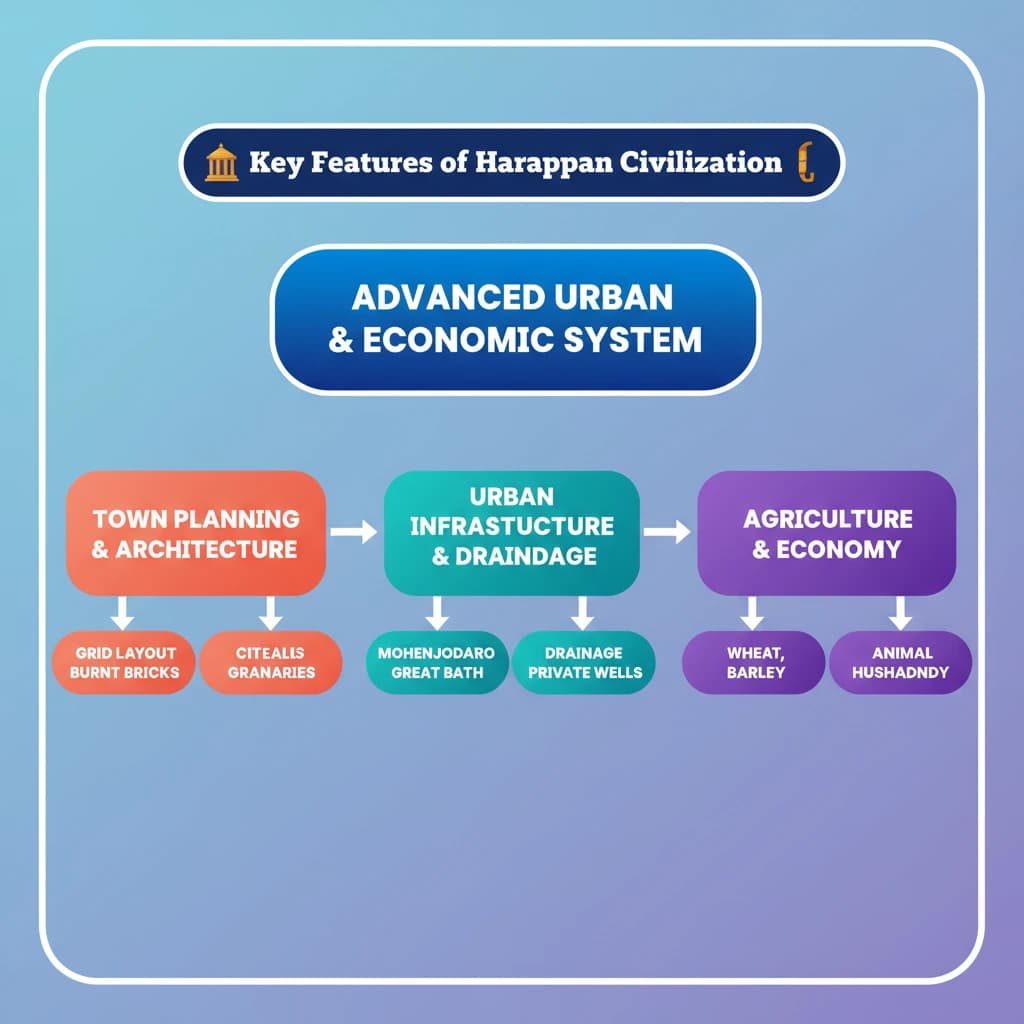
What were the Key Features of Harappan Civilization? is a key topic under History for UPSC Civil Services Examination. Key points include: Harappan Civilization was characterized by highly advanced and standardized town planning, including a grid layout.. Key urban features included citadels, lower towns, large granaries, and widespread use of burnt bricks.. Mohenjodaro showcased an impressive drainage system and private courtyards/bathrooms in houses.. Understanding this topic is essential for both UPSC Prelims and Mains preparation.

Why is What were the Key Features of Harappan Civilization? important for UPSC exam?

What were the Key Features of Harappan Civilization? is a Medium-level topic in UPSC History. It is tested in both Prelims (factual MCQs) and Mains (analytical answer writing). Previous year UPSC questions have frequently covered aspects of What were the Key Features of Harappan Civilization?, making it essential for comprehensive IAS preparation.

How to prepare What were the Key Features of Harappan Civilization? for UPSC?

To prepare What were the Key Features of Harappan Civilization? for UPSC: (1) Study the comprehensive notes covering all key concepts on Vaidra. (2) Practice previous year questions on this topic. (3) Connect it with current affairs using daily updates. (4) Revise using key takeaways and mind maps available for History. (5) Write practice answers linking What were the Key Features of Harappan Civilization? to related GS Paper topics.

Key takeaways of What were the Key Features of Harappan Civilization? for UPSC

  • Harappan Civilization was characterized by highly advanced and standardized town planning, including a grid layout.
  • Key urban features included citadels, lower towns, large granaries, and widespread use of burnt bricks.
  • Mohenjodaro showcased an impressive drainage system and private courtyards/bathrooms in houses.
  • Agriculture was the economic backbone, with diverse crops like wheat, barley, peas, and pioneering cotton production.
  • Animal husbandry was also a significant practice alongside crop cultivation.
What were the Key Features of Harappan Civilization?

What were the Key Features of Harappan Civilization?

Medium⏱️ 8 min read✓ 98% Verified
history

📖 Introduction

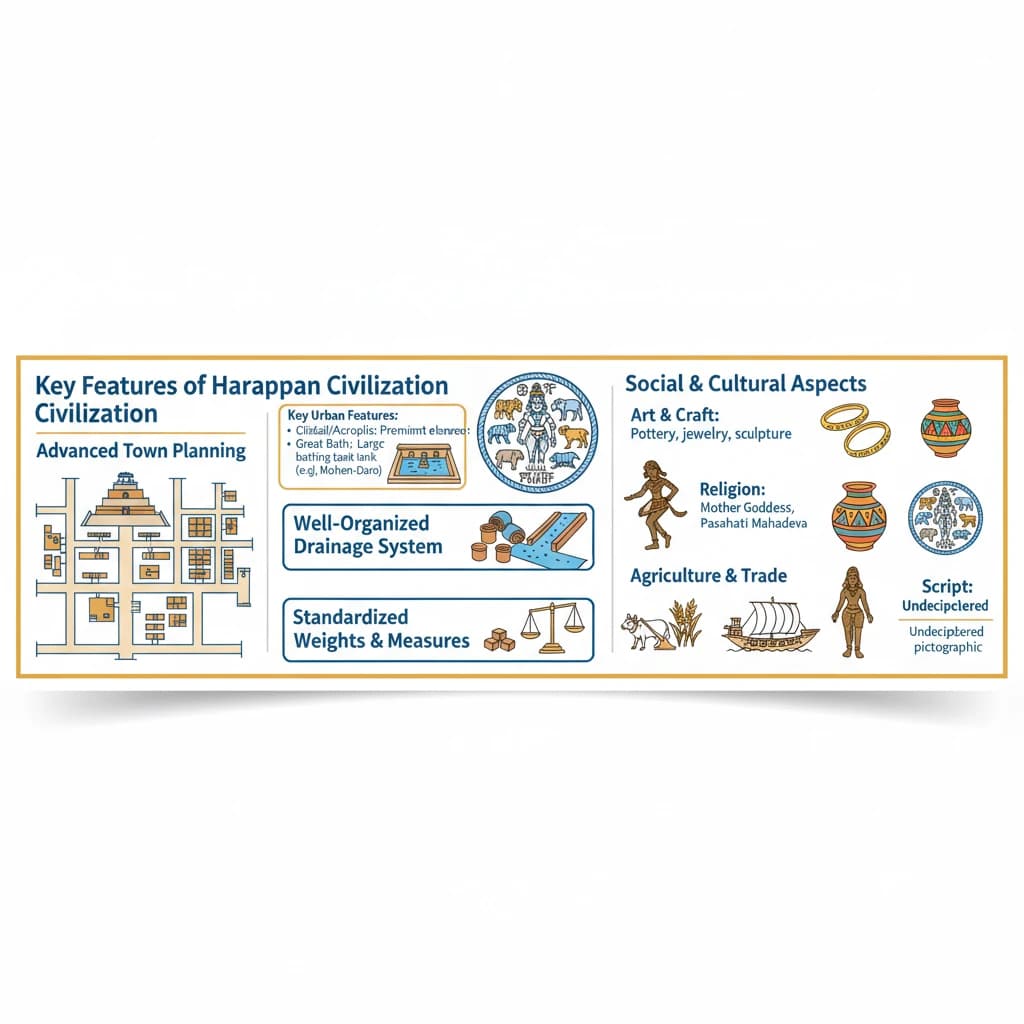
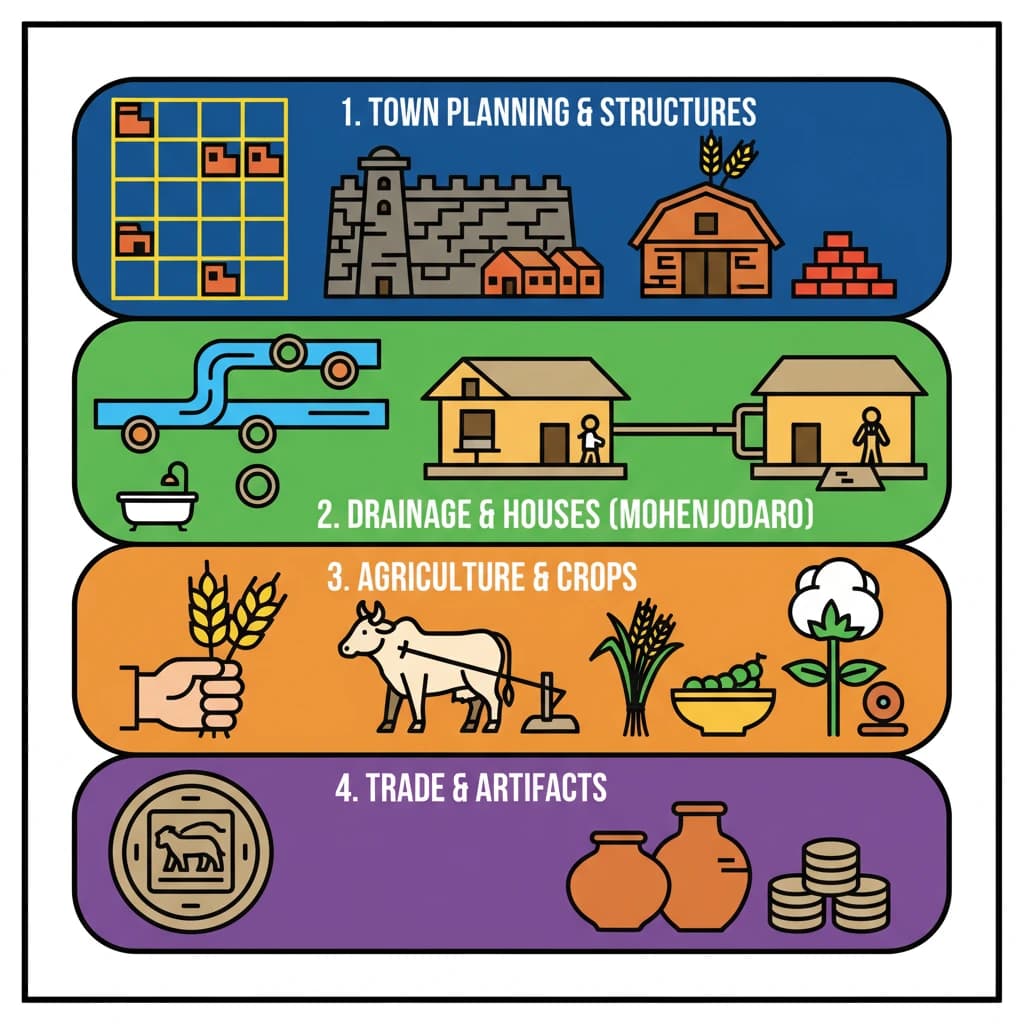
<h4>Advanced Town Planning</h4><p>The <strong>Harappan Civilization</strong> is renowned for its sophisticated <strong>town planning</strong>, a hallmark of its urban centers. Cities were meticulously designed, often following a distinct <strong>grid-like layout</strong>, which indicates a high degree of organization and foresight.</p><div class='key-point-box'><p><strong>Key Urban Features:</strong></p><ul><li><strong>Citadel/Acropolis:</strong> Prominent elevated areas, likely housing the <strong>ruling class</strong> and important public structures.</li><li><strong>Lower Towns:</strong> Residential areas below the citadel, characterized by well-constructed <strong>brick houses</strong> for common people.</li></ul></div><p>Notable examples include <strong>Harappa</strong> and <strong>Mohenjodaro</strong>, both featuring these dual-part city divisions. The consistency in planning across various sites highlights a standardized approach to urban development.</p><div class='info-box'><p><strong>Architectural and Infrastructure Highlights:</strong></p><ul><li><strong>Granaries:</strong> Large structures for storing surplus grains, crucial for economic stability.</li><li><strong>Burnt Bricks:</strong> Widespread use of <strong>burnt bricks</strong> for construction, offering superior durability compared to the dried bricks common in contemporary <strong>Egyptian structures</strong>.</li><li><strong>Drainage System:</strong> <strong>Mohenjodaro</strong> boasted an impressive and elaborate <strong>drainage system</strong>, indicating advanced sanitation practices.</li><li><strong>Courtyards & Bathrooms:</strong> Almost all houses in <strong>Mohenjodaro</strong> had private <strong>courtyards</strong> and <strong>bathrooms</strong>, reflecting a focus on privacy and hygiene.</li></ul></div><p>At sites like <strong>Dholavira</strong> and <strong>Lothal</strong> in <strong>Gujarat</strong>, the entire settlement was fortified. Furthermore, these sites often had internal sections divided by walls, showcasing complex defensive and organizational strategies.</p><h4>Agricultural Prowess</h4><p>The <strong>Harappan villages</strong> were primarily situated near <strong>floodplains</strong>, benefiting from fertile soils for agricultural productivity. This strategic location allowed for bountiful harvests, supporting a large urban population.</p><div class='info-box'><p><strong>Major Crops Cultivated:</strong></p><ul><li><strong>Cereals:</strong> <strong>Wheat</strong>, <strong>barley</strong></li><li><strong>Legumes:</strong> <strong>Peas</strong>, <strong>lentils</strong>, <strong>chickpeas</strong></li><li><strong>Oilseeds:</strong> <strong>Sesame</strong>, <strong>rai</strong>, <strong>mustard</strong></li><li><strong>Other:</strong> <strong>Millets</strong> (especially in <strong>Gujarat</strong>)</li></ul></div><p>While <strong>rice</strong> was rarely cultivated, the <strong>Indus people</strong> were pioneers in cotton production. The <strong>Greeks</strong> later referred to this cotton as <strong>“Sindon,”</strong> a testament to its origin in the Indus Valley.</p><div class='key-point-box'><p><strong>Farming Techniques & Animal Husbandry:</strong></p><p>Although specific farming techniques are challenging to reconstruct from archaeological evidence, the abundance of grain remains clearly indicates extensive agricultural activity. In addition to crop cultivation, <strong>animal husbandry</strong> was a widespread practice, playing a vital role in their economy and sustenance.</p></div>
Concept Diagram

💡 Key Takeaways

  • •Harappan Civilization was characterized by highly advanced and standardized town planning, including a grid layout.
  • •Key urban features included citadels, lower towns, large granaries, and widespread use of burnt bricks.
  • •Mohenjodaro showcased an impressive drainage system and private courtyards/bathrooms in houses.
  • •Agriculture was the economic backbone, with diverse crops like wheat, barley, peas, and pioneering cotton production.
  • •Animal husbandry was also a significant practice alongside crop cultivation.

🧠 Memory Techniques
Memory Aid
98% Verified Content

📚 Reference Sources

•NCERT Textbooks (Ancient Indian History)
•Standard academic sources on Indus Valley Civilization

Related Topics

Loading related topics...
Explore:History Topics·All Subjects·Daily Current Affairs·Editorial Analysis·Previous Year Questions·UPSC GPT
What were the Key Features of Harappan Civilization? - UPSC History