Loading page, please wait…
Vaidra Logo
Vaidra

Top 4 items + smart groups

UPSC GPT
New
Current Affairs
Daily Solutions
Daily Puzzle
Mains Evaluator

Version 2.0.0 • Built with ❤️ for UPSC aspirants

Loading...
Loading...
Loading...
Loading...
Loading...
Loading...
Loading...
Loading...
Loading...
Loading...
Loading...
Loading...
Loading...
Back
All Subjects

Topics

0 topics • 0 completed

Loading topics...
Loading...
Loading...
Loading...
Loading...
Loading...
Overall Progress0%

What are the Key Facts about the Nataraja Statue - UPSC History

What is What are the Key Facts about the Nataraja Statue in UPSC History?

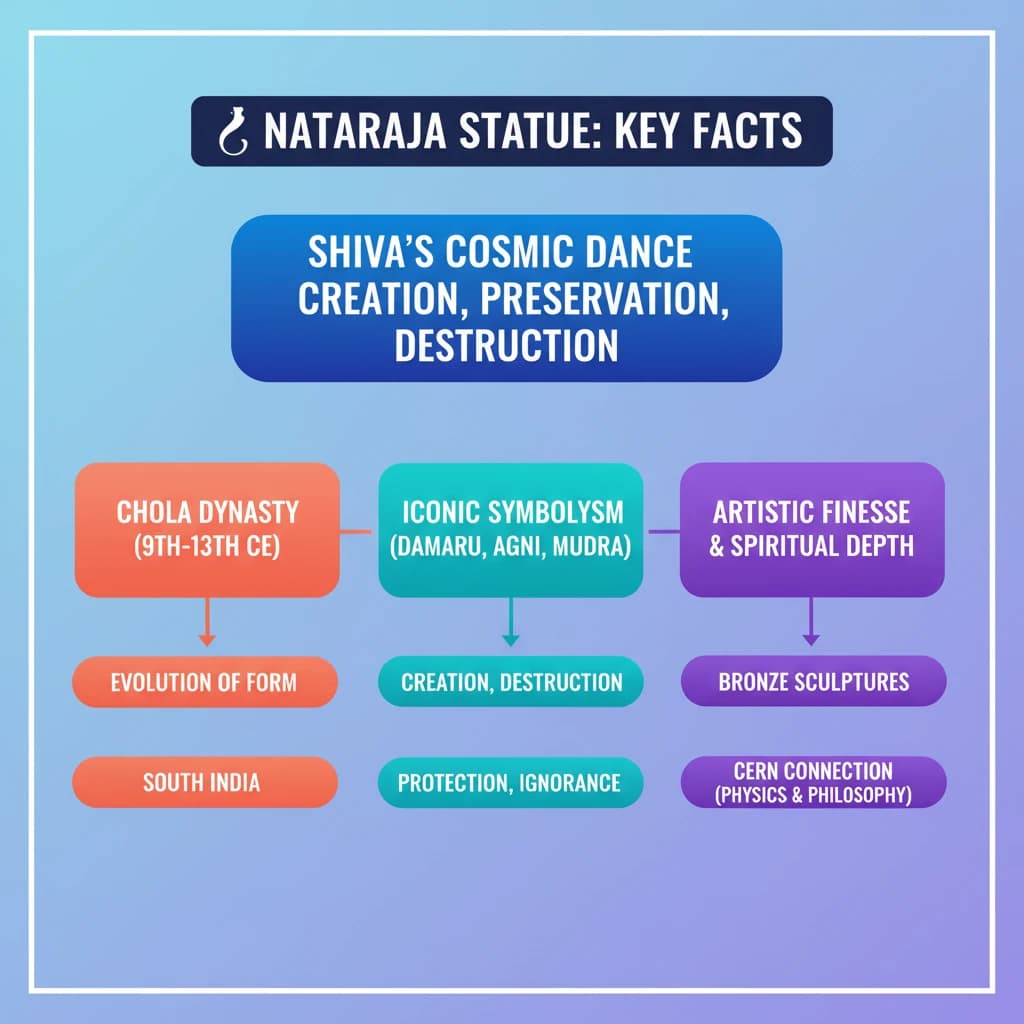
What are the Key Facts about the Nataraja Statue is a key topic under History for UPSC Civil Services Examination. Key points include: Nataraja symbolizes Shiva as the cosmic dancer, embodying creation, preservation, and destruction.. The iconic form evolved significantly during the Chola dynasty (9th-13th century CE), known for exquisite bronze craftsmanship.. Key symbolic features include the flaming halo (cosmos), Damaru (creation sound), Agni (destruction flame), Abhayamudra (protection), Apasmara Purusha (ignorance), and raised left foot (salvation).. Understanding this topic is essential for both UPSC Prelims and Mains preparation.

Why is What are the Key Facts about the Nataraja Statue important for UPSC exam?

What are the Key Facts about the Nataraja Statue is a Medium-level topic in UPSC History. It is tested in both Prelims (factual MCQs) and Mains (analytical answer writing). Previous year UPSC questions have frequently covered aspects of What are the Key Facts about the Nataraja Statue, making it essential for comprehensive IAS preparation.

How to prepare What are the Key Facts about the Nataraja Statue for UPSC?

To prepare What are the Key Facts about the Nataraja Statue for UPSC: (1) Study the comprehensive notes covering all key concepts on Vaidra. (2) Practice previous year questions on this topic. (3) Connect it with current affairs using daily updates. (4) Revise using key takeaways and mind maps available for History. (5) Write practice answers linking What are the Key Facts about the Nataraja Statue to related GS Paper topics.

Key takeaways of What are the Key Facts about the Nataraja Statue for UPSC

  • Nataraja symbolizes Shiva as the cosmic dancer, embodying creation, preservation, and destruction.
  • The iconic form evolved significantly during the Chola dynasty (9th-13th century CE), known for exquisite bronze craftsmanship.
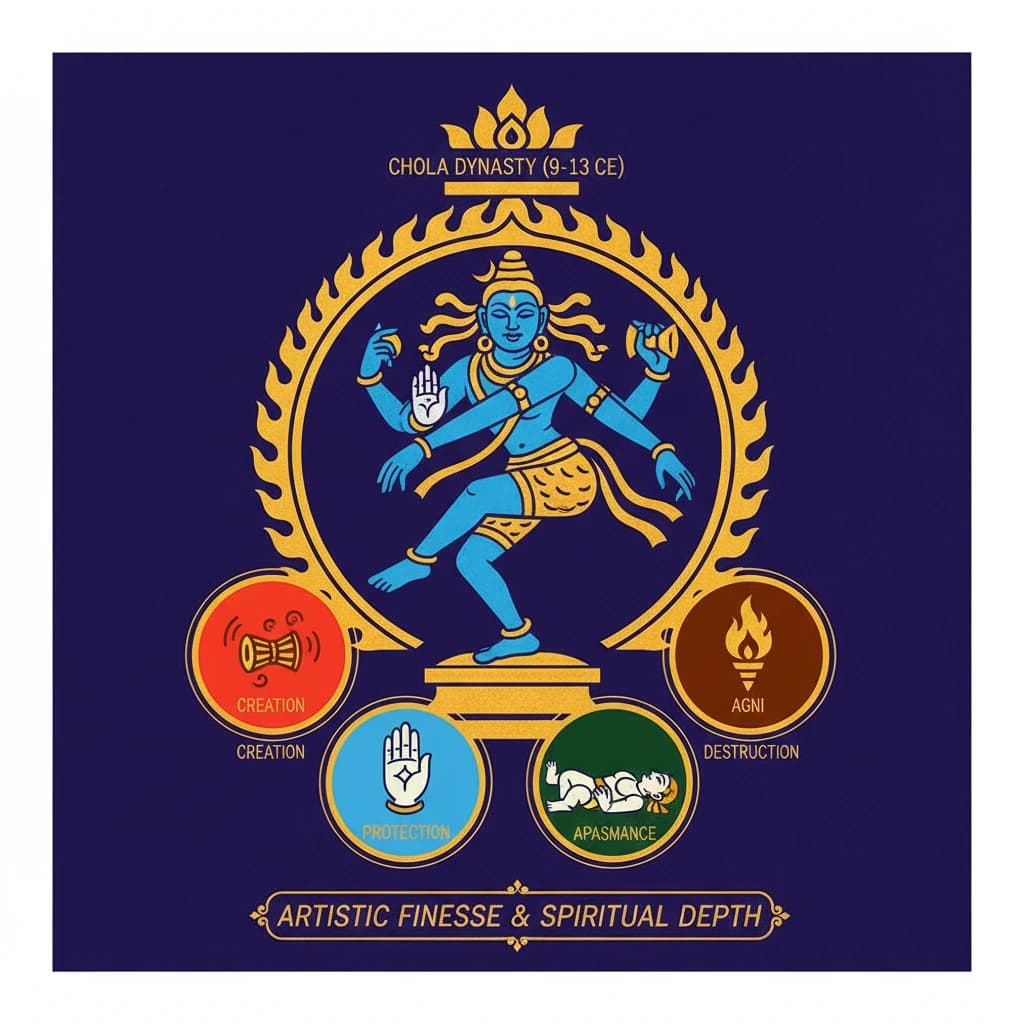
  • Key symbolic features include the flaming halo (cosmos), Damaru (creation sound), Agni (destruction flame), Abhayamudra (protection), Apasmara Purusha (ignorance), and raised left foot (salvation).
  • The dance is called Ananda Tandava (Dance of Bliss), representing the universe's eternal rhythm.
  • A replica at CERN highlights the global recognition and connection between ancient wisdom and modern science.
What are the Key Facts about the Nataraja Statue

What are the Key Facts about the Nataraja Statue

Medium⏱️ 6 min read✓ 95% Verified
history

📖 Introduction

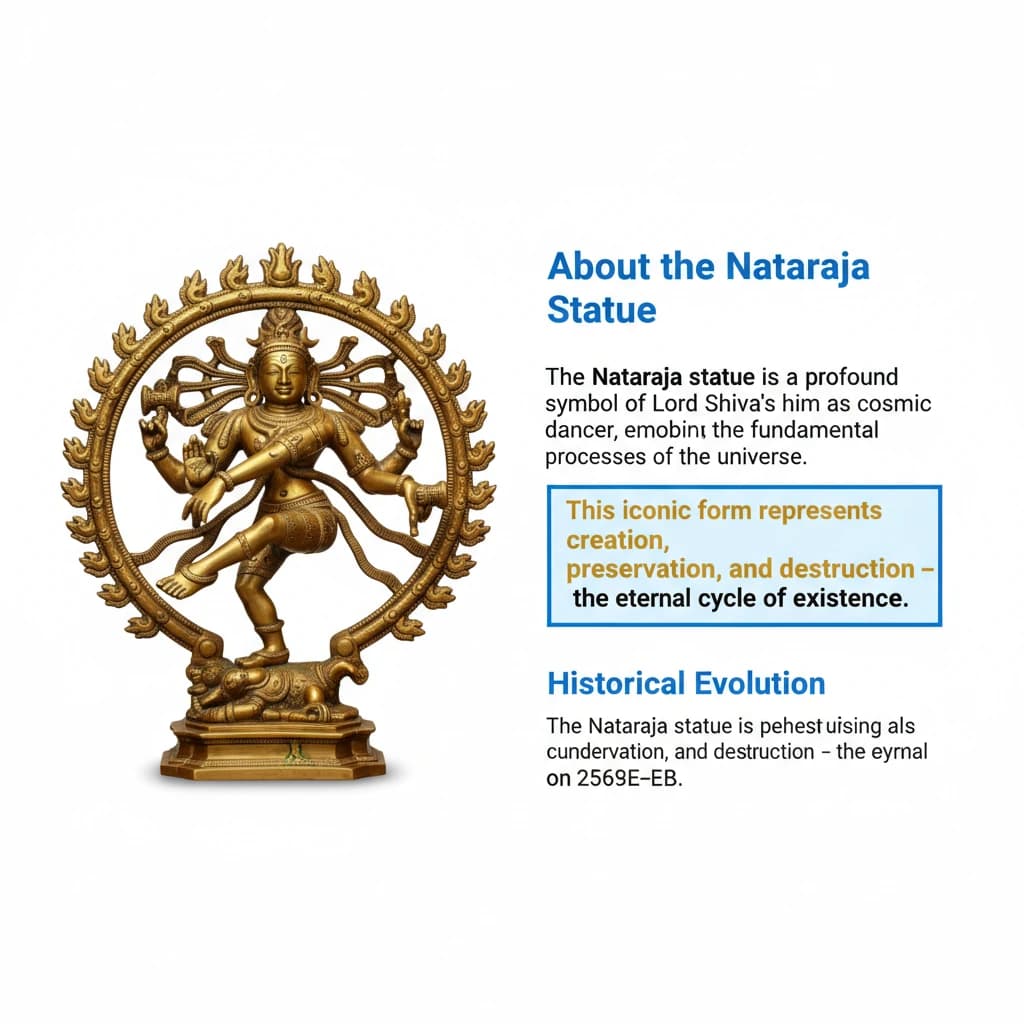
<h4>Understanding the Nataraja Statue</h4><p>The <strong>Nataraja statue</strong> is a profound symbol of <strong>Lord Shiva</strong>, revered as the <strong>cosmic dancer</strong>.</p><p>This iconic form embodies the fundamental cosmic functions: <strong>creation</strong>, <strong>preservation</strong>, and <strong>destruction</strong> of the universe.</p><div class='info-box'><p><strong>Nataraja</strong>: A portmanteau of <strong>Nata</strong> (dance) and <strong>Raja</strong> (king), signifying the <strong>'Lord of Dance'</strong>.</p></div><h4>Historical Origins and Chola Patronage</h4><p>The earliest known sculptures depicting <strong>Lord Shiva</strong> in a dancing posture date back to the <strong>5th century CE</strong>.</p><p>However, the globally recognized and iconic form of <strong>Nataraja</strong> significantly evolved during the illustrious reign of the <strong>Chola dynasty</strong>.</p><div class='info-box'><p><strong>Chola Dynasty Period</strong>: <strong>9th–13th century CE</strong>. This era marked significant artistic and cultural advancements in South India.</p></div><p>The <strong>Chola period</strong> is celebrated for its exceptional bronze craftsmanship, which brought the <strong>Nataraja</strong> form to its artistic zenith.</p><h4>The Significance of Ananda Tandava</h4><p>The dance performed by <strong>Lord Shiva</strong> as <strong>Nataraja</strong> is known as <strong>Ananda Tandava</strong>, or the <strong>'Dance of Bliss'</strong>.</p><p>This cosmic dance symbolizes the <strong>eternal rhythm of the universe</strong>, encapsulating the continuous cycle of <strong>creation</strong> and <strong>destruction</strong>.</p><div class='key-point-box'><p>It represents the perpetual flow of <strong>time</strong> and the dynamic interplay of cosmic forces, essential to the universe's existence.</p></div><h4>Key Symbolic Features of Nataraja</h4><p>Each element of the <strong>Nataraja statue</strong> is imbued with deep philosophical and cosmic symbolism:</p><ul><li><strong>Flaming Halo (Prabhamandala)</strong>: Encircling the deity, it represents the entire <strong>cosmos</strong> and the cyclical nature of <strong>time</strong>, encompassing <strong>destruction</strong> and <strong>renewal</strong>.</li><li><strong>Damaru (Upper Right Hand)</strong>: The small hand drum signifies the <strong>first sound of creation (Shabda Brahma)</strong> and establishes the fundamental <strong>rhythm of the universe</strong>.</li><li><strong>Agni (Upper Left Hand)</strong>: The flame held here symbolizes <strong>destruction</strong>, marking the inevitable end of each cosmic cycle and the purification of the universe.</li><li><strong>Abhayamudra (Lower Right Hand)</strong>: This gesture offers <strong>reassurance</strong> and <strong>protection</strong> to devotees, effectively dispelling all forms of fear.</li><li><strong>Left-Hand Gesture</strong>: This hand points towards the <strong>raised left foot</strong>, symbolizing a path to <strong>refuge</strong> and ultimate <strong>liberation (moksha)</strong> for the troubled soul.</li><li><strong>Apasmara Purusha</strong>: The dwarf figure crushed under <strong>Shiva's right foot</strong> represents <strong>ignorance</strong> or <strong>illusion (maya)</strong>, which misleads humanity.</li><li><strong>Raised Left Foot</strong>: This elevated foot is a powerful symbol of <strong>grace</strong> and the divine path leading to <strong>salvation</strong>.</li></ul><h4>Chola Dynasty's Artistic Legacy</h4><p>The <strong>Chola bronzes</strong> are celebrated globally for their unparalleled <strong>finesse</strong>, exquisite <strong>intricate detailing</strong>, and profound <strong>spiritual symbolism</strong>.</p><div class='info-box'><p>The <strong>Nataraja statue</strong> was predominantly crafted in <strong>bronze</strong>, showcasing the exceptional expertise of <strong>Chola-era metallurgists</strong> and skilled artists.</p></div><p>This period set a benchmark for sculptural art, leaving an enduring legacy on Indian aesthetics and religious iconography.</p><h4>Global Recognition and Modern Symbolism</h4><p>The universal appeal of the <strong>Nataraja statue</strong> is evident in its global recognition.</p><div class='exam-tip-box'><p>A replica of the <strong>Nataraja statue</strong> stands proudly outside <strong>CERN (European Organization for Nuclear Research)</strong> in Geneva.</p></div><p>This placement at a leading scientific institution symbolizes the cosmic dance of particles in physics, drawing parallels between ancient spiritual wisdom and modern scientific understanding.</p>
Concept Diagram

💡 Key Takeaways

  • •Nataraja symbolizes Shiva as the cosmic dancer, embodying creation, preservation, and destruction.
  • •The iconic form evolved significantly during the Chola dynasty (9th-13th century CE), known for exquisite bronze craftsmanship.
  • •Key symbolic features include the flaming halo (cosmos), Damaru (creation sound), Agni (destruction flame), Abhayamudra (protection), Apasmara Purusha (ignorance), and raised left foot (salvation).
  • •The dance is called Ananda Tandava (Dance of Bliss), representing the universe's eternal rhythm.
  • •A replica at CERN highlights the global recognition and connection between ancient wisdom and modern science.

🧠 Memory Techniques
Memory Aid
95% Verified Content

📚 Reference Sources

•NCERT Class XI - An Introduction to Indian Art
•Official CERN website (for Nataraja replica details)

Related Topics

Loading related topics...
Explore:History Topics·All Subjects·Daily Current Affairs·Editorial Analysis·Previous Year Questions·UPSC GPT
What are the Key Facts about the Nataraja Statue - UPSC History