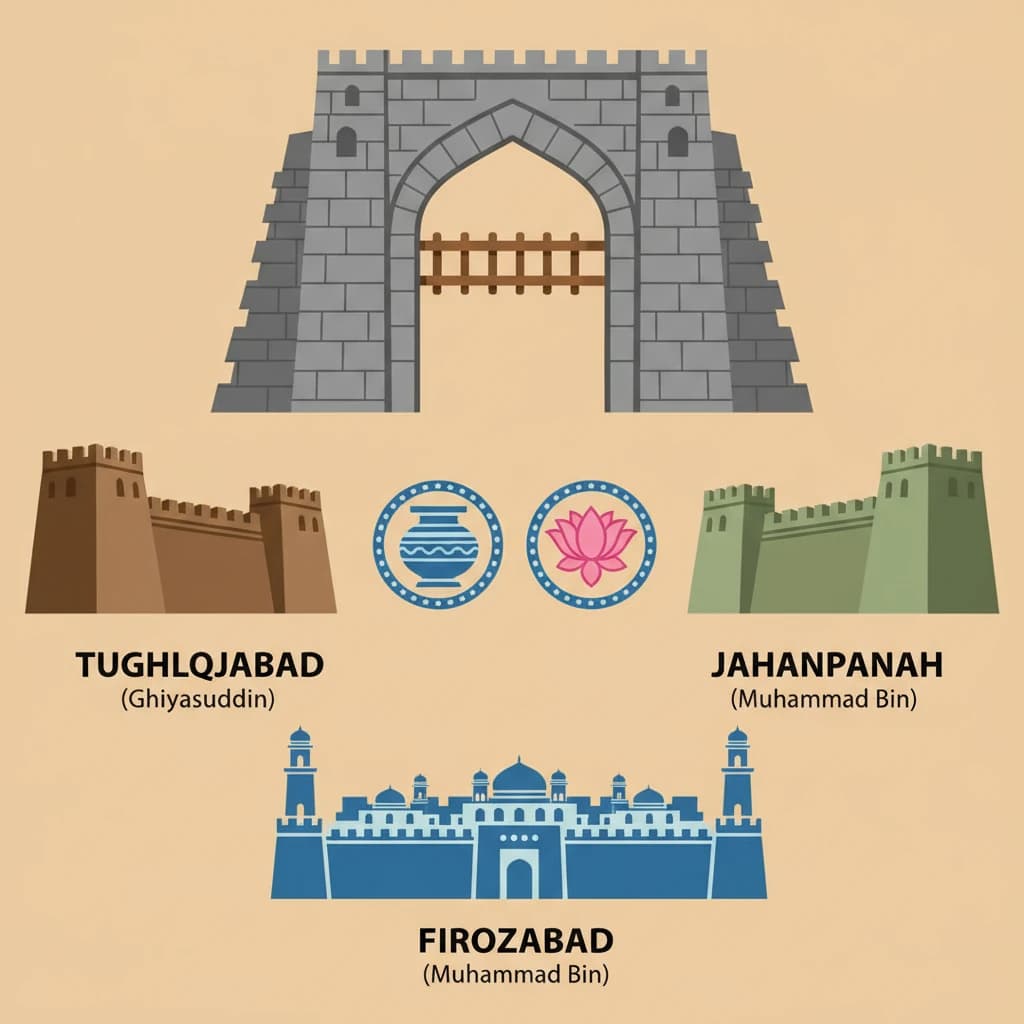
What are the Key Features of Tughlaq Architecture? - UPSC History
What is What are the Key Features of Tughlaq Architecture? in UPSC History?
What are the Key Features of Tughlaq Architecture? is a key topic under History for UPSC Civil Services Examination. Key points include: Tughlaq architecture is known for its sturdy, solid construction and distinctive sloping walls (batter).. It innovatively combined the principles of the arch, lintel, and beam.. Incorporated Hindu motifs like the water pot and lotus, contributing to the Indo-Islamic style.. Understanding this topic is essential for both UPSC Prelims and Mains preparation.
Why is What are the Key Features of Tughlaq Architecture? important for UPSC exam?
What are the Key Features of Tughlaq Architecture? is a Medium-level topic in UPSC History. It is tested in both Prelims (factual MCQs) and Mains (analytical answer writing). Previous year UPSC questions have frequently covered aspects of What are the Key Features of Tughlaq Architecture?, making it essential for comprehensive IAS preparation.
How to prepare What are the Key Features of Tughlaq Architecture? for UPSC?
To prepare What are the Key Features of Tughlaq Architecture? for UPSC: (1) Study the comprehensive notes covering all key concepts on Vaidra. (2) Practice previous year questions on this topic. (3) Connect it with current affairs using daily updates. (4) Revise using key takeaways and mind maps available for History. (5) Write practice answers linking What are the Key Features of Tughlaq Architecture? to related GS Paper topics.
Key takeaways of What are the Key Features of Tughlaq Architecture? for UPSC
- Tughlaq architecture is known for its sturdy, solid construction and distinctive sloping walls (batter).
- It innovatively combined the principles of the arch, lintel, and beam.
- Incorporated Hindu motifs like the water pot and lotus, contributing to the Indo-Islamic style.
- Key constructions include Tughlaqabad (Ghiyasuddin), Jahanpanah (Muhammad Bin), and Firozabad (Firuz Shah).
- Ghiyasuddin Tughlaq’s Tomb introduced new trends: high platform, white marble dome, red sandstone, and the 'Tartar' dome design.
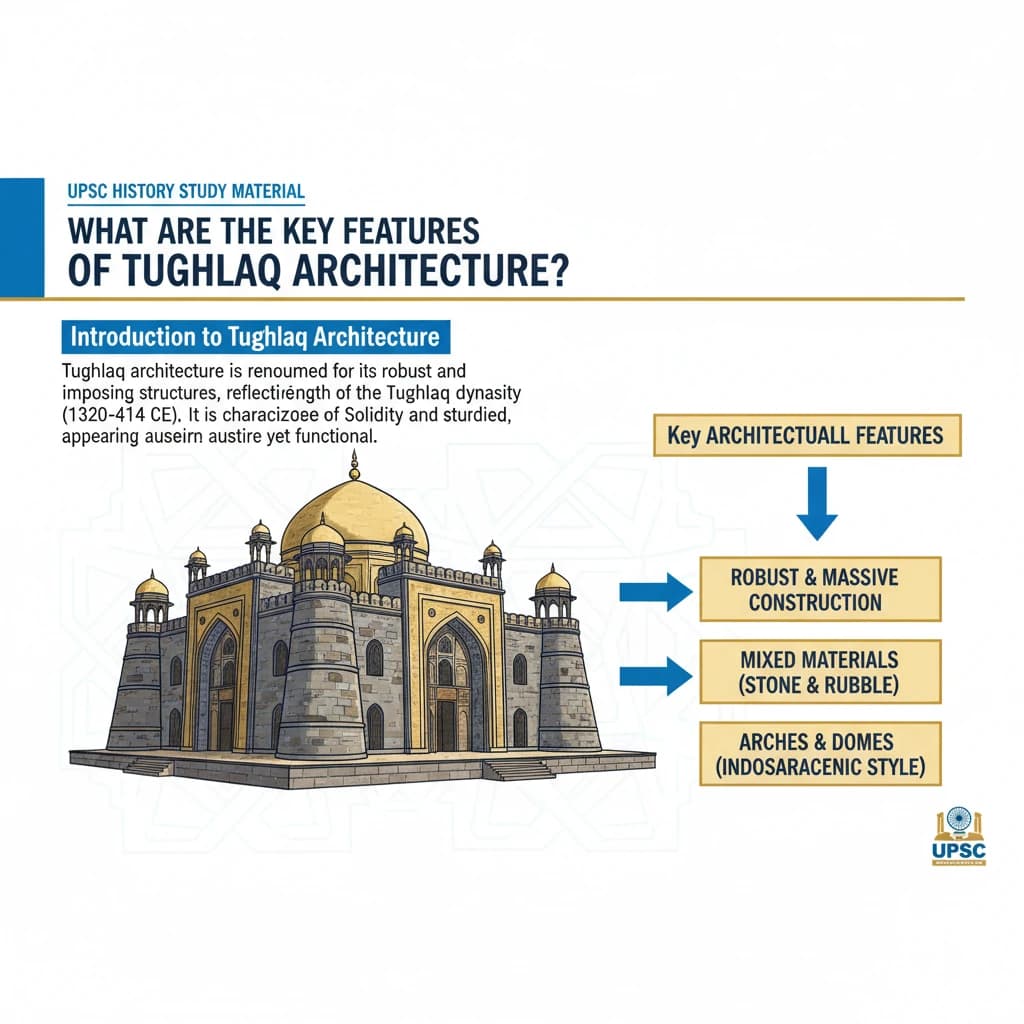
What are the Key Features of Tughlaq Architecture?
📖 Introduction
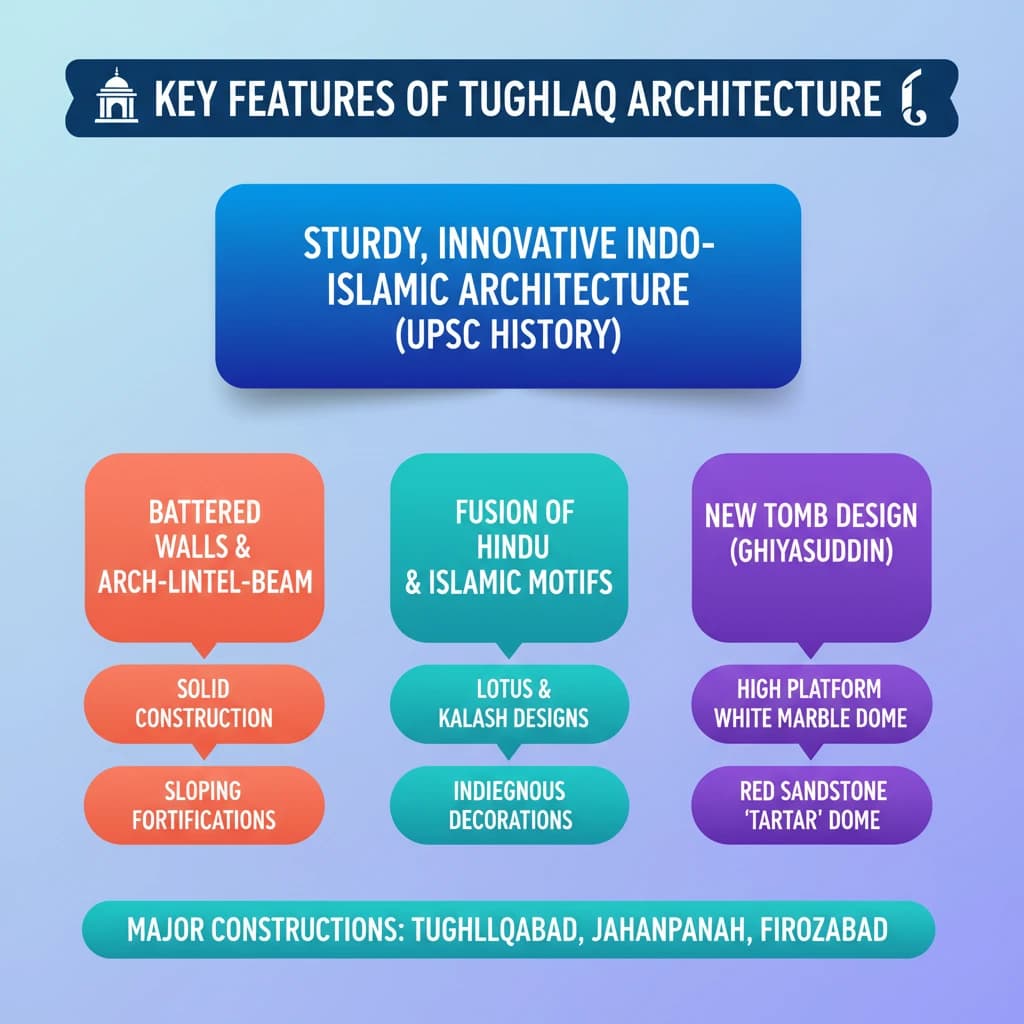
💡 Key Takeaways
- •Tughlaq architecture is known for its sturdy, solid construction and distinctive sloping walls (batter).
- •It innovatively combined the principles of the arch, lintel, and beam.
- •Incorporated Hindu motifs like the water pot and lotus, contributing to the Indo-Islamic style.
- •Key constructions include Tughlaqabad (Ghiyasuddin), Jahanpanah (Muhammad Bin), and Firozabad (Firuz Shah).
- •Ghiyasuddin Tughlaq’s Tomb introduced new trends: high platform, white marble dome, red sandstone, and the 'Tartar' dome design.
🧠 Memory Techniques