Loading page, please wait…
Vaidra Logo
Vaidra

Top 4 items + smart groups

UPSC GPT
New
Current Affairs
Daily Solutions
Daily Puzzle
Mains Evaluator

Version 2.0.0 • Built with ❤️ for UPSC aspirants

Loading...
Loading...
Loading...
Loading...
Loading...
Loading...
Loading...
Loading...
Loading...
Loading...
Loading...
Loading...
Loading...
Back
All Subjects

Topics

0 topics • 0 completed

Loading topics...
Loading...
Loading...
Loading...
Loading...
Loading...
Overall Progress0%

Mahavir Jayanti - UPSC History

What is Mahavir Jayanti in UPSC History?

Mahavir Jayanti is a key topic under History for UPSC Civil Services Examination. Key points include: Mahavir Jayanti celebrates the birth of Lord Mahavir, the 24th Jain Tirthankara.. The 2550th Bhagwan Mahaveer Nirvan Mahotsav was recently inaugurated by the PM.. Jains observe five Kalyanaks: Chyavana, Janma, Diksha, Kevaljnana, and Nirvana.. Understanding this topic is essential for both UPSC Prelims and Mains preparation.

Why is Mahavir Jayanti important for UPSC exam?

Mahavir Jayanti is a Medium-level topic in UPSC History. It is tested in both Prelims (factual MCQs) and Mains (analytical answer writing). Previous year UPSC questions have frequently covered aspects of Mahavir Jayanti, making it essential for comprehensive IAS preparation.

How to prepare Mahavir Jayanti for UPSC?

To prepare Mahavir Jayanti for UPSC: (1) Study the comprehensive notes covering all key concepts on Vaidra. (2) Practice previous year questions on this topic. (3) Connect it with current affairs using daily updates. (4) Revise using key takeaways and mind maps available for History. (5) Write practice answers linking Mahavir Jayanti to related GS Paper topics.

Key takeaways of Mahavir Jayanti for UPSC

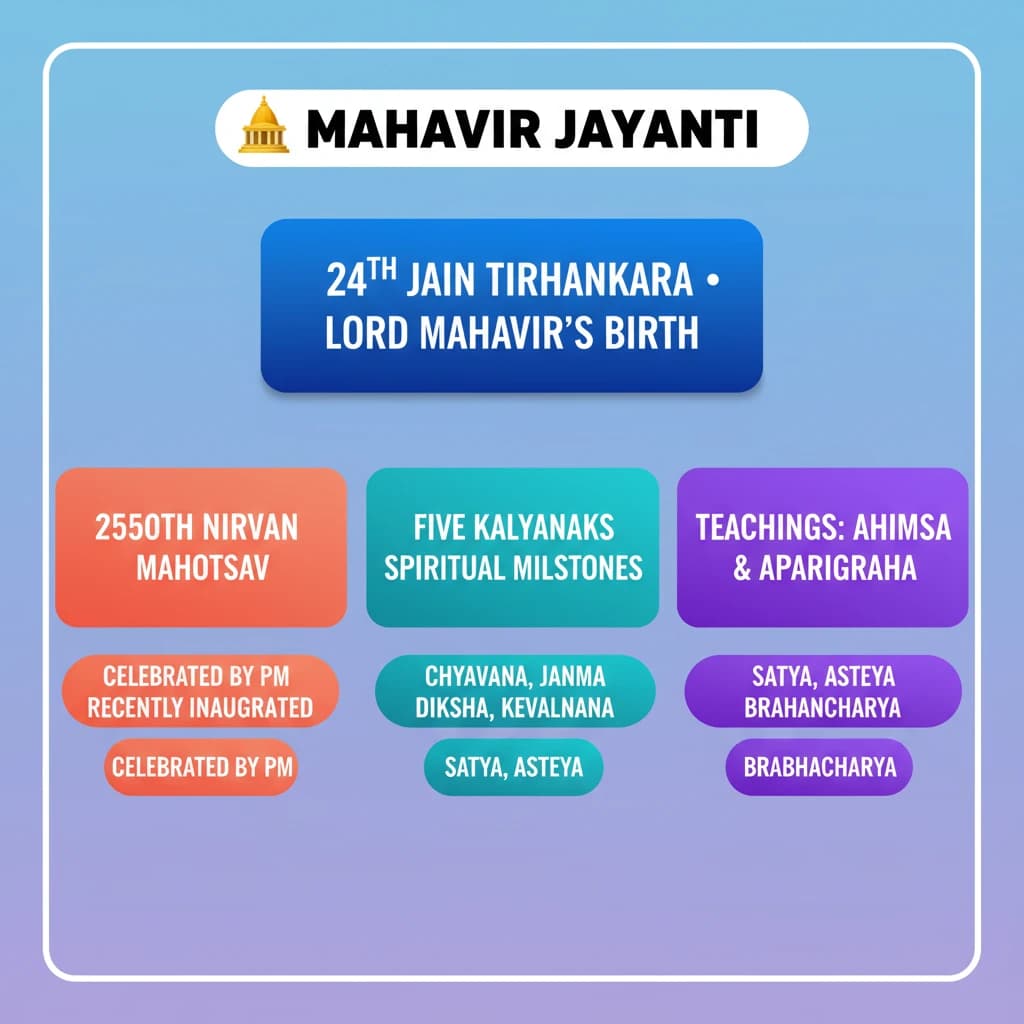
  • Mahavir Jayanti celebrates the birth of Lord Mahavir, the 24th Jain Tirthankara.
  • The 2550th Bhagwan Mahaveer Nirvan Mahotsav was recently inaugurated by the PM.
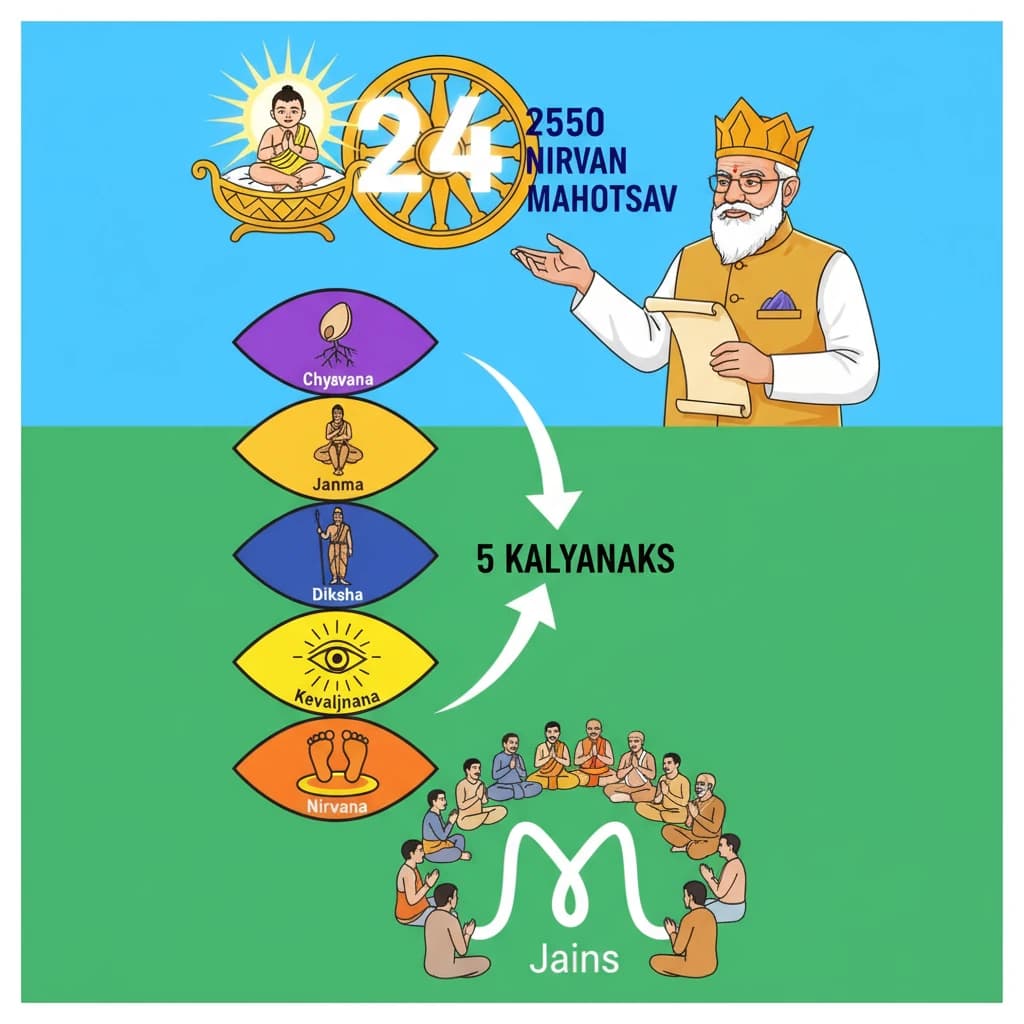
  • Jains observe five Kalyanaks: Chyavana, Janma, Diksha, Kevaljnana, and Nirvana.
  • Kalyanaks mark significant spiritual milestones in a Tirthankara's journey.
  • Lord Mahavir's teachings emphasize Ahimsa, Satya, Asteya, Brahmacharya, and Aparigraha.
Mahavir Jayanti

Mahavir Jayanti

Medium⏱️ 7 min read✓ 95% Verified
history

📖 Introduction

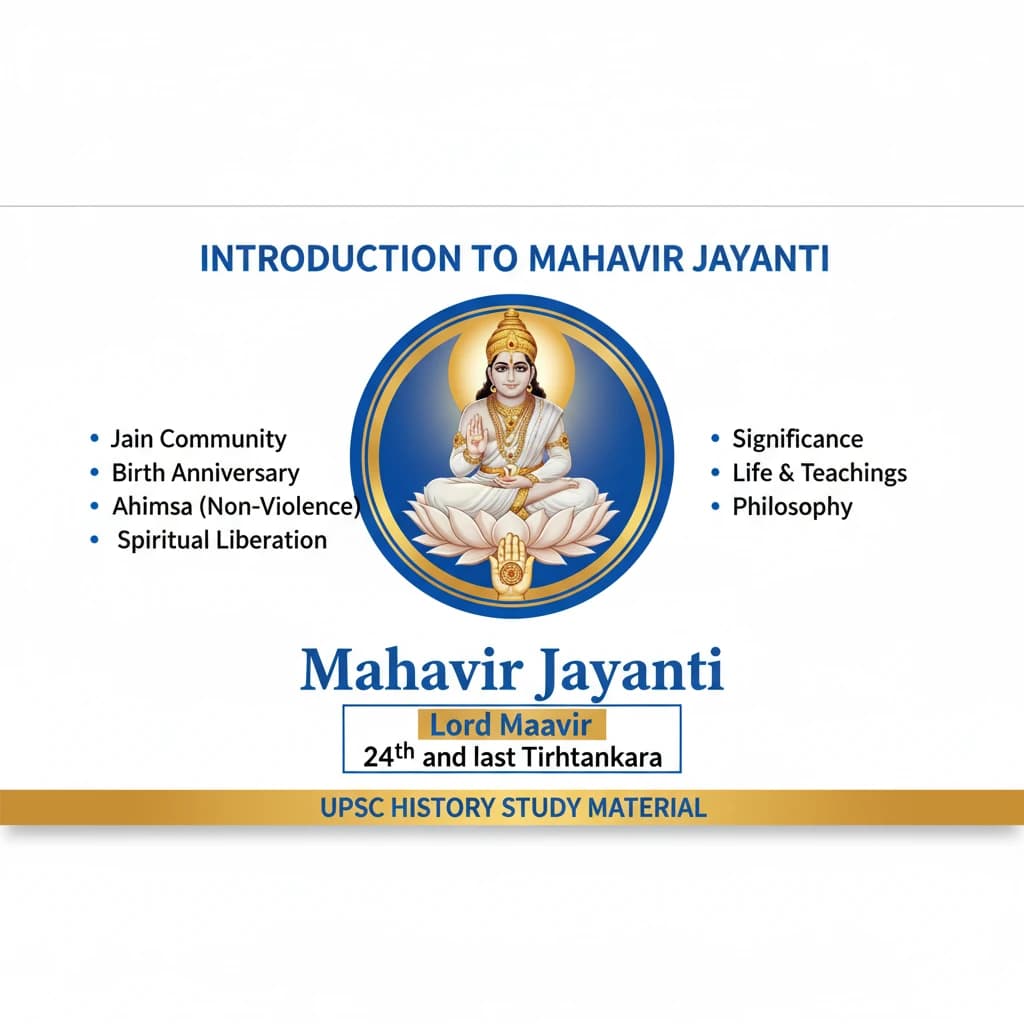
<h4>Introduction to Mahavir Jayanti</h4><p><strong>Mahavir Jayanti</strong> is one of the most significant festivals observed by the <strong>Jain community</strong> globally. It commemorates the <strong>birth anniversary</strong> of <strong>Lord Mahavir</strong>, the <strong>24th and last Tirthankara</strong> of Jainism.</p><p>This auspicious occasion celebrates his life, teachings, and his profound contribution to the philosophy of <strong>Ahimsa</strong> (non-violence) and spiritual liberation.</p><h4>2550th Bhagwan Mahaveer Nirvan Mahotsav</h4><p>Recently, the <strong>Prime Minister of India</strong> inaugurated the <strong>2550th Bhagwan Mahaveer Nirvan Mahotsav</strong>. This grand event took place on the sacred occasion of <strong>Mahaveer Jayanti</strong> itself.</p><div class="info-box"><p>The inauguration of the <strong>Nirvan Mahotsav</strong> highlights the government's recognition of <strong>Lord Mahavir's</strong> enduring legacy and its commitment to promoting India's rich spiritual heritage.</p></div><h4>Understanding the Five Kalyanaks</h4><p>Jains celebrate five pivotal events, known as <strong>Kalyanaks</strong>, in the life of every <strong>Tirthankara</strong>, including <strong>Mahavir Swami Ji</strong>. These events mark significant spiritual milestones.</p><div class="key-point-box"><p>The <strong>Kalyanaks</strong> are central to Jain theology, representing the journey of a soul towards ultimate liberation and enlightenment.</p></div><ul><li><strong>Chyavana/Garbha Kalyanak</strong>: This signifies the <strong>conception</strong> of the Tirthankara's soul in the mother's womb.</li><li><strong>Janma (Birth) Kalyanak</strong>: Celebrates the <strong>birth</strong> of the Tirthankara, marking their physical arrival in the world.</li><li><strong>Diksha (Renunciation) Kalyanak</strong>: Occurs when the Tirthankara <strong>renounces worldly life</strong> and embraces asceticism.</li><li><strong>Kevaljnana (Omniscience) Kalyanak</strong>: Marks the attainment of <strong>absolute knowledge</strong> or omniscience, becoming a <strong>Kevali</strong>.</li><li><strong>Nirvana (Liberation/Ultimate Salvation) Kalyanak</strong>: Represents the Tirthankara's <strong>final liberation</strong> from the cycle of birth and death, achieving <strong>ultimate salvation</strong>.</li></ul><div class="exam-tip-box"><p>For <strong>UPSC Prelims</strong>, remember the names and significance of each <strong>Kalyanak</strong>. For <strong>Mains</strong>, discuss how these concepts reflect the core tenets of <strong>Jain philosophy</strong>.</p></div>
Concept Diagram

💡 Key Takeaways

  • •Mahavir Jayanti celebrates the birth of Lord Mahavir, the 24th Jain Tirthankara.
  • •The 2550th Bhagwan Mahaveer Nirvan Mahotsav was recently inaugurated by the PM.
  • •Jains observe five Kalyanaks: Chyavana, Janma, Diksha, Kevaljnana, and Nirvana.
  • •Kalyanaks mark significant spiritual milestones in a Tirthankara's journey.
  • •Lord Mahavir's teachings emphasize Ahimsa, Satya, Asteya, Brahmacharya, and Aparigraha.

🧠 Memory Techniques
Memory Aid
95% Verified Content

📚 Reference Sources

•Official Press Releases (PMO India for Mahotsav)
•NCERT History Textbooks (for Jainism basics)
•Standard reference books on Indian Philosophy

Related Topics

Loading related topics...
Explore:History Topics·All Subjects·Daily Current Affairs·Editorial Analysis·Previous Year Questions·UPSC GPT
Mahavir Jayanti - UPSC History