Rashtrakutas: Military, Religious Tolerance, and Cultural Contributions - UPSC History
What is Rashtrakutas: Military, Religious Tolerance, and Cultural Contributions in UPSC History?
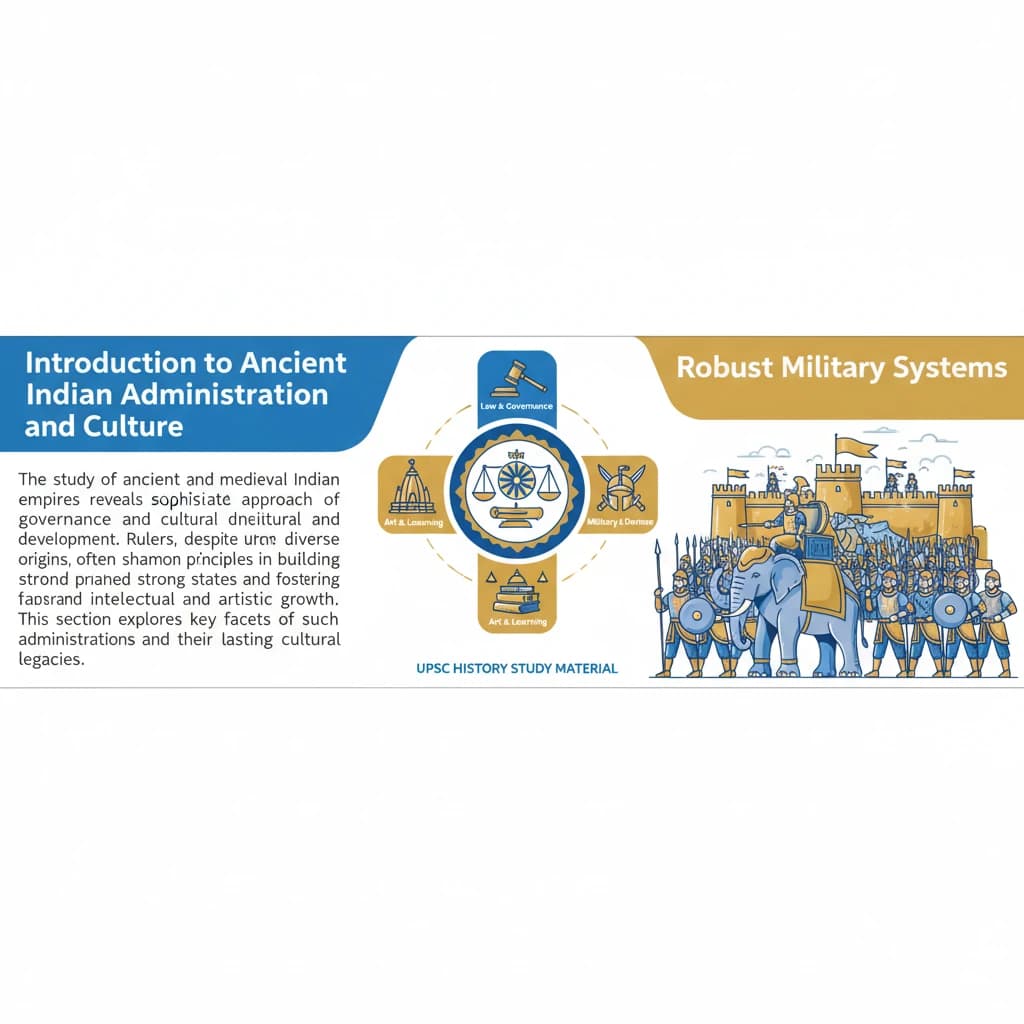
Rashtrakutas: Military, Religious Tolerance, and Cultural Contributions is a key topic under History for UPSC Civil Services Examination. Key points include: Ancient Indian rulers maintained robust militaries (infantry, cavalry, elephants, navy) for defense and stability.. Many Hindu rulers practiced significant religious tolerance, supporting Buddhism and Jainism.. Kannada and Telugu literature saw advanced developments under royal patronage.. Understanding this topic is essential for both UPSC Prelims and Mains preparation.
Why is Rashtrakutas: Military, Religious Tolerance, and Cultural Contributions important for UPSC exam?
Rashtrakutas: Military, Religious Tolerance, and Cultural Contributions is a Medium-level topic in UPSC History. It is tested in both Prelims (factual MCQs) and Mains (analytical answer writing). Previous year UPSC questions have frequently covered aspects of Rashtrakutas: Military, Religious Tolerance, and Cultural Contributions, making it essential for comprehensive IAS preparation.
How to prepare Rashtrakutas: Military, Religious Tolerance, and Cultural Contributions for UPSC?
To prepare Rashtrakutas: Military, Religious Tolerance, and Cultural Contributions for UPSC: (1) Study the comprehensive notes covering all key concepts on Vaidra. (2) Practice previous year questions on this topic. (3) Connect it with current affairs using daily updates. (4) Revise using key takeaways and mind maps available for History. (5) Write practice answers linking Rashtrakutas: Military, Religious Tolerance, and Cultural Contributions to related GS Paper topics.
Key takeaways of Rashtrakutas: Military, Religious Tolerance, and Cultural Contributions for UPSC
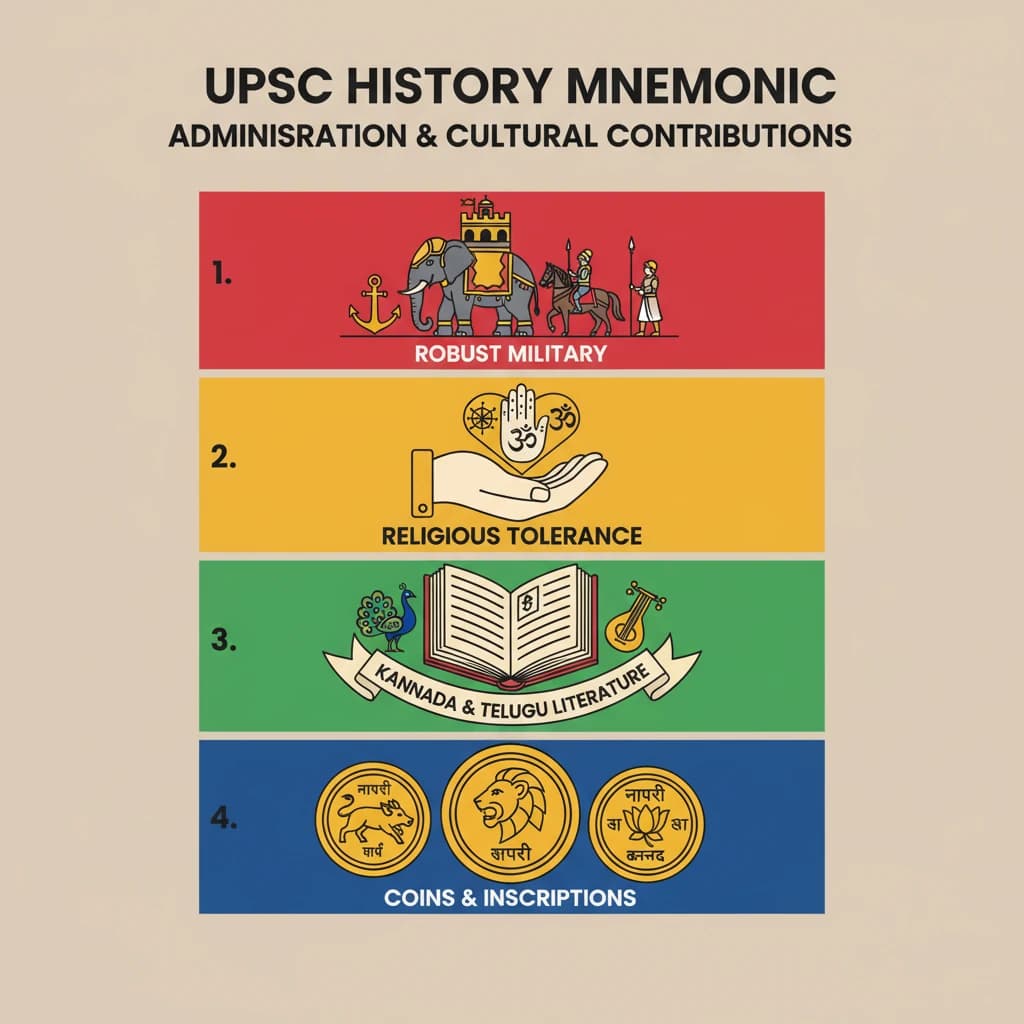
- Ancient Indian rulers maintained robust militaries (infantry, cavalry, elephants, navy) for defense and stability.
- Many Hindu rulers practiced significant religious tolerance, supporting Buddhism and Jainism.
- Kannada and Telugu literature saw advanced developments under royal patronage.
- Coins were vital historical records, featuring Nagari/Kannada inscriptions and symbols like lions, boars, and lotuses.
- These administrative and cultural contributions highlight a sophisticated and pluralistic historical India.
Rashtrakutas: Military, Religious Tolerance, and Cultural Contributions
📖 Introduction
💡 Key Takeaways
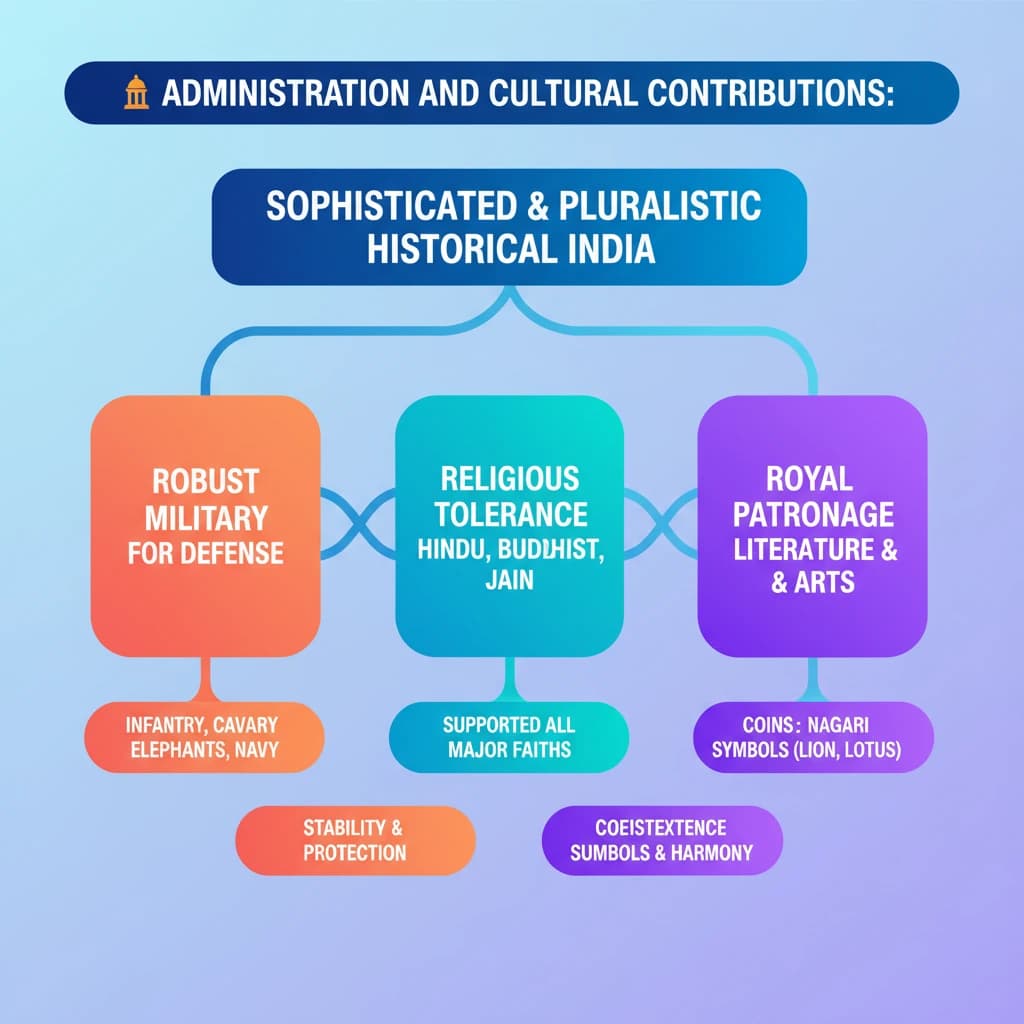
- •Ancient Indian rulers maintained robust militaries (infantry, cavalry, elephants, navy) for defense and stability.
- •Many Hindu rulers practiced significant religious tolerance, supporting Buddhism and Jainism.
- •Kannada and Telugu literature saw advanced developments under royal patronage.
- •Coins were vital historical records, featuring Nagari/Kannada inscriptions and symbols like lions, boars, and lotuses.
- •These administrative and cultural contributions highlight a sophisticated and pluralistic historical India.
🧠 Memory Techniques