Loading page, please wait…
Vaidra Logo
Vaidra

Top 4 items + smart groups

UPSC GPT
New
Current Affairs
Daily Solutions
Daily Puzzle
Mains Evaluator

Version 2.0.0 • Built with ❤️ for UPSC aspirants

Loading...
Loading...
Loading...
Loading...
Loading...
Loading...
Loading...
Loading...
Loading...
Loading...
Loading...
Loading...
Loading...
Back
All Subjects

Topics

0 topics • 0 completed

Loading topics...
Loading...
Loading...
Loading...
Loading...
Loading...
Overall Progress0%

What is Mahavir Jayanti? - UPSC History

What is What is Mahavir Jayanti? in UPSC History?

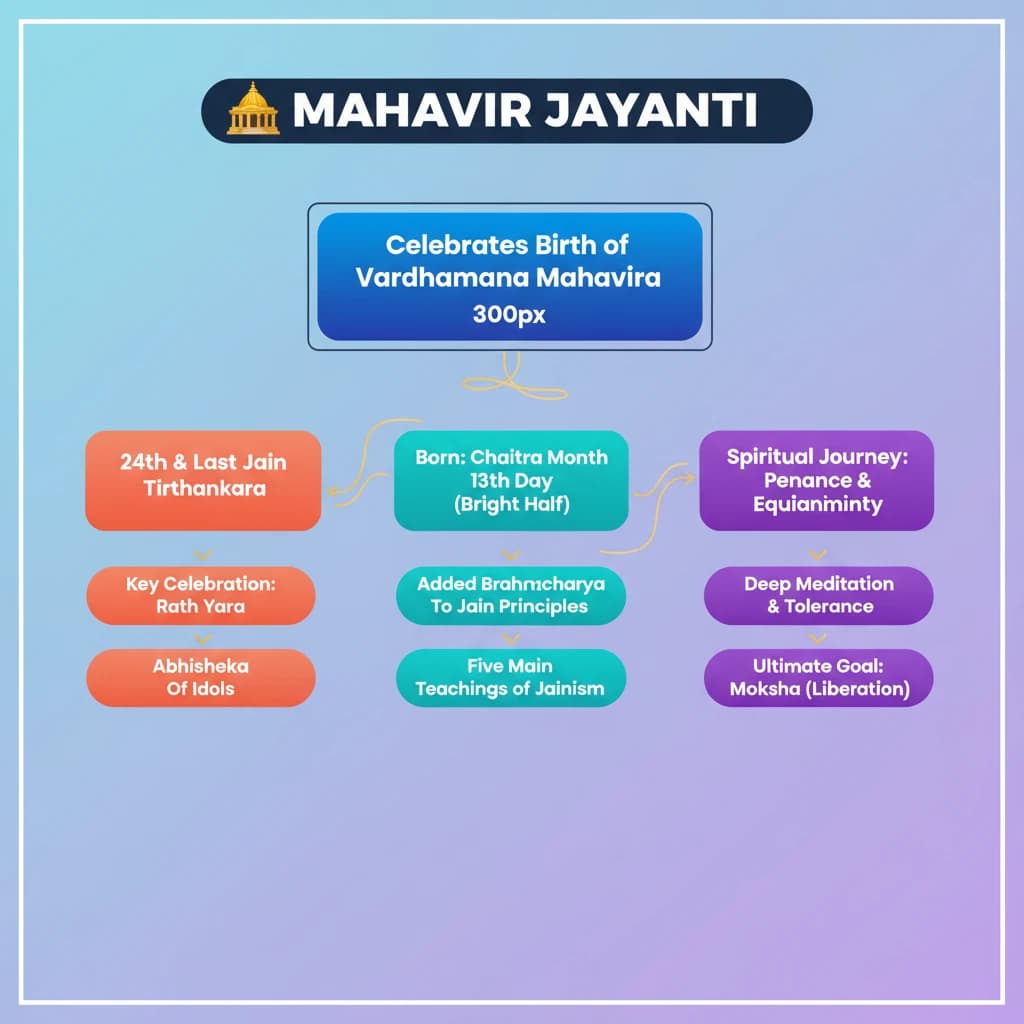
What is Mahavir Jayanti? is a key topic under History for UPSC Civil Services Examination. Key points include: Mahavir Jayanti celebrates the birth of Vardhamana Mahavira, the 24th and last Jain Tirthankara.. Lord Mahavira was born on the 13th day of the bright half of Chaitra month.. Key celebrations include Rath Yatra and Abhishekа of Mahavira's idols.. Understanding this topic is essential for both UPSC Prelims and Mains preparation.

Why is What is Mahavir Jayanti? important for UPSC exam?

What is Mahavir Jayanti? is a Easy-level topic in UPSC History. It is tested in both Prelims (factual MCQs) and Mains (analytical answer writing). Previous year UPSC questions have frequently covered aspects of What is Mahavir Jayanti?, making it essential for comprehensive IAS preparation.

How to prepare What is Mahavir Jayanti? for UPSC?

To prepare What is Mahavir Jayanti? for UPSC: (1) Study the comprehensive notes covering all key concepts on Vaidra. (2) Practice previous year questions on this topic. (3) Connect it with current affairs using daily updates. (4) Revise using key takeaways and mind maps available for History. (5) Write practice answers linking What is Mahavir Jayanti? to related GS Paper topics.

Key takeaways of What is Mahavir Jayanti? for UPSC

  • Mahavir Jayanti celebrates the birth of Vardhamana Mahavira, the 24th and last Jain Tirthankara.
  • Lord Mahavira was born on the 13th day of the bright half of Chaitra month.
  • Key celebrations include Rath Yatra and Abhishekа of Mahavira's idols.
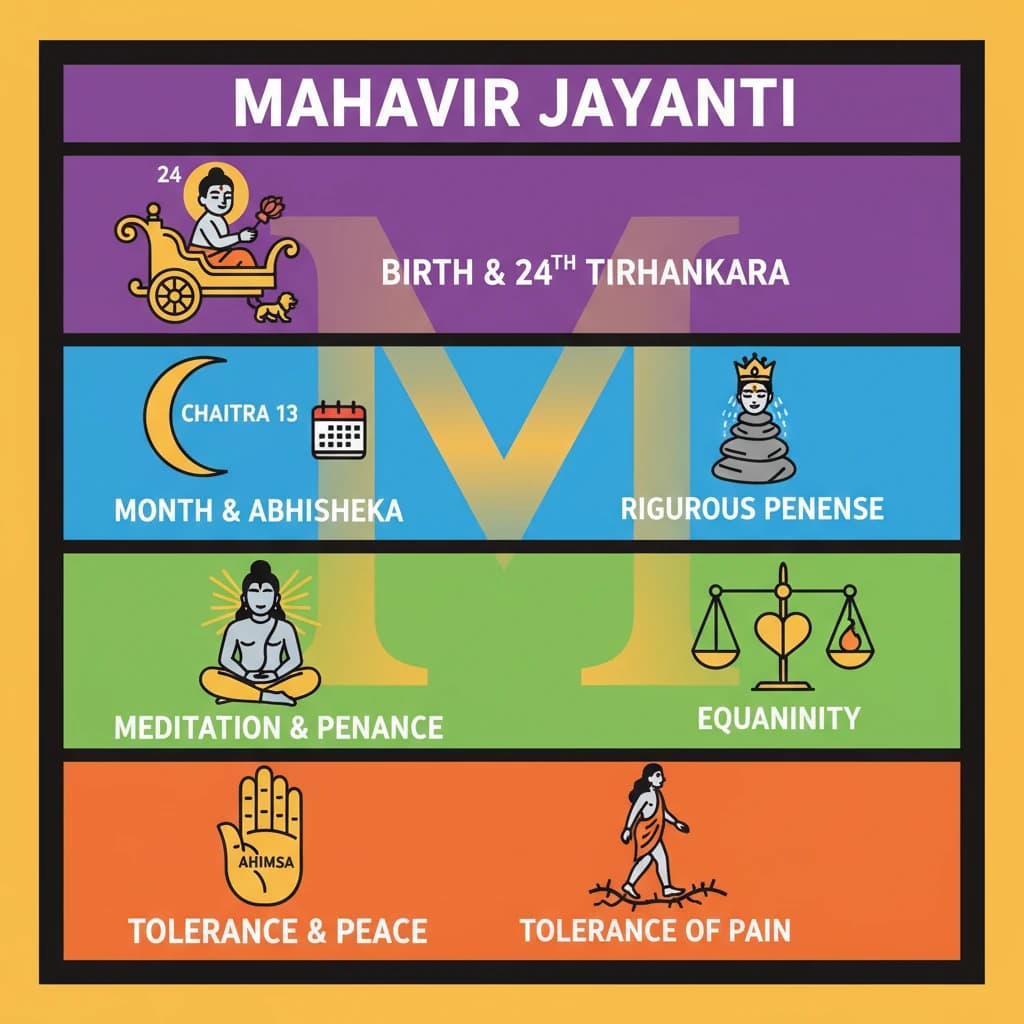
  • Mahavira's spiritual journey involved deep meditation, rigorous penance, tolerance of pain, and ultimate equanimity.
  • He added Brahmacharya (celibacy) to the five main teachings of Jainism.
  • His teachings emphasize non-violence, truth, non-stealing, and non-possession.
  • The festival highlights Jainism's enduring cultural and ethical significance in India.
What is Mahavir Jayanti?

What is Mahavir Jayanti?

Easy⏱️ 4 min read✓ 95% Verified
history

📖 Introduction

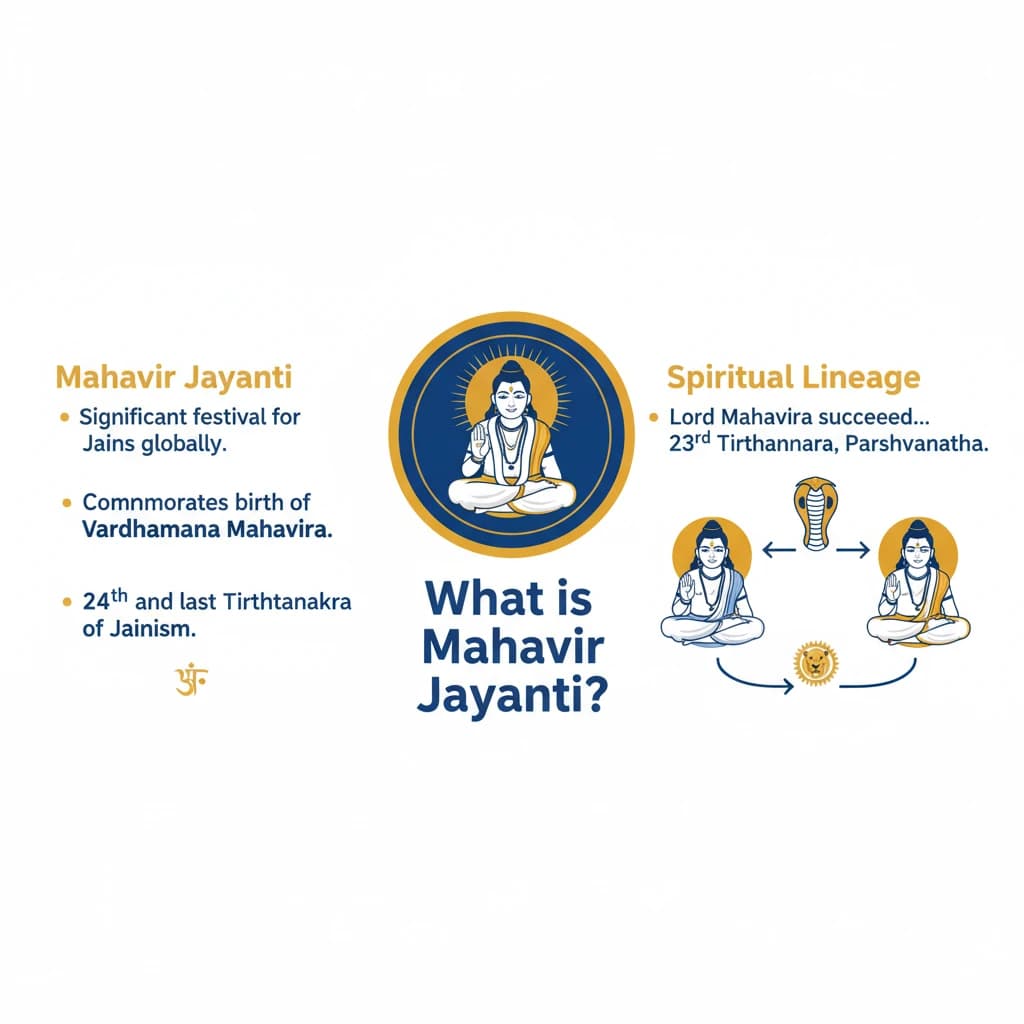
<h4>What is Mahavir Jayanti?</h4><p><strong>Mahavir Jayanti</strong> is one of the most significant and auspicious festivals celebrated by the <strong>Jain community</strong> across the globe. It commemorates the birth of <strong>Vardhamana Mahavira</strong>, the <strong>24th and last Tirthankara</strong> of Jainism.</p><p>This sacred day marks the culmination of a spiritual lineage, as <strong>Lord Mahavira</strong> succeeded the <strong>23rd Tirthankara, Parshvanatha</strong>, carrying forward the profound teachings of Jain philosophy.</p><div class='info-box'><p><strong>Birth Details:</strong> According to <strong>Jain texts</strong>, <strong>Lord Mahavira</strong> was born on the <strong>13th day of the bright half of the month of Chaitra</strong>. In the <strong>Gregorian calendar</strong>, this usually falls in <strong>March or April</strong>.</p></div><h4>Celebrations and Rituals</h4><p>The celebrations of <strong>Mahavir Jayanti</strong> are marked by vibrant processions and devotional practices. A key highlight is the <strong>Rath Yatra</strong>, a grand procession featuring the idol of <strong>Lord Mahavira</strong>.</p><p>Devotees engage in reciting <strong>stavans</strong>, which are sacred <strong>Jain prayers</strong>. A significant ritual involves giving the statues of <strong>Lord Mahavira</strong> a ceremonial bath, known as <strong>abhishekа</strong>, symbolizing purification and reverence.</p><h4>The Life and Teachings of Lord Mahavira</h4><p><strong>Bhagwan Mahavir Swami</strong> left an indelible mark on humanity through his profound spiritual practices and teachings. He was originally named <strong>Vardhamana</strong>, a name that signifies <strong>'one who grows'</strong>, reflecting his spiritual evolution.</p><div class='key-point-box'><p><strong>Lord Mahavira's Extraordinary Qualities:</strong> During his <strong>twelve-year period of intense spiritual practices</strong>, <strong>Bhagwan Mahavir</strong> exhibited four remarkable qualities:</p><ul><li><strong>Deep and Undisturbed Meditation:</strong> His unwavering focus led to profound spiritual insights.</li><li><strong>Rigorous Penance:</strong> He endured extreme physical hardships to purify his soul.</li><li><strong>Tolerance of Pain:</strong> <strong>Mahavir Swami</strong> demonstrated exceptional endurance and resilience.</li><li><strong>Ultimate Equanimity:</strong> His inner balance and composure remained unshaken through all circumstances.</li></ul></div><p>His spiritual journey reached a pivotal moment on the <strong>tenth day of the Vaishakh</strong>, when he attained <strong>Kevala Jnana</strong> (omniscience).</p><h4>Core Teachings and Contributions</h4><p>Among the <strong>five fundamental teachings of Jainism</strong>, <strong>Brahmacharya (Celibacy/Chastity)</strong> was specifically added and emphasized by <strong>Lord Mahavira</strong>, solidifying its place as a core tenet of the faith.</p><div class='exam-tip-box'><p><strong>UPSC Insight:</strong> Understanding <strong>Mahavir Jayanti</strong> and <strong>Lord Mahavira's</strong> contributions is crucial for <strong>Ancient Indian History (GS Paper 1)</strong> and <strong>Indian Culture and Heritage</strong>. Questions often relate to the tenets of <strong>Jainism</strong> and its impact on society.</p></div>
Concept Diagram

💡 Key Takeaways

  • •Mahavir Jayanti celebrates the birth of Vardhamana Mahavira, the 24th and last Jain Tirthankara.
  • •Lord Mahavira was born on the 13th day of the bright half of Chaitra month.
  • •Key celebrations include Rath Yatra and Abhishekа of Mahavira's idols.
  • •Mahavira's spiritual journey involved deep meditation, rigorous penance, tolerance of pain, and ultimate equanimity.
  • •He added Brahmacharya (celibacy) to the five main teachings of Jainism.
  • •His teachings emphasize non-violence, truth, non-stealing, and non-possession.
  • •The festival highlights Jainism's enduring cultural and ethical significance in India.

🧠 Memory Techniques
Memory Aid
95% Verified Content

Related Topics

Loading related topics...
Explore:History Topics·All Subjects·Daily Current Affairs·Editorial Analysis·Previous Year Questions·UPSC GPT
What is Mahavir Jayanti? - UPSC History