Racial Bias in Jallianwala Bagh Massacre Compensation - UPSC History
What is Racial Bias in Jallianwala Bagh Massacre Compensation in UPSC History?
Racial Bias in Jallianwala Bagh Massacre Compensation is a key topic under History for UPSC Civil Services Examination. Key points include: Jallianwala Bagh Massacre (April 13, 1919) was a dark chapter in Indian colonial history.. New research reveals racial bias in British compensation for massacre victims.. The Rowlatt Act (1919) and arrest of leaders (Kitchlew, Satyapal) were key preludes.. Understanding this topic is essential for both UPSC Prelims and Mains preparation.
Why is Racial Bias in Jallianwala Bagh Massacre Compensation important for UPSC exam?
Racial Bias in Jallianwala Bagh Massacre Compensation is a Medium-level topic in UPSC History. It is tested in both Prelims (factual MCQs) and Mains (analytical answer writing). Previous year UPSC questions have frequently covered aspects of Racial Bias in Jallianwala Bagh Massacre Compensation, making it essential for comprehensive IAS preparation.
How to prepare Racial Bias in Jallianwala Bagh Massacre Compensation for UPSC?
To prepare Racial Bias in Jallianwala Bagh Massacre Compensation for UPSC: (1) Study the comprehensive notes covering all key concepts on Vaidra. (2) Practice previous year questions on this topic. (3) Connect it with current affairs using daily updates. (4) Revise using key takeaways and mind maps available for History. (5) Write practice answers linking Racial Bias in Jallianwala Bagh Massacre Compensation to related GS Paper topics.
Key takeaways of Racial Bias in Jallianwala Bagh Massacre Compensation for UPSC
- Jallianwala Bagh Massacre (April 13, 1919) was a dark chapter in Indian colonial history.
- New research reveals racial bias in British compensation for massacre victims.
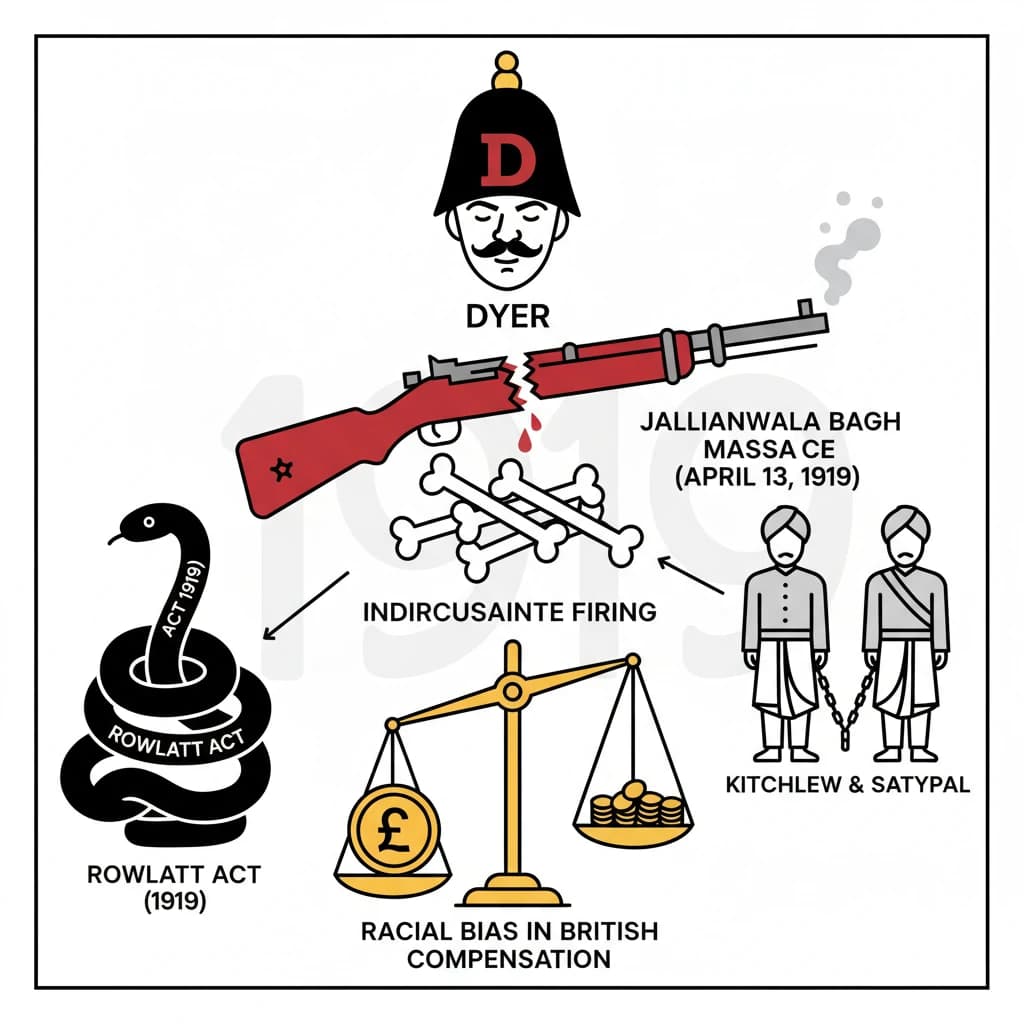
- The Rowlatt Act (1919) and arrest of leaders (Kitchlew, Satyapal) were key preludes.
- Brigadier-General Dyer ordered indiscriminate firing on unarmed civilians.
- Racialized legal structures underscored systemic colonial injustice.
- The event is crucial for understanding colonial legacies and calls for historical justice.
Racial Bias in Jallianwala Bagh Massacre Compensation
📖 Introduction
💡 Key Takeaways
- •Jallianwala Bagh Massacre (April 13, 1919) was a dark chapter in Indian colonial history.
- •New research reveals racial bias in British compensation for massacre victims.
- •The Rowlatt Act (1919) and arrest of leaders (Kitchlew, Satyapal) were key preludes.
- •Brigadier-General Dyer ordered indiscriminate firing on unarmed civilians.
- •Racialized legal structures underscored systemic colonial injustice.
- •The event is crucial for understanding colonial legacies and calls for historical justice.
🧠 Memory Techniques