Loading page, please wait…
Vaidra Logo
Vaidra

Top 4 items + smart groups

UPSC GPT
New
Current Affairs
Daily Solutions
Daily Puzzle
Mains Evaluator

Version 2.0.0 • Built with ❤️ for UPSC aspirants

Loading...
Loading...
Loading...
Loading...
Loading...
Loading...
Loading...
Loading...
Loading...
Loading...
Loading...
Loading...
Loading...
Back
All Subjects

Topics

0 topics • 0 completed

Loading topics...
Loading...
Loading...
Loading...
Loading...
Loading...
Overall Progress0%

What are Key Facts About the Hampi? - UPSC History

What is What are Key Facts About the Hampi? in UPSC History?

What are Key Facts About the Hampi? is a key topic under History for UPSC Civil Services Examination. Key points include: Hampi is the capital city remnant of the Vijayanagara Empire (14th-16th century CE) in Karnataka.. Known for unique wide chariot streets flanked by pillared mandapas.. Features famous complexes like Vitthala, Krishna, Achyutaraya, and Lotus Mahal.. Understanding this topic is essential for both UPSC Prelims and Mains preparation.

Why is What are Key Facts About the Hampi? important for UPSC exam?

What are Key Facts About the Hampi? is a Medium-level topic in UPSC History. It is tested in both Prelims (factual MCQs) and Mains (analytical answer writing). Previous year UPSC questions have frequently covered aspects of What are Key Facts About the Hampi?, making it essential for comprehensive IAS preparation.

How to prepare What are Key Facts About the Hampi? for UPSC?

To prepare What are Key Facts About the Hampi? for UPSC: (1) Study the comprehensive notes covering all key concepts on Vaidra. (2) Practice previous year questions on this topic. (3) Connect it with current affairs using daily updates. (4) Revise using key takeaways and mind maps available for History. (5) Write practice answers linking What are Key Facts About the Hampi? to related GS Paper topics.

Key takeaways of What are Key Facts About the Hampi? for UPSC

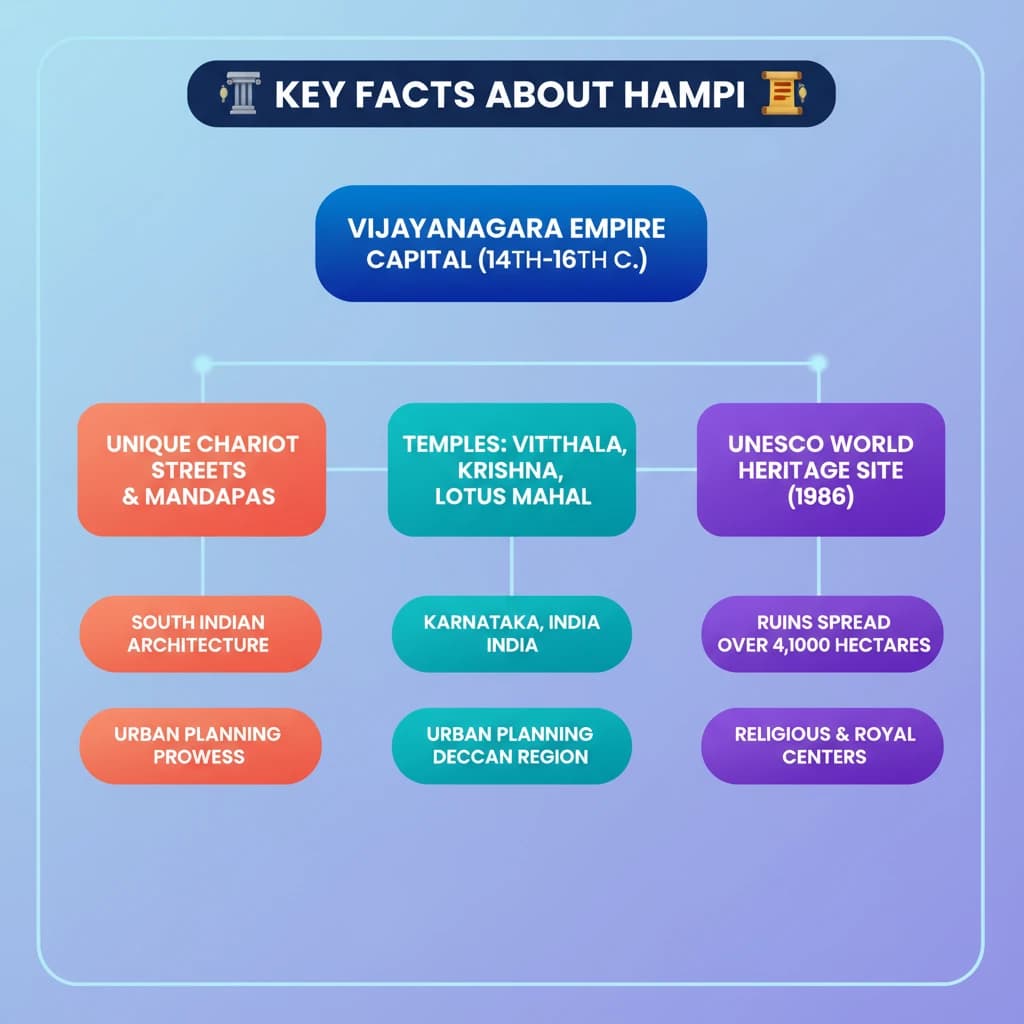
  • Hampi is the capital city remnant of the Vijayanagara Empire (14th-16th century CE) in Karnataka.
  • Known for unique wide chariot streets flanked by pillared mandapas.
  • Features famous complexes like Vitthala, Krishna, Achyutaraya, and Lotus Mahal.
  • Declared a UNESCO World Heritage Site in 1986.
  • Represents a pinnacle of South Indian architectural and urban planning prowess.
What are Key Facts About the Hampi?

What are Key Facts About the Hampi?

Medium⏱️ 6 min read✓ 95% Verified
history

📖 Introduction

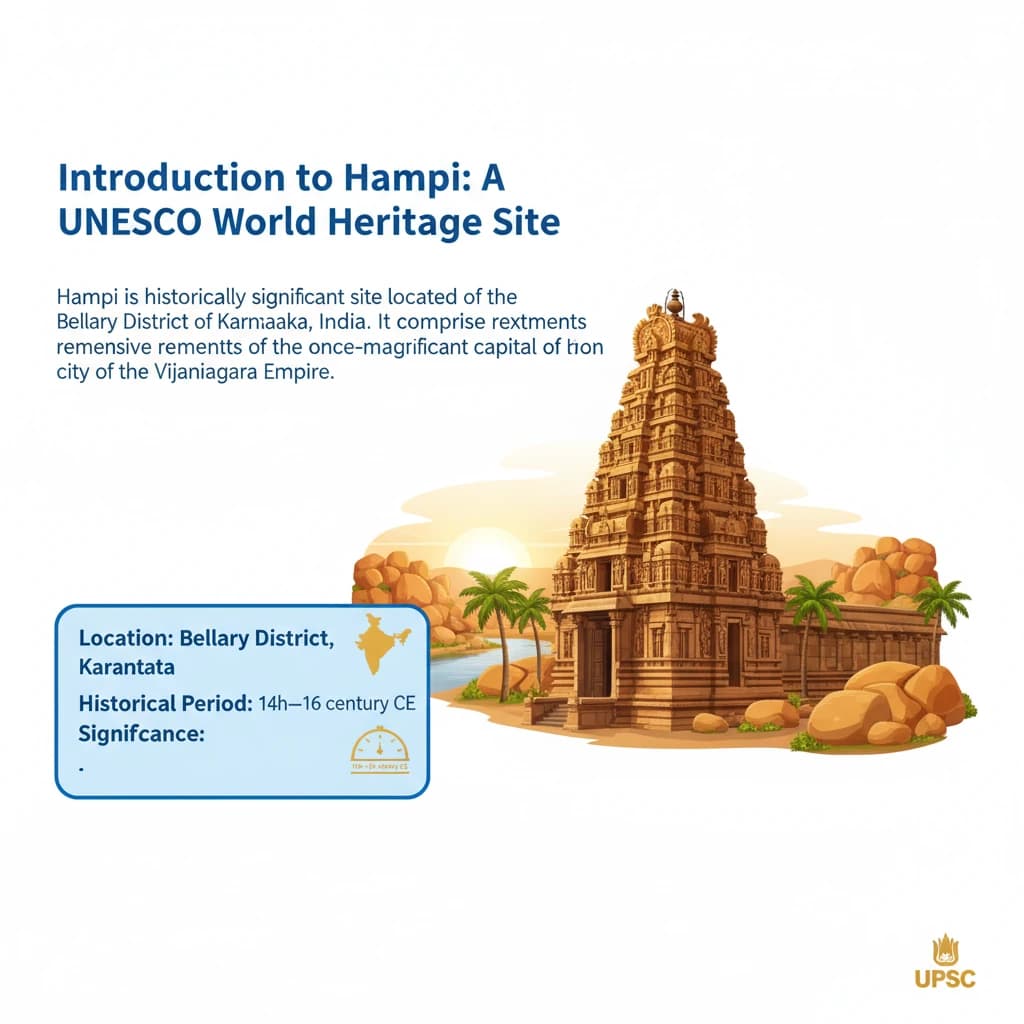
<h4>Introduction to Hampi: A UNESCO World Heritage Site</h4><p><strong>Hampi</strong> is a historically significant site located in the <strong>Bellary District</strong> of <strong>Karnataka</strong>, India. It comprises the extensive remnants of the once-magnificent capital city of the <strong>Vijayanagara Empire</strong>.</p><div class='info-box'><p><strong>Location:</strong> Bellary District, Karnataka</p><p><strong>Historical Period:</strong> 14th–16th century CE</p><p><strong>Significance:</strong> Capital of the <strong>Vijayanagara Empire</strong></p></div><h4>Architectural Grandeur: Unique Features</h4><p>One of the most striking and unique features of the temples at Hampi is their wide <strong>chariot streets</strong>. These grand avenues were specifically designed for religious processions and public gatherings.</p><p>These chariot streets are typically flanked by a continuous row of <strong>pillared mandapas</strong>. These mandapas served various purposes, including housing markets, shelters for pilgrims, and spaces for religious discourses.</p><div class='key-point-box'><p><strong>Key Architectural Features:</strong></p><ul><li>Wide <strong>chariot streets</strong></li><li>Flanked by <strong>pillared mandapas</strong></li></ul></div><h4>Prominent Temple Complexes and Structures</h4><p>Hampi is home to numerous iconic temple complexes and structures, each showcasing the unparalleled architectural and artistic prowess of the <strong>Vijayanagara period</strong>.</p><ul><li><strong>Krishna Temple Complex</strong></li><li><strong>Narasimha Temple</strong></li><li><strong>Ganesa Temple</strong></li><li><strong>Hemakuta Group of Temples</strong></li><li><strong>Achyutaraya Temple Complex</strong></li><li><strong>Vitthala Temple Complex</strong> (famous for its stone chariot)</li><li><strong>Pattabhirama Temple Complex</strong></li><li><strong>Lotus Mahal Complex</strong></li></ul><h4>UNESCO World Heritage Status</h4><p>The exceptional historical and architectural value of Hampi has been globally recognized. It was officially declared a <strong>World Heritage Site</strong> by <strong>UNESCO</strong> in <strong>1986</strong>.</p><div class='exam-tip-box'><p><strong>UPSC Insight:</strong> The <strong>UNESCO World Heritage Site</strong> status of Hampi makes it a crucial topic for <strong>Art and Culture</strong> in <strong>GS Paper I</strong>. Questions can relate to its architectural style, historical significance, or the importance of heritage preservation.</p></div>
Concept Diagram

💡 Key Takeaways

  • •Hampi is the capital city remnant of the Vijayanagara Empire (14th-16th century CE) in Karnataka.
  • •Known for unique wide chariot streets flanked by pillared mandapas.
  • •Features famous complexes like Vitthala, Krishna, Achyutaraya, and Lotus Mahal.
  • •Declared a UNESCO World Heritage Site in 1986.
  • •Represents a pinnacle of South Indian architectural and urban planning prowess.

🧠 Memory Techniques

Memory Aid
95% Verified Content

Related Topics

Loading related topics...
Explore:History Topics·All Subjects·Daily Current Affairs·Editorial Analysis·Previous Year Questions·UPSC GPT
What are Key Facts About the Hampi? - UPSC History