Loading page, please wait…
Vaidra Logo
Vaidra

Top 4 items + smart groups

UPSC GPT
New
Current Affairs
Daily Solutions
Daily Puzzle
Mains Evaluator

Version 2.0.0 • Built with ❤️ for UPSC aspirants

Loading...
Loading...
Loading...
Loading...
Loading...
Loading...
Loading...
Loading...
Loading...
Loading...
Loading...
Loading...
Loading...
100 Years of Discovery of IVC - UPSC History
Back
All Subjects

Topics

0 topics • 0 completed

Loading topics...
Loading...
Loading...
Loading...
Loading...
Loading...
Overall Progress0%

100 Years of Discovery of IVC - UPSC History

What is 100 Years of Discovery of IVC in UPSC History?

100 Years of Discovery of IVC is a key topic under History for UPSC Civil Services Examination. Key points include: 2024 marks 100 years since Sir John Marshall's 1924 announcement of IVC discovery.. IVC spans 2,000+ sites across 1.5 million sq. km in India, Pakistan, Afghanistan.. Known for advanced urban planning, sophisticated architecture, and drainage systems.. Understanding this topic is essential for both UPSC Prelims and Mains preparation.

Why is 100 Years of Discovery of IVC important for UPSC exam?

100 Years of Discovery of IVC is a Medium-level topic in UPSC History. It is tested in both Prelims (factual MCQs) and Mains (analytical answer writing). Previous year UPSC questions have frequently covered aspects of 100 Years of Discovery of IVC, making it essential for comprehensive IAS preparation.

How to prepare 100 Years of Discovery of IVC for UPSC?

To prepare 100 Years of Discovery of IVC for UPSC: (1) Study the comprehensive notes covering all key concepts on Vaidra. (2) Practice previous year questions on this topic. (3) Connect it with current affairs using daily updates. (4) Revise using key takeaways and mind maps available for History. (5) Write practice answers linking 100 Years of Discovery of IVC to related GS Paper topics.

Key takeaways of 100 Years of Discovery of IVC for UPSC

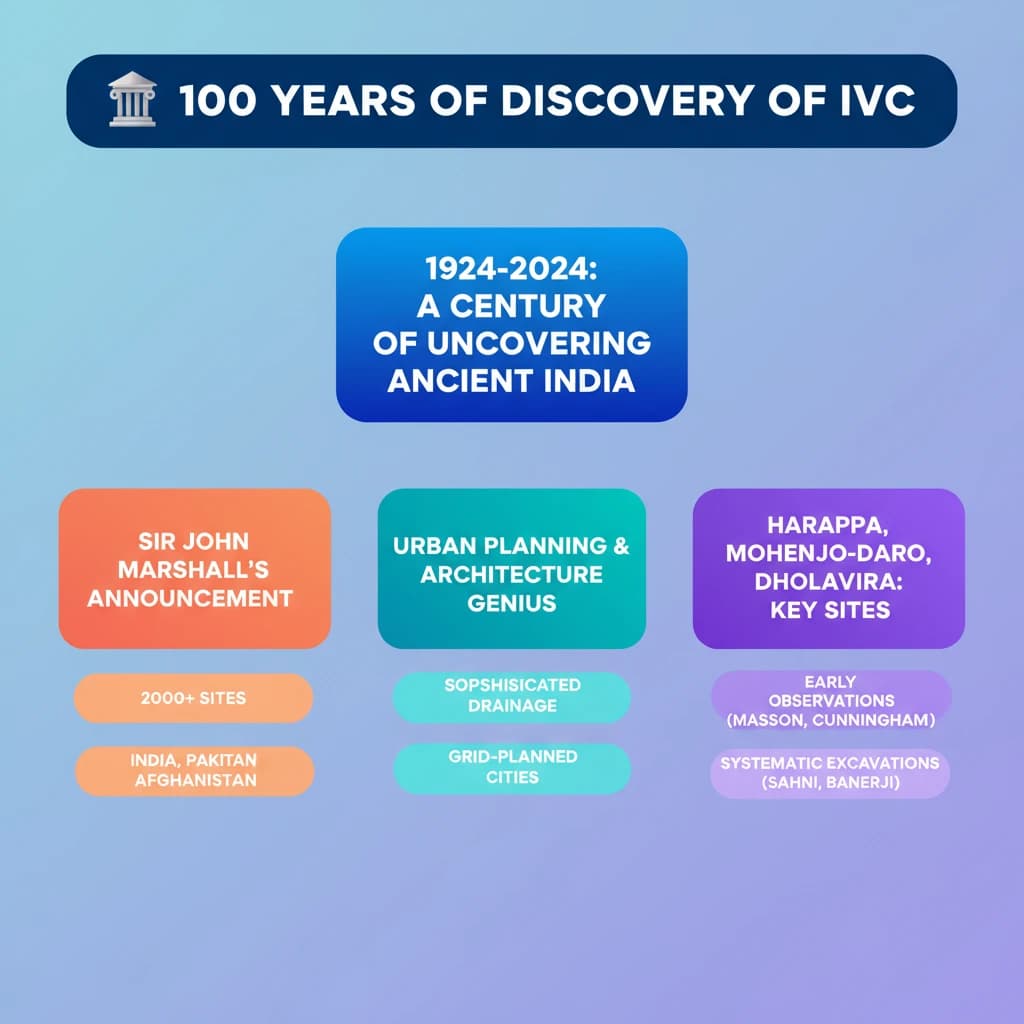
  • 2024 marks 100 years since Sir John Marshall's 1924 announcement of IVC discovery.
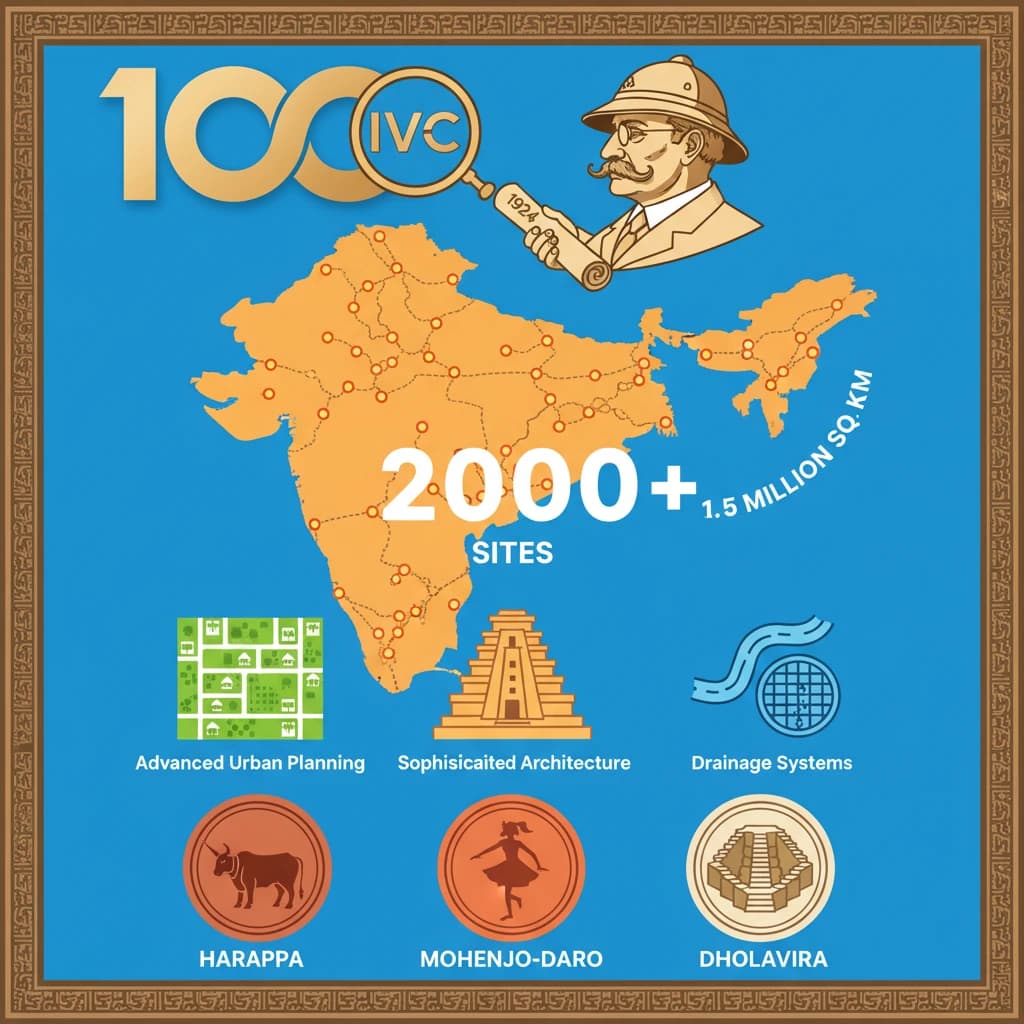
  • IVC spans 2,000+ sites across 1.5 million sq. km in India, Pakistan, Afghanistan.
  • Known for advanced urban planning, sophisticated architecture, and drainage systems.
  • Key sites like Harappa, Mohenjo-Daro, and Dholavira showcase its ingenuity.
  • Discovery involved early observations (Masson, Cunningham) followed by systematic excavations (Sahni, Banerji) leading to Marshall's formal announcement.
  • IVC offers lessons for modern urban planning, water management, and cultural heritage preservation.
100 Years of Discovery of IVC

100 Years of Discovery of IVC

Medium⏱️ 8 min read✓ 98% Verified
history

📖 Introduction

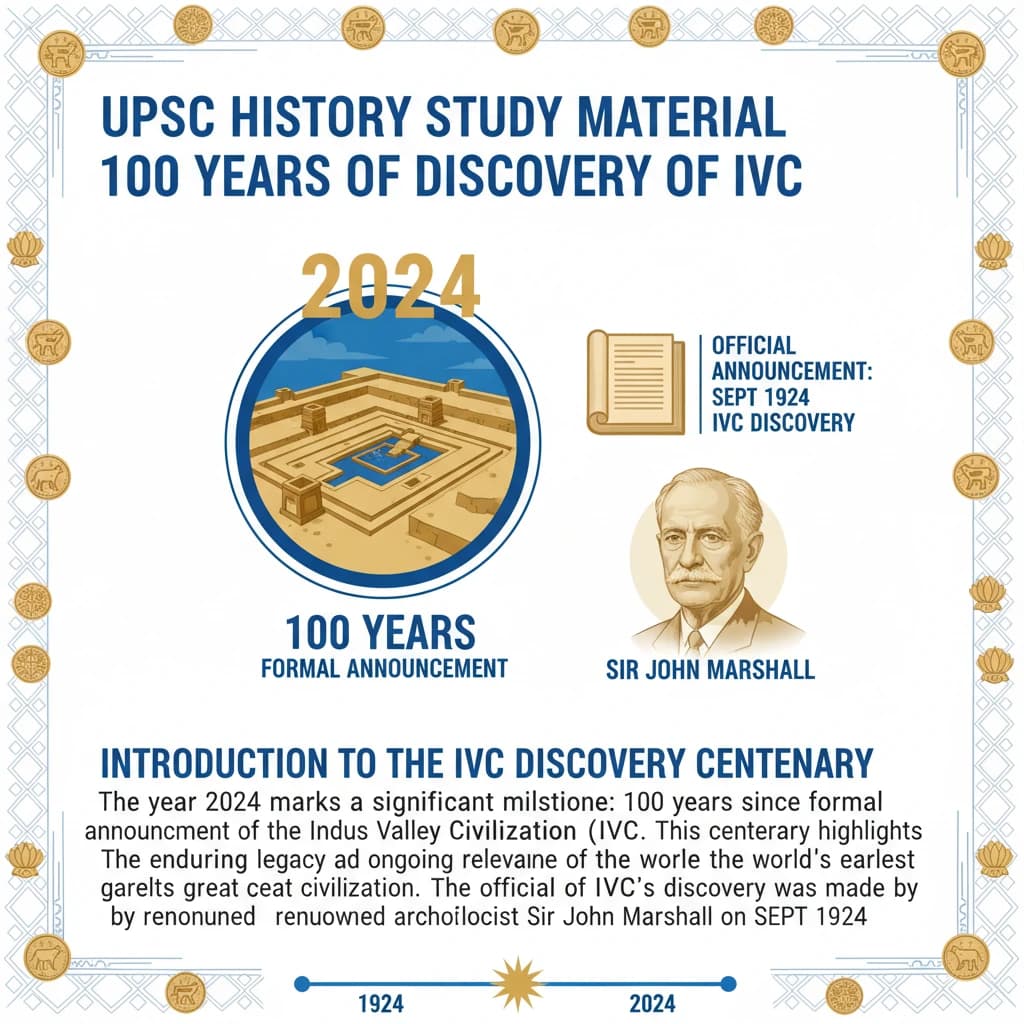
<h4>Introduction to the IVC Discovery Centenary</h4><p>The year <strong>2024</strong> marks a significant milestone: <strong>100 years since the formal announcement</strong> of the <strong>Indus Valley Civilization (IVC)</strong>. This centenary highlights the enduring legacy and ongoing relevance of one of the world's earliest great civilizations.</p><p>The official announcement of the <strong>IVC's discovery</strong> was made by renowned archaeologist <strong>Sir John Marshall</strong> on <strong>20th September 1924</strong>. This declaration brought to light a sophisticated ancient culture that profoundly reshaped our understanding of Indian history.</p><div class='info-box'><p><strong>Key Dates:</strong></p><ul><li><strong>20th September 1924:</strong> Official announcement of IVC discovery by <strong>Sir John Marshall</strong>.</li><li><strong>20th September 2024:</strong> Marks the <strong>100th anniversary</strong> of this pivotal announcement.</li></ul></div><h4>Geographical Extent and Key Features of IVC</h4><p>The <strong>Indus Valley Civilization</strong> was remarkably widespread, encompassing over <strong>2,000 known sites</strong>. These sites are distributed across a vast area of approximately <strong>1.5 million sq. km</strong>.</p><p>The civilization's geographical spread includes modern-day <strong>India</strong>, <strong>Pakistan</strong>, and parts of <strong>Afghanistan</strong>. This expansive reach signifies its profound influence and advanced organizational capabilities.</p><div class='key-point-box'><p><strong>Defining Characteristics:</strong></p><ul><li><strong>Advanced Urban Planning:</strong> Cities like Mohenjo-Daro and Harappa showcased meticulous grid layouts, standardized brick sizes, and elaborate drainage systems.</li><li><strong>Sophisticated Architecture:</strong> Evidence of monumental structures, granaries, and public baths demonstrates advanced engineering skills.</li></ul></div><div class='exam-tip-box'><p>For <strong>UPSC Prelims</strong>, remember the <strong>date of announcement</strong> and the <strong>archaeologist</strong>. For <strong>Mains</strong>, focus on the <strong>significance of the discovery</strong> and the <strong>civilization's key features</strong> as foundational knowledge.</p></div>
Concept Diagram

💡 Key Takeaways

  • •2024 marks 100 years since Sir John Marshall's 1924 announcement of IVC discovery.
  • •IVC spans 2,000+ sites across 1.5 million sq. km in India, Pakistan, Afghanistan.
  • •Known for advanced urban planning, sophisticated architecture, and drainage systems.
  • •Key sites like Harappa, Mohenjo-Daro, and Dholavira showcase its ingenuity.
  • •Discovery involved early observations (Masson, Cunningham) followed by systematic excavations (Sahni, Banerji) leading to Marshall's formal announcement.
  • •IVC offers lessons for modern urban planning, water management, and cultural heritage preservation.

🧠 Memory Techniques
Memory Aid
98% Verified Content

📚 Reference Sources

•Archaeological Survey of India (ASI) Publications
•Drishti IAS Study Material on Ancient History
•Upinder Singh, 'A History of Ancient and Early Medieval India'
•Reports by Sir John Marshall, R.D. Banerji, Dayaram Sahni

Related Topics

Loading related topics...
Explore:History Topics·All Subjects·Daily Current Affairs·Editorial Analysis·Previous Year Questions·UPSC GPT