What were the Important Sites of Harappan Civilization? - UPSC History
What is What were the Important Sites of Harappan Civilization? in UPSC History?
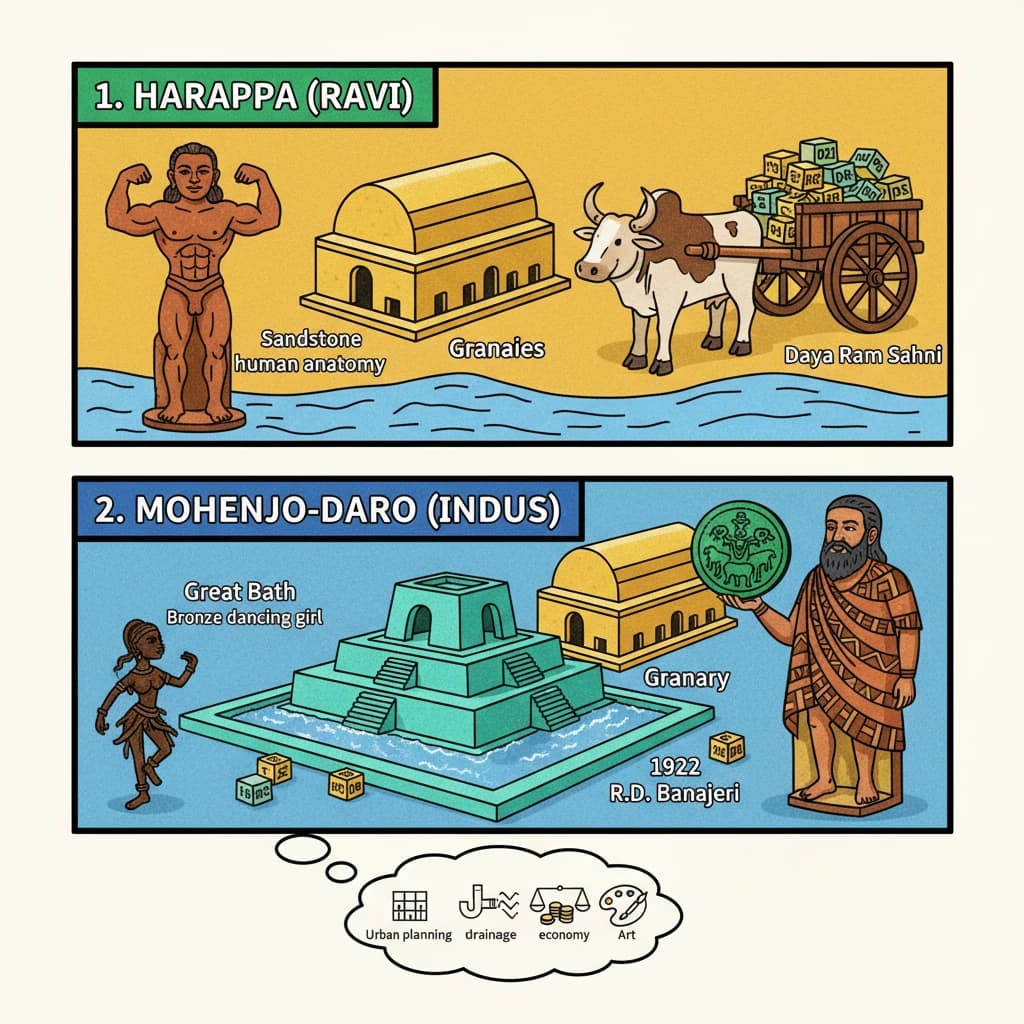
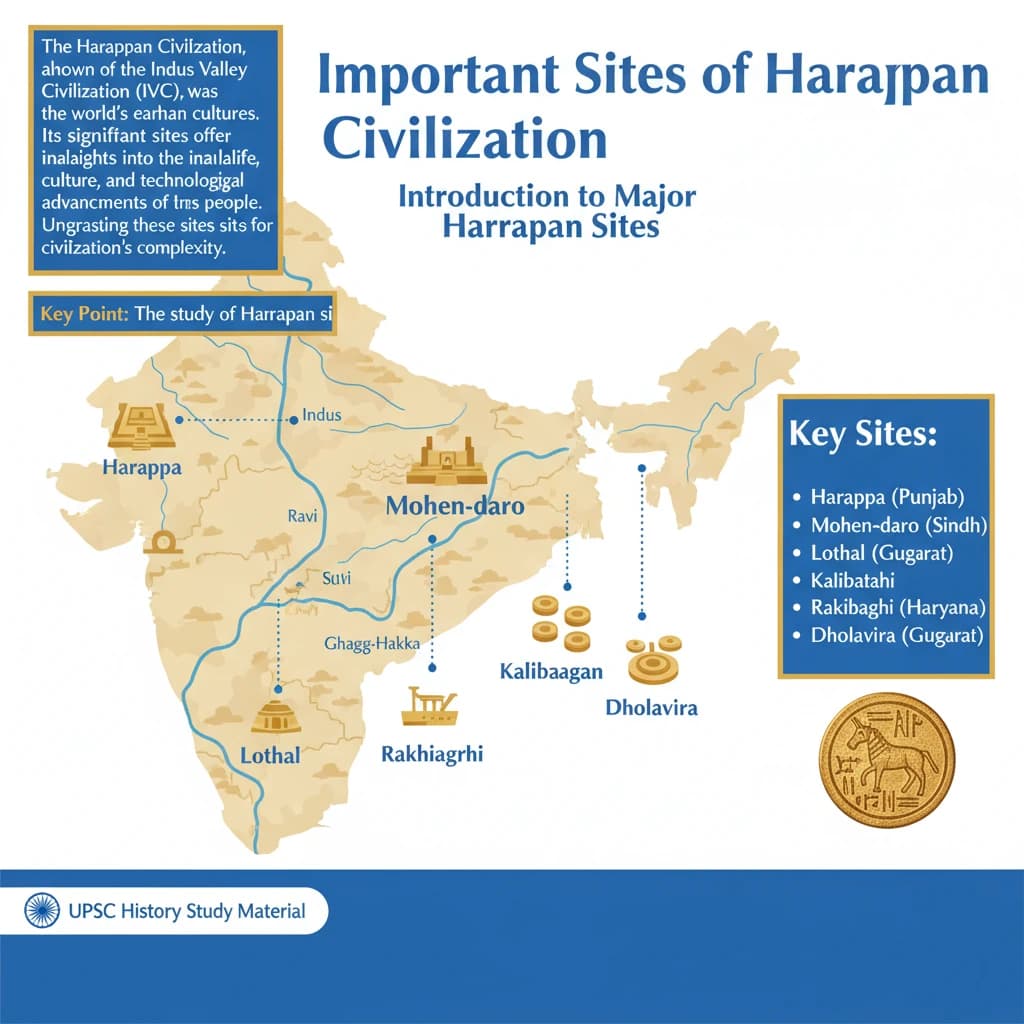
What were the Important Sites of Harappan Civilization? is a key topic under History for UPSC Civil Services Examination. Key points include: Harappa (1921, Daya Ram Sahni, River Ravi) and Mohenjo-Daro (1922, R.D. Banerjee, River Indus) are two primary Harappan sites.. Harappa's key finds include sandstone human anatomy statues, granaries, and bullock carts.. Mohenjo-Daro is famous for the Great Bath, Granary, Bronze dancing girl, Pasupathi seal, and bearded man statue.. Understanding this topic is essential for both UPSC Prelims and Mains preparation.
Why is What were the Important Sites of Harappan Civilization? important for UPSC exam?
What were the Important Sites of Harappan Civilization? is a Easy-level topic in UPSC History. It is tested in both Prelims (factual MCQs) and Mains (analytical answer writing). Previous year UPSC questions have frequently covered aspects of What were the Important Sites of Harappan Civilization?, making it essential for comprehensive IAS preparation.
How to prepare What were the Important Sites of Harappan Civilization? for UPSC?
To prepare What were the Important Sites of Harappan Civilization? for UPSC: (1) Study the comprehensive notes covering all key concepts on Vaidra. (2) Practice previous year questions on this topic. (3) Connect it with current affairs using daily updates. (4) Revise using key takeaways and mind maps available for History. (5) Write practice answers linking What were the Important Sites of Harappan Civilization? to related GS Paper topics.
Key takeaways of What were the Important Sites of Harappan Civilization? for UPSC
- Harappa (1921, Daya Ram Sahni, River Ravi) and Mohenjo-Daro (1922, R.D. Banerjee, River Indus) are two primary Harappan sites.
- Harappa's key finds include sandstone human anatomy statues, granaries, and bullock carts.
- Mohenjo-Daro is famous for the Great Bath, Granary, Bronze dancing girl, Pasupathi seal, and bearded man statue.
- These sites showcase advanced urban planning, sophisticated drainage, and evidence of organized economy and art.
- Sir John Marshall announced the IVC discovery in 1924, pushing back India's urban history significantly.
What were the Important Sites of Harappan Civilization?
📖 Introduction
💡 Key Takeaways
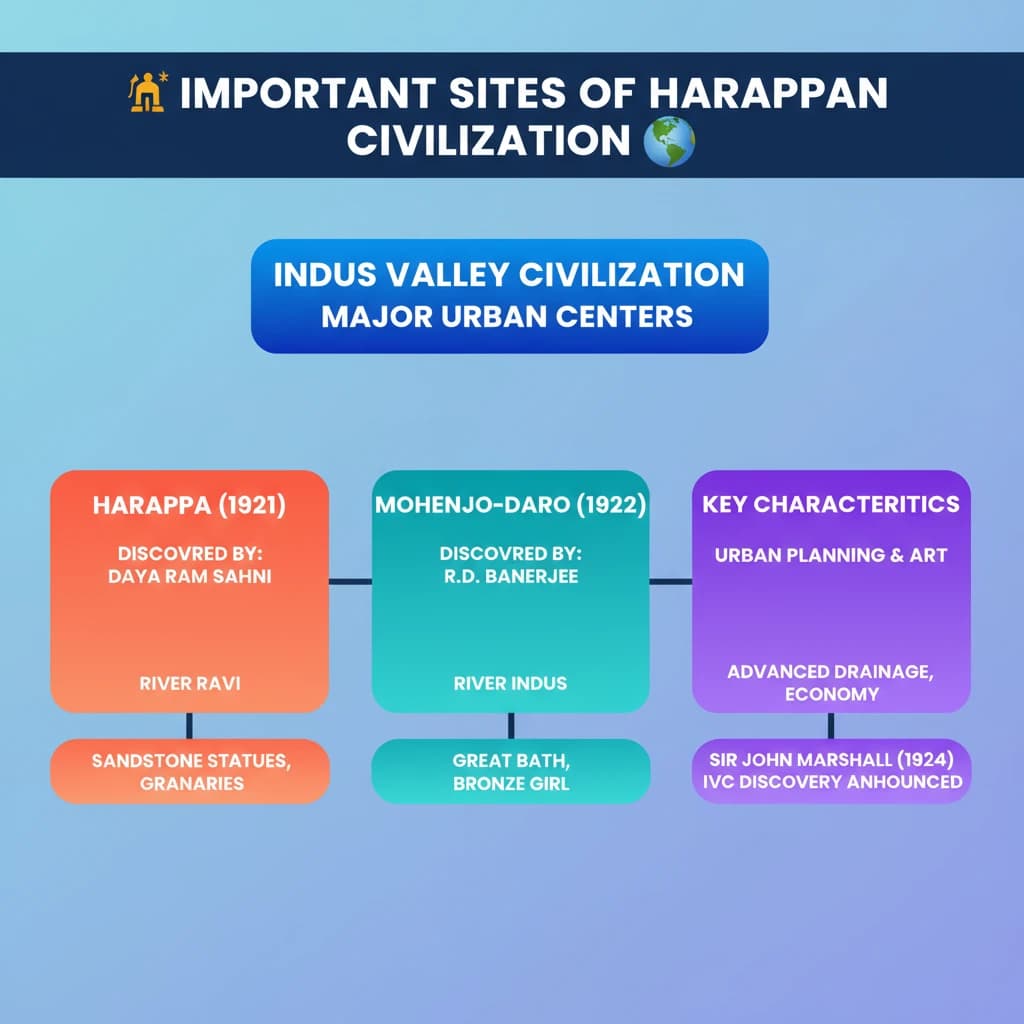
- •Harappa (1921, Daya Ram Sahni, River Ravi) and Mohenjo-Daro (1922, R.D. Banerjee, River Indus) are two primary Harappan sites.
- •Harappa's key finds include sandstone human anatomy statues, granaries, and bullock carts.
- •Mohenjo-Daro is famous for the Great Bath, Granary, Bronze dancing girl, Pasupathi seal, and bearded man statue.
- •These sites showcase advanced urban planning, sophisticated drainage, and evidence of organized economy and art.
- •Sir John Marshall announced the IVC discovery in 1924, pushing back India's urban history significantly.
🧠 Memory Techniques