What are the Key Facts About the 80-Pillar Assembly Hall of Kumharr? - UPSC History
What is What are the Key Facts About the 80-Pillar Assembly Hall of Kumharr? in UPSC History?
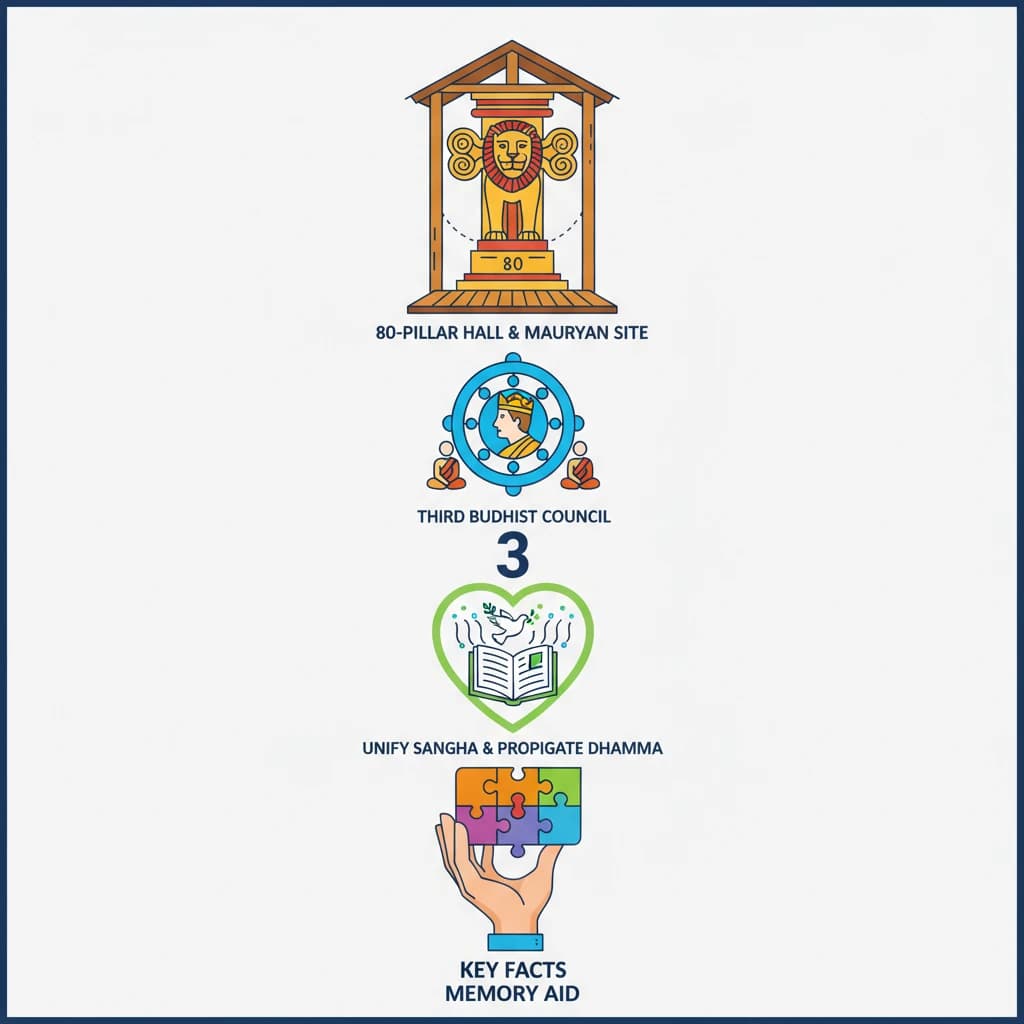
What are the Key Facts About the 80-Pillar Assembly Hall of Kumharr? is a key topic under History for UPSC Civil Services Examination. Key points include: The 80-Pillar Assembly Hall at Kumhrar is a significant Mauryan archaeological site.. It is linked to Emperor Ashoka and the Third Buddhist Council (c. 250 BCE).. The council aimed to unify the Buddhist Sangha and propagate Dhamma.. Understanding this topic is essential for both UPSC Prelims and Mains preparation.
Why is What are the Key Facts About the 80-Pillar Assembly Hall of Kumharr? important for UPSC exam?
What are the Key Facts About the 80-Pillar Assembly Hall of Kumharr? is a Medium-level topic in UPSC History. It is tested in both Prelims (factual MCQs) and Mains (analytical answer writing). Previous year UPSC questions have frequently covered aspects of What are the Key Facts About the 80-Pillar Assembly Hall of Kumharr?, making it essential for comprehensive IAS preparation.
How to prepare What are the Key Facts About the 80-Pillar Assembly Hall of Kumharr? for UPSC?
To prepare What are the Key Facts About the 80-Pillar Assembly Hall of Kumharr? for UPSC: (1) Study the comprehensive notes covering all key concepts on Vaidra. (2) Practice previous year questions on this topic. (3) Connect it with current affairs using daily updates. (4) Revise using key takeaways and mind maps available for History. (5) Write practice answers linking What are the Key Facts About the 80-Pillar Assembly Hall of Kumharr? to related GS Paper topics.
Key takeaways of What are the Key Facts About the 80-Pillar Assembly Hall of Kumharr? for UPSC
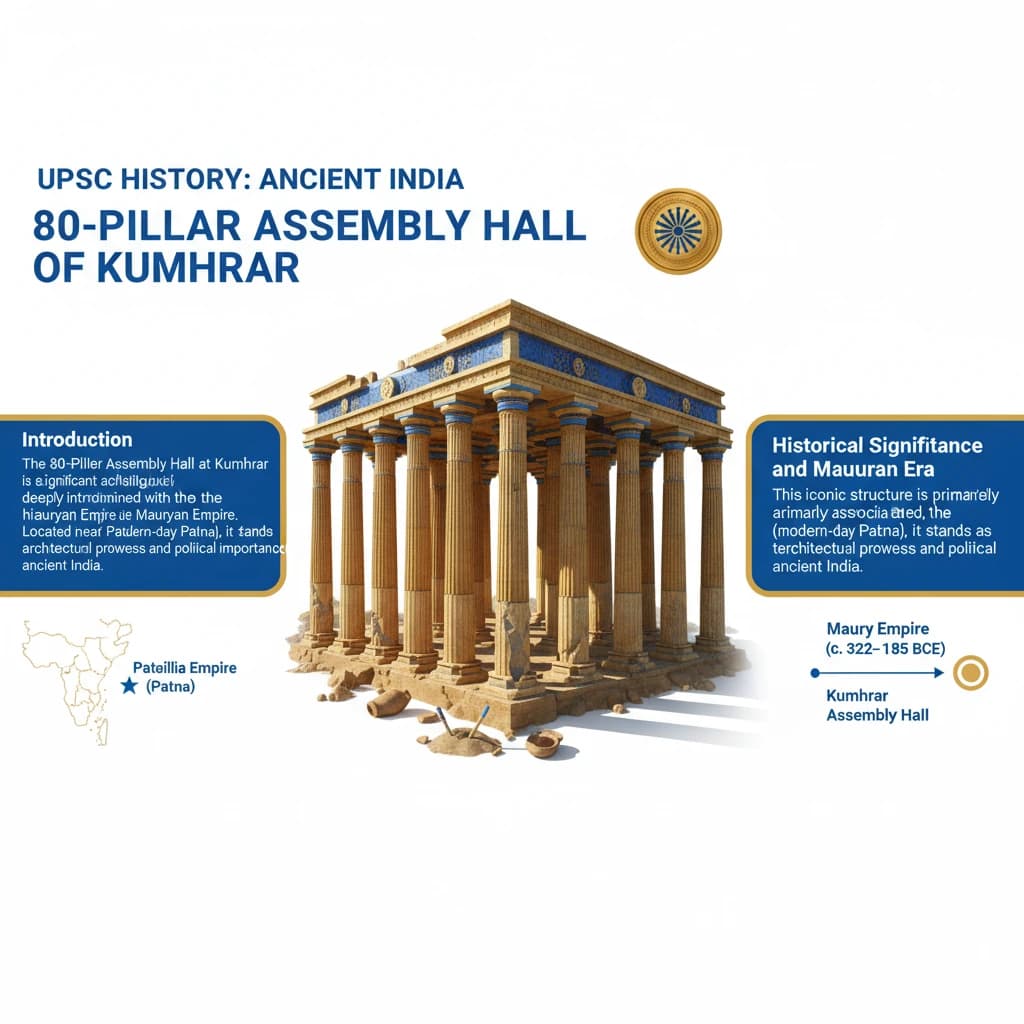
- The 80-Pillar Assembly Hall at Kumhrar is a significant Mauryan archaeological site.
- It is linked to Emperor Ashoka and the Third Buddhist Council (c. 250 BCE).
- The council aimed to unify the Buddhist Sangha and propagate Dhamma.
- The hall featured 80 sandstone pillars supporting a wooden roof and floor.
- It underscores Pataliputra's role as a major Mauryan political and cultural center.
What are the Key Facts About the 80-Pillar Assembly Hall of Kumharr?
📖 Introduction
💡 Key Takeaways
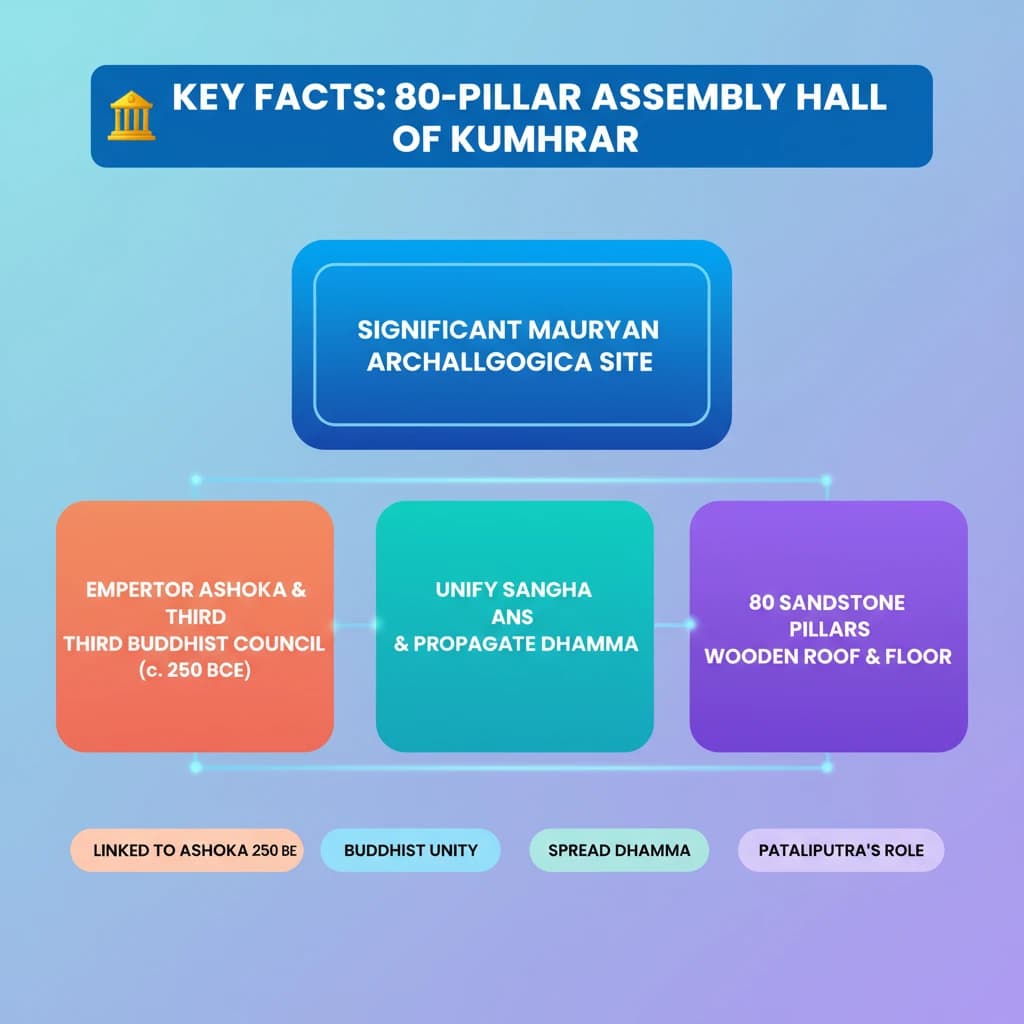
- •The 80-Pillar Assembly Hall at Kumhrar is a significant Mauryan archaeological site.
- •It is linked to Emperor Ashoka and the Third Buddhist Council (c. 250 BCE).
- •The council aimed to unify the Buddhist Sangha and propagate Dhamma.
- •The hall featured 80 sandstone pillars supporting a wooden roof and floor.
- •It underscores Pataliputra's role as a major Mauryan political and cultural center.
🧠 Memory Techniques