Loading page, please wait…
Vaidra Logo
Vaidra

Top 4 items + smart groups

UPSC GPT
New
Current Affairs
Daily Solutions
Daily Puzzle
Mains Evaluator

Version 2.0.0 • Built with ❤️ for UPSC aspirants

Loading...
Loading...
Loading...
Loading...
Loading...
Loading...
Loading...
Loading...
Loading...
Loading...
Loading...
Loading...
Loading...
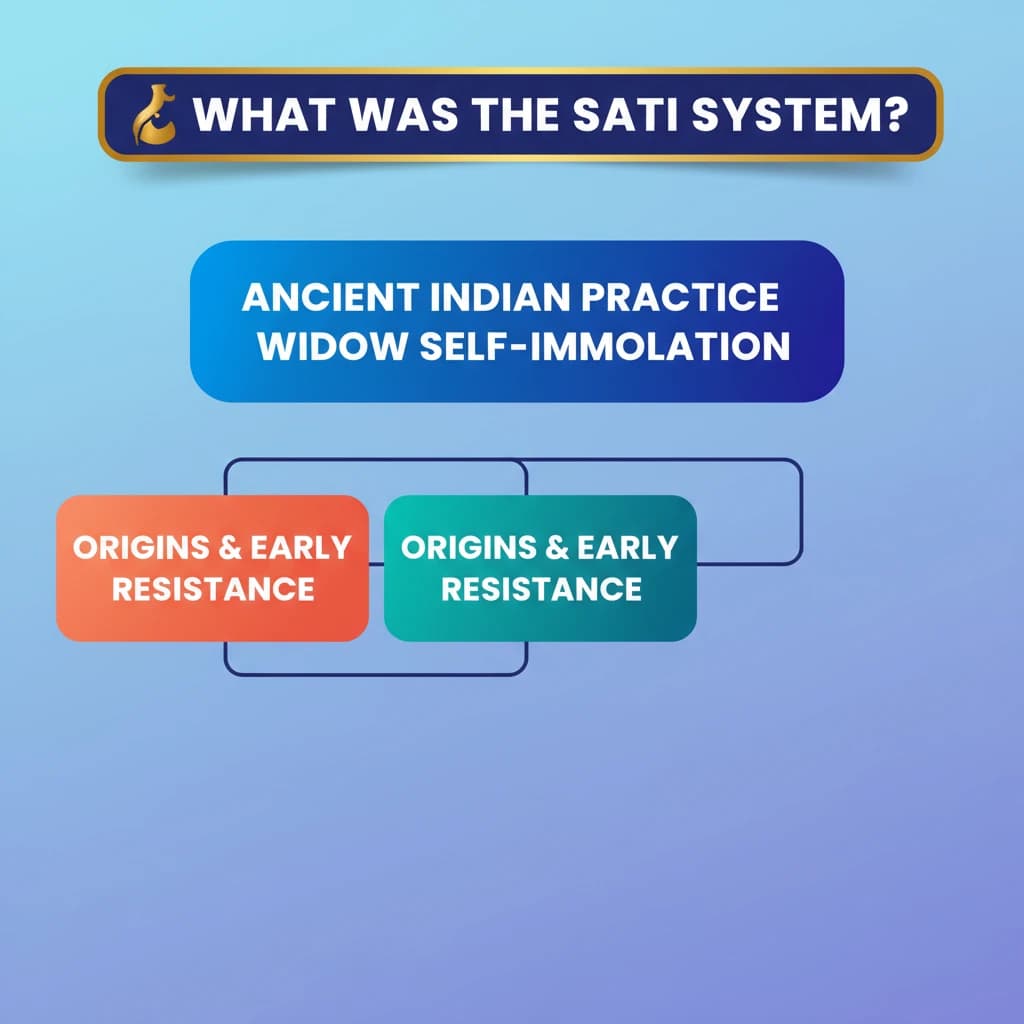
What was the Sati System - UPSC History
Back
All Subjects

Topics

0 topics • 0 completed

Loading topics...
Loading...
Loading...
Loading...
Loading...
Loading...
Overall Progress0%

What was the Sati System - UPSC History

What is What was the Sati System in UPSC History?

What was the Sati System is a key topic under History for UPSC Civil Services Examination. Key points include: Sati was the practice of a widow immolating herself on her husband's funeral pyre, often leading to her worship as a goddess.. First epigraphical evidence: Eran Pillar Inscription (510 AD) in Madhya Pradesh.. Early opposition: Mughal Emperor Akbar (1582), Sikh Guru Amar Das (15th-16th century), Maratha Empire, and other European colonial powers.. Understanding this topic is essential for both UPSC Prelims and Mains preparation.

Why is What was the Sati System important for UPSC exam?

What was the Sati System is a Easy-level topic in UPSC History. It is tested in both Prelims (factual MCQs) and Mains (analytical answer writing). Previous year UPSC questions have frequently covered aspects of What was the Sati System, making it essential for comprehensive IAS preparation.

How to prepare What was the Sati System for UPSC?

To prepare What was the Sati System for UPSC: (1) Study the comprehensive notes covering all key concepts on Vaidra. (2) Practice previous year questions on this topic. (3) Connect it with current affairs using daily updates. (4) Revise using key takeaways and mind maps available for History. (5) Write practice answers linking What was the Sati System to related GS Paper topics.

Key takeaways of What was the Sati System for UPSC

  • Sati was the practice of a widow immolating herself on her husband's funeral pyre, often leading to her worship as a goddess.
  • First epigraphical evidence: Eran Pillar Inscription (510 AD) in Madhya Pradesh.
  • Early opposition: Mughal Emperor Akbar (1582), Sikh Guru Amar Das (15th-16th century), Maratha Empire, and other European colonial powers.
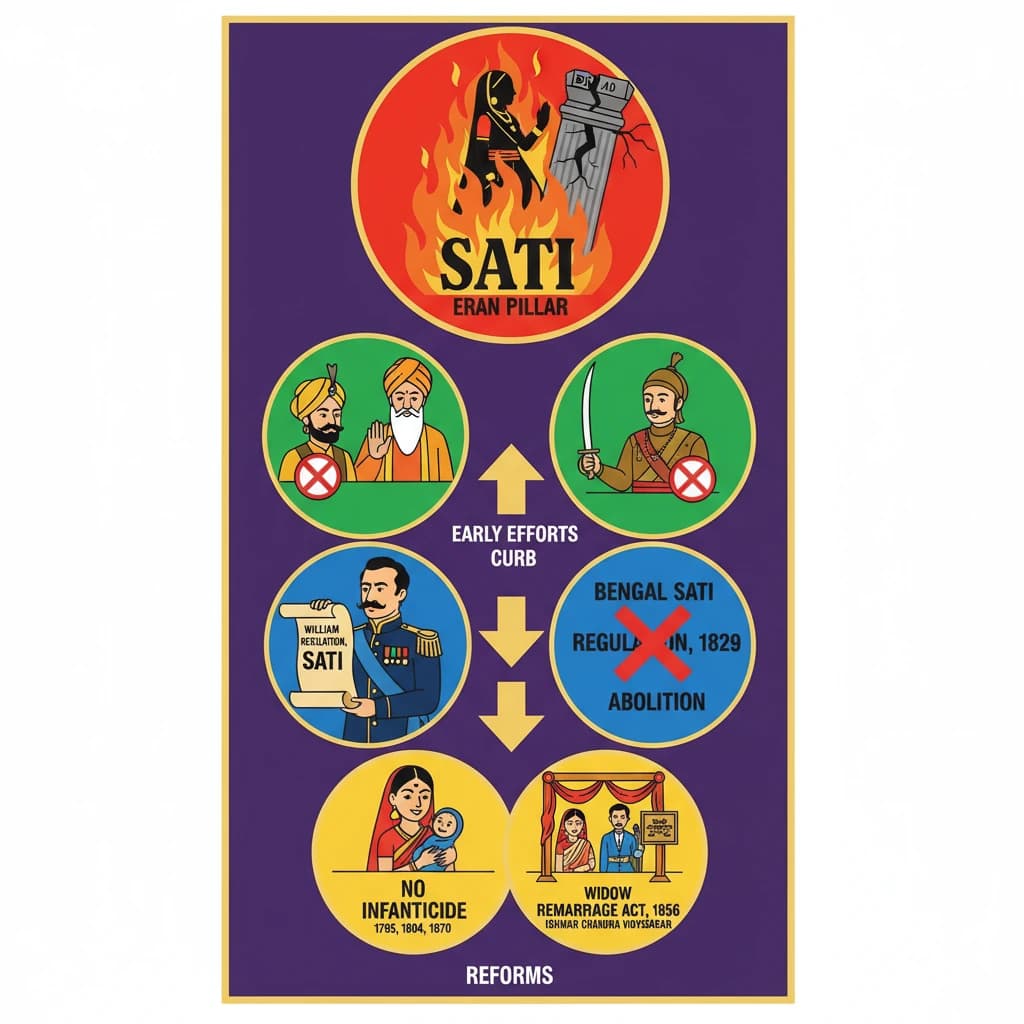
  • British abolition: Governor-General William Bentinck declared Sati illegal via the Bengal Sati Regulation, 1829, making it a criminal offense.
  • Other reforms for women: Bengal Regulations of 1795 & 1804 against female infanticide, and Hindu Widows’ Remarriage Act, 1856 (due to Ishwar Chandra Vidyasagar's efforts).
What was the Sati System

What was the Sati System

Easy⏱️ 7 min read✓ 98% Verified
history

📖 Introduction

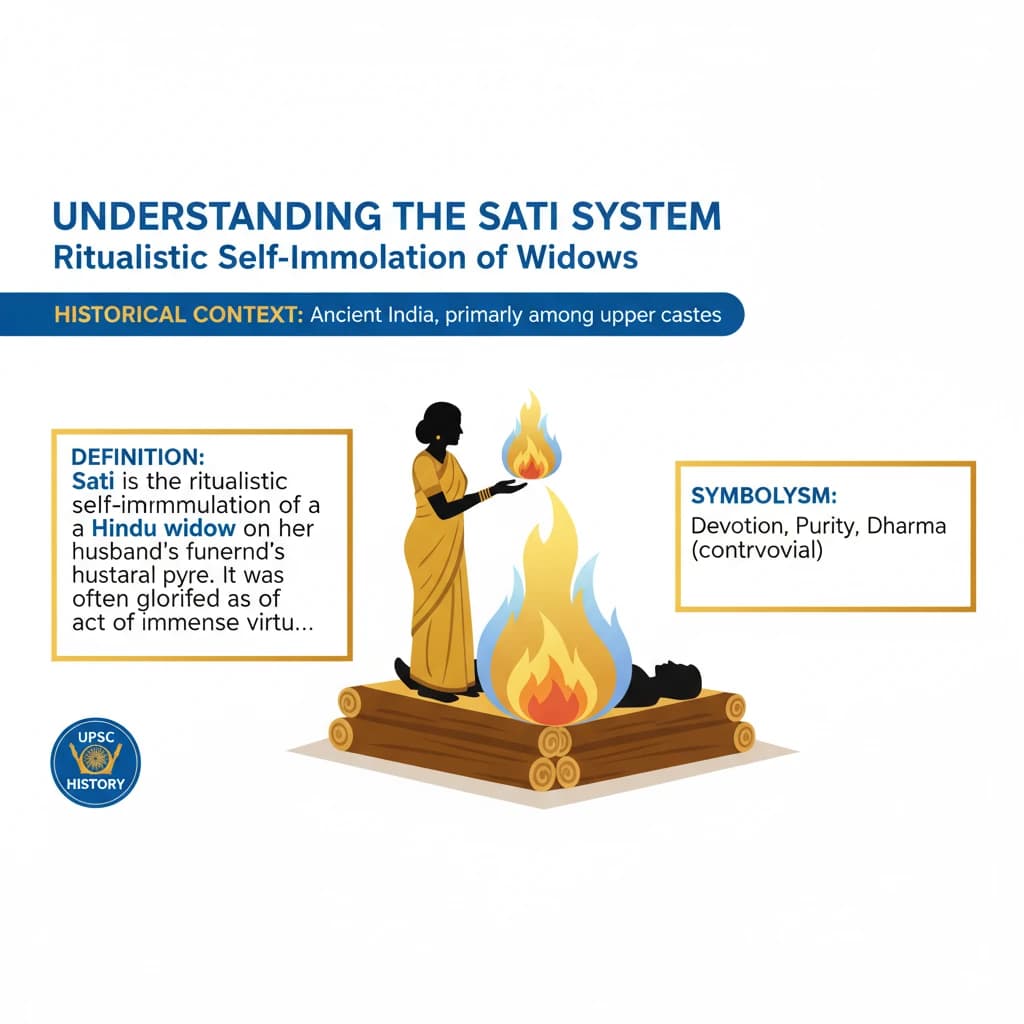
<h4>Definition of Sati System</h4><p><strong>Sati</strong> refers to the historical practice where a <strong>widow immolated herself</strong> on the cremation pyre of her deceased husband. This act was often driven by social pressure or religious belief.</p><div class='key-point-box'><p>After the immolation, a <strong>memorial stone</strong> and often a shrine were erected for the woman, and she was sometimes worshipped as a <strong>Goddess</strong>, signifying a complex interplay of grief, devotion, and social ritual.</p></div><h4>First Epigraphical Evidence of Sati</h4><p>The earliest known epigraphical evidence of <strong>Sati</strong> has been discovered from the <strong>Eran Pillar Inscription</strong>. This inscription is located in <strong>Eran, Madhya Pradesh</strong>.</p><div class='info-box'><p>The inscription dates back to <strong>510 AD</strong> and mentions the practice in relation to <strong>Bhānugupta</strong>. This provides crucial historical proof of its existence.</p></div><div class='exam-tip-box'><p>The <strong>Eran Pillar Inscription (510 AD)</strong> is a key factual detail for UPSC Prelims, especially for ancient Indian history. Remember the location: <strong>Eran, Madhya Pradesh</strong>.</p></div><h4>Early Efforts to Abolish Sati</h4><p>Various rulers and empires made efforts to curb the practice of <strong>Sati</strong> even before the British colonial period. These efforts highlight a long-standing societal debate.</p><ul><li><strong>Mughal Empire:</strong> In <strong>1582</strong>, Emperor <strong>Akbar</strong> issued orders to his officials across the empire to prevent the forced immolation of women.</li><li><strong>Akbar's Reforms:</strong> He also provided incentives like <strong>pensions, gifts, and rehabilitation</strong> to widows to discourage them from performing <strong>Sati</strong>.</li><li><strong>Sikh Empire:</strong> <strong>Sikh Guru Amar Das</strong>, during the <strong>15th-16th centuries</strong>, strongly condemned the practice of <strong>Sati</strong>, reflecting early religious opposition.</li><li><strong>Maratha Empire:</strong> The <strong>Marathas</strong> also took steps to ban <strong>Sati</strong> in their territories, indicating a regional awareness and action against the custom.</li></ul><h4>Colonial Powers and Sati Abolition</h4><p>Several European colonial powers in India also recognized the severity of <strong>Sati</strong> and implemented bans in their respective territories.</p><div class='info-box'><p>The <strong>Dutch, Portuguese, and French</strong> colonial administrations prohibited <strong>Sati</strong> within their colonies in India, demonstrating a collective disapproval of the practice.</p></div><h4>British Abolition of Sati</h4><p>The most significant legislative step against <strong>Sati</strong> came during the British colonial rule. This marked a pivotal moment in social reform.</p><div class='key-point-box'><p><strong>British Governor-General William Bentinck</strong> officially declared the practice of <strong>Sati illegal</strong> and punishable by criminal courts under the <strong>Bengal Sati Regulation, 1829</strong>. This made it a criminal offense.</p></div><h4>Other Legal Initiatives for Women's Position</h4><p>The movement against <strong>Sati</strong> was part of broader efforts to improve the position of women in Indian society. Other social evils were also targeted through legislation.</p><ul><li><strong>Female Infanticide:</strong> The <strong>Bengal Regulations of 1795 and 1804</strong> made infanticide illegal, equating it with murder.</li><li><strong>Registration Mandate:</strong> An <strong>1870 act</strong> further required parents to register all births and mandated verification of female infants for several years in areas prone to secret infanticide.</li><li><strong>Widow Remarriage:</strong> Driven by the relentless efforts of <strong>Pandit Ishwar Chandra Vidyasagar</strong>, the <strong>Hindu Widows’ Remarriage Act, 1856</strong> was passed.</li><li><strong>Legal Recognition:</strong> This act legalized the marriage of widows and recognized children from such marriages as legitimate, providing crucial social and legal support.</li></ul>
Concept Diagram

💡 Key Takeaways

  • •Sati was the practice of a widow immolating herself on her husband's funeral pyre, often leading to her worship as a goddess.
  • •First epigraphical evidence: Eran Pillar Inscription (510 AD) in Madhya Pradesh.
  • •Early opposition: Mughal Emperor Akbar (1582), Sikh Guru Amar Das (15th-16th century), Maratha Empire, and other European colonial powers.
  • •British abolition: Governor-General William Bentinck declared Sati illegal via the Bengal Sati Regulation, 1829, making it a criminal offense.
  • •Other reforms for women: Bengal Regulations of 1795 & 1804 against female infanticide, and Hindu Widows’ Remarriage Act, 1856 (due to Ishwar Chandra Vidyasagar's efforts).

🧠 Memory Techniques
Memory Aid
98% Verified Content

📚 Reference Sources

•Standard textbooks on Modern Indian History (e.g., Bipan Chandra, Spectrum)
•Academic articles on the history of Sati and social reforms in India

Related Topics

Loading related topics...
Explore:History Topics·All Subjects·Daily Current Affairs·Editorial Analysis·Previous Year Questions·UPSC GPT