Loading page, please wait…
Vaidra Logo
Vaidra

Top 4 items + smart groups

UPSC GPT
New
Current Affairs
Daily Solutions
Daily Puzzle
Mains Evaluator

Version 2.0.0 • Built with ❤️ for UPSC aspirants

Loading...
Loading...
Loading...
Loading...
Loading...
Loading...
Loading...
Loading...
Loading...
Loading...
Loading...
Loading...
Loading...
Back
All Subjects

Topics

0 topics • 0 completed

Loading topics...
Loading...
Loading...
Loading...
Loading...
Loading...
Overall Progress0%
Saint Narahari Tirtha - UPSC History

Saint Narahari Tirtha - UPSC History

What is Saint Narahari Tirtha in UPSC History?

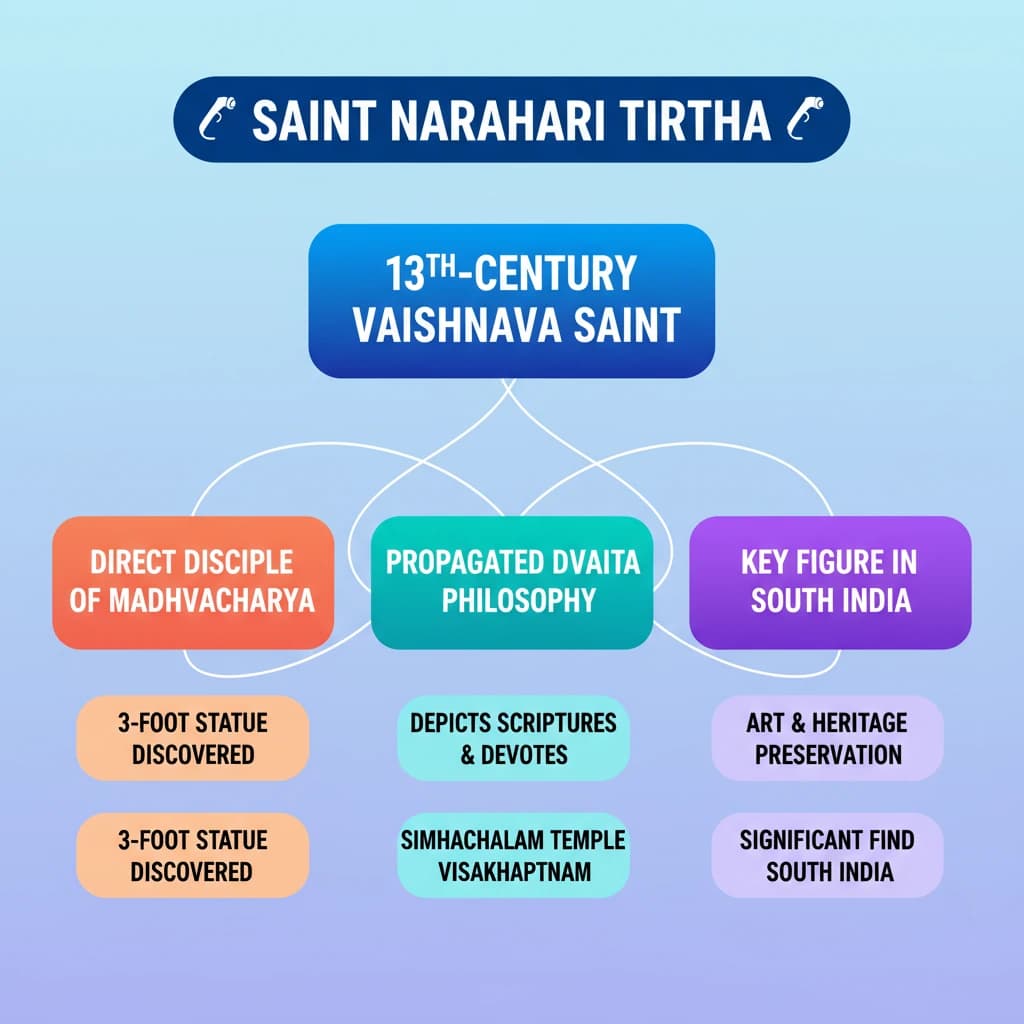
Saint Narahari Tirtha is a key topic under History for UPSC Civil Services Examination. Key points include: Saint Narahari Tirtha was a 13th-century Vaishnava saint and direct disciple of Madhvacharya.. He was a key figure in propagating the Dvaita philosophy in South India.. A three-foot statue of him was discovered at Simhachalam Temple, Visakhapatnam, Andhra Pradesh.. Understanding this topic is essential for both UPSC Prelims and Mains preparation.

Why is Saint Narahari Tirtha important for UPSC exam?

Saint Narahari Tirtha is a Easy-level topic in UPSC History. It is tested in both Prelims (factual MCQs) and Mains (analytical answer writing). Previous year UPSC questions have frequently covered aspects of Saint Narahari Tirtha, making it essential for comprehensive IAS preparation.

How to prepare Saint Narahari Tirtha for UPSC?

To prepare Saint Narahari Tirtha for UPSC: (1) Study the comprehensive notes covering all key concepts on Vaidra. (2) Practice previous year questions on this topic. (3) Connect it with current affairs using daily updates. (4) Revise using key takeaways and mind maps available for History. (5) Write practice answers linking Saint Narahari Tirtha to related GS Paper topics.

Key takeaways of Saint Narahari Tirtha for UPSC

  • Saint Narahari Tirtha was a 13th-century Vaishnava saint and direct disciple of Madhvacharya.
  • He was a key figure in propagating the Dvaita philosophy in South India.
  • A three-foot statue of him was discovered at Simhachalam Temple, Visakhapatnam, Andhra Pradesh.
  • The statue depicts him with palm-leaf scriptures, flanked by devotees.
  • The discovery is significant for understanding medieval religious history, art, and heritage preservation in South India.
Saint Narahari Tirtha

Saint Narahari Tirtha

Easy⏱️ 6 min read✓ 95% Verified
history

📖 Introduction

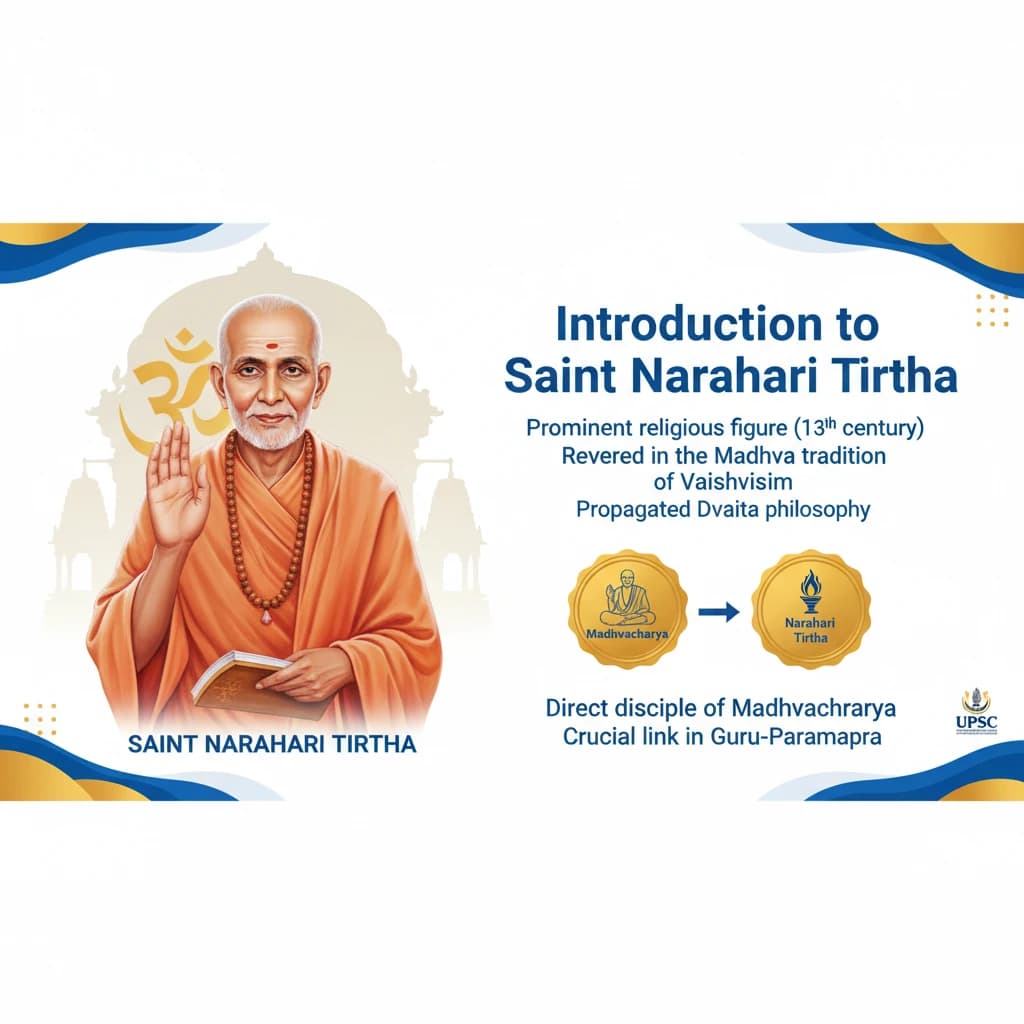
<h4>Introduction to Saint Narahari Tirtha</h4><p><strong>Saint Narahari Tirtha</strong> was a prominent religious figure from the <strong>13th century</strong>. He is revered in the <strong>Madhva tradition</strong> of Vaishnavism, a significant philosophical school in Hinduism.</p><p>His contributions are noted in the propagation of <strong>Dvaita philosophy</strong>, established by <strong>Madhvacharya</strong>. Narahari Tirtha was a direct disciple of Madhvacharya, making him a crucial link in the lineage.</p><h4>Discovery of Saint Narahari Tirtha's Statue</h4><p>A significant archaeological discovery recently brought <strong>Saint Narahari Tirtha</strong> back into the spotlight. A three-foot statue depicting the saint was found at the <strong>Simhachalam Temple</strong>.</p><div class='info-box'><p><strong>Location of Discovery:</strong> <strong>Simhachalam Temple</strong> in <strong>Visakhapatnam</strong>, <strong>Andhra Pradesh</strong>.</p><p><strong>Statue Description:</strong> The three-foot statue portrays <strong>Saint Narahari Tirtha</strong> holding <strong>script on palm leaves</strong>. He is depicted flanked by devotees, indicating his revered status.</p></div><p>This discovery provides valuable insights into the artistic and religious practices of the <strong>13th century</strong> and reinforces the historical presence of the <strong>Madhva tradition</strong> in the region.</p><h4>Significance of the Discovery</h4><p>The finding of the statue is crucial for understanding the spread and influence of <strong>Vaishnavism</strong> and the <strong>Dvaita philosophy</strong> in <strong>South India</strong> during the medieval period.</p><div class='key-point-box'><p>The statue serves as tangible evidence of <strong>Saint Narahari Tirtha's</strong> historical existence and his veneration among followers. It enriches the cultural and religious heritage of <strong>Andhra Pradesh</strong>.</p></div><div class='exam-tip-box'><p><strong>UPSC Insight:</strong> Such discoveries are important for <strong>Art and Culture</strong> (GS Paper I) and can be linked to questions on <strong>religious movements</strong>, <strong>sculptural traditions</strong>, and <strong>regional history</strong>.</p></div>
Concept Diagram

💡 Key Takeaways

  • •Saint Narahari Tirtha was a 13th-century Vaishnava saint and direct disciple of Madhvacharya.
  • •He was a key figure in propagating the Dvaita philosophy in South India.
  • •A three-foot statue of him was discovered at Simhachalam Temple, Visakhapatnam, Andhra Pradesh.
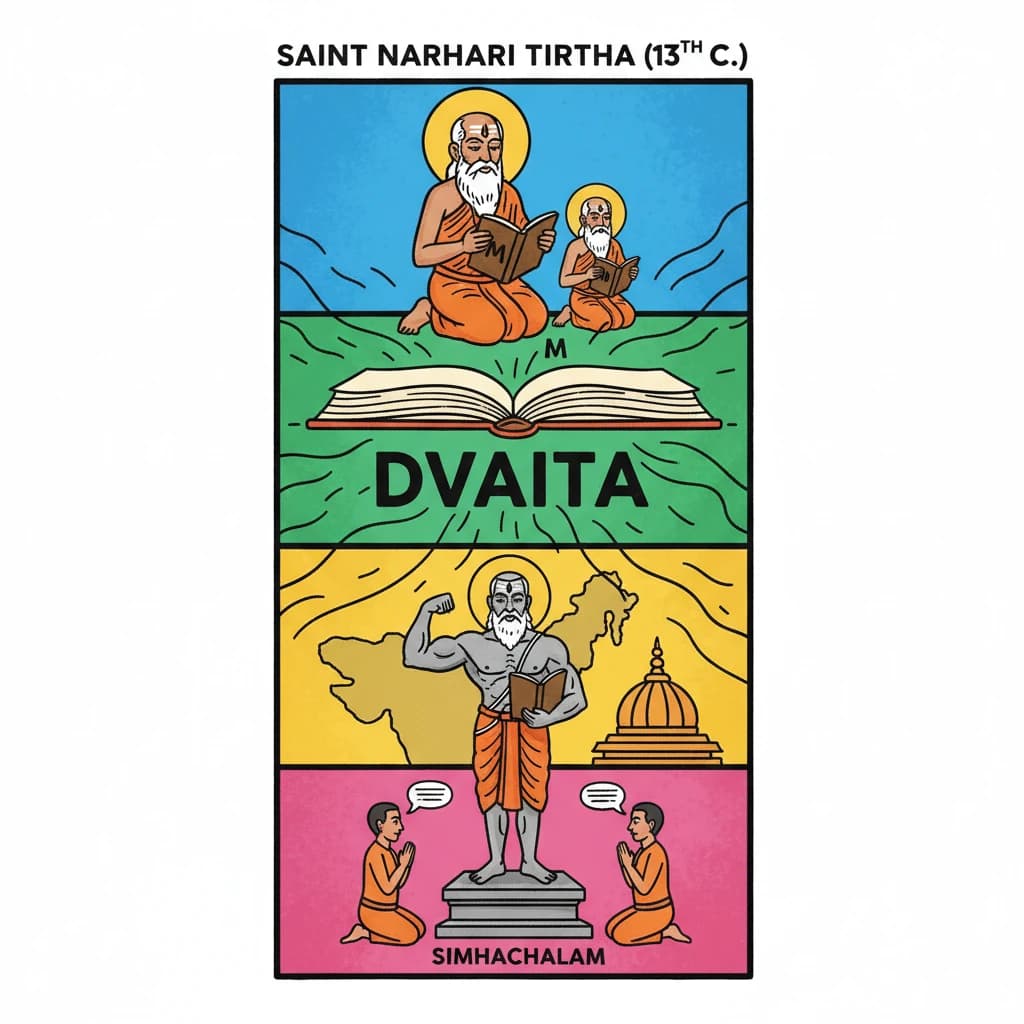
  • •The statue depicts him with palm-leaf scriptures, flanked by devotees.
  • •The discovery is significant for understanding medieval religious history, art, and heritage preservation in South India.

🧠 Memory Techniques
Memory Aid
95% Verified Content

📚 Reference Sources

•General knowledge of Madhva philosophy and 13th-century South Indian history
•Archaeological Survey of India (ASI) reports (general context for discoveries)

Related Topics

Loading related topics...
Explore:History Topics·All Subjects·Daily Current Affairs·Editorial Analysis·Previous Year Questions·UPSC GPT