UNESCO World Heritage Sites Related to Buddhism in India - UPSC History
What is UNESCO World Heritage Sites Related to Buddhism in India in UPSC History?
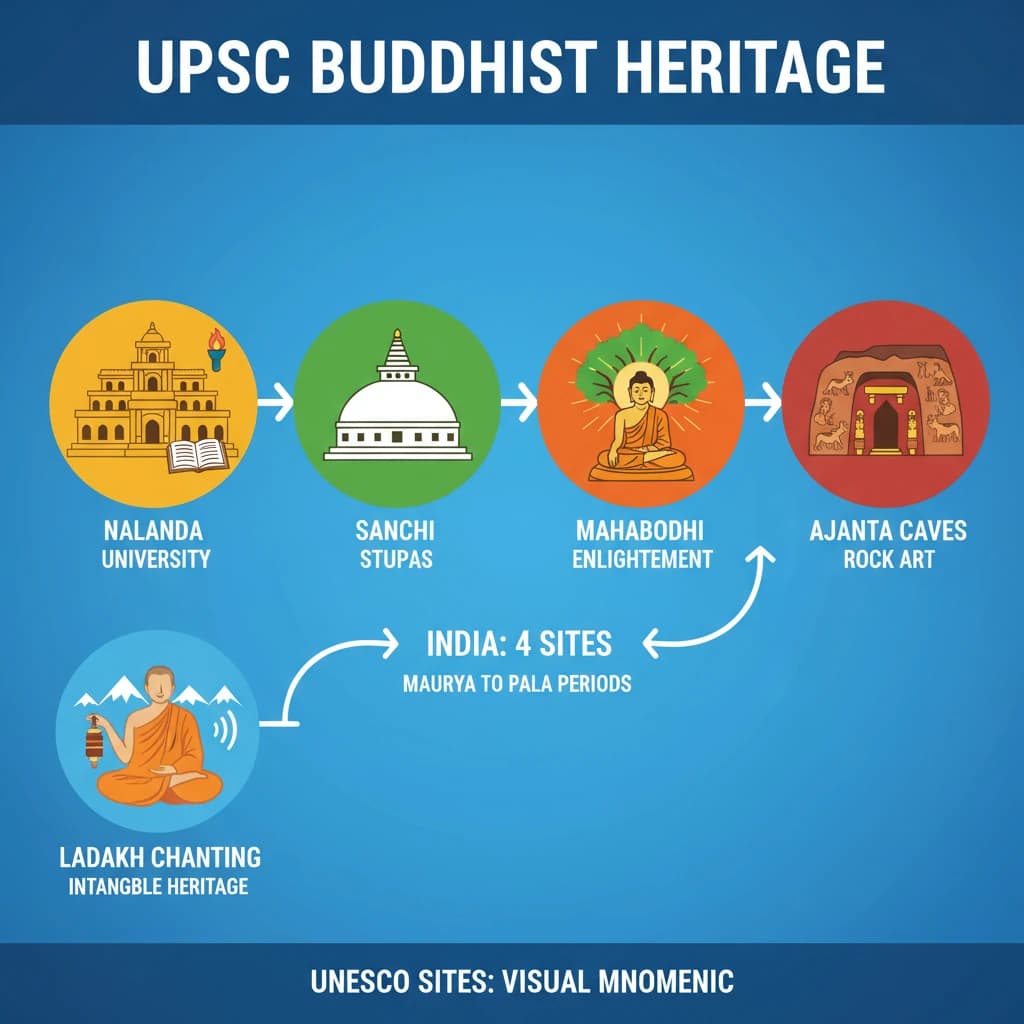
UNESCO World Heritage Sites Related to Buddhism in India is a key topic under History for UPSC Civil Services Examination. Key points include: India has four major UNESCO Buddhist World Heritage Sites: Nalanda, Sanchi, Mahabodhi Temple, and Ajanta Caves.. These sites represent key phases of Buddhist art, architecture, and learning from the Mauryan to the Pala periods.. Nalanda was an ancient university, Sanchi is famous for its stupas, Mahabodhi is where Buddha attained enlightenment, and Ajanta for its rock-cut paintings.. Understanding this topic is essential for both UPSC Prelims and Mains preparation.
Why is UNESCO World Heritage Sites Related to Buddhism in India important for UPSC exam?
UNESCO World Heritage Sites Related to Buddhism in India is a Medium-level topic in UPSC History. It is tested in both Prelims (factual MCQs) and Mains (analytical answer writing). Previous year UPSC questions have frequently covered aspects of UNESCO World Heritage Sites Related to Buddhism in India, making it essential for comprehensive IAS preparation.
How to prepare UNESCO World Heritage Sites Related to Buddhism in India for UPSC?
To prepare UNESCO World Heritage Sites Related to Buddhism in India for UPSC: (1) Study the comprehensive notes covering all key concepts on Vaidra. (2) Practice previous year questions on this topic. (3) Connect it with current affairs using daily updates. (4) Revise using key takeaways and mind maps available for History. (5) Write practice answers linking UNESCO World Heritage Sites Related to Buddhism in India to related GS Paper topics.
Key takeaways of UNESCO World Heritage Sites Related to Buddhism in India for UPSC
- India has four major UNESCO Buddhist World Heritage Sites: Nalanda, Sanchi, Mahabodhi Temple, and Ajanta Caves.
- These sites represent key phases of Buddhist art, architecture, and learning from the Mauryan to the Pala periods.
- Nalanda was an ancient university, Sanchi is famous for its stupas, Mahabodhi is where Buddha attained enlightenment, and Ajanta for its rock-cut paintings.
- The Buddhist chanting of Ladakh is recognized as UNESCO Intangible Cultural Heritage.
- These sites are crucial for understanding India's historical, cultural, and spiritual legacy, and play a role in India's cultural diplomacy.
UNESCO World Heritage Sites Related to Buddhism in India
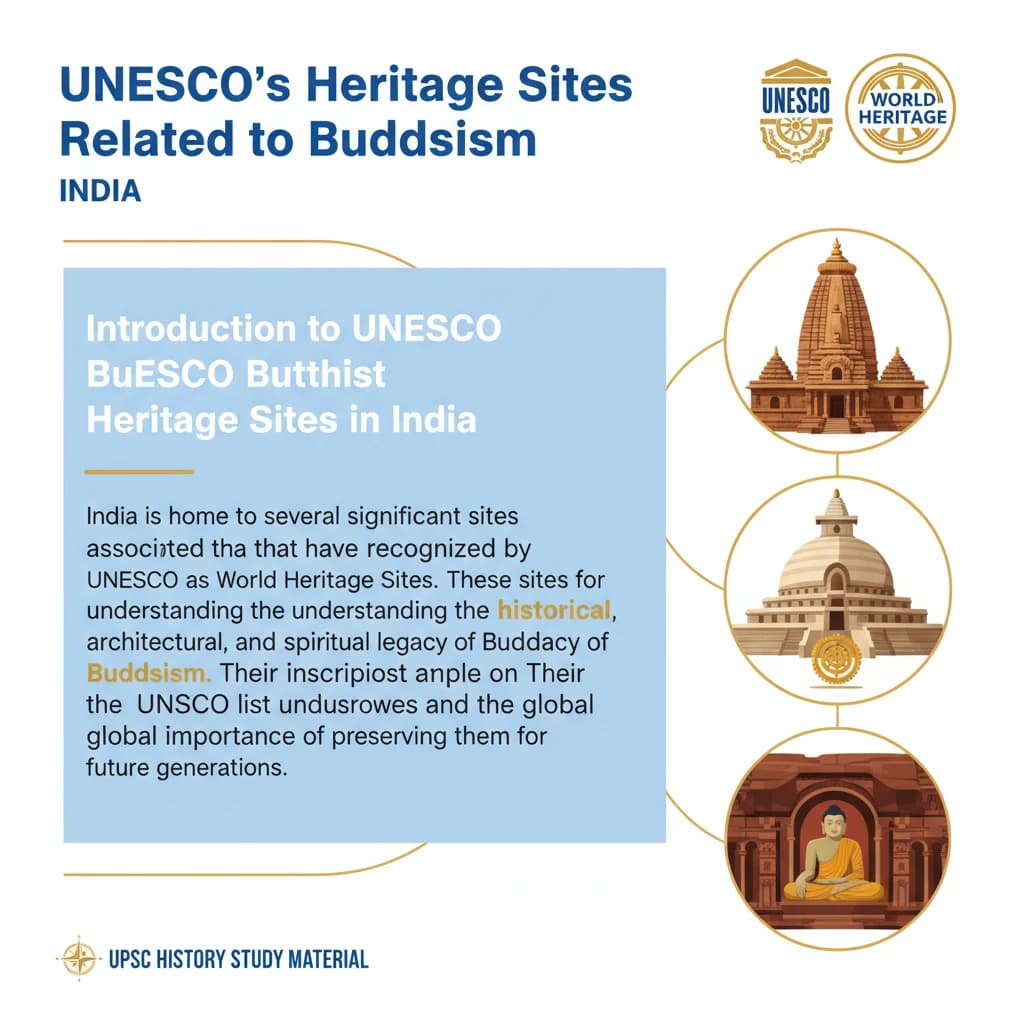
📖 Introduction
💡 Key Takeaways
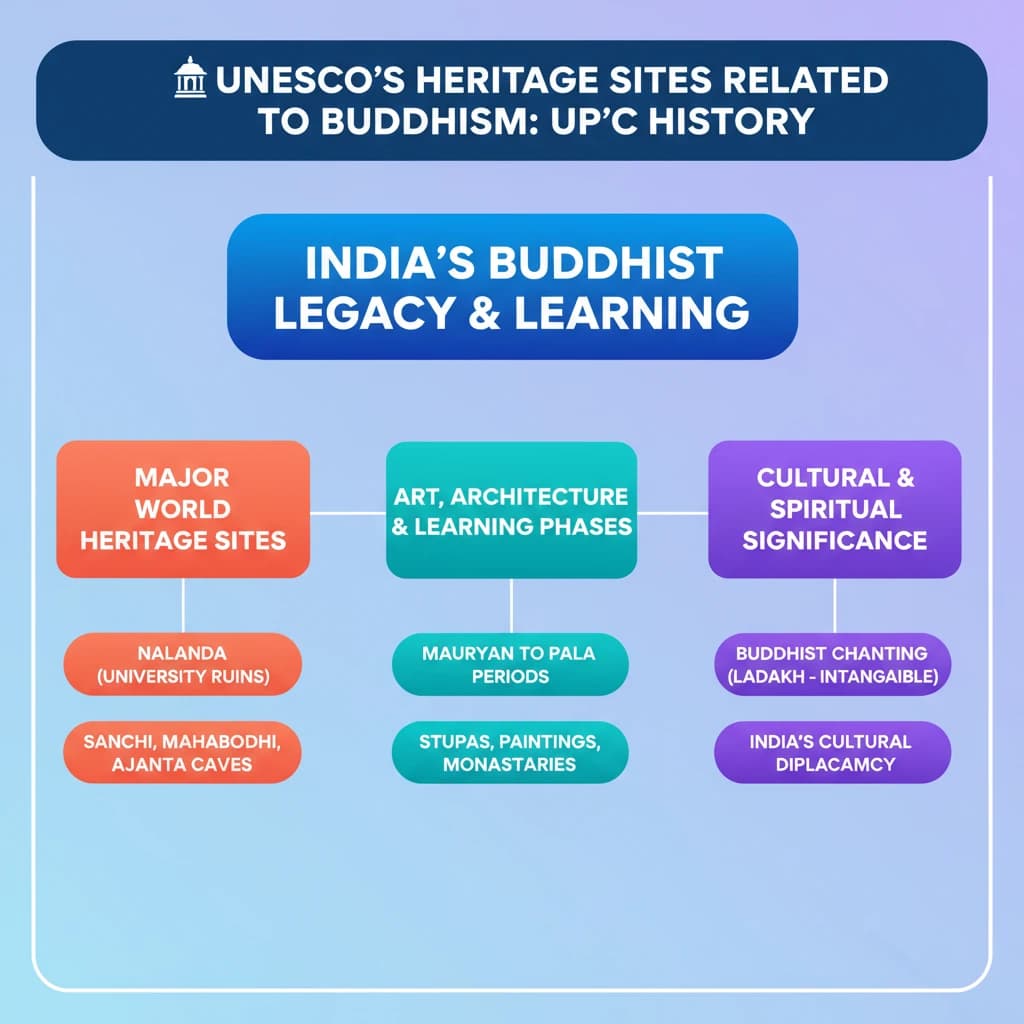
- •India has four major UNESCO Buddhist World Heritage Sites: Nalanda, Sanchi, Mahabodhi Temple, and Ajanta Caves.
- •These sites represent key phases of Buddhist art, architecture, and learning from the Mauryan to the Pala periods.
- •Nalanda was an ancient university, Sanchi is famous for its stupas, Mahabodhi is where Buddha attained enlightenment, and Ajanta for its rock-cut paintings.
- •The Buddhist chanting of Ladakh is recognized as UNESCO Intangible Cultural Heritage.
- •These sites are crucial for understanding India's historical, cultural, and spiritual legacy, and play a role in India's cultural diplomacy.
🧠 Memory Techniques