Loading page, please wait…
Chalukya Architecture: Cave, Aihole, Badami & Pattadakal Temples - UPSC History
What is Chalukya Architecture: Cave, Aihole, Badami & Pattadakal Temples in UPSC History?
Chalukya Architecture: Cave, Aihole, Badami & Pattadakal Temples is a key topic under History for UPSC Civil Services Examination. Key points include: <strong>Cave Temples</strong> represent early rock-cut architecture with both religious and secular themes.. <strong>Aihole</strong> is known as the 'Cradle of Indian Temple Architecture' for its experimental styles.. <strong>Badami</strong> features exquisite rock-cut cave temples, capital of early <strong>Chalukyas</strong>.. Understanding this topic is essential for both UPSC Prelims and Mains preparation.
Why is Chalukya Architecture: Cave, Aihole, Badami & Pattadakal Temples important for UPSC exam?
Chalukya Architecture: Cave, Aihole, Badami & Pattadakal Temples is a Medium-level topic in UPSC History. It is tested in both Prelims (factual MCQs) and Mains (analytical answer writing). Previous year UPSC questions have frequently covered aspects of Chalukya Architecture: Cave, Aihole, Badami & Pattadakal Temples, making it essential for comprehensive IAS preparation.
How to prepare Chalukya Architecture: Cave, Aihole, Badami & Pattadakal Temples for UPSC?
To prepare Chalukya Architecture: Cave, Aihole, Badami & Pattadakal Temples for UPSC: (1) Study the comprehensive notes covering all key concepts on Vaidra. (2) Practice previous year questions on this topic. (3) Connect it with current affairs using daily updates. (4) Revise using key takeaways and mind maps available for History. (5) Write practice answers linking Chalukya Architecture: Cave, Aihole, Badami & Pattadakal Temples to related GS Paper topics.
Key takeaways of Chalukya Architecture: Cave, Aihole, Badami & Pattadakal Temples for UPSC
- <strong>Cave Temples</strong> represent early rock-cut architecture with both religious and secular themes.
- <strong>Aihole</strong> is known as the 'Cradle of Indian Temple Architecture' for its experimental styles.
- <strong>Badami</strong> features exquisite rock-cut cave temples, capital of early <strong>Chalukyas</strong>.
- <strong>Pattadakal</strong> is a <strong>UNESCO World Heritage site</strong>, showcasing a unique blend of <strong>Nagara</strong> and <strong>Dravida</strong> styles.
- The <strong>Chalukya dynasty</strong> was instrumental in developing these architectural marvels in the Deccan.
- Understanding the transition from rock-cut to structural temples is key to Indian architectural history.
Chalukya Architecture: Cave, Aihole, Badami & Pattadakal Temples
Medium⏱️ 8 min read
history
📖 Introduction
Introduction to Architectural Marvels
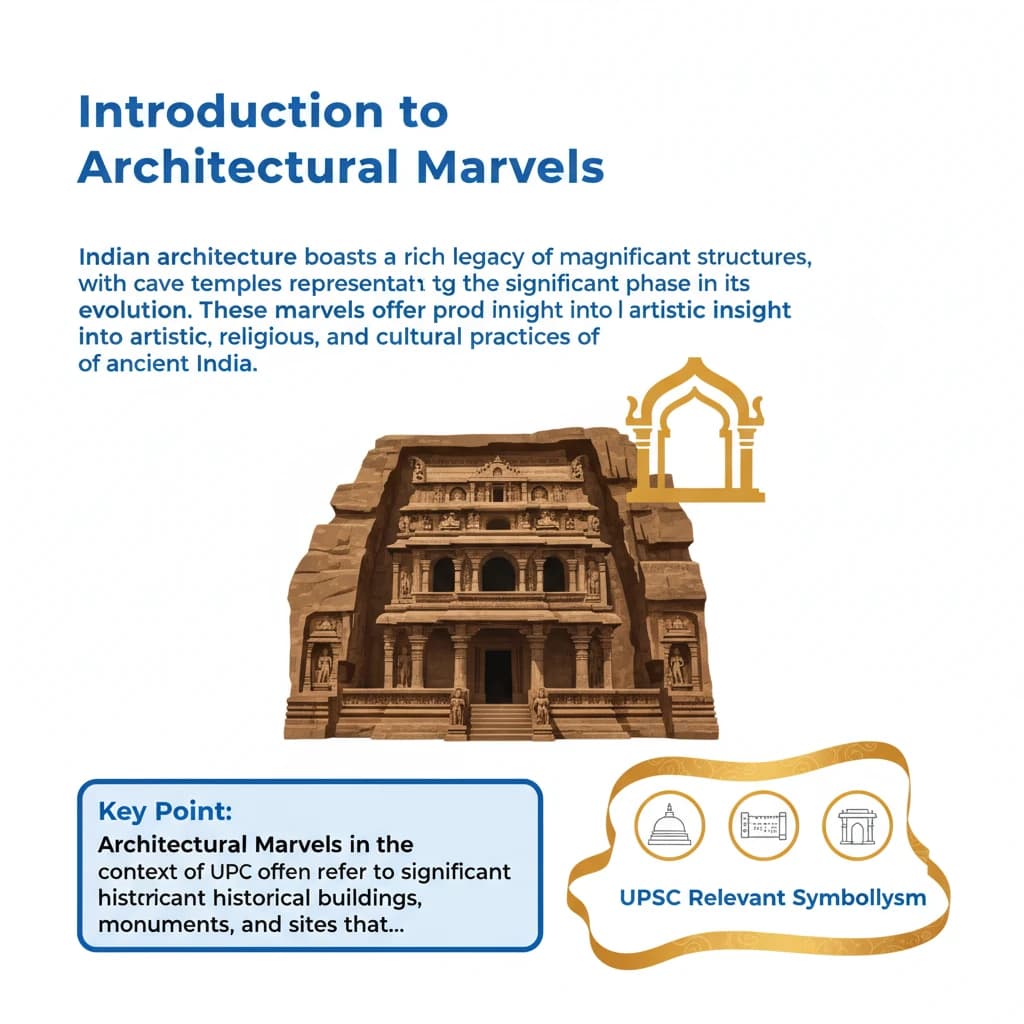
Indian architecture boasts a rich legacy of magnificent structures, with cave temples representing a significant phase in its evolution. These marvels offer a profound insight into the artistic, religious, and cultural practices of ancient India.
Architectural Marvels in the context of UPSC often refer to significant historical buildings, monuments, and sites that showcase advanced engineering, artistic skill, and cultural significance from different periods of Indian history.
The Significance of Cave Temples
Cave temples are unique architectural achievements carved directly out of natural rock formations. They served as important centers for religious worship and spiritual practices, reflecting the devotion of various communities.
These temples were not limited to religious themes; many also incorporated secular themes in their designs. They were frequently adorned with intricate sculptures and beautiful mural paintings, providing a visual narrative of the era.
- Religious Themes: Depictions of deities, mythological stories, and spiritual symbols.
- Secular Themes: Scenes from daily life, royal processions, courtly activities, and nature.
Notable Temple Complexes and Their Features
The Deccan region, particularly Karnataka, is home to several prominent temple complexes that exemplify the grandeur of ancient Indian rock-cut and structural architecture. These sites are crucial for understanding the transition in temple building styles.
- Aihole Temples: Known as the "Cradle of Indian Temple Architecture," Aihole showcases an experimental phase with various styles.
- Badami Temples: Famous for its exquisite rock-cut cave temples, Badami served as the capital of the early Chalukyas.
- Pattadakal Temples: A UNESCO World Heritage site, Pattadakal represents the culmination of Chalukyan architecture, featuring both Nagara and Dravida styles.
Aihole: Cradle of Temple Architecture
Aihole is a significant archaeological site in Karnataka, housing over 125 temples. It is often referred to as the "laboratory" where different architectural styles were experimented with by the Chalukyan artisans.
Key Temples at Aihole:
- Lady Khan Temple (Surya Temple): One of the earliest stone temples, initially a Vaishnava temple, later dedicated to Surya.
- Durga Temple: Unique for its apsidal plan, resembling a Buddhist chaitya hall, showcasing a blend of architectural influences.
- Huchimalligudi Temple: An early example of a structural temple, indicating the transition from rock-cut to freestanding structures.
Badami: Chalukyan Rock-Cut Grandeur
The town of Badami (formerly Vatapi) is renowned for its four magnificent rock-cut cave temples, primarily dedicated to Hindu deities and one to Jainism. These caves are carved out of soft sandstone cliffs.
The Badami Cave Temples are noted for their exquisite sculptures, detailed carvings, and vibrant mural paintings, offering a glimpse into the religious syncretism of the Chalukya dynasty.
Pattadakal: A UNESCO World Heritage Site
Pattadakal, located on the banks of the Malaprabha River, is a spectacular complex that served as the coronation site for the Chalukyan kings. It stands as a testament to the architectural prowess of the 7th and 8th centuries.
This site is particularly important as it showcases a harmonious blend of two major Indian temple architectural styles: the Nagara style (Northern Indian) and the Dravida style (Southern Indian). There are 10 temples in total, reflecting this unique synthesis.
Prominent Temples at Pattadakal:
- Virupaksha Temple: A grand Dravida style temple built by Queen Lokamahadevi to commemorate Vikramaditya II's victory over the Pallavas. It is known for its intricate sculptures and inscriptions.
- Sangameshwara Temple: Another significant Dravida style temple, also known as the Vijayeshwara Temple, built by King Vijayaditya Satyashraya.
- Other notable temples include the Papanatha Temple (Nagara style) and the Jambulinga Temple.
For UPSC, remember the UNESCO World Heritage status of Pattadakal and its unique representation of both Nagara and Dravida architectural styles. This makes it a frequent topic in Art & Culture questions.
💡 Key Takeaways
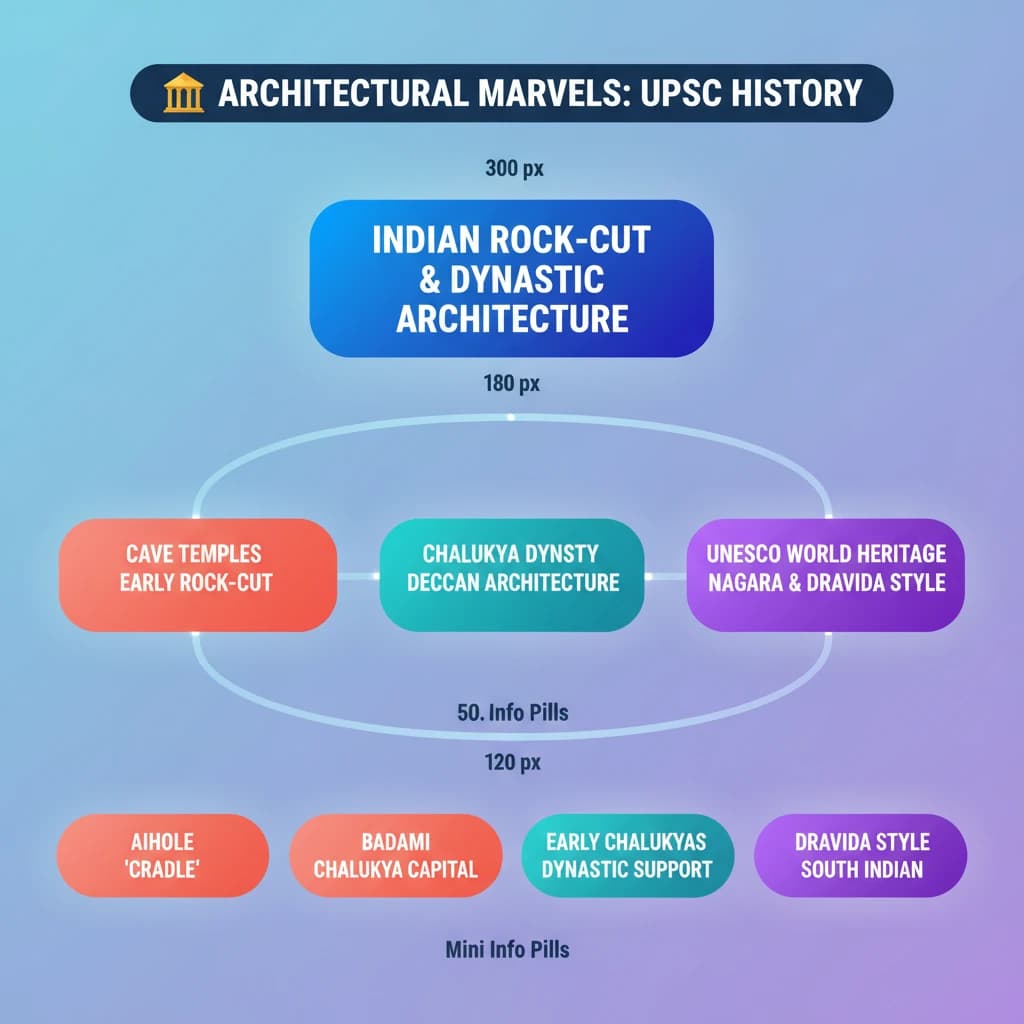
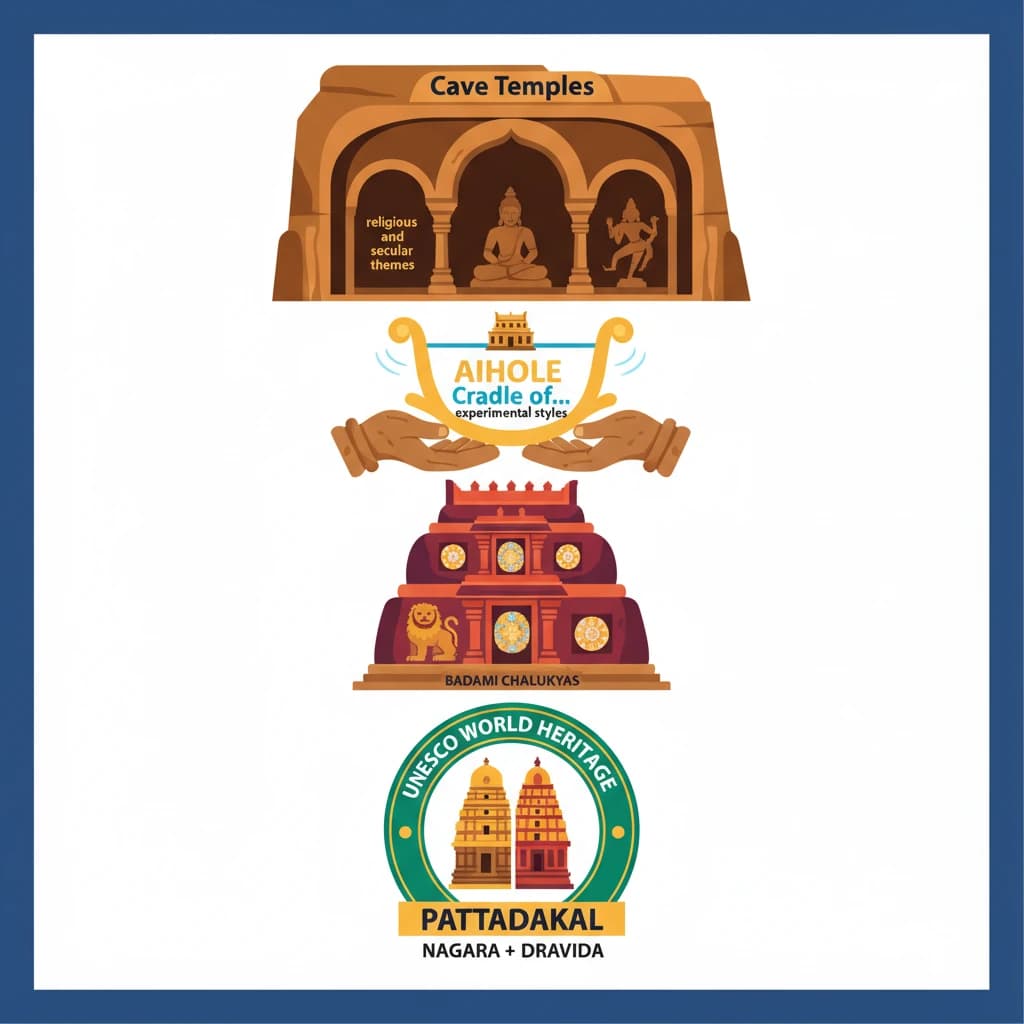
- •<strong>Cave Temples</strong> represent early rock-cut architecture with both religious and secular themes.
- •<strong>Aihole</strong> is known as the 'Cradle of Indian Temple Architecture' for its experimental styles.
- •<strong>Badami</strong> features exquisite rock-cut cave temples, capital of early <strong>Chalukyas</strong>.
- •<strong>Pattadakal</strong> is a <strong>UNESCO World Heritage site</strong>, showcasing a unique blend of <strong>Nagara</strong> and <strong>Dravida</strong> styles.
- •The <strong>Chalukya dynasty</strong> was instrumental in developing these architectural marvels in the Deccan.
- •Understanding the transition from rock-cut to structural temples is key to Indian architectural history.
🧠 Memory Techniques
95% Verified Content
📚 Reference Sources
•NCERT Fine Arts Class 11
•Archaeological Survey of India (ASI) official website
•UNESCO World Heritage Centre website