Mizoram: Formation, Statehood, and Constitutional Status - UPSC History
What is Mizoram: Formation, Statehood, and Constitutional Status in UPSC History?
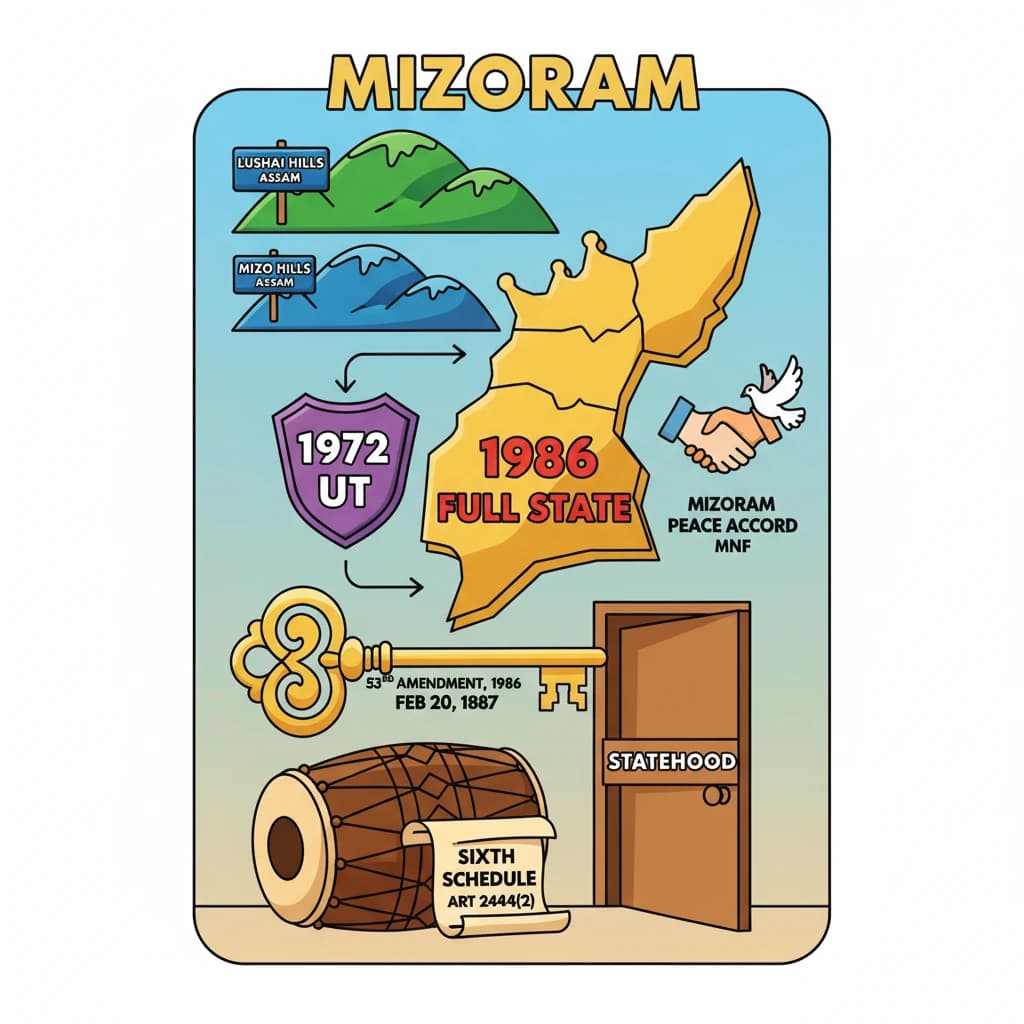
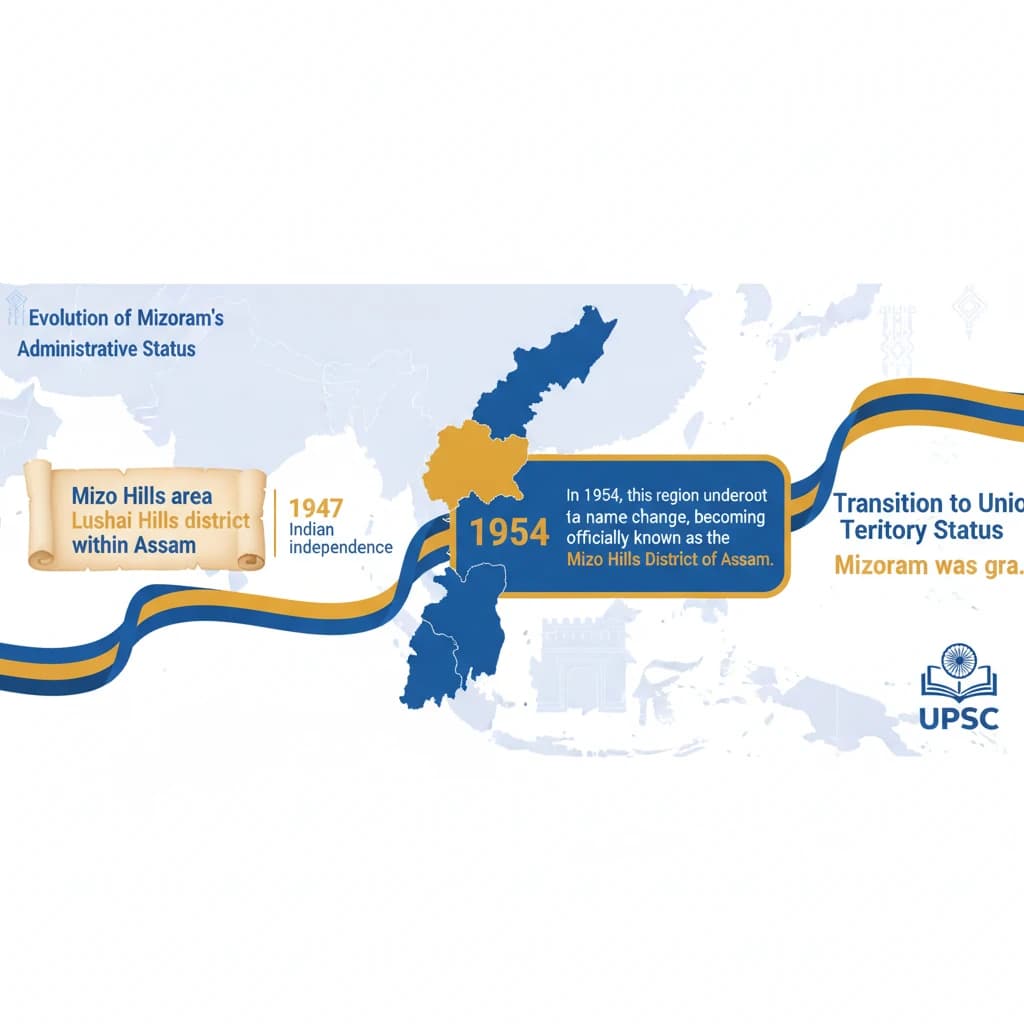
Mizoram: Formation, Statehood, and Constitutional Status is a key topic under History for UPSC Civil Services Examination. Key points include: Mizoram's administrative evolution: Lushai Hills district (Assam) -> Mizo Hills District (Assam) -> Union Territory (1972) -> Full State (1986).. The Mizoram Peace Accord (1986) between the Central government and MNF was instrumental in achieving statehood.. Formal statehood for Mizoram was granted on 20th February 1987, enabled by the 53rd Amendment, 1986.. Understanding this topic is essential for both UPSC Prelims and Mains preparation.
Why is Mizoram: Formation, Statehood, and Constitutional Status important for UPSC exam?
Mizoram: Formation, Statehood, and Constitutional Status is a Easy-level topic in UPSC History. It is tested in both Prelims (factual MCQs) and Mains (analytical answer writing). Previous year UPSC questions have frequently covered aspects of Mizoram: Formation, Statehood, and Constitutional Status, making it essential for comprehensive IAS preparation.
How to prepare Mizoram: Formation, Statehood, and Constitutional Status for UPSC?
To prepare Mizoram: Formation, Statehood, and Constitutional Status for UPSC: (1) Study the comprehensive notes covering all key concepts on Vaidra. (2) Practice previous year questions on this topic. (3) Connect it with current affairs using daily updates. (4) Revise using key takeaways and mind maps available for History. (5) Write practice answers linking Mizoram: Formation, Statehood, and Constitutional Status to related GS Paper topics.
Key takeaways of Mizoram: Formation, Statehood, and Constitutional Status for UPSC
- Mizoram's administrative evolution: Lushai Hills district (Assam) -> Mizo Hills District (Assam) -> Union Territory (1972) -> Full State (1986).
- The Mizoram Peace Accord (1986) between the Central government and MNF was instrumental in achieving statehood.
- Formal statehood for Mizoram was granted on 20th February 1987, enabled by the 53rd Amendment, 1986.
- Mizoram is designated as a 'tribal area' under the Sixth Schedule of the Indian Constitution (Article 244(2)).
- The Mizo National Front (MNF) played a significant role in Mizoram's political journey, from insurgency to peace.
Mizoram: Formation, Statehood, and Constitutional Status
📖 Introduction
💡 Key Takeaways
- •Mizoram's administrative evolution: Lushai Hills district (Assam) -> Mizo Hills District (Assam) -> Union Territory (1972) -> Full State (1986).
- •The Mizoram Peace Accord (1986) between the Central government and MNF was instrumental in achieving statehood.
- •Formal statehood for Mizoram was granted on 20th February 1987, enabled by the 53rd Amendment, 1986.
- •Mizoram is designated as a 'tribal area' under the Sixth Schedule of the Indian Constitution (Article 244(2)).
- •The Mizo National Front (MNF) played a significant role in Mizoram's political journey, from insurgency to peace.
🧠 Memory Techniques