Loading page, please wait…
Vaidra Logo
Vaidra

Top 4 items + smart groups

UPSC GPT
New
Current Affairs
Daily Solutions
Daily Puzzle
Mains Evaluator

Version 2.0.0 • Built with ❤️ for UPSC aspirants

Loading...
Loading...
Loading...
Loading...
Loading...
Loading...
Loading...
Loading...
Loading...
Loading...
Loading...
Loading...
Loading...
Back
All Subjects

Topics

0 topics • 0 completed

Loading topics...
Loading...
Loading...
Loading...
Loading...
Loading...
Overall Progress0%

What was Harappan Civilization? - UPSC History

What is What was Harappan Civilization? in UPSC History?

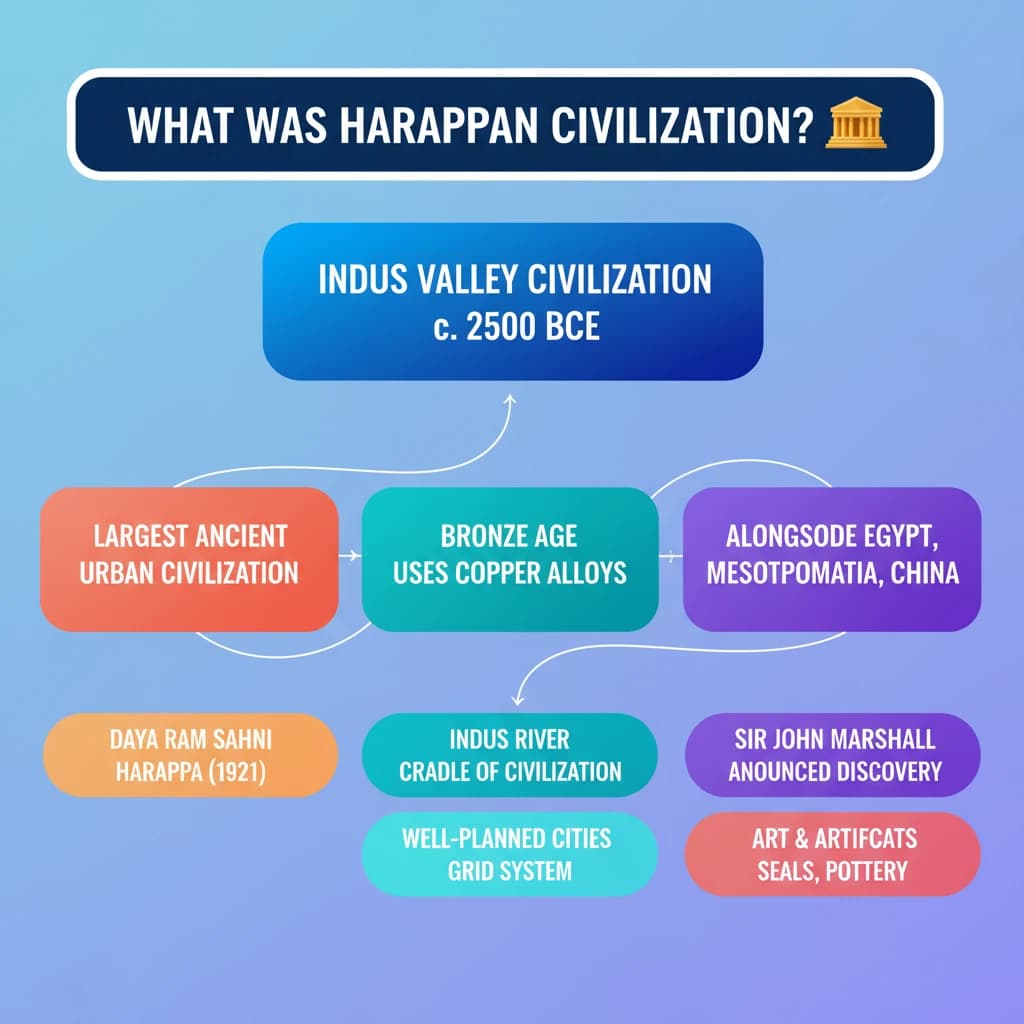
What was Harappan Civilization? is a key topic under History for UPSC Civil Services Examination. Key points include: The Harappan Civilization (IVC) flourished around 2500 BCE along the Indus River.. It was the largest of the four ancient urban civilizations, alongside Egypt, Mesopotamia, and China.. Classified as a Bronze-age civilization due to extensive use of copper-based alloys.. Understanding this topic is essential for both UPSC Prelims and Mains preparation.

Why is What was Harappan Civilization? important for UPSC exam?

What was Harappan Civilization? is a Easy-level topic in UPSC History. It is tested in both Prelims (factual MCQs) and Mains (analytical answer writing). Previous year UPSC questions have frequently covered aspects of What was Harappan Civilization?, making it essential for comprehensive IAS preparation.

How to prepare What was Harappan Civilization? for UPSC?

To prepare What was Harappan Civilization? for UPSC: (1) Study the comprehensive notes covering all key concepts on Vaidra. (2) Practice previous year questions on this topic. (3) Connect it with current affairs using daily updates. (4) Revise using key takeaways and mind maps available for History. (5) Write practice answers linking What was Harappan Civilization? to related GS Paper topics.

Key takeaways of What was Harappan Civilization? for UPSC

  • The Harappan Civilization (IVC) flourished around 2500 BCE along the Indus River.
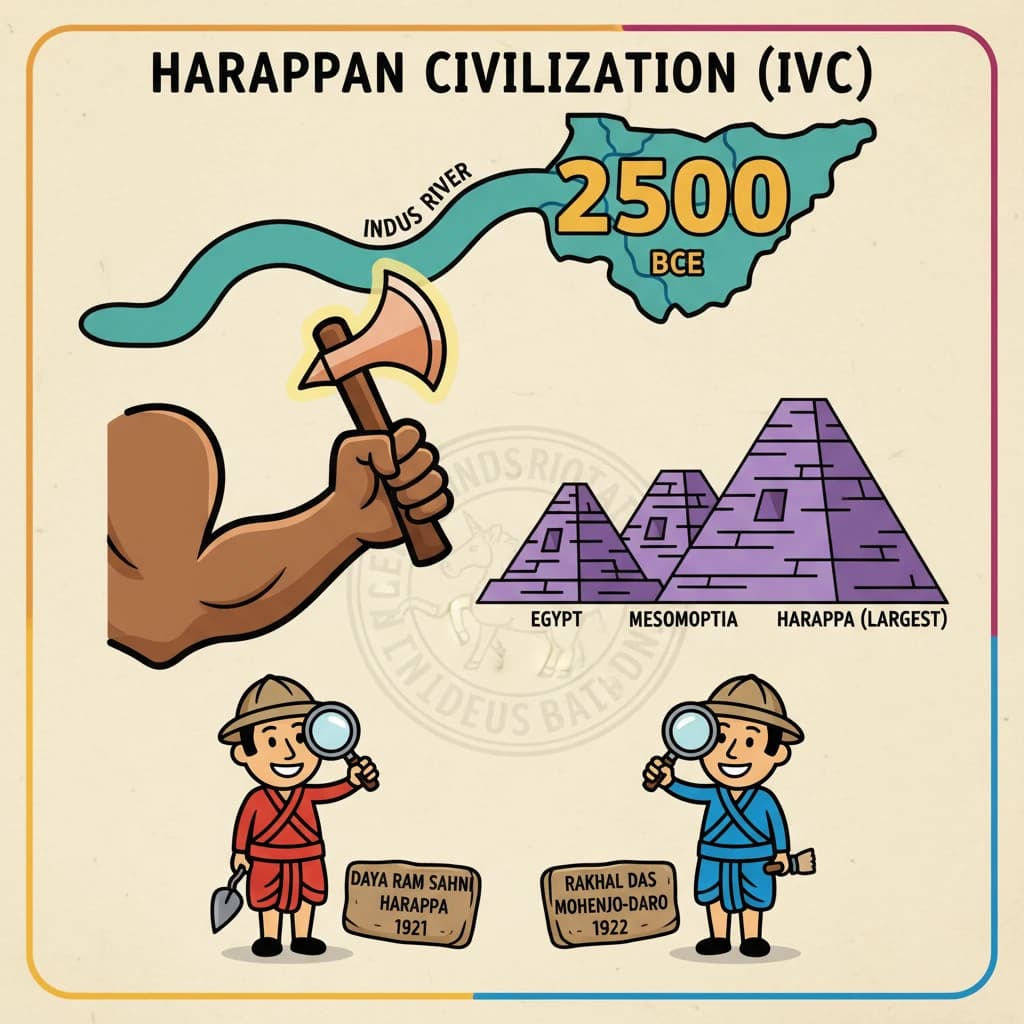
  • It was the largest of the four ancient urban civilizations, alongside Egypt, Mesopotamia, and China.
  • Classified as a Bronze-age civilization due to extensive use of copper-based alloys.
  • Key excavators: Daya Ram Sahni (Harappa, 1921-22) and Rakhal Das Banerji (Mohenjo-daro, 1922).
  • Sir John Marshall, DG of ASI, was responsible for coordinating and announcing these discoveries.
  • The civilization progressed through Early (3200-2600 BCE), Mature (2600-1900 BCE), and Late (1900-1500 BCE) phases.
What was Harappan Civilization?

What was Harappan Civilization?

Easy⏱️ 4 min read✓ 95% Verified
history

📖 Introduction

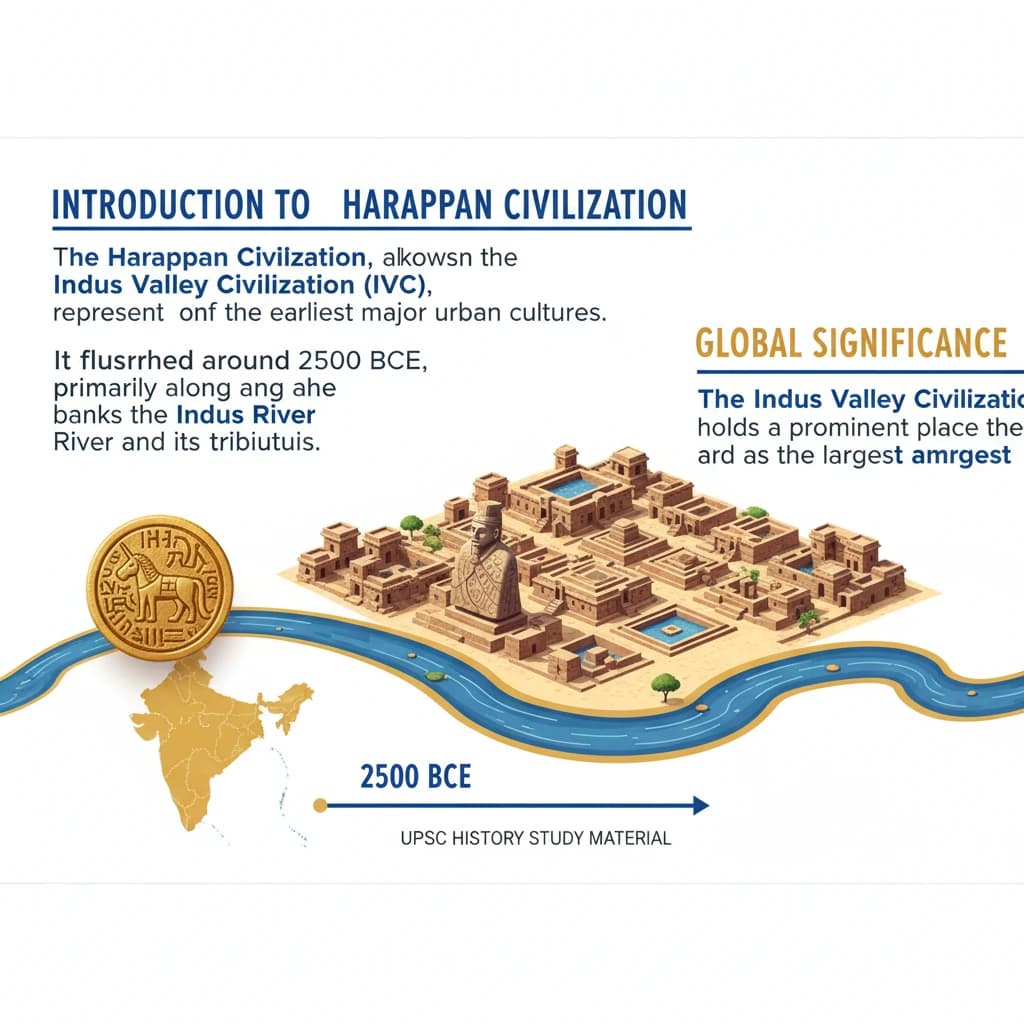
<h4>Introduction to Harappan Civilization</h4><p>The <strong>Harappan Civilization</strong>, also known as the <strong>Indus Valley Civilization (IVC)</strong>, represents one of the earliest major urban cultures.</p><p>It flourished around <strong>2500 BCE</strong>, primarily along the fertile banks of the <strong>Indus River</strong> and its tributaries.</p><h4>Global Significance</h4><p>The <strong>Indus Valley Civilization</strong> holds a prominent place as the <strong>largest</strong> among the four ancient urban civilizations known to history.</p><p>It was a contemporary of other great civilizations such as <strong>Egypt</strong>, <strong>Mesopotamia</strong>, and <strong>China</strong>, showcasing a parallel development of complex societies.</p><h4>Bronze Age Classification</h4><div class='key-point-box'><p>The <strong>IVC</strong> is unequivocally classified as a <strong>Bronze-age civilization</strong>.</p></div><p>This classification is derived from the extensive discovery of numerous <strong>artefacts</strong> crafted from <strong>copper-based alloys</strong> throughout its various sites.</p><h4>Key Discoveries and Excavators</h4><p>The unearthing of the <strong>Harappan Civilization</strong> was a monumental achievement in archaeology, significantly reshaping the understanding of ancient Indian history.</p><ul><li><strong>Daya Ram Sahni</strong> conducted the first excavations at <strong>Harappa</strong> during <strong>1921-22</strong>.</li><li><strong>Rakhal Das Banerji</strong> initiated the excavation of <strong>Mohenjo-daro</strong> in <strong>1922</strong>.</li><li><strong>Sir John Marshall</strong>, serving as the <strong>Director-General of the Archaeological Survey of India (ASI)</strong>, played a pivotal role in overseeing these crucial discoveries.</li></ul><h4>Phases of Harappan Civilization</h4><p>The development and eventual decline of the <strong>Harappan Civilization</strong> can be understood through three distinct chronological phases:</p><ol><li><strong>Early Phase (3200 BCE to 2600 BCE)</strong>:<ul><li>This period is strongly associated with the <strong>Hakra Phase</strong>, which was identified in the <strong>Ghaggar-Hakra River Valley</strong>.</li><li>The earliest known examples of the <strong>Indus script</strong> date back to approximately <strong>3000 BCE</strong> within this phase.</li></ul></li><li><strong>Mature Period (2600 BCE to 1900 BCE)</strong>:<ul><li>By <strong>2600 BCE</strong>, the <strong>IVC</strong> had reached its peak, exhibiting advanced urbanization and sophisticated planning.</li><li>Early Harappan towns, including major centers like <strong>Harappa</strong> and <strong>Mohenjo-daro</strong> (in modern-day Pakistan) and <strong>Lothal</strong> (in India), evolved into significant urban hubs.</li></ul></li><li><strong>Late Phase (1900 BCE to 1500 BCE)</strong>:<ul><li>This final phase is characterized by the gradual <strong>decay and eventual collapse</strong> of the once-flourishing <strong>Harappan Civilization</strong>.</li></ul></li></ol>
Concept Diagram

💡 Key Takeaways

  • •The Harappan Civilization (IVC) flourished around 2500 BCE along the Indus River.
  • •It was the largest of the four ancient urban civilizations, alongside Egypt, Mesopotamia, and China.
  • •Classified as a Bronze-age civilization due to extensive use of copper-based alloys.
  • •Key excavators: Daya Ram Sahni (Harappa, 1921-22) and Rakhal Das Banerji (Mohenjo-daro, 1922).
  • •Sir John Marshall, DG of ASI, was responsible for coordinating and announcing these discoveries.
  • •The civilization progressed through Early (3200-2600 BCE), Mature (2600-1900 BCE), and Late (1900-1500 BCE) phases.

🧠 Memory Techniques
Memory Aid
95% Verified Content

Related Topics

Loading related topics...
Explore:History Topics·All Subjects·Daily Current Affairs·Editorial Analysis·Previous Year Questions·UPSC GPT
What was Harappan Civilization? - UPSC History