Loading page, please wait…
Vaidra Logo
Vaidra

Top 4 items + smart groups

UPSC GPT
New
Current Affairs
Daily Solutions
Daily Puzzle
Mains Evaluator

Version 2.0.0 • Built with ❤️ for UPSC aspirants

Loading...
Loading...
Loading...
Loading...
Loading...
Loading...
Loading...
Loading...
Loading...
Loading...
Loading...
Loading...
Loading...
Back
All Subjects

Topics

0 topics • 0 completed

Loading topics...
Loading...
Loading...
Loading...
Loading...
Loading...
Overall Progress0%

Vittala Temple: Vijayanagara Architecture, Stone Chariot & Musical Pillars - UPSC History

What is Vittala Temple: Vijayanagara Architecture, Stone Chariot & Musical Pillars in UPSC History?

Vittala Temple: Vijayanagara Architecture, Stone Chariot & Musical Pillars is a key topic under History for UPSC Civil Services Examination. Key points include: Vittala Temple: Dedicated to Lord Vittala (Vishnu), built in 15th century by Devaraya II.. Located in Hampi, capital of the Vijayanagara Empire.. Famous for Stone Chariot (depicted on Rs 50 note) and Musical Pillars.. Understanding this topic is essential for both UPSC Prelims and Mains preparation.

Why is Vittala Temple: Vijayanagara Architecture, Stone Chariot & Musical Pillars important for UPSC exam?

Vittala Temple: Vijayanagara Architecture, Stone Chariot & Musical Pillars is a Medium-level topic in UPSC History. It is tested in both Prelims (factual MCQs) and Mains (analytical answer writing). Previous year UPSC questions have frequently covered aspects of Vittala Temple: Vijayanagara Architecture, Stone Chariot & Musical Pillars, making it essential for comprehensive IAS preparation.

How to prepare Vittala Temple: Vijayanagara Architecture, Stone Chariot & Musical Pillars for UPSC?

To prepare Vittala Temple: Vijayanagara Architecture, Stone Chariot & Musical Pillars for UPSC: (1) Study the comprehensive notes covering all key concepts on Vaidra. (2) Practice previous year questions on this topic. (3) Connect it with current affairs using daily updates. (4) Revise using key takeaways and mind maps available for History. (5) Write practice answers linking Vittala Temple: Vijayanagara Architecture, Stone Chariot & Musical Pillars to related GS Paper topics.

Key takeaways of Vittala Temple: Vijayanagara Architecture, Stone Chariot & Musical Pillars for UPSC

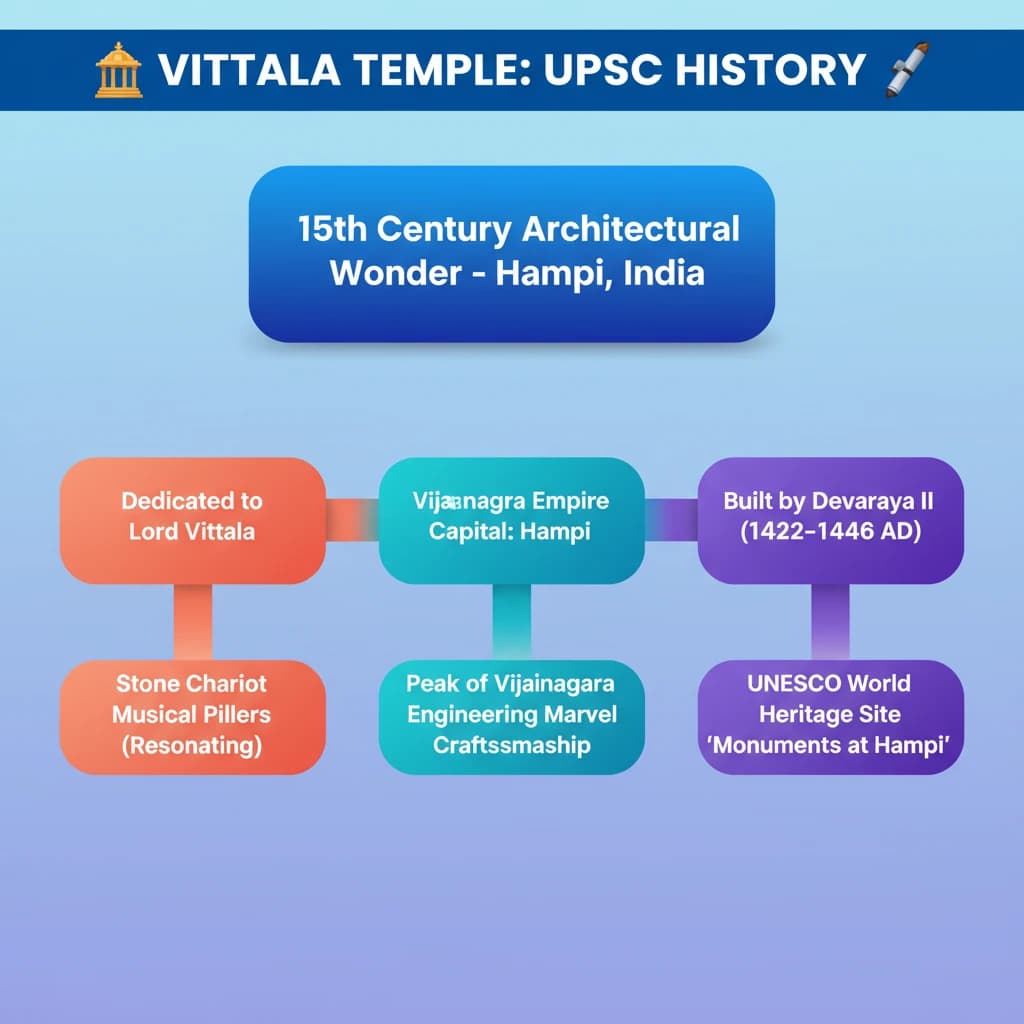
  • Vittala Temple: Dedicated to Lord Vittala (Vishnu), built in 15th century by Devaraya II.
  • Located in Hampi, capital of the Vijayanagara Empire.
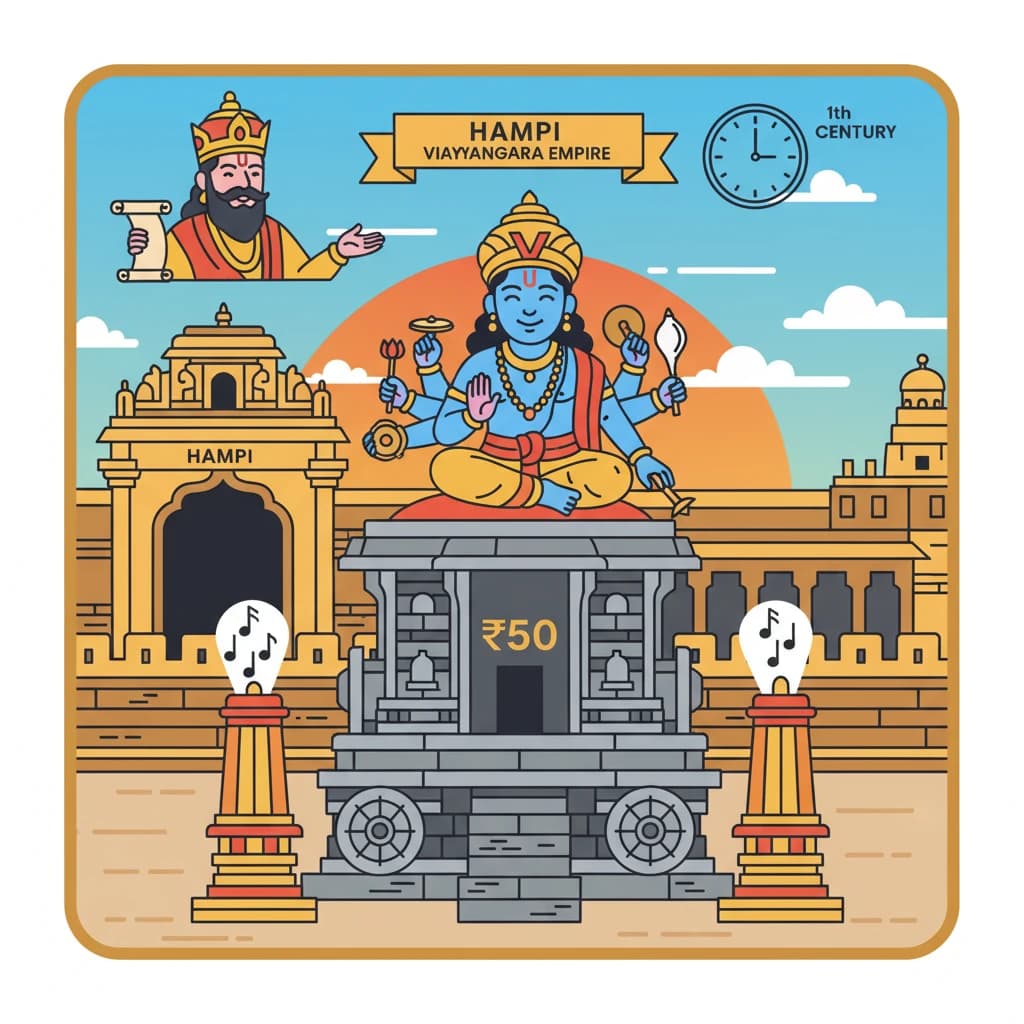
  • Famous for Stone Chariot (depicted on Rs 50 note) and Musical Pillars.
  • Represents peak of Vijayanagara architecture and engineering.
  • Part of UNESCO World Heritage Site 'Group of Monuments at Hampi'.
Vittala Temple: Vijayanagara Architecture, Stone Chariot & Musical Pillars

Vittala Temple: Vijayanagara Architecture, Stone Chariot & Musical Pillars

Medium⏱️ 4 min read✓ 98% Verified
history

📖 Introduction

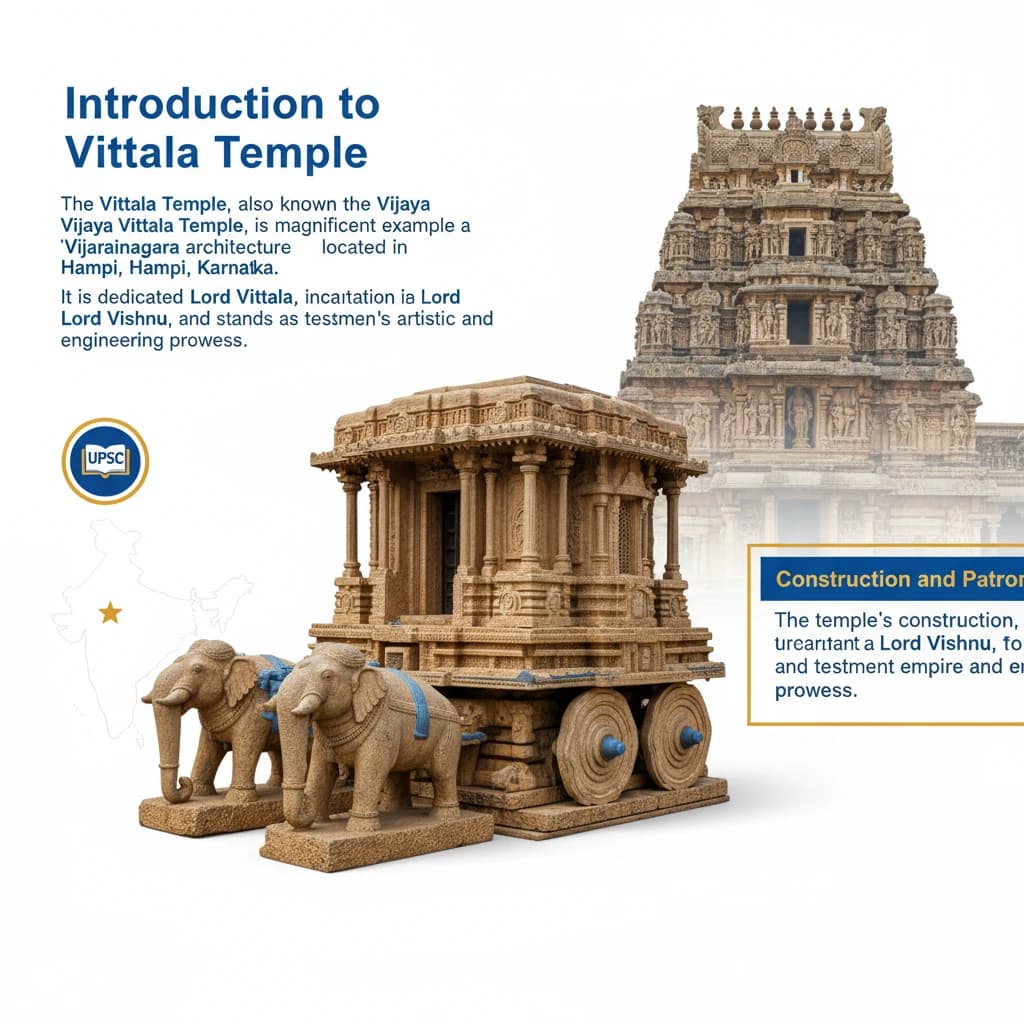
<h4>Introduction to Vittala Temple</h4><p>The <strong>Vittala Temple</strong>, also known as the <strong>Vijaya Vittala Temple</strong>, is a magnificent example of <strong>Vijayanagara architecture</strong> located in <strong>Hampi</strong>, Karnataka.</p><p>It is dedicated to <strong>Lord Vittala</strong>, an incarnation of <strong>Lord Vishnu</strong>, and stands as a testament to the empire's artistic and engineering prowess.</p><h4>Construction and Patronage</h4><p>The temple's construction began in the <strong>15th century</strong>, during the flourishing period of the <strong>Vijayanagara Empire</strong>.</p><div class='info-box'><p>Key Patron: The temple was primarily built during the reign of <strong>King Devaraya II</strong> (1422-1446 CE), one of the prominent rulers of the <strong>Sangama Dynasty</strong>.</p></div><h4>Salient Architectural Features</h4><p>The <strong>Vittala Temple complex</strong> is renowned for its exceptional and intricate architectural elements, showcasing advanced craftsmanship.</p><p>Among its most famous attractions are the iconic <strong>Stone Chariot</strong> and the unique <strong>Musical Pillars</strong>, which draw visitors globally.</p><div class='key-point-box'><p>Symbolic Representation: The <strong>Stone Chariot</strong> is a miniature replica of a temple car, carved entirely out of stone, and is a powerful symbol of <strong>Hampi's rich heritage</strong>.</p></div><p>This architectural marvel, the <strong>Stone Chariot</strong>, is prominently depicted on the reverse side of the <strong>Indian Rs 50 currency note</strong>, highlighting its national significance.</p><h4>Cultural and Historical Significance</h4><p>The temple served not only as a place of worship but also as a center for cultural activities, reflecting the vibrant life of the <strong>Vijayanagara capital</strong>.</p><div class='exam-tip-box'><p><strong>UPSC Insight:</strong> The <strong>Vittala Temple</strong> is a crucial topic for <strong>GS Paper I (Art and Culture)</strong>. Questions often focus on its architectural style, unique features like the <strong>Stone Chariot</strong> and <strong>Musical Pillars</strong>, and its connection to the <strong>Vijayanagara Empire</strong>. Its depiction on the <strong>Rs 50 note</strong> is a direct factual question possibility.</p></div>
Concept Diagram

💡 Key Takeaways

  • •Vittala Temple: Dedicated to Lord Vittala (Vishnu), built in 15th century by Devaraya II.
  • •Located in Hampi, capital of the Vijayanagara Empire.
  • •Famous for Stone Chariot (depicted on Rs 50 note) and Musical Pillars.
  • •Represents peak of Vijayanagara architecture and engineering.
  • •Part of UNESCO World Heritage Site 'Group of Monuments at Hampi'.

🧠 Memory Techniques
Memory Aid
98% Verified Content

📚 Reference Sources

•NCERT Class 12: Themes in Indian History Part II (Chapter 7: An Imperial Capital: Vijayanagara)
•Archaeological Survey of India (ASI) official publications on Hampi
•Reserve Bank of India (RBI) information on currency notes

Related Topics

Loading related topics...
Explore:History Topics·All Subjects·Daily Current Affairs·Editorial Analysis·Previous Year Questions·UPSC GPT
Vittala Temple: Vijayanagara Architecture, Stone Chariot & Musical Pillars - UPSC History