Loading page, please wait…
Vaidra Logo
Vaidra

Top 4 items + smart groups

UPSC GPT
New
Current Affairs
Daily Solutions
Daily Puzzle
Mains Evaluator

Version 2.0.0 • Built with ❤️ for UPSC aspirants

Loading...
Loading...
Loading...
Loading...
Loading...
Loading...
Loading...
Loading...
Loading...
Loading...
Loading...
Loading...
Loading...
Simhachalam Temple - UPSC History
Back
All Subjects

Topics

0 topics • 0 completed

Loading topics...
Loading...
Loading...
Loading...
Loading...
Loading...
Overall Progress0%

Simhachalam Temple - UPSC History

What is Simhachalam Temple in UPSC History?

Simhachalam Temple is a key topic under History for UPSC Civil Services Examination. Key points include: Simhachalam Temple is in Visakhapatnam, Andhra Pradesh, dedicated to Lord Narasimha (Vishnu's incarnation).. Originally constructed in the 11th century by Gajapati rulers of Odisha.. Significantly renovated by Vengi Chalukyas and Narasimha I of the Eastern Ganga dynasty.. Understanding this topic is essential for both UPSC Prelims and Mains preparation.

Why is Simhachalam Temple important for UPSC exam?

Simhachalam Temple is a Medium-level topic in UPSC History. It is tested in both Prelims (factual MCQs) and Mains (analytical answer writing). Previous year UPSC questions have frequently covered aspects of Simhachalam Temple, making it essential for comprehensive IAS preparation.

How to prepare Simhachalam Temple for UPSC?

To prepare Simhachalam Temple for UPSC: (1) Study the comprehensive notes covering all key concepts on Vaidra. (2) Practice previous year questions on this topic. (3) Connect it with current affairs using daily updates. (4) Revise using key takeaways and mind maps available for History. (5) Write practice answers linking Simhachalam Temple to related GS Paper topics.

Key takeaways of Simhachalam Temple for UPSC

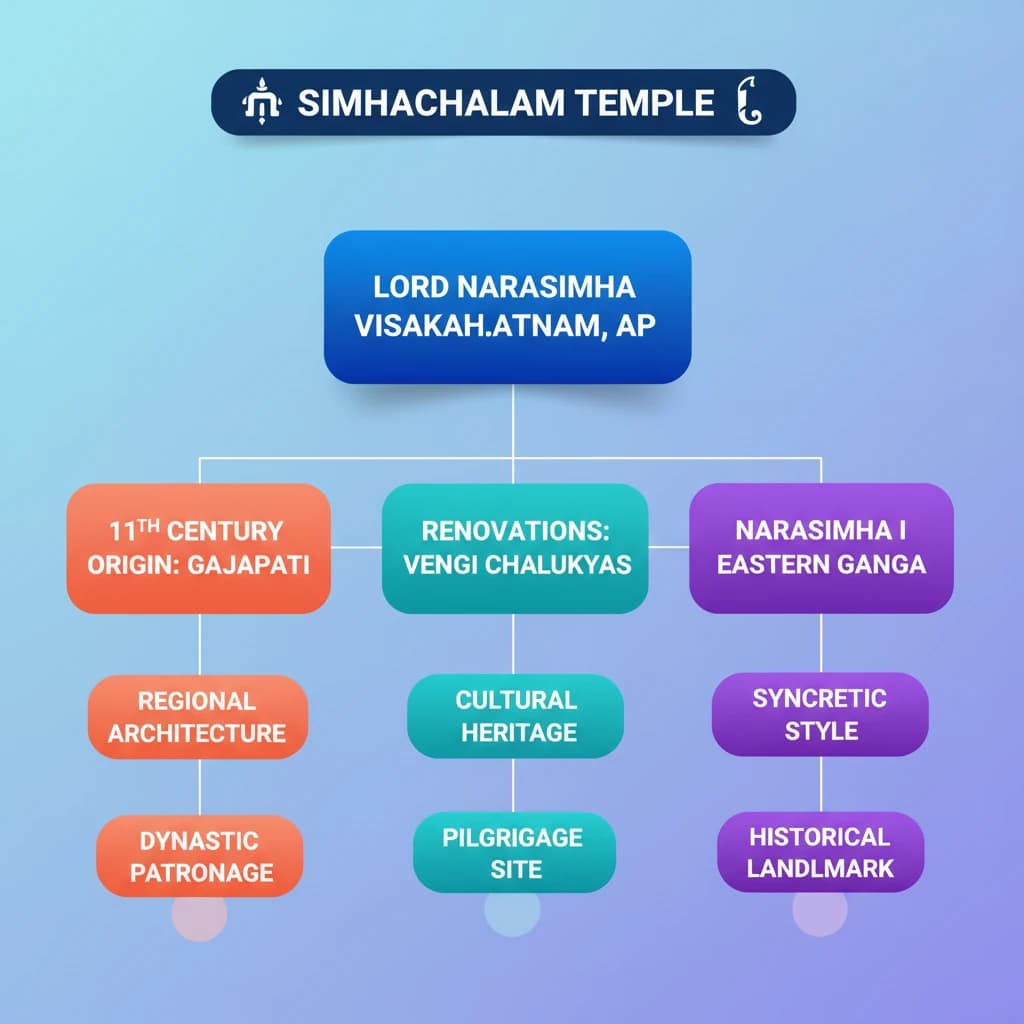
  • Simhachalam Temple is in Visakhapatnam, Andhra Pradesh, dedicated to Lord Narasimha (Vishnu's incarnation).
  • Originally constructed in the 11th century by Gajapati rulers of Odisha.
  • Significantly renovated by Vengi Chalukyas and Narasimha I of the Eastern Ganga dynasty.
  • Showcases a blend of regional architectural styles and continuous dynastic patronage.
  • Remains a vital pilgrimage site and cultural heritage landmark today.
Simhachalam Temple

Simhachalam Temple

Medium⏱️ 4 min read✓ 95% Verified
history

📖 Introduction

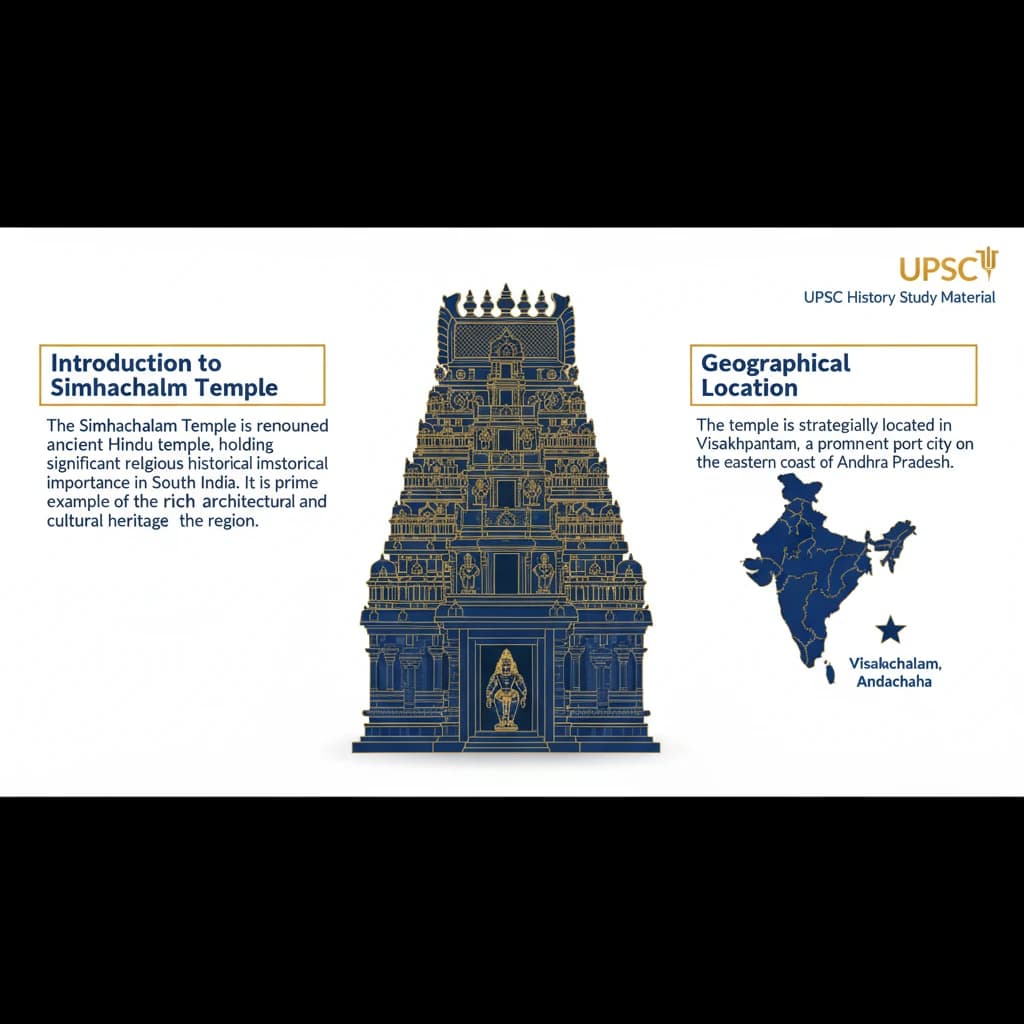
<h4>Introduction to Simhachalam Temple</h4><p>The <strong>Simhachalam Temple</strong> is a renowned ancient Hindu temple, holding significant religious and historical importance in <strong>South India</strong>.</p><p>It is a prime example of the rich architectural and cultural heritage of the region.</p><h4>Geographical Location</h4><p>The temple is strategically located in <strong>Visakhapatnam</strong>, a prominent port city on the eastern coast of <strong>Andhra Pradesh</strong>.</p><p>Its coastal proximity has historically made it accessible to devotees and traders alike.</p><div class='info-box'><p>📍 <strong>Location:</strong> Visakhapatnam, Andhra Pradesh</p></div><h4>Presiding Deity</h4><p>The primary deity worshipped at <strong>Simhachalam Temple</strong> is <strong>Lord Narasimha</strong>, a powerful and revered incarnation of <strong>Lord Vishnu</strong>.</p><p><strong>Lord Narasimha</strong> is depicted in his half-man, half-lion form, symbolizing divine protection and the triumph of good over evil.</p><div class='info-box'><p><strong>Deity:</strong> Lord Narasimha (the fourth incarnation of Vishnu)</p></div><h4>Original Construction and Patronage</h4><p>The initial construction of the <strong>Simhachalam Temple</strong> dates back to the <strong>11th century AD</strong>.</p><p>It was originally built by the powerful <strong>Gajapati rulers of Odisha</strong>, who were significant patrons of art and architecture in their dominion.</p><div class='info-box'><p>📅 <strong>Original Construction:</strong> 11th century</p><p>👑 <strong>Original Builders:</strong> Gajapati rulers of Odisha</p></div><h4>Subsequent Renovations and Dynastic Contributions</h4><p>Over centuries, the temple underwent several crucial renovations and expansions, enhancing its grandeur and architectural integrity.</p><p>These efforts were undertaken by various influential dynasties, reflecting their devotion and political influence.</p><div class='key-point-box'><p>Significant renovations were carried out by the <strong>Vengi Chalukyas</strong> and later by <strong>Narasimha I</strong> of the <strong>Eastern Ganga dynasty</strong>.</p></div><div class='exam-tip-box'><p><strong>UPSC Insight:</strong> Understanding the contributions of different dynasties (<strong>Gajapati, Vengi Chalukyas, Eastern Ganga</strong>) to a single monument like <strong>Simhachalam</strong> highlights the syncretic nature of Indian temple architecture and patronage. This is crucial for <strong>Art & Culture (GS Paper I)</strong>.</p></div>
Concept Diagram

💡 Key Takeaways

  • •Simhachalam Temple is in Visakhapatnam, Andhra Pradesh, dedicated to Lord Narasimha (Vishnu's incarnation).
  • •Originally constructed in the 11th century by Gajapati rulers of Odisha.
  • •Significantly renovated by Vengi Chalukyas and Narasimha I of the Eastern Ganga dynasty.
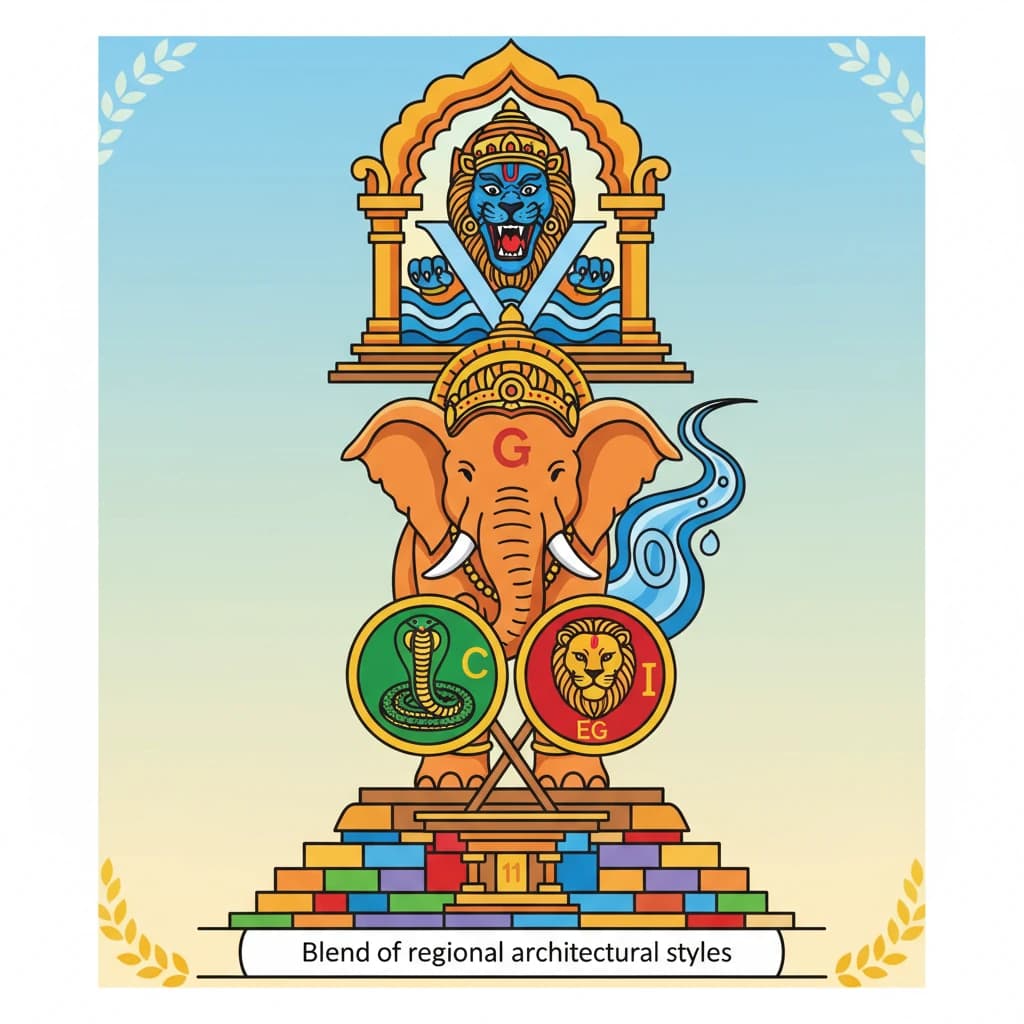
  • •Showcases a blend of regional architectural styles and continuous dynastic patronage.
  • •Remains a vital pilgrimage site and cultural heritage landmark today.

🧠 Memory Techniques
Memory Aid
95% Verified Content

📚 Reference Sources

•NCERT History Textbooks (Class XI & XII)
•Cultural Heritage of India by A.L. Basham (general reference)
•Archaeological Survey of India (ASI) records (general knowledge)

Related Topics

Loading related topics...
Explore:History Topics·All Subjects·Daily Current Affairs·Editorial Analysis·Previous Year Questions·UPSC GPT