Loading page, please wait…
Vaidra Logo
Vaidra

Top 4 items + smart groups

UPSC GPT
New
Current Affairs
Daily Solutions
Daily Puzzle
Mains Evaluator

Version 2.0.0 • Built with ❤️ for UPSC aspirants

Loading...
Loading...
Loading...
Loading...
Loading...
Loading...
Loading...
Loading...
Loading...
Loading...
Loading...
Loading...
Loading...

What is the Stone Age? - UPSC History

What is What is the Stone Age? in UPSC History?

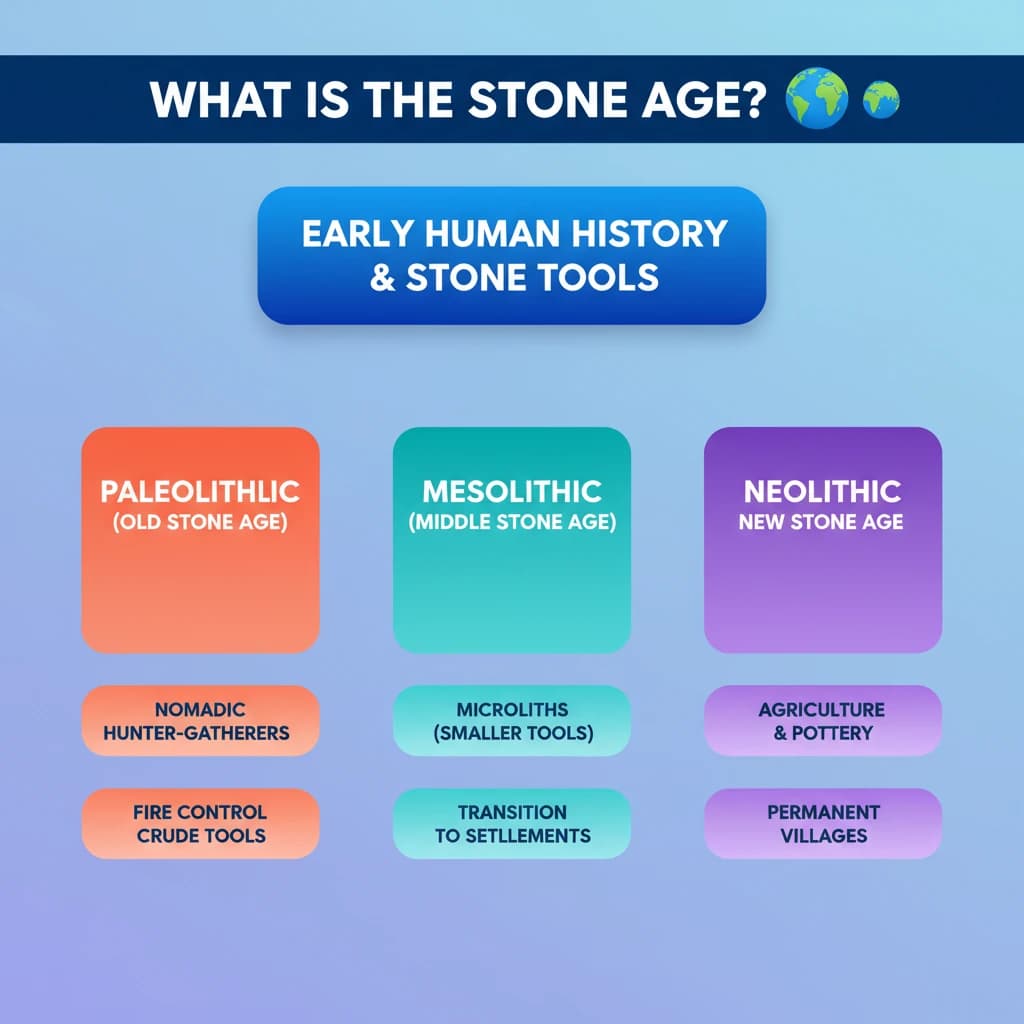
What is the Stone Age? is a key topic under History for UPSC Civil Services Examination. Key points include: The Stone Age began approximately 3.4 million years ago with the first use of stone tools by hominids.. It is divided into Paleolithic (Old), Mesolithic (Middle), and Neolithic (New) ages, marked by tool advancements.. Early humans were primarily nomadic hunter-gatherers, adapting to diverse environments.. Understanding this topic is essential for both UPSC Prelims and Mains preparation.

Why is What is the Stone Age? important for UPSC exam?

What is the Stone Age? is a Easy-level topic in UPSC History. It is tested in both Prelims (factual MCQs) and Mains (analytical answer writing). Previous year UPSC questions have frequently covered aspects of What is the Stone Age?, making it essential for comprehensive IAS preparation.

How to prepare What is the Stone Age? for UPSC?

To prepare What is the Stone Age? for UPSC: (1) Study the comprehensive notes covering all key concepts on Vaidra. (2) Practice previous year questions on this topic. (3) Connect it with current affairs using daily updates. (4) Revise using key takeaways and mind maps available for History. (5) Write practice answers linking What is the Stone Age? to related GS Paper topics.

Key takeaways of What is the Stone Age? for UPSC

  • The Stone Age began approximately 3.4 million years ago with the first use of stone tools by hominids.
  • It is divided into Paleolithic (Old), Mesolithic (Middle), and Neolithic (New) ages, marked by tool advancements.
  • Early humans were primarily nomadic hunter-gatherers, adapting to diverse environments.
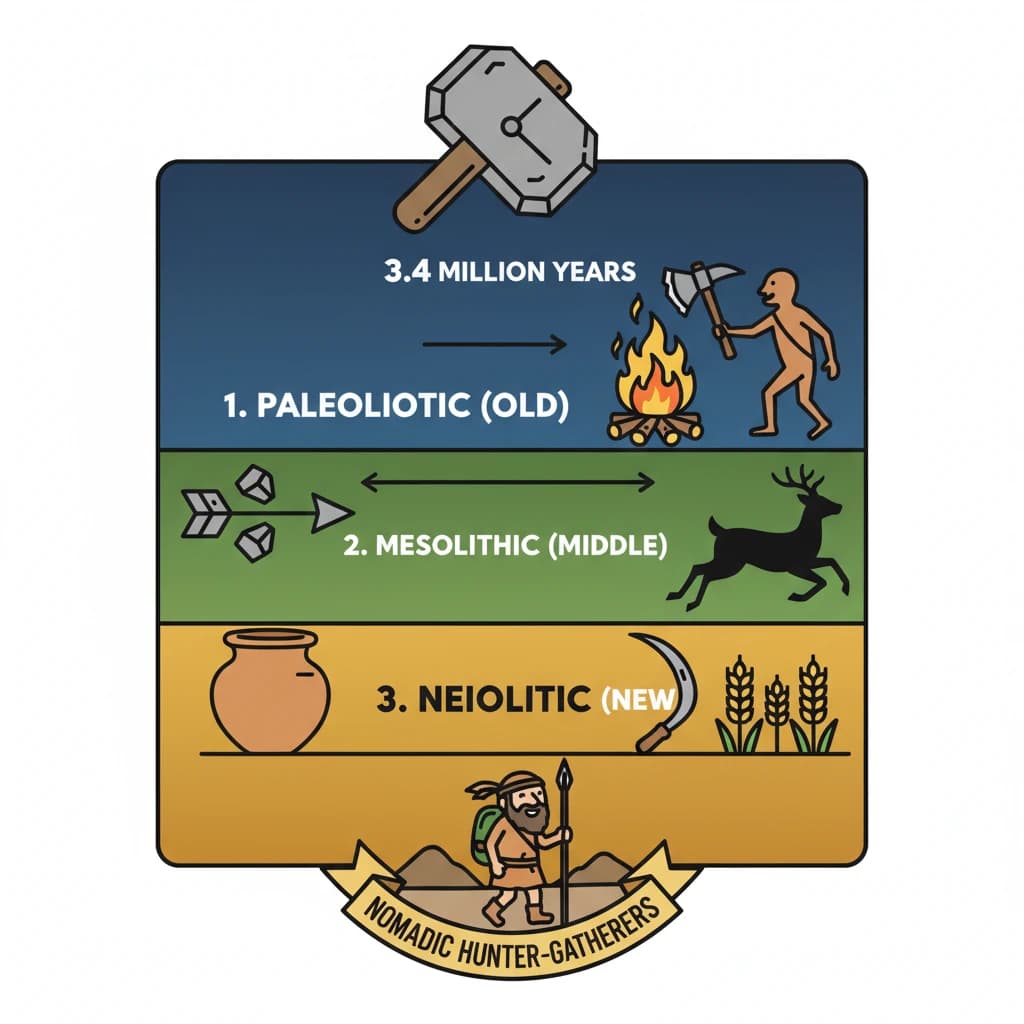
  • Key innovations include fire control (Paleolithic), microliths (Mesolithic), and agriculture/pottery (Neolithic).
  • Archaeological sites like Olduvai Gorge, Bhimbetka, and Mehrgarh provide crucial evidence of Stone Age life and transitions.
What is the Stone Age?

What is the Stone Age?

Easy⏱️ 8 min read✓ 95% Verified
history

📖 Introduction

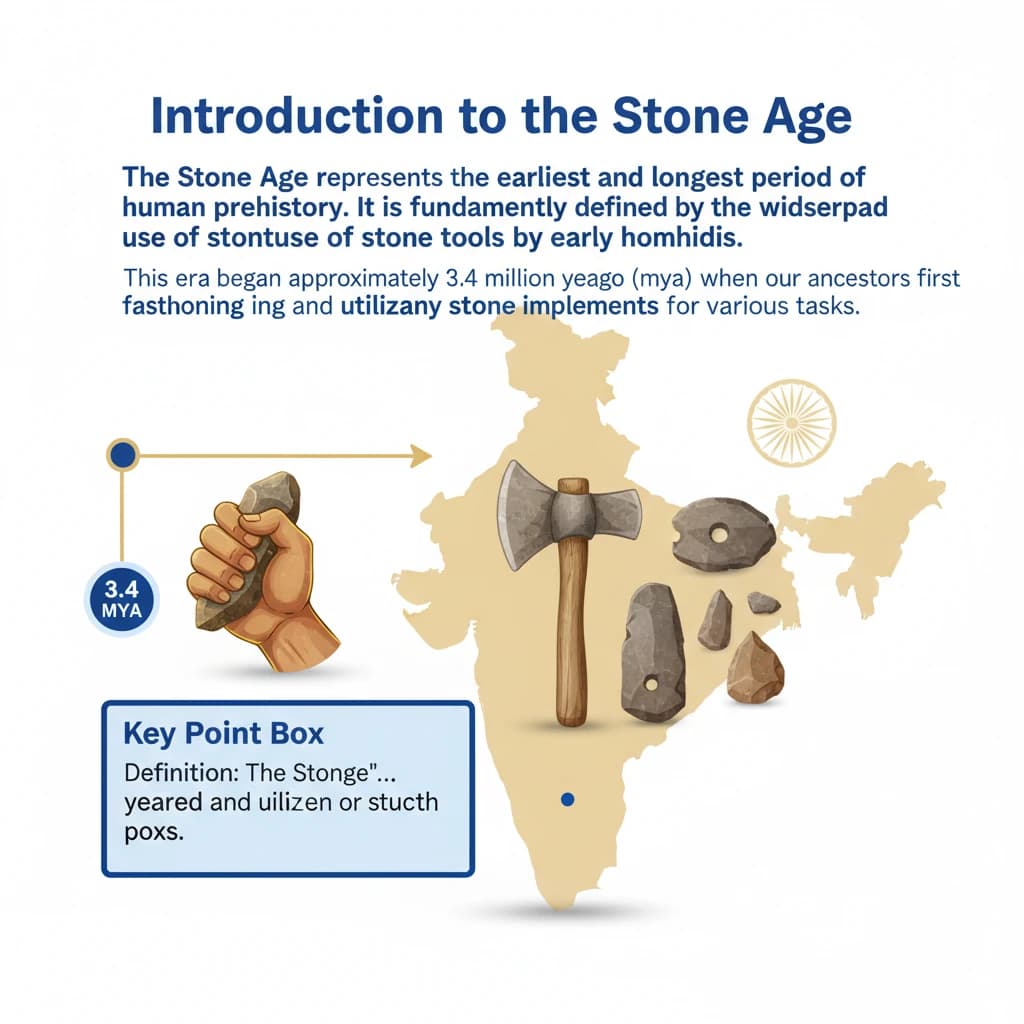
<h4>Introduction to the Stone Age</h4><p>The <strong>Stone Age</strong> represents the earliest and longest period of human prehistory. It is fundamentally defined by the widespread use of <strong>stone tools</strong> by early hominids.</p><p>This era began approximately <strong>3.4 million years ago (mya)</strong> when our ancestors first started fashioning and utilizing rudimentary stone implements for various tasks.</p><div class='key-point-box'><p><strong>Definition:</strong> The <strong>Stone Age</strong> is a broad prehistoric period during which stone was widely used to make implements with an edge, a point, or a percussion surface.</p></div><h4>Key Characteristics of the Stone Age</h4><p>Life during the Stone Age was characterized by a <strong>nomadic hunting-gathering lifestyle</strong>. Early humans relied entirely on their environment for sustenance, moving frequently to find food and resources.</p><p>The development of <strong>stone tool technology</strong> was a pivotal aspect, evolving from simple choppers to more refined blades and projectile points over millennia. This technological progression enabled better hunting, processing of food, and defense.</p><div class='info-box'><p><strong>Primary Occupation:</strong> Hunting, fishing, and gathering wild plants were the main methods of acquiring food. There was no agriculture or domestication of animals in the early phases.</p></div><h4>Phases of the Stone Age</h4><p>The Stone Age is typically divided into three main periods, each marked by distinct technological advancements and societal structures.</p><ul><li><strong>Paleolithic Age (Old Stone Age):</strong> The longest period, characterized by crude stone tools, nomadic hunter-gatherers, and the discovery of fire.</li><li><strong>Mesolithic Age (Middle Stone Age):</strong> A transitional period featuring smaller, more refined microlithic tools, incipient animal domestication, and settled communities.</li><li><strong>Neolithic Age (New Stone Age):</strong> Marked by polished stone tools, the advent of agriculture, animal husbandry, pottery, and permanent settlements, leading to the formation of villages.</li></ul><div class='exam-tip-box'><p><strong>UPSC Insight:</strong> Understanding the characteristics and transitions between these phases is crucial for questions on prehistoric India, often appearing in <strong>GS Paper 1 (History)</strong>.</p></div>
Concept Diagram

💡 Key Takeaways

  • •The Stone Age began approximately 3.4 million years ago with the first use of stone tools by hominids.
  • •It is divided into Paleolithic (Old), Mesolithic (Middle), and Neolithic (New) ages, marked by tool advancements.
  • •Early humans were primarily nomadic hunter-gatherers, adapting to diverse environments.
  • •Key innovations include fire control (Paleolithic), microliths (Mesolithic), and agriculture/pottery (Neolithic).
  • •Archaeological sites like Olduvai Gorge, Bhimbetka, and Mehrgarh provide crucial evidence of Stone Age life and transitions.

🧠 Memory Techniques
Memory Aid
95% Verified Content

📚 Reference Sources

•NCERT Class VI - Our Pasts – I
•Upinder Singh - A History of Ancient and Early Medieval India
•D.N. Jha - Ancient India: An Introductory Outline

Related Topics

Loading related topics...
Explore:History Topics·All Subjects·Daily Current Affairs·Editorial Analysis·Previous Year Questions·UPSC GPT
Back
All Subjects

Topics

0 topics • 0 completed

Loading topics...
Loading...
Loading...
Loading...
Loading...
Loading...
Overall Progress0%
What is the Stone Age? - UPSC History