Loading page, please wait…
Vaidra Logo
Vaidra

Top 4 items + smart groups

UPSC GPT
New
Current Affairs
Daily Solutions
Daily Puzzle
Mains Evaluator

Version 2.0.0 • Built with ❤️ for UPSC aspirants

Loading...
Loading...
Loading...
Loading...
Loading...
Loading...
Loading...
Loading...
Loading...
Loading...
Loading...
Loading...
Loading...
Megalithic Footprints and Human Figure - UPSC History
Back
All Subjects

Topics

0 topics • 0 completed

Loading topics...
Loading...
Loading...
Loading...
Loading...
Loading...
Overall Progress0%

Megalithic Footprints and Human Figure - UPSC History

What is Megalithic Footprints and Human Figure in UPSC History?

Megalithic Footprints and Human Figure is a key topic under History for UPSC Civil Services Examination. Key points include: 24 pairs of Megalithic footprints and a human figure discovered in Madikkai, Kerala.. Discovery dates back to the Prehistoric Megalithic period.. Prehistoric refers to the time before written records, generally predating 3000 BCE.. Understanding this topic is essential for both UPSC Prelims and Mains preparation.

Why is Megalithic Footprints and Human Figure important for UPSC exam?

Megalithic Footprints and Human Figure is a Easy-level topic in UPSC History. It is tested in both Prelims (factual MCQs) and Mains (analytical answer writing). Previous year UPSC questions have frequently covered aspects of Megalithic Footprints and Human Figure, making it essential for comprehensive IAS preparation.

How to prepare Megalithic Footprints and Human Figure for UPSC?

To prepare Megalithic Footprints and Human Figure for UPSC: (1) Study the comprehensive notes covering all key concepts on Vaidra. (2) Practice previous year questions on this topic. (3) Connect it with current affairs using daily updates. (4) Revise using key takeaways and mind maps available for History. (5) Write practice answers linking Megalithic Footprints and Human Figure to related GS Paper topics.

Key takeaways of Megalithic Footprints and Human Figure for UPSC

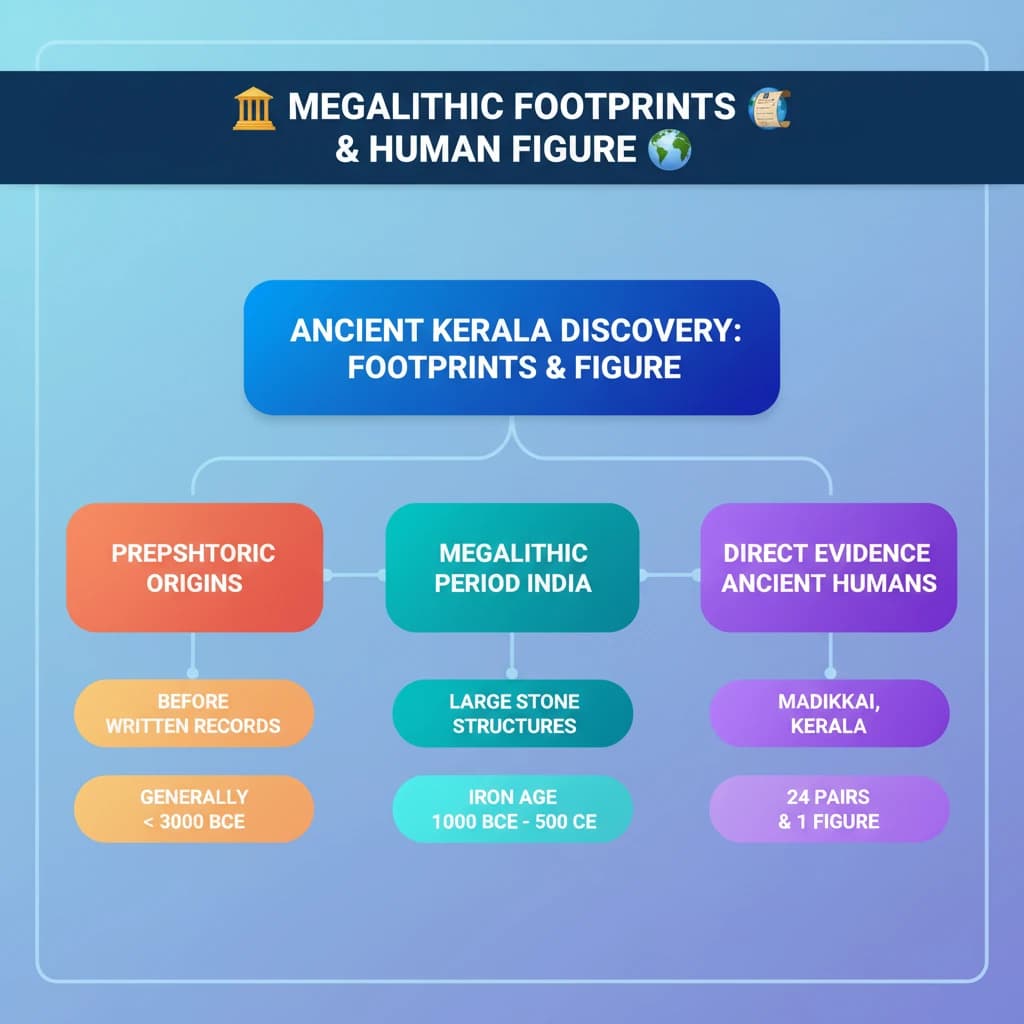
  • 24 pairs of Megalithic footprints and a human figure discovered in Madikkai, Kerala.
  • Discovery dates back to the Prehistoric Megalithic period.
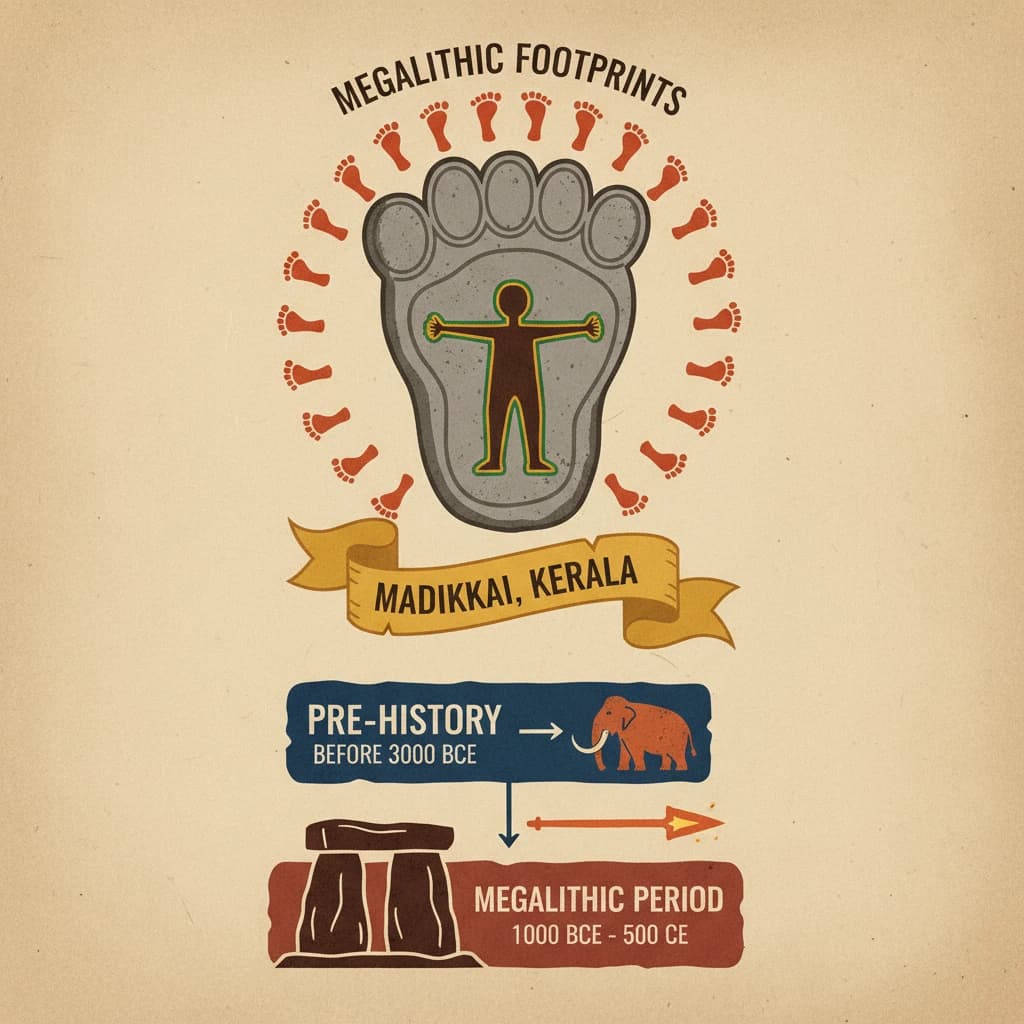
  • Prehistoric refers to the time before written records, generally predating 3000 BCE.
  • Megalithic period in India is known for large stone structures and iron use (c. 1000 BCE - 500 CE).
  • Footprints offer direct evidence of ancient human presence and activities.
  • Such finds are crucial for understanding India's ancient history and cultural heritage.
Megalithic Footprints
and Human Figure

Megalithic Footprints and Human Figure

Easy⏱️ 7 min read✓ 95% Verified
history

📖 Introduction

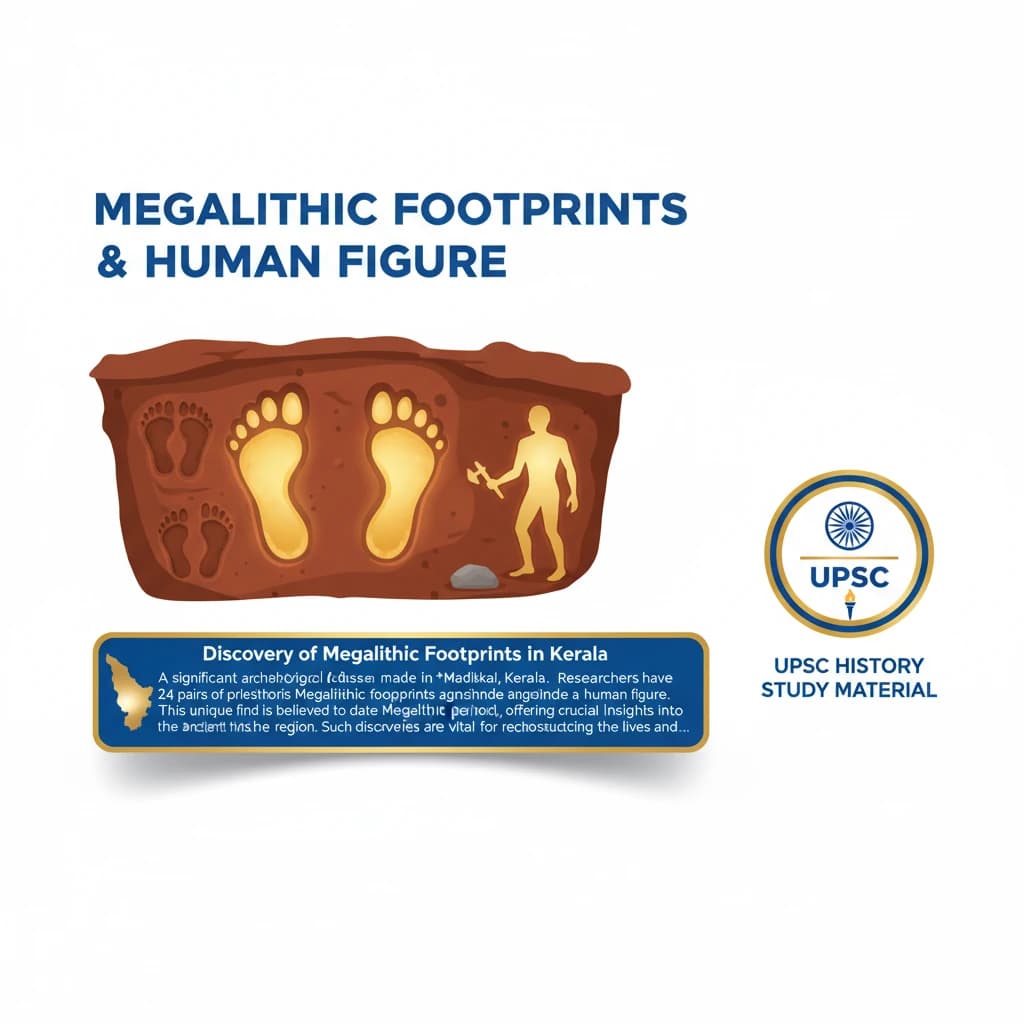
<h4>Discovery of Megalithic Footprints in Kerala</h4><p>A significant archaeological discovery has been made in <strong>Madikkai, Kerala</strong>. Researchers have unearthed <strong>24 pairs of prehistoric Megalithic footprints</strong> alongside a <strong>human figure</strong>.</p><p>This unique find is believed to date back to the <strong>Megalithic period</strong>, offering crucial insights into the ancient inhabitants of the region. Such discoveries are vital for reconstructing the lives and practices of early human societies.</p><div class='info-box'><p><strong>Location:</strong> Madikkai, Kerala</p><p><strong>Discovery:</strong> 24 pairs of Megalithic footprints, 1 human figure</p><p><strong>Dating:</strong> Megalithic period</p></div><h4>Understanding the Prehistoric Period</h4><p>The term <strong>'Prehistoric'</strong> refers to the vast expanse of human history that predates the existence of <strong>written records</strong>. This era covers the period from the earliest human existence up to the development of writing systems.</p><p>Globally, the advent of writing generally occurred before <strong>3000 BCE</strong>. Studying prehistoric periods relies heavily on archaeological evidence, as no textual accounts exist.</p><div class='key-point-box'><p><strong>Key Concept:</strong> The <strong>Prehistoric period</strong> is characterized by the absence of written documentation, making archaeological finds like these footprints indispensable for historical understanding.</p></div><div class='exam-tip-box'><p><strong>UPSC Insight:</strong> Archaeological discoveries, especially those from the <strong>Prehistoric</strong> and <strong>Megalithic periods</strong>, are frequently asked in <strong>GS Paper I (History & Culture)</strong>. Focus on locations, significance, and the cultural context.</p></div>
Concept Diagram

💡 Key Takeaways

  • •24 pairs of Megalithic footprints and a human figure discovered in Madikkai, Kerala.
  • •Discovery dates back to the Prehistoric Megalithic period.
  • •Prehistoric refers to the time before written records, generally predating 3000 BCE.
  • •Megalithic period in India is known for large stone structures and iron use (c. 1000 BCE - 500 CE).
  • •Footprints offer direct evidence of ancient human presence and activities.
  • •Such finds are crucial for understanding India's ancient history and cultural heritage.

🧠 Memory Techniques
Memory Aid
95% Verified Content

📚 Reference Sources

•Archaeological Survey of India (ASI) publications on Megalithic sites in South India
•NCERT textbooks for Ancient Indian History (Class XI/XII)
•Academic articles on Indian Prehistory and Megalithic culture

Related Topics

Loading related topics...
Explore:History Topics·All Subjects·Daily Current Affairs·Editorial Analysis·Previous Year Questions·UPSC GPT