Loading page, please wait…
Geographical Distribution - UPSC History
What is Geographical Distribution in UPSC History?
Geographical Distribution is a key topic under History for UPSC Civil Services Examination. Key points include: Megalithic culture primarily concentrated in the <strong>Deccan, south of the Godavari River</strong>.. Widespread presence across India, including <strong>Punjab, Indo-Gangetic basin, Rajasthan, Gujarat, and J&K (Burzahom)</strong>.. Key sites include <strong>Seraikalla (Bihar), Khera (UP), and Deosa (Rajasthan)</strong>.. Understanding this topic is essential for both UPSC Prelims and Mains preparation.
Why is Geographical Distribution important for UPSC exam?
Geographical Distribution is a Medium-level topic in UPSC History. It is tested in both Prelims (factual MCQs) and Mains (analytical answer writing). Previous year UPSC questions have frequently covered aspects of Geographical Distribution, making it essential for comprehensive IAS preparation.
How to prepare Geographical Distribution for UPSC?
To prepare Geographical Distribution for UPSC: (1) Study the comprehensive notes covering all key concepts on Vaidra. (2) Practice previous year questions on this topic. (3) Connect it with current affairs using daily updates. (4) Revise using key takeaways and mind maps available for History. (5) Write practice answers linking Geographical Distribution to related GS Paper topics.
Key takeaways of Geographical Distribution for UPSC
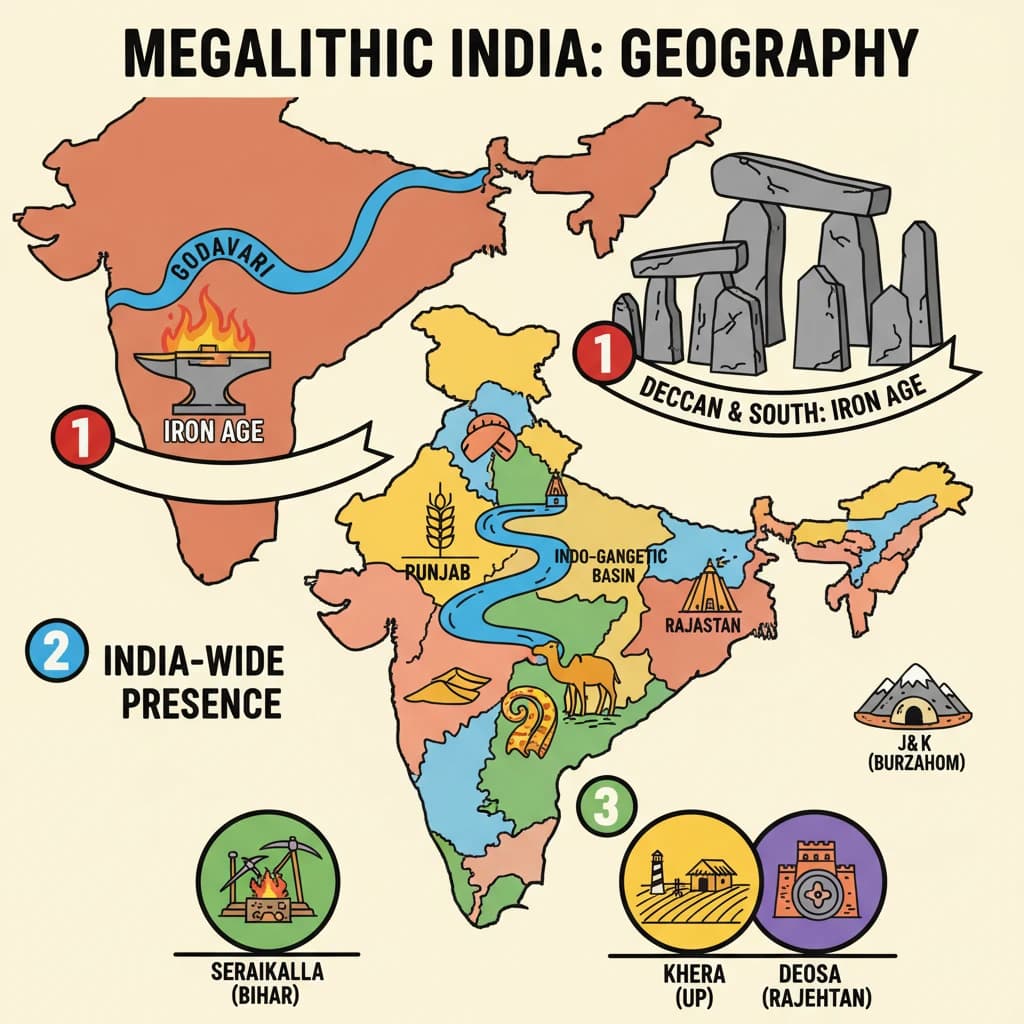
- Megalithic culture primarily concentrated in the <strong>Deccan, south of the Godavari River</strong>.
- Widespread presence across India, including <strong>Punjab, Indo-Gangetic basin, Rajasthan, Gujarat, and J&K (Burzahom)</strong>.
- Key sites include <strong>Seraikalla (Bihar), Khera (UP), and Deosa (Rajasthan)</strong>.
- The South Indian Megalithic period was a full-fledged <strong>Iron Age culture</strong>.
- Evidence of iron use (weapons, agricultural implements) found from <strong>Junapani (Vidarbha) to Adichanallur (Tamil Nadu)</strong>.
- Rock paintings at megalithic sites depict <strong>hunting, cattle raids, and group dancing</strong>.
Geographical Distribution
Medium⏱️ 5 min read
history
📖 Introduction
Geographical Spread of Megalithic Culture
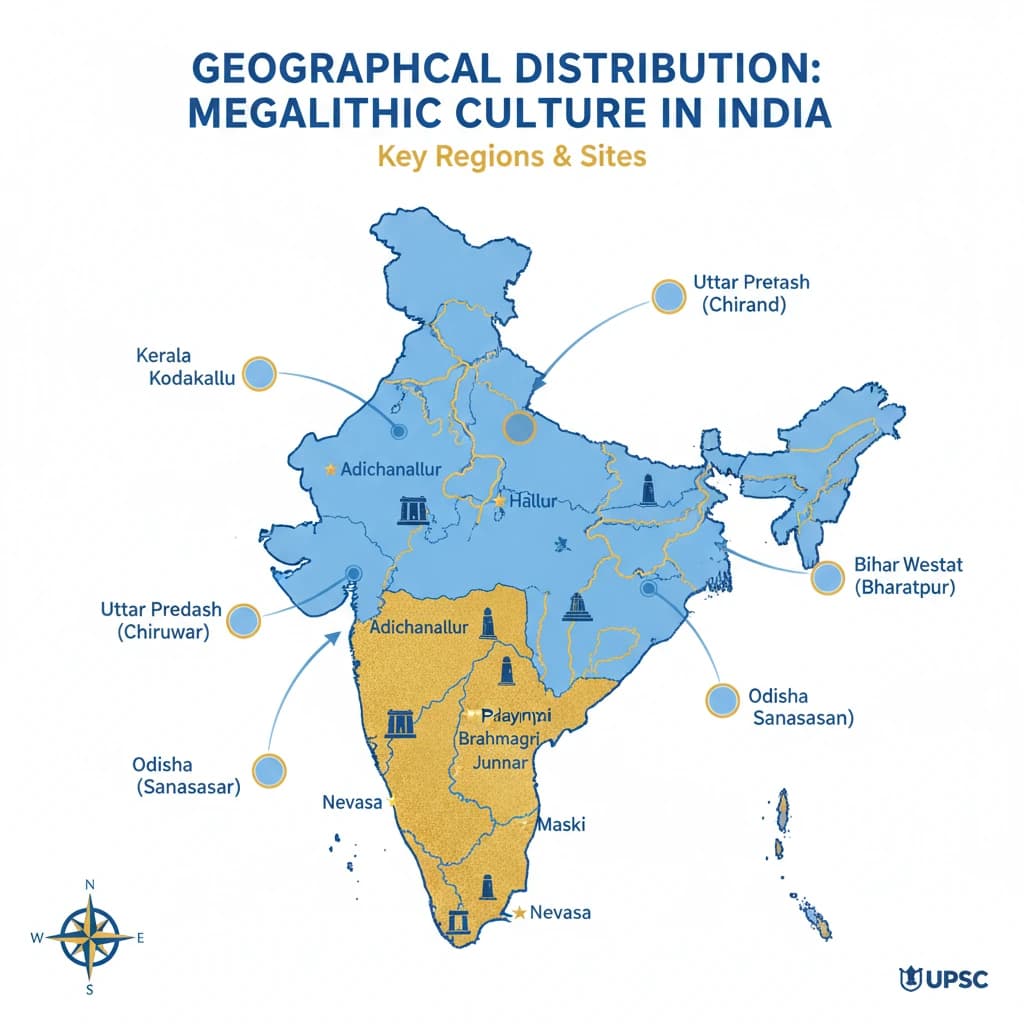
The Megalithic culture in India exhibited a wide geographical spread, though its primary concentration was in specific regions.
The main areas of development and density were in the Deccan region, particularly south of the Godavari River.
Key Regions and Sites
Beyond the Deccan, evidence of Megalithic presence has been discovered across various parts of the Indian subcontinent.
- Northern India: Presence noted in the Punjab Plains, the Indo-Gangetic basin, and Burzahom in Jammu and Kashmir.
- Western India: Traces found in Rajasthan and Gujarat.
- Eastern India: Significant sites like Seraikalla in Bihar.
- Central India: Sites such as Khera in Uttar Pradesh and Deosa in Rajasthan further illustrate its widespread nature.
Iron Age Culture and Technology
The Megalithic period in South India is distinctively recognized as a full-fledged Iron Age culture.
This era saw the complete utilization and mastery of iron technology, marking a significant technological advancement.
Evidence of Iron Use:
- Discovery of various iron weapons.
- Unearthing of sophisticated agricultural implements.
These artifacts indicate advanced metallurgy and its application in daily life and warfare.
Key sites for these iron finds range from Junapani in Vidarbha to Adichanallur in Tamil Nadu.
Art and Rock Paintings
Artistic expressions were also a part of the Megalithic culture, particularly evident through rock paintings.
These paintings, discovered at various megalithic sites, offer insights into their societal activities and beliefs.
Depictions in Rock Paintings:
- Scenes of hunting, showcasing their subsistence strategies.
- Illustrations of cattle raids, suggesting social dynamics and resource acquisition.
- Portrayals of group dancing, indicating communal rituals or celebrations.
💡 Key Takeaways
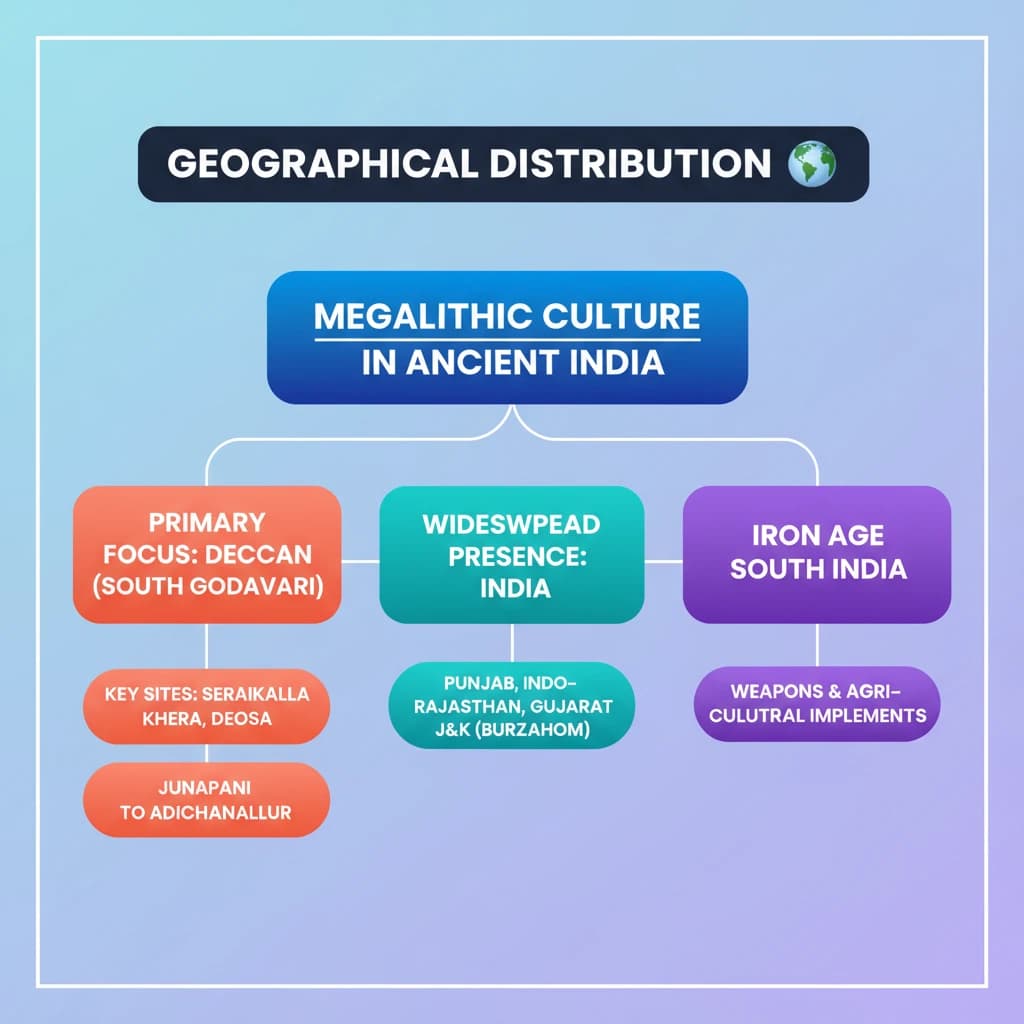
- •Megalithic culture primarily concentrated in the <strong>Deccan, south of the Godavari River</strong>.
- •Widespread presence across India, including <strong>Punjab, Indo-Gangetic basin, Rajasthan, Gujarat, and J&K (Burzahom)</strong>.
- •Key sites include <strong>Seraikalla (Bihar), Khera (UP), and Deosa (Rajasthan)</strong>.
- •The South Indian Megalithic period was a full-fledged <strong>Iron Age culture</strong>.
- •Evidence of iron use (weapons, agricultural implements) found from <strong>Junapani (Vidarbha) to Adichanallur (Tamil Nadu)</strong>.
- •Rock paintings at megalithic sites depict <strong>hunting, cattle raids, and group dancing</strong>.
🧠 Memory Techniques
95% Verified Content
📚 Reference Sources
•NCERT Class XI: An Introduction to Indian Art (for rock paintings context)
•Upinder Singh, A History of Ancient and Early Medieval India: From the Stone Age to the 12th Century
•Archaeological Survey of India (ASI) publications on Megalithic sites