Loading page, please wait…
Guru Gobind Singh Ji - UPSC History
What is Guru Gobind Singh Ji in UPSC History?
Guru Gobind Singh Ji is a key topic under History for UPSC Civil Services Examination. Key points include: Guru Gobind Singh Ji was the 10th Sikh Guru and founder of the Khalsa in 1699.. He introduced the Five K's (Kangha, Kesh, Kara, Kirpan, Kachhera) as symbols of Sikh identity.. All four of his sons (Sahibzadas) attained martyrdom, two executed by Wazir Khan and two in the Battle of Chamkaur.. Understanding this topic is essential for both UPSC Prelims and Mains preparation.
Why is Guru Gobind Singh Ji important for UPSC exam?
Guru Gobind Singh Ji is a Medium-level topic in UPSC History. It is tested in both Prelims (factual MCQs) and Mains (analytical answer writing). Previous year UPSC questions have frequently covered aspects of Guru Gobind Singh Ji, making it essential for comprehensive IAS preparation.
How to prepare Guru Gobind Singh Ji for UPSC?
To prepare Guru Gobind Singh Ji for UPSC: (1) Study the comprehensive notes covering all key concepts on Vaidra. (2) Practice previous year questions on this topic. (3) Connect it with current affairs using daily updates. (4) Revise using key takeaways and mind maps available for History. (5) Write practice answers linking Guru Gobind Singh Ji to related GS Paper topics.
Key takeaways of Guru Gobind Singh Ji for UPSC
- Guru Gobind Singh Ji was the 10th Sikh Guru and founder of the Khalsa in 1699.
- He introduced the Five K's (Kangha, Kesh, Kara, Kirpan, Kachhera) as symbols of Sikh identity.
- All four of his sons (Sahibzadas) attained martyrdom, two executed by Wazir Khan and two in the Battle of Chamkaur.
- December 26th is observed as ‘Veer Bal Diwas’ to honor the sacrifice of the younger Sahibzadas.
- He established the institution of Panj Pyare, symbolizing ultimate devotion and equality within the Khalsa.
Guru Gobind Singh Ji
Medium⏱️ 7 min read
history
📖 Introduction
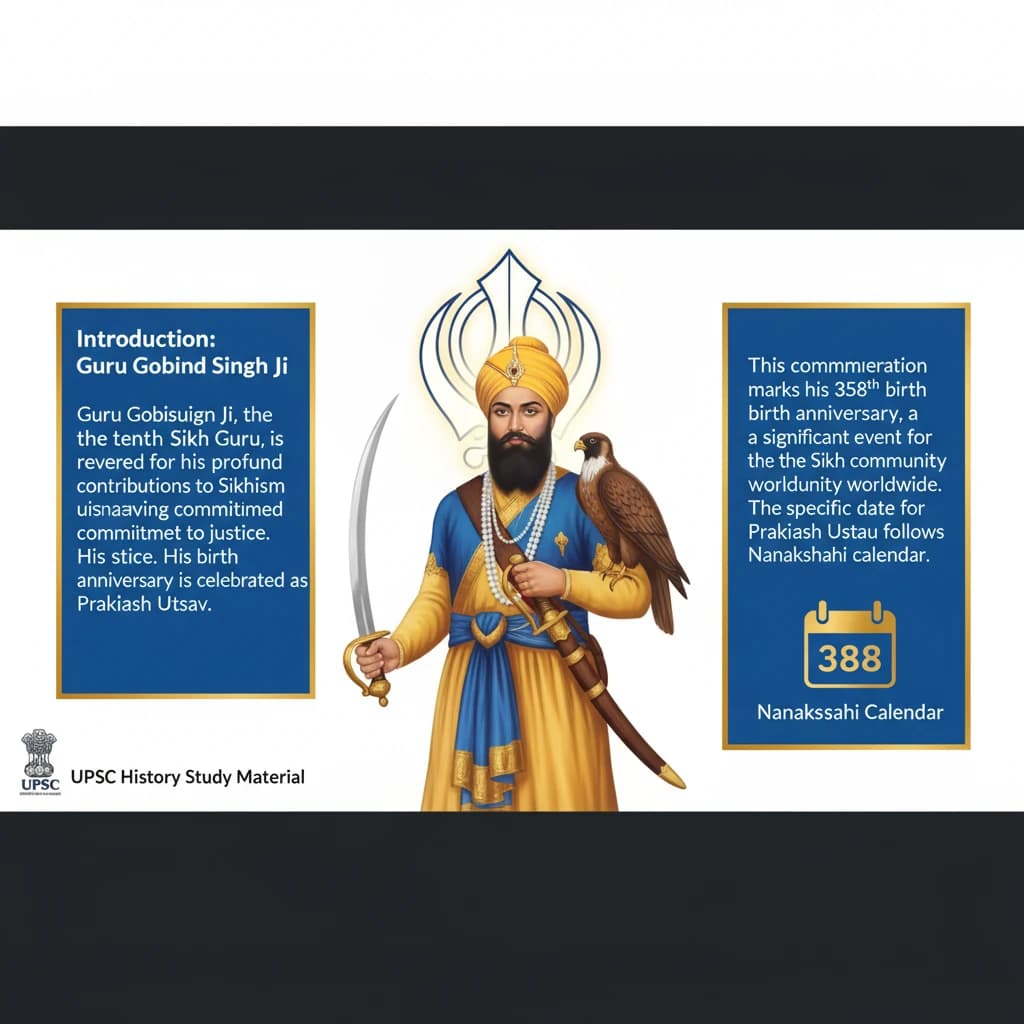
Introduction: Guru Gobind Singh Ji
Guru Gobind Singh Ji, the tenth Sikh Guru, is revered for his profound contributions to Sikhism and his unwavering commitment to justice. His birth anniversary is celebrated as Prakash Utsav.
This commemoration marks his 358th birth anniversary, a significant event for the Sikh community worldwide. The specific date for Prakash Utsav follows the Nanakshahi calendar.
Prakash Parv is a general term used to refer to the birth anniversaries of the Sikh Gurus. For Guru Gobind Singh Ji, this will fall on 6th January in 2025 according to the Nanakshahi calendar, which follows the solar year.
Birth and Succession
Guru Gobind Singh Ji was born on 22nd December 1666, in Patna Sahib, Bihar. His early life was marked by the spiritual legacy of his predecessors.
He succeeded his father, Guru Teg Bahadur, who was the ninth Sikh Guru. This succession occurred at a challenging time, following his father's martyrdom.
Establishment of the Khalsa
In 1699, Guru Gobind Singh Ji established the Khalsa, a revolutionary move that transformed the Sikh community into a disciplined warrior collective.
The primary purpose of the Khalsa was to protect the Sikh faith and uphold justice against oppression. It instilled a sense of courage and self-respect among its followers.
The Five K's (Panj Kakke)
As part of the Khalsa initiation, Guru Gobind Singh Ji introduced the Five K's, which serve as external symbols of Sikh identity and commitment.
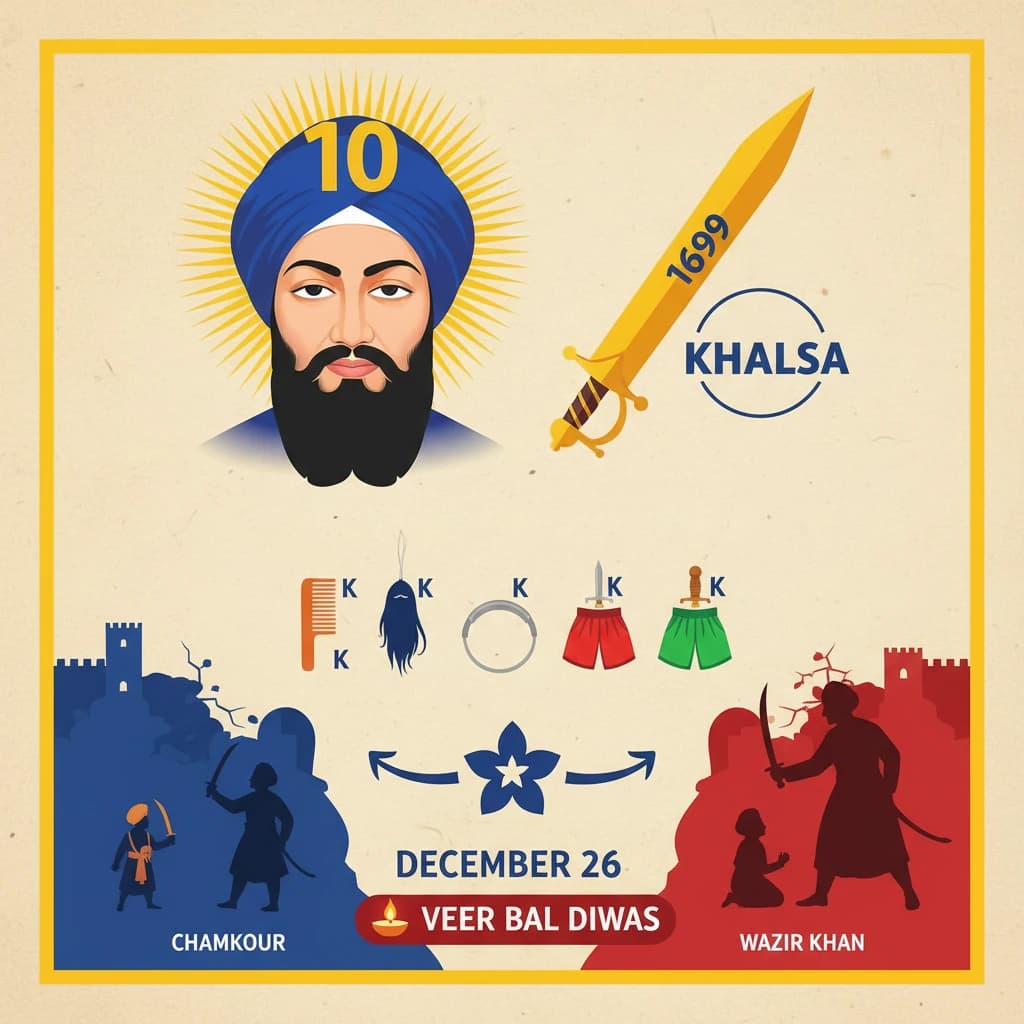
- Kangha (comb): Symbolizes cleanliness and order.
- Kesh (uncut hair): Represents holiness and spiritual devotion.
- Kara (steel bracelet): Signifies restraint, strength, and connection to the Guru.
- Kirpan (sword): Denotes dignity, self-defense, and the fight against injustice.
- Kachhera (shorts): Represents modesty, agility, and readiness for battle.
Sacrifice of the Sahibzadas (Sons)
Guru Gobind Singh Ji endured immense personal sacrifice, including the martyrdom of all four of his sons, known as the Sahibzadas.
- His younger sons, Zorawar Singh (aged 7) and Fateh Singh (aged 9), were brutally executed by Sarhind's governor Wazir Khan after they steadfastly refused to convert to Islam.
- His two elder sons, Ajit Singh and Jujhar Singh, bravely sacrificed their lives in the Battle of Chamkaur in 1705. In this battle, a small Sikh force valiantly fought against overwhelming Mughal and hill king armies.
The martyrdom of the younger Sahibzadas is commemorated annually on 26th December, observed as ‘Veer Bal Diwas’, to honor their courage and sacrifice.
Institution of Panj Pyare
The concept of Panj Pyare (the Five Beloved Ones) was a cornerstone of the Khalsa's formation, signifying ultimate devotion and equality.
Guru Gobind Singh Ji famously asked for five heads for sacrifice, and five men willingly stepped forward, demonstrating their unwavering faith and commitment to the Guru's cause.
💡 Key Takeaways
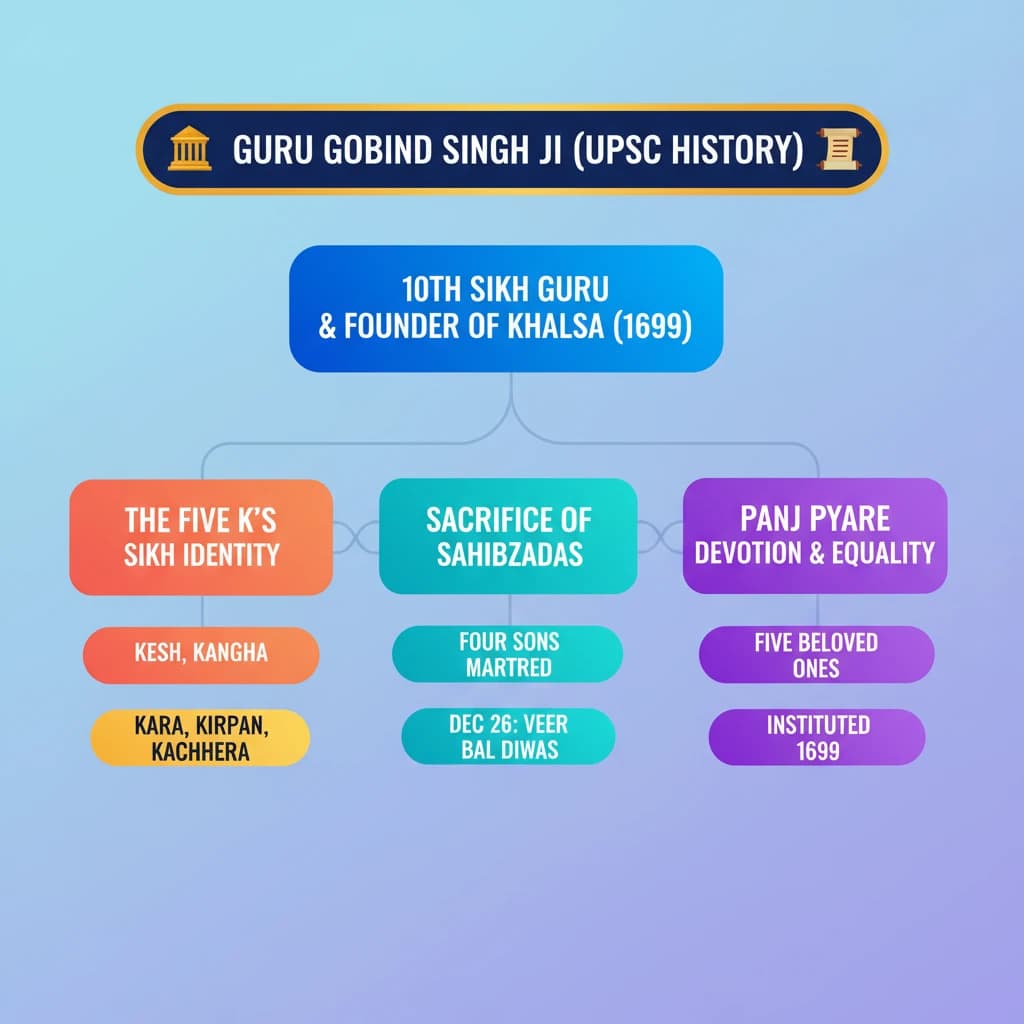
- •Guru Gobind Singh Ji was the 10th Sikh Guru and founder of the Khalsa in 1699.
- •He introduced the Five K's (Kangha, Kesh, Kara, Kirpan, Kachhera) as symbols of Sikh identity.
- •All four of his sons (Sahibzadas) attained martyrdom, two executed by Wazir Khan and two in the Battle of Chamkaur.
- •December 26th is observed as ‘Veer Bal Diwas’ to honor the sacrifice of the younger Sahibzadas.
- •He established the institution of Panj Pyare, symbolizing ultimate devotion and equality within the Khalsa.
🧠 Memory Techniques
95% Verified Content
📚 Reference Sources
•NCERT History Textbooks (relevant chapters on Mughal-Sikh relations)
•General historical accounts of Sikhism and medieval India