Loading page, please wait…
Hampi Stone Chariot: History, Significance, and Krishnadevaraya's Role - UPSC History
What is Hampi Stone Chariot: History, Significance, and Krishnadevaraya's Role in UPSC History?
Hampi Stone Chariot: History, Significance, and Krishnadevaraya's Role is a key topic under History for UPSC Civil Services Examination. Key points include: Hampi Chariot is one of three famous stone chariots in India (others: Konark, Mahabalipuram).. Built in the 16th century by King Krishnadevaraya of the Vijayanagara Empire.. It is a shrine dedicated to Garuda, the vehicle of Lord Vishnu.. Understanding this topic is essential for both UPSC Prelims and Mains preparation.
Why is Hampi Stone Chariot: History, Significance, and Krishnadevaraya's Role important for UPSC exam?
Hampi Stone Chariot: History, Significance, and Krishnadevaraya's Role is a Medium-level topic in UPSC History. It is tested in both Prelims (factual MCQs) and Mains (analytical answer writing). Previous year UPSC questions have frequently covered aspects of Hampi Stone Chariot: History, Significance, and Krishnadevaraya's Role, making it essential for comprehensive IAS preparation.
How to prepare Hampi Stone Chariot: History, Significance, and Krishnadevaraya's Role for UPSC?
To prepare Hampi Stone Chariot: History, Significance, and Krishnadevaraya's Role for UPSC: (1) Study the comprehensive notes covering all key concepts on Vaidra. (2) Practice previous year questions on this topic. (3) Connect it with current affairs using daily updates. (4) Revise using key takeaways and mind maps available for History. (5) Write practice answers linking Hampi Stone Chariot: History, Significance, and Krishnadevaraya's Role to related GS Paper topics.
Key takeaways of Hampi Stone Chariot: History, Significance, and Krishnadevaraya's Role for UPSC
- Hampi Chariot is one of three famous stone chariots in India (others: Konark, Mahabalipuram).
- Built in the 16th century by King Krishnadevaraya of the Vijayanagara Empire.
- It is a shrine dedicated to Garuda, the vehicle of Lord Vishnu.
- Located within the Vittala Temple Complex, Hampi, a UNESCO World Heritage Site.
- Represents the pinnacle of Vijayanagara architectural and sculptural art.
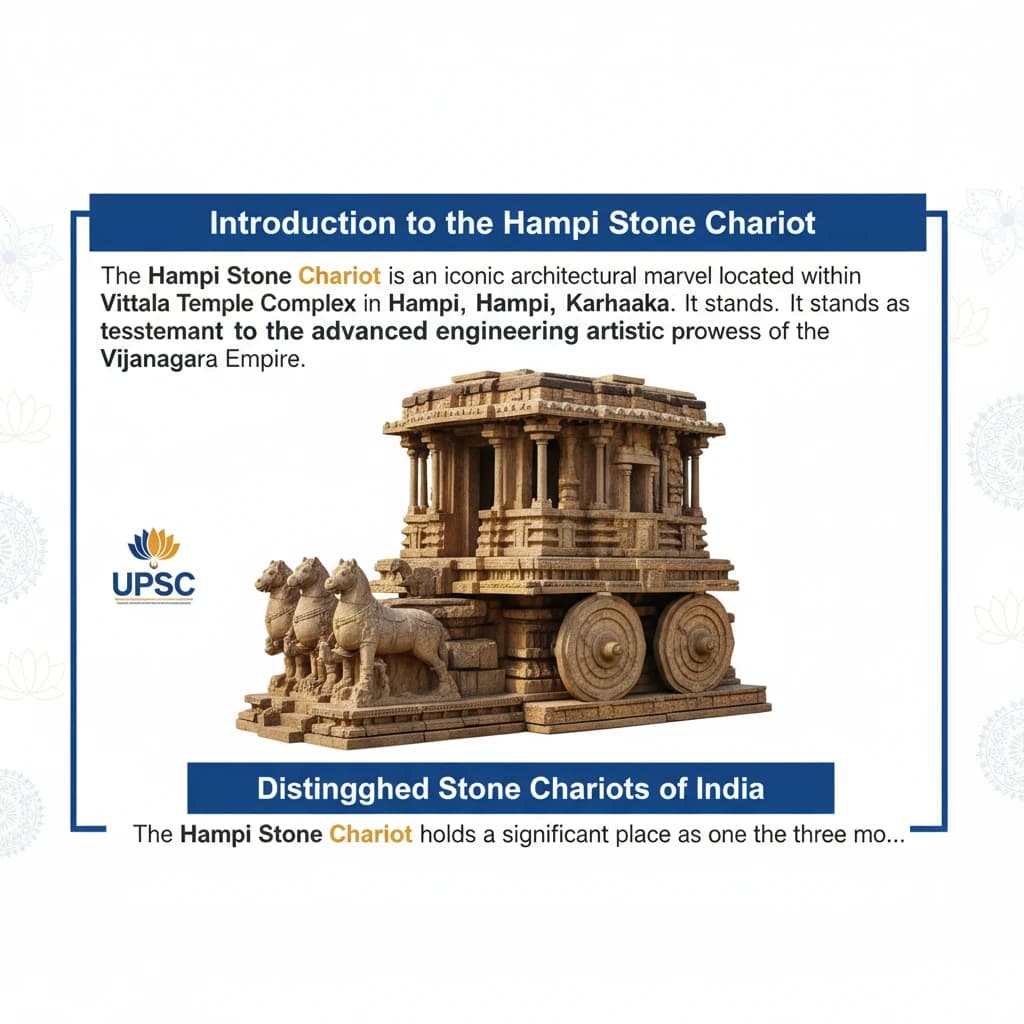
Hampi Stone Chariot: History, Significance, and Krishnadevaraya's Role
Medium⏱️ 7 min read
history
📖 Introduction
Introduction to the Hampi Stone Chariot
The Hampi Stone Chariot is an iconic architectural marvel located within the Vittala Temple Complex in Hampi, Karnataka. It stands as a testament to the advanced engineering and artistic prowess of the Vijayanagara Empire.
Distinguished Stone Chariots of India
The Hampi Stone Chariot holds a significant place as one of the three most renowned stone chariots found across India. These structures are celebrated for their intricate carvings and architectural grandeur.
- Hampi Stone Chariot: Located in Hampi, Karnataka.
- Konark Sun Temple Chariot: Situated in Konark, Odisha.
- Mahabalipuram Rathas: Found in Mahabalipuram, Tamil Nadu.
Construction and Patronage
This magnificent chariot was constructed during the 16th century, a period marking the zenith of the Vijayanagara Empire's power and cultural flourishing. Its creation was commissioned by a prominent ruler of the dynasty.
Builder: King Krishnadevaraya
Dynasty: Vijayanagara Empire
Period: 16th century
Religious Significance and Dedication
Beyond its architectural brilliance, the Hampi Stone Chariot serves a profound religious purpose. It is essentially a shrine, embodying the spiritual beliefs of the era.
The chariot is dedicated to Garuda, the mythical bird and the official vehicle (vahana) of Lord Vishnu. This dedication underscores its role within the larger Vittala Temple complex, which is dedicated to Lord Vishnu.
For UPSC Prelims, remember the three famous stone chariots and their locations. For Mains, discuss the architectural significance and religious symbolism of such structures under Vijayanagara art and architecture.
💡 Key Takeaways
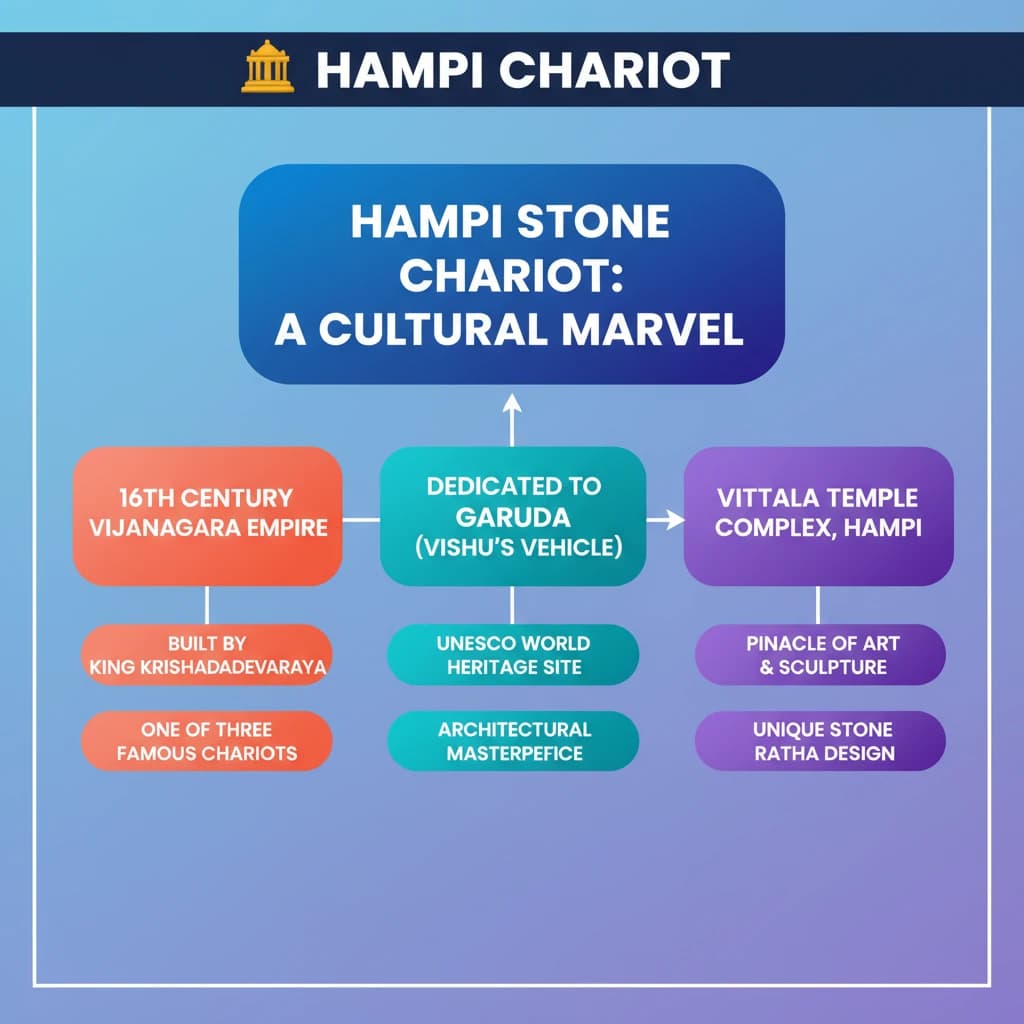
- •Hampi Chariot is one of three famous stone chariots in India (others: Konark, Mahabalipuram).
- •Built in the 16th century by King Krishnadevaraya of the Vijayanagara Empire.
- •It is a shrine dedicated to Garuda, the vehicle of Lord Vishnu.
- •Located within the Vittala Temple Complex, Hampi, a UNESCO World Heritage Site.
- •Represents the pinnacle of Vijayanagara architectural and sculptural art.
🧠 Memory Techniques
95% Verified Content
📚 Reference Sources
•NCERT Textbooks (Art & Culture)
•Archaeological Survey of India (ASI) official website
•UNESCO World Heritage Centre