Loading page, please wait…
How did the Government Respond to the Spread of QIM? - UPSC History
What is How did the Government Respond to the Spread of QIM? in UPSC History?
How did the Government Respond to the Spread of QIM? is a key topic under History for UPSC Civil Services Examination. Key points include: The British government's response to QIM was immediate and brutal, involving mass arrests and banning of Congress.. The movement, though leaderless initially, saw widespread public participation, targeting symbols of authority and infrastructure.. Key underground activities were led by figures like Rammanohar Lohia, Jayaprakash Narayan, and Aruna Asaf Ali.. Understanding this topic is essential for both UPSC Prelims and Mains preparation.
Why is How did the Government Respond to the Spread of QIM? important for UPSC exam?
How did the Government Respond to the Spread of QIM? is a Medium-level topic in UPSC History. It is tested in both Prelims (factual MCQs) and Mains (analytical answer writing). Previous year UPSC questions have frequently covered aspects of How did the Government Respond to the Spread of QIM?, making it essential for comprehensive IAS preparation.
How to prepare How did the Government Respond to the Spread of QIM? for UPSC?
To prepare How did the Government Respond to the Spread of QIM? for UPSC: (1) Study the comprehensive notes covering all key concepts on Vaidra. (2) Practice previous year questions on this topic. (3) Connect it with current affairs using daily updates. (4) Revise using key takeaways and mind maps available for History. (5) Write practice answers linking How did the Government Respond to the Spread of QIM? to related GS Paper topics.
Key takeaways of How did the Government Respond to the Spread of QIM? for UPSC
- The British government's response to QIM was immediate and brutal, involving mass arrests and banning of Congress.
- The movement, though leaderless initially, saw widespread public participation, targeting symbols of authority and infrastructure.
- Key underground activities were led by figures like Rammanohar Lohia, Jayaprakash Narayan, and Aruna Asaf Ali.
- Usha Mehta's underground radio in Bombay was crucial for communication and morale.
- Parallel governments emerged in Ballia, Tamluk, and Satara, challenging British rule locally.
- QIM was a truly mass movement with significant involvement from youth, women, workers, and peasants.
How did the Government Respond to the Spread of QIM?
Medium⏱️ 8 min read
history
📖 Introduction
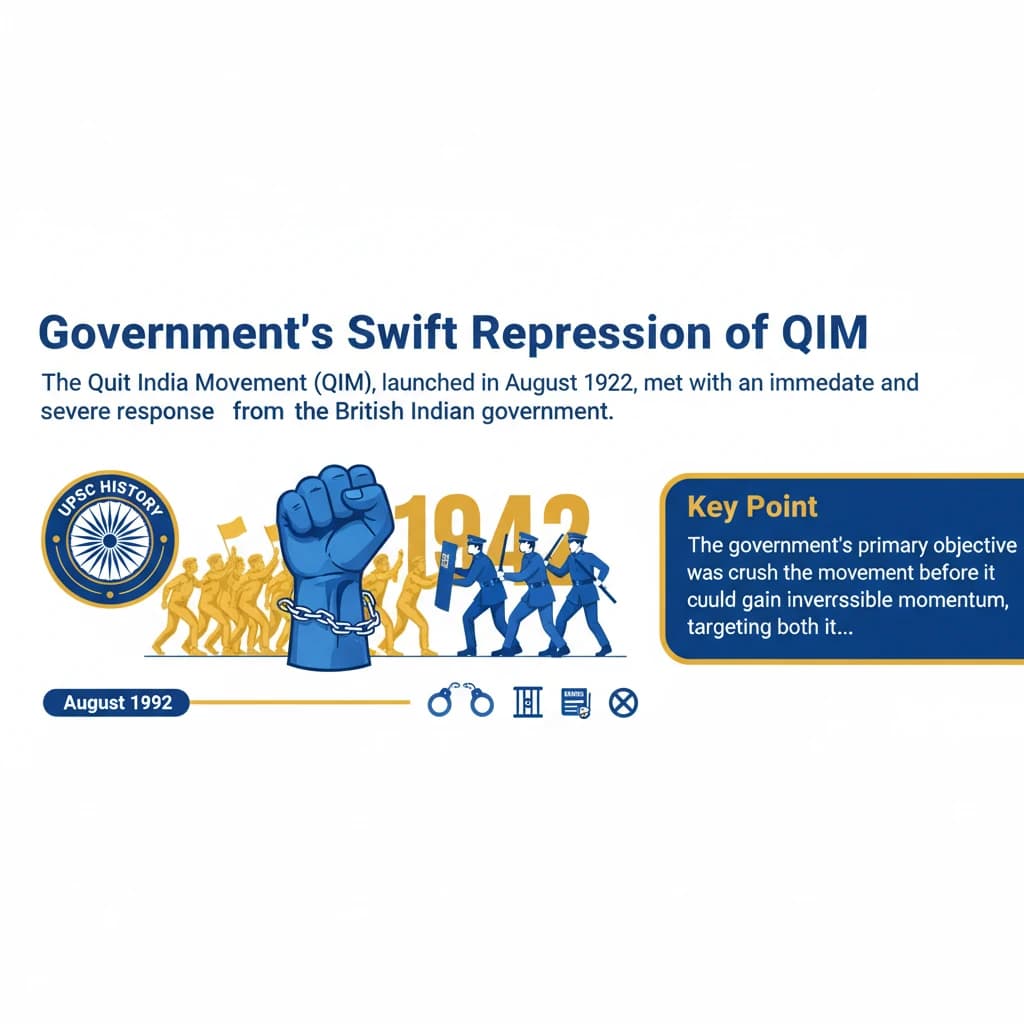
Government's Swift Repression of QIM
The Quit India Movement (QIM), launched in August 1942, met with an immediate and severe response from the British Indian government. This response was characterized by widespread arrests and systematic suppression of the burgeoning rebellion across the country.
The government's primary objective was to crush the movement before it could gain irreversible momentum, targeting both its leadership and its grassroots activities.
Spread and Nature of the Movement
Following the arrest of major leaders, the movement quickly decentralized, with the general public taking a leading role. This phase was marked by spontaneous acts of defiance and sabotage aimed at disrupting British administration.
- The public engaged in widespread attacks on symbols of authority, demonstrating their collective anger and resolve.
- Satyagrahis voluntarily offered themselves for arrest, embodying the spirit of non-violent resistance even amidst escalating violence.
Disruption of Infrastructure
A key strategy of the movement involved crippling the British administration's ability to communicate and transport. This led to targeted destruction of vital infrastructure.
- Bridges were blown up to impede troop movements and supply lines.
- Railway tracks were removed, further disrupting communication and transport networks crucial for colonial control.
- Telegraph lines were cut, isolating administrative centers and preventing the rapid dissemination of orders and intelligence.
Underground Activities and Key Personalities
With most prominent leaders incarcerated, a significant aspect of the QIM involved underground activities. These covert operations aimed to sustain the movement, coordinate resistance, and disseminate information.
Key personalities involved in underground activities included Rammanohar Lohia, Jayaprakash Narayan, Aruna Asaf Ali, Usha Mehta, and R.P. Goenka.
These leaders worked to keep the spirit of rebellion alive, often at great personal risk, through various clandestine means.
The Role of Underground Radio
A notable initiative during this period was the establishment of an underground radio station. This served as a crucial tool for communication and propaganda, bypassing government censorship.
Usha Mehta was instrumental in starting an underground radio in Bombay, which broadcasted nationalist messages and news of the movement's progress to the masses.
Leadership and the AICC Session
Despite the arrest of top leaders, the movement found new figures to lead. The All India Congress Committee (AICC) session on August 9th proceeded under challenging circumstances.
A young and relatively unknown leader, Aruna Asaf Ali, presided over the AICC session and courageously hoisted the flag, symbolizing continued resistance.
Following these events, the Congress party was officially banned by the government, further escalating the confrontation.
Emergence of Parallel Governments
A significant development showcasing the extent of public defiance was the formation of parallel governments in several regions. These administrations challenged British authority directly.
- Ballia in Uttar Pradesh saw the establishment of a parallel government under Chittu Pandey.
- Tamluk in Bengal (Jatiya Sarkar) also formed its own administration.
- Satara in Maharashtra (Prati Sarkar) became another stronghold of self-rule.
Understanding the locations and leaders of these parallel governments is crucial for Mains answers, as they illustrate the decentralized and radical nature of QIM.
Extent of Mass Participation
The Quit India Movement was characterized by widespread participation from diverse sections of society, making it a truly mass movement.
Youth, women, workers, and peasants all played active and prominent roles, demonstrating a unified national resolve against colonial rule.
💡 Key Takeaways
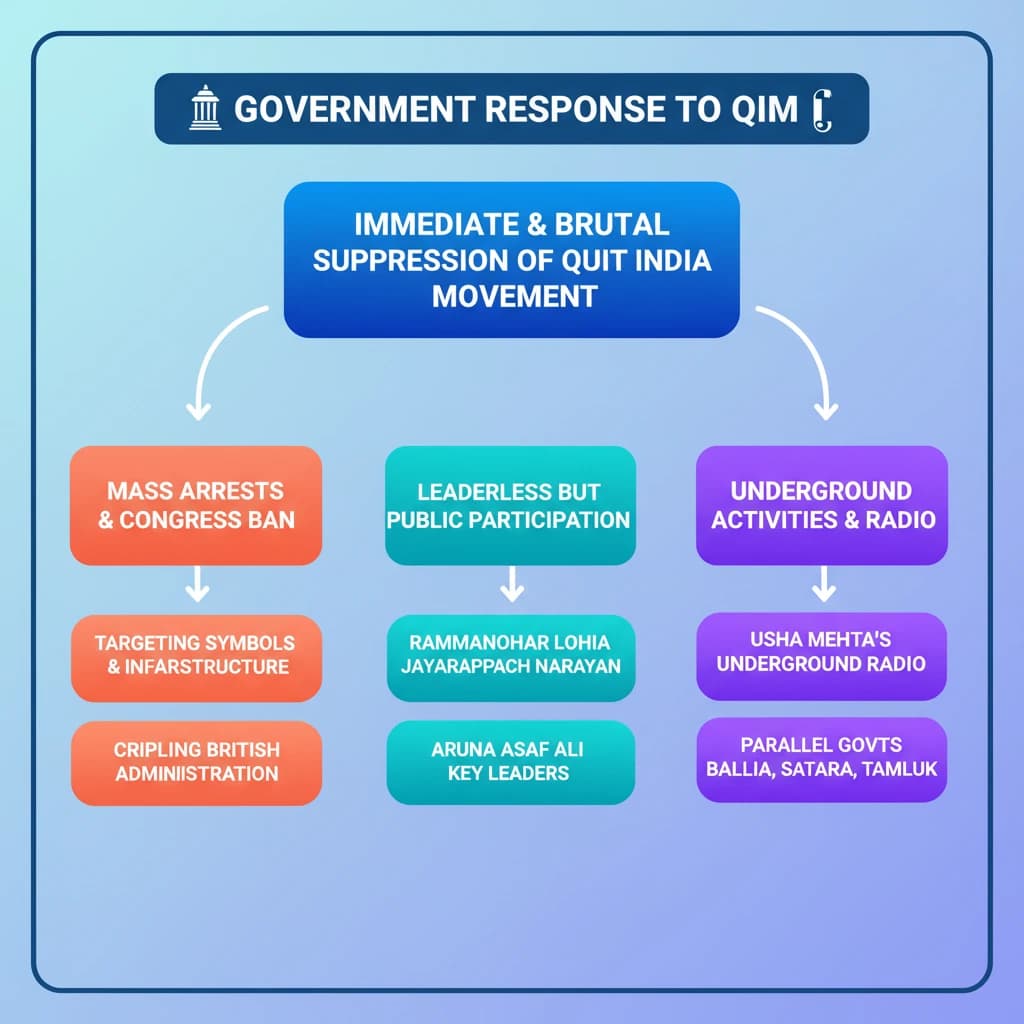
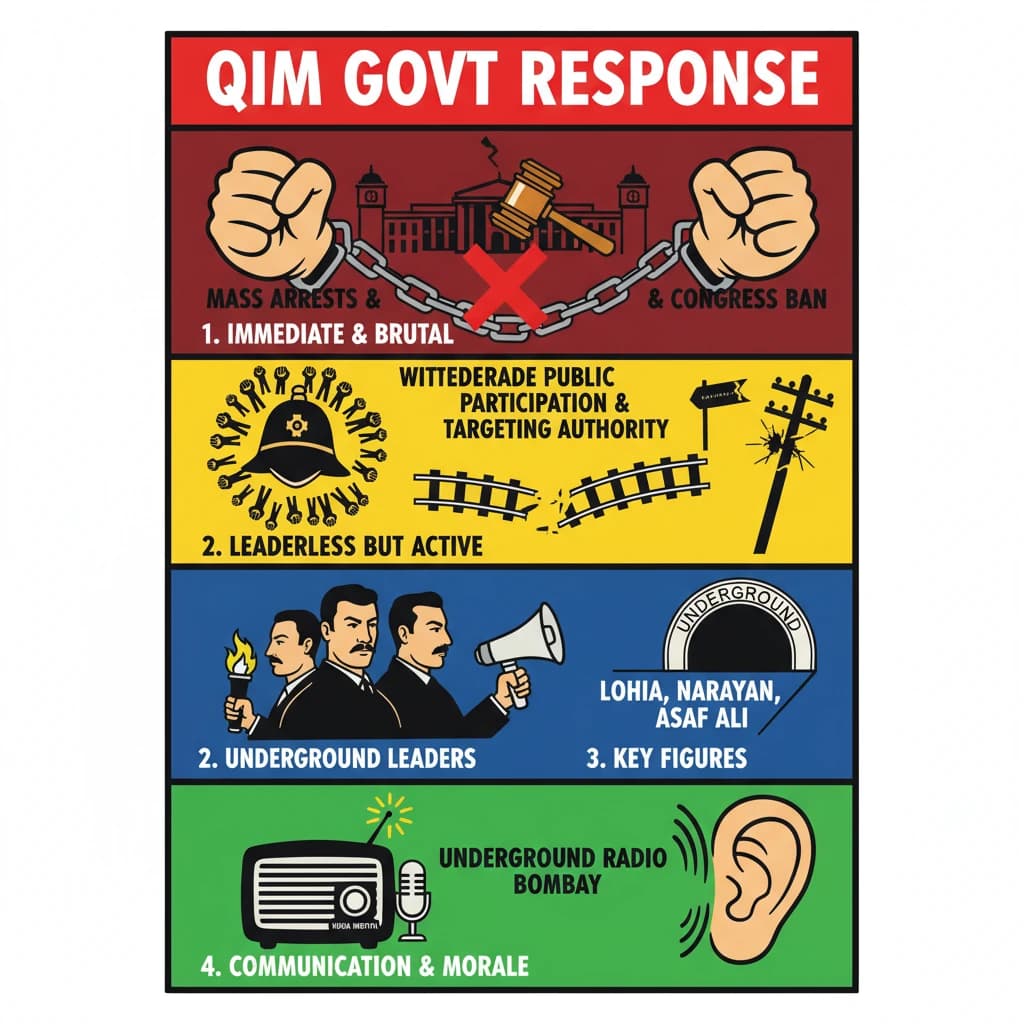
- •The British government's response to QIM was immediate and brutal, involving mass arrests and banning of Congress.
- •The movement, though leaderless initially, saw widespread public participation, targeting symbols of authority and infrastructure.
- •Key underground activities were led by figures like Rammanohar Lohia, Jayaprakash Narayan, and Aruna Asaf Ali.
- •Usha Mehta's underground radio in Bombay was crucial for communication and morale.
- •Parallel governments emerged in Ballia, Tamluk, and Satara, challenging British rule locally.
- •QIM was a truly mass movement with significant involvement from youth, women, workers, and peasants.
🧠 Memory Techniques
95% Verified Content