Loading page, please wait…
Lala Lajpat Rai - UPSC History
What is Lala Lajpat Rai in UPSC History?
Lala Lajpat Rai is a key topic under History for UPSC Civil Services Examination. Key points include: Lala Lajpat Rai (Punjab Kesari) was a key member of the Lal-Bal-Pal trio, an extremist leader.. He founded the Home Rule League of America (1917) and died protesting the Simon Commission (1928).. Dr. Rajendra Prasad was India's first President and President of the Constituent Assembly (1946).. Understanding this topic is essential for both UPSC Prelims and Mains preparation.
Why is Lala Lajpat Rai important for UPSC exam?
Lala Lajpat Rai is a Medium-level topic in UPSC History. It is tested in both Prelims (factual MCQs) and Mains (analytical answer writing). Previous year UPSC questions have frequently covered aspects of Lala Lajpat Rai, making it essential for comprehensive IAS preparation.
How to prepare Lala Lajpat Rai for UPSC?
To prepare Lala Lajpat Rai for UPSC: (1) Study the comprehensive notes covering all key concepts on Vaidra. (2) Practice previous year questions on this topic. (3) Connect it with current affairs using daily updates. (4) Revise using key takeaways and mind maps available for History. (5) Write practice answers linking Lala Lajpat Rai to related GS Paper topics.
Key takeaways of Lala Lajpat Rai for UPSC
- Lala Lajpat Rai (Punjab Kesari) was a key member of the Lal-Bal-Pal trio, an extremist leader.
- He founded the Home Rule League of America (1917) and died protesting the Simon Commission (1928).
- Dr. Rajendra Prasad was India's first President and President of the Constituent Assembly (1946).
- He was a staunch Gandhian, imprisoned during Salt Satyagraha and Quit India Movement.
- Prasad served over 12 years as President, reelected unopposed, and received Bharat Ratna in 1962.
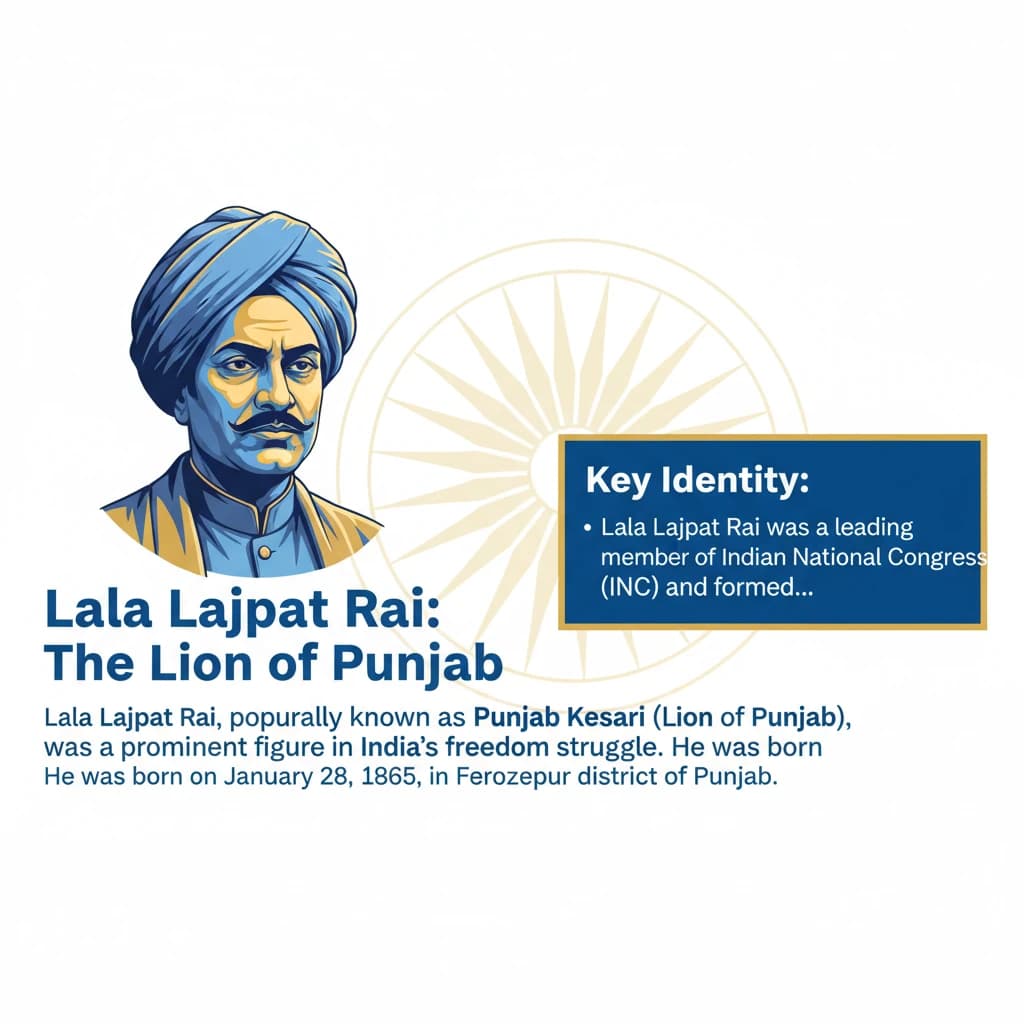
Lala Lajpat Rai
Medium⏱️ 7 min read
history
📖 Introduction
Lala Lajpat Rai: The Lion of Punjab
Lala Lajpat Rai, popularly known as Punjab Kesari (Lion of Punjab), was a prominent figure in India's freedom struggle. He was born on January 28, 1865, in the Ferozepur district of Punjab.
Key Identity: Lala Lajpat Rai was a leading member of the Indian National Congress (INC) and formed the influential trio Lal-Bal-Pal alongside Bal Gangadhar Tilak and Bipin Chandra Pal.
Role in Early Nationalist Movements
Lala Lajpat Rai actively participated in and led several significant movements during the early 20th century. His nationalist fervor was evident in his strong opposition to the Partition of Bengal in 1905.
He later extended his support to Mahatma Gandhi's Non-Cooperation Movement which began in 1920, advocating for non-violent resistance against British rule.
International Advocacy and Protests
During his time abroad, Lala Lajpat Rai founded the Home Rule League of America in 1917. This initiative aimed to garner international support for India’s Home Rule Movement, which had been initiated by Bal Gangadhar Tilak and Annie Besant in 1916.
Upon his return, he vehemently protested against the repressive Rowlatt Act and condemned the brutal Jallianwala Bagh massacre, highlighting the injustices of British colonial rule.
UPSC Insight: Questions on Lal-Bal-Pal often focus on their ideological differences and similarities with the 'Moderates' and their role in shaping the Extremist phase of the Indian National Movement. Remember his international efforts for Home Rule.
Tragic End during Simon Commission Protests
In 1928, Lala Lajpat Rai led a massive opposition movement against the Simon Commission, an all-British commission appointed to review constitutional reforms in India. During a peaceful protest in Lahore, he sustained severe injuries from a brutal lathi charge.
These injuries proved fatal, and Lala Lajpat Rai succumbed to them, becoming a martyr for the cause of Indian independence. His death sparked widespread outrage and further intensified the nationalist movement.
Remember: Lala Lajpat Rai's death is a critical event, symbolizing British brutality and fueling revolutionary activities in the late 1920s.
Dr. Rajendra Prasad: Architect of Modern India
Dr. Rajendra Prasad, India's first President, was born on December 3, 1884, in Bihar. His birth anniversary is observed annually on this date.
Early Life & Influences: He was deeply influenced by Mahatma Gandhi's views, particularly on issues of caste and untouchability, which led him to adopt a simple and principled life.
Role in the Freedom Struggle
Dr. Rajendra Prasad made a significant sacrifice by giving up his successful legal career in 1920 to fully dedicate himself to the Independence movement. His commitment led to multiple imprisonments.
- He was imprisoned during the Salt Satyagraha in 1931.
- He was also jailed during the pivotal Quit India Movement in 1942.
His leadership within the Indian National Congress was undeniable. He presided over the Bombay session of the INC in 1934. Later, he became the Congress President after Subhash Chandra Bose's resignation in 1939.
Contribution to Constitutional Making
A pivotal moment in his career was his appointment as the President of the Constituent Assembly in 1946. In this role, he guided the framing of the Indian Constitution.
He also led several crucial committees within the Constituent Assembly, including those on the National Flag, Rules of Procedure, and Finance and Staff, ensuring the smooth functioning of the assembly.
Literary Contributions
Dr. Rajendra Prasad was also a prolific writer, documenting his experiences and thoughts. His notable literary works include:
- Atmakatha (in Champaran) (1922)
- India Divided (1946)
- Mahatma (1946)
- Bapu ke Kadmon Mein (1954)
Presidency and Enduring Legacy
He was elected as India's first President in 1950, serving for over 12 years. He holds the unique distinction of being the only President to be reelected unopposedly in both 1952 and 1957.
In recognition of his immense contributions to the nation, Dr. Rajendra Prasad was awarded the Bharat Ratna, India's highest civilian honor, in 1962.
UPSC Strategy: When discussing Dr. Rajendra Prasad, emphasize his role as a bridge between the Gandhian era and independent India's constitutional framework. His leadership in the Constituent Assembly is crucial for GS Paper II (Polity) and GS Paper I (Modern History).
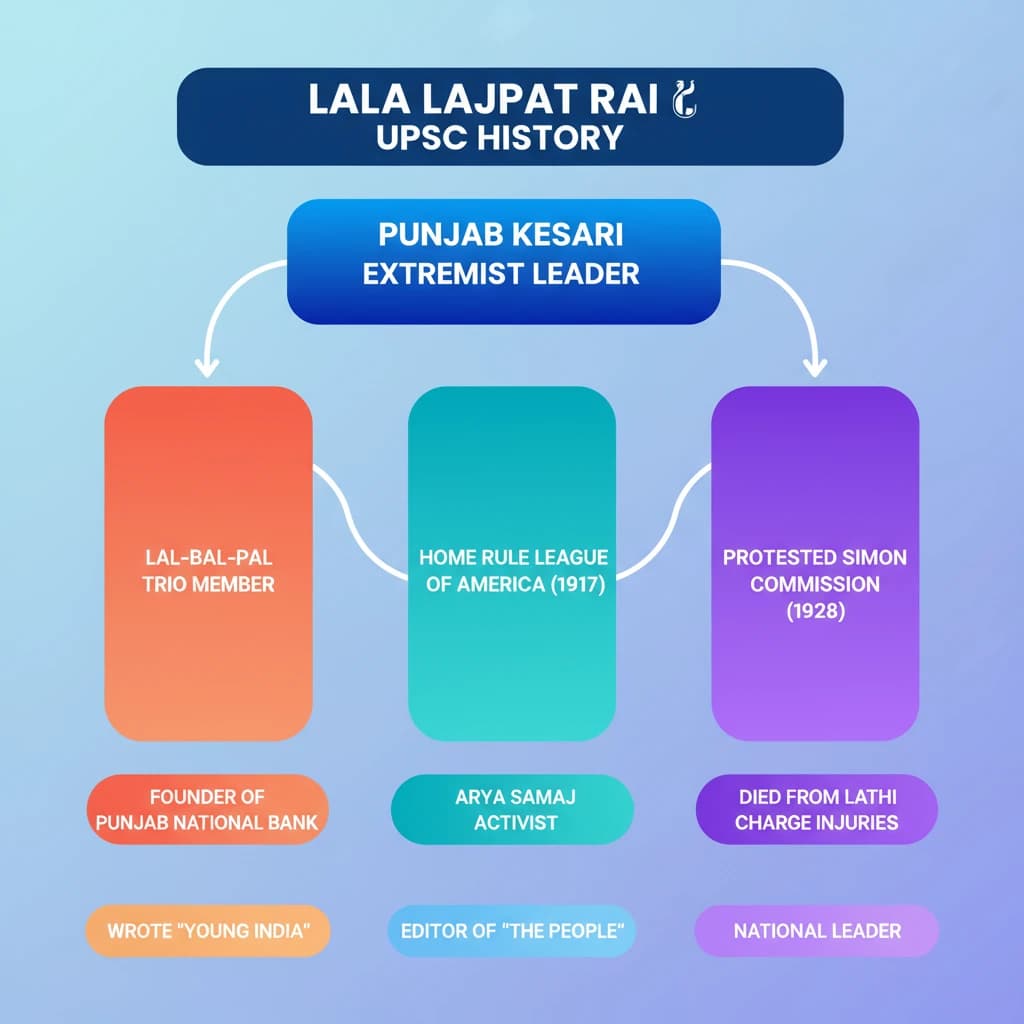
💡 Key Takeaways
- •Lala Lajpat Rai (Punjab Kesari) was a key member of the Lal-Bal-Pal trio, an extremist leader.
- •He founded the Home Rule League of America (1917) and died protesting the Simon Commission (1928).
- •Dr. Rajendra Prasad was India's first President and President of the Constituent Assembly (1946).
- •He was a staunch Gandhian, imprisoned during Salt Satyagraha and Quit India Movement.
- •Prasad served over 12 years as President, reelected unopposed, and received Bharat Ratna in 1962.
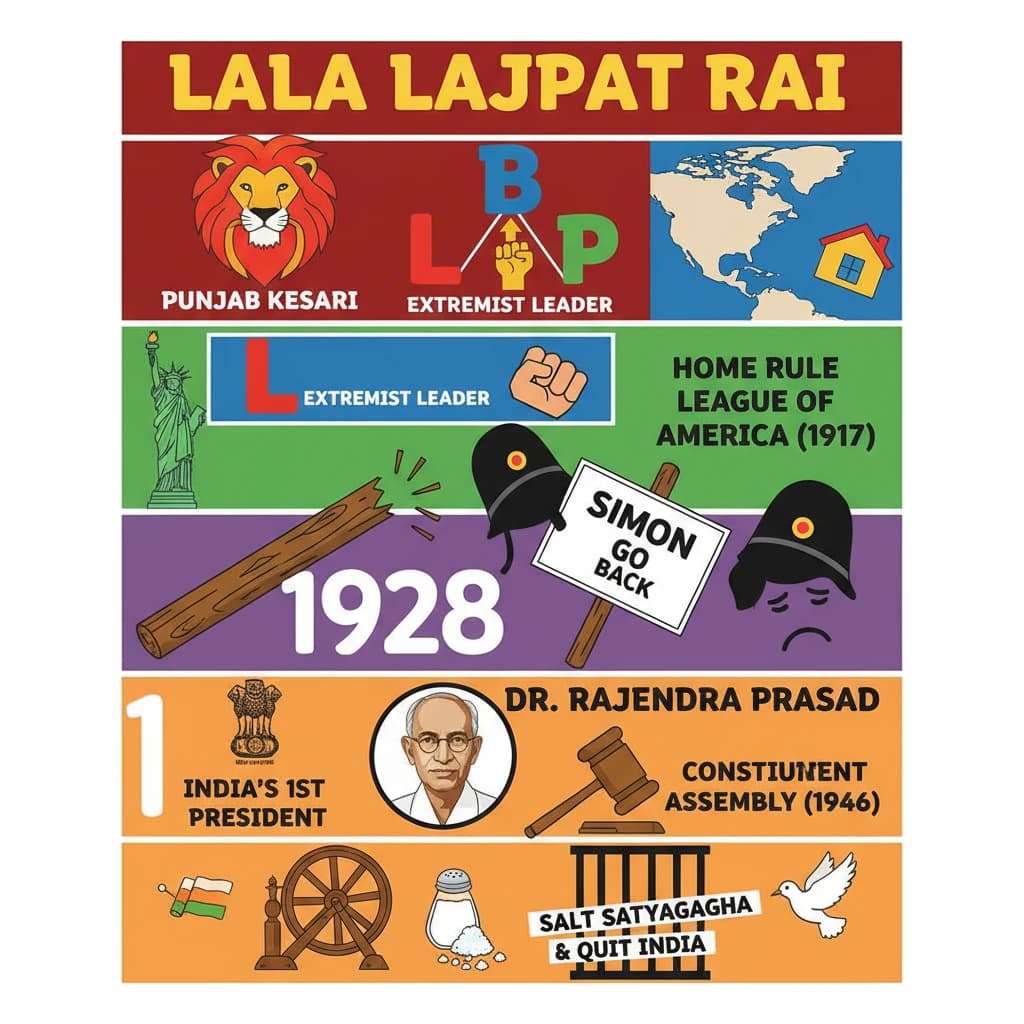
🧠 Memory Techniques
95% Verified Content