Loading page, please wait…
Maritime Activity Under the Chola Rule - UPSC History
What is Maritime Activity Under the Chola Rule in UPSC History?
Maritime Activity Under the Chola Rule is a key topic under History for UPSC Civil Services Examination. Key points include: Cholas built a powerful navy for territorial conquest and promoting mercantile interests.. Key Chola ports included Mamallapuram, Kaveripattinam, Nagapattinam, Kancheepuram, Kulachal, and Thootukudi.. King Rajendra I's invasion of the Srivijaya Empire brought Malay Peninsula, Java, and Sumatra under Chola control.. Understanding this topic is essential for both UPSC Prelims and Mains preparation.
Why is Maritime Activity Under the Chola Rule important for UPSC exam?
Maritime Activity Under the Chola Rule is a Medium-level topic in UPSC History. It is tested in both Prelims (factual MCQs) and Mains (analytical answer writing). Previous year UPSC questions have frequently covered aspects of Maritime Activity Under the Chola Rule, making it essential for comprehensive IAS preparation.
How to prepare Maritime Activity Under the Chola Rule for UPSC?
To prepare Maritime Activity Under the Chola Rule for UPSC: (1) Study the comprehensive notes covering all key concepts on Vaidra. (2) Practice previous year questions on this topic. (3) Connect it with current affairs using daily updates. (4) Revise using key takeaways and mind maps available for History. (5) Write practice answers linking Maritime Activity Under the Chola Rule to related GS Paper topics.
Key takeaways of Maritime Activity Under the Chola Rule for UPSC
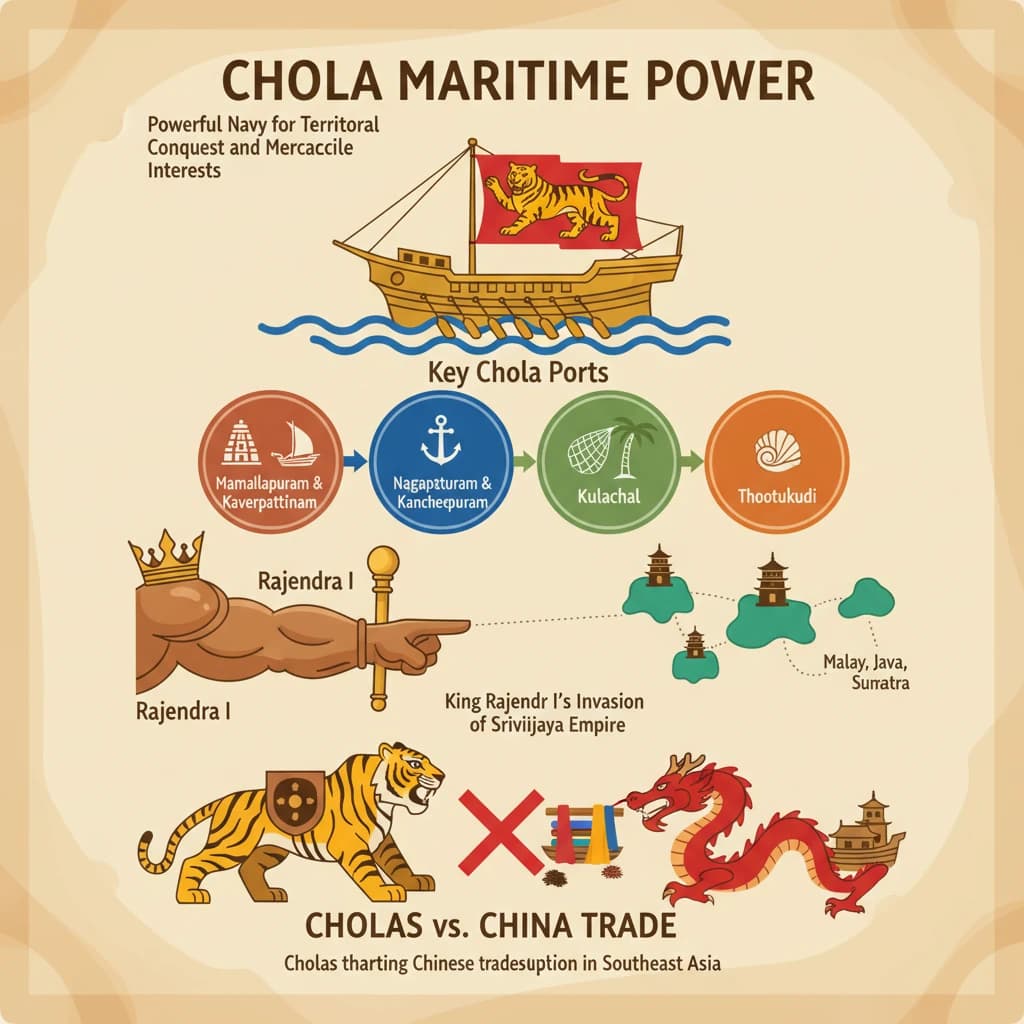
- Cholas built a powerful navy for territorial conquest and promoting mercantile interests.
- Key Chola ports included Mamallapuram, Kaveripattinam, Nagapattinam, Kancheepuram, Kulachal, and Thootukudi.
- King Rajendra I's invasion of the Srivijaya Empire brought Malay Peninsula, Java, and Sumatra under Chola control.
- Cholas successfully thwarted Chinese attempts to disrupt their trade with Southeast Asia.
- Advanced shipbuilding technology is evidenced by the treatise 'Kappal Sastiram'.
Maritime Activity Under the Chola Rule
Medium⏱️ 5 min read
history
📖 Introduction
Introduction to Chola Maritime Power
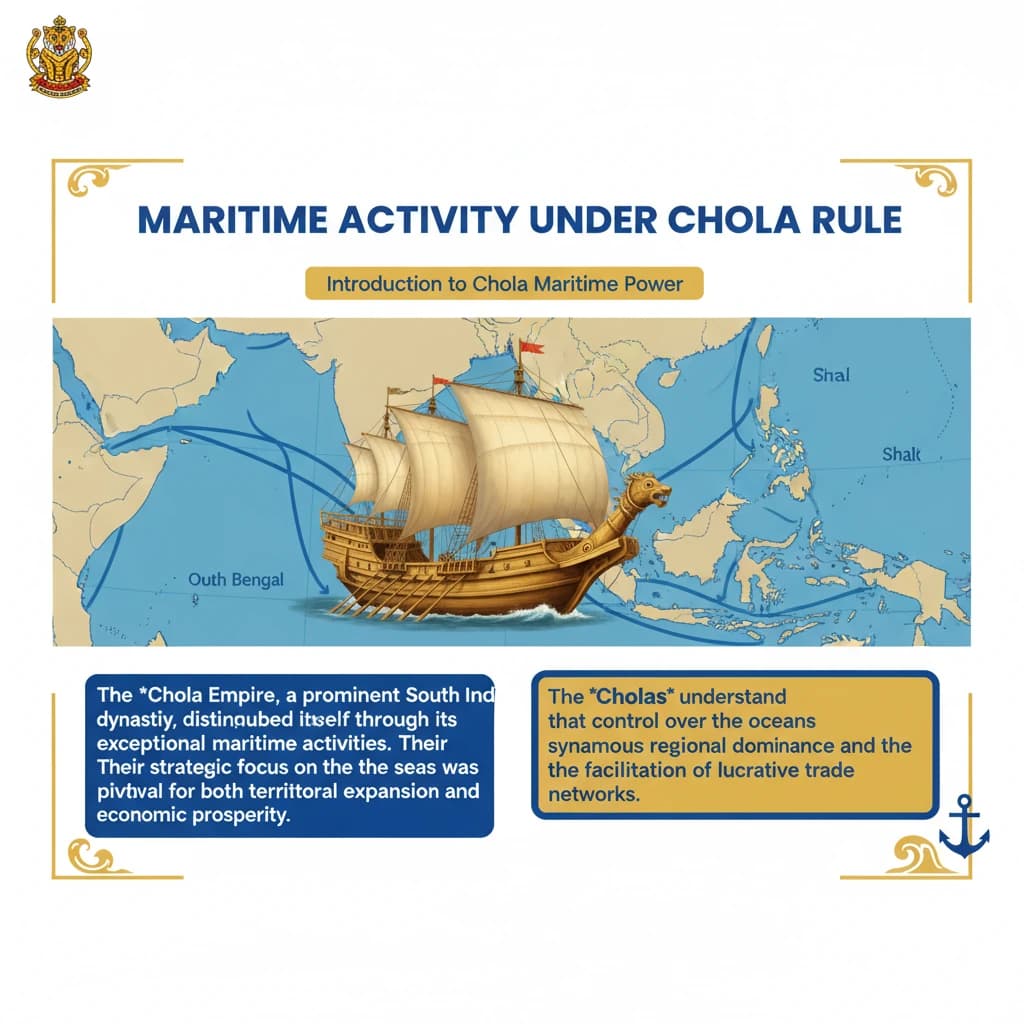
The Chola Empire, a prominent South Indian dynasty, distinguished itself through its exceptional maritime activities. Their strategic focus on the seas was pivotal for both territorial expansion and economic prosperity.
The Cholas understood that control over the oceans was synonymous with regional dominance and the facilitation of lucrative trade networks.
The Mighty Chola Navy
The Cholas meticulously built and maintained a powerful navy. This naval force was not merely for defense but was actively used to project power across vast distances.
Its primary objectives included the conquest of distant territories and the vigorous promotion of their mercantile interests throughout Southeast Asia and beyond.
Strategic Chola Ports
A network of well-developed ports was crucial to the Chola's maritime success. These ports served as vital hubs for trade, naval operations, and cultural exchange.
Key Chola ports included:
- Mamallapuram (Mahabalipuram)
- Kaveripattinam (Poompuhar)
- Nagapattinam
- Kancheepuram
- Kulachal
- Thootukudi (Tuticorin)
Expansion into Southeast Asia
Under the reign of King Rajendra I, the Chola navy undertook a monumental overseas expedition. This involved a successful invasion of the Srivijaya Empire in Southeast Asia.
This campaign brought significant territories under Chola control, including the Malay Peninsula, Java, and Sumatra. This demonstrated their unparalleled naval reach and strategic ambition.
Trade Dominance and Chinese Rivalry
The Cholas were keen protectors of their established trade routes, particularly those connecting India with Southeast Asia. They actively thwarted any attempts by other powers to disrupt these vital economic lifelines.
Notably, the Cholas successfully countered Chinese attempts to interfere with their lucrative trade relations in the region, asserting their maritime supremacy.
Advanced Shipbuilding Technology
The sophistication of Chola maritime capabilities was underpinned by their advanced knowledge in shipbuilding. This technological prowess allowed them to construct robust and efficient vessels for both war and trade.
The existence of a treatise known as Kappal Sastiram, specifically dedicated to shipbuilding, highlights the advanced maritime technology and engineering expertise possessed by the Cholas.
💡 Key Takeaways
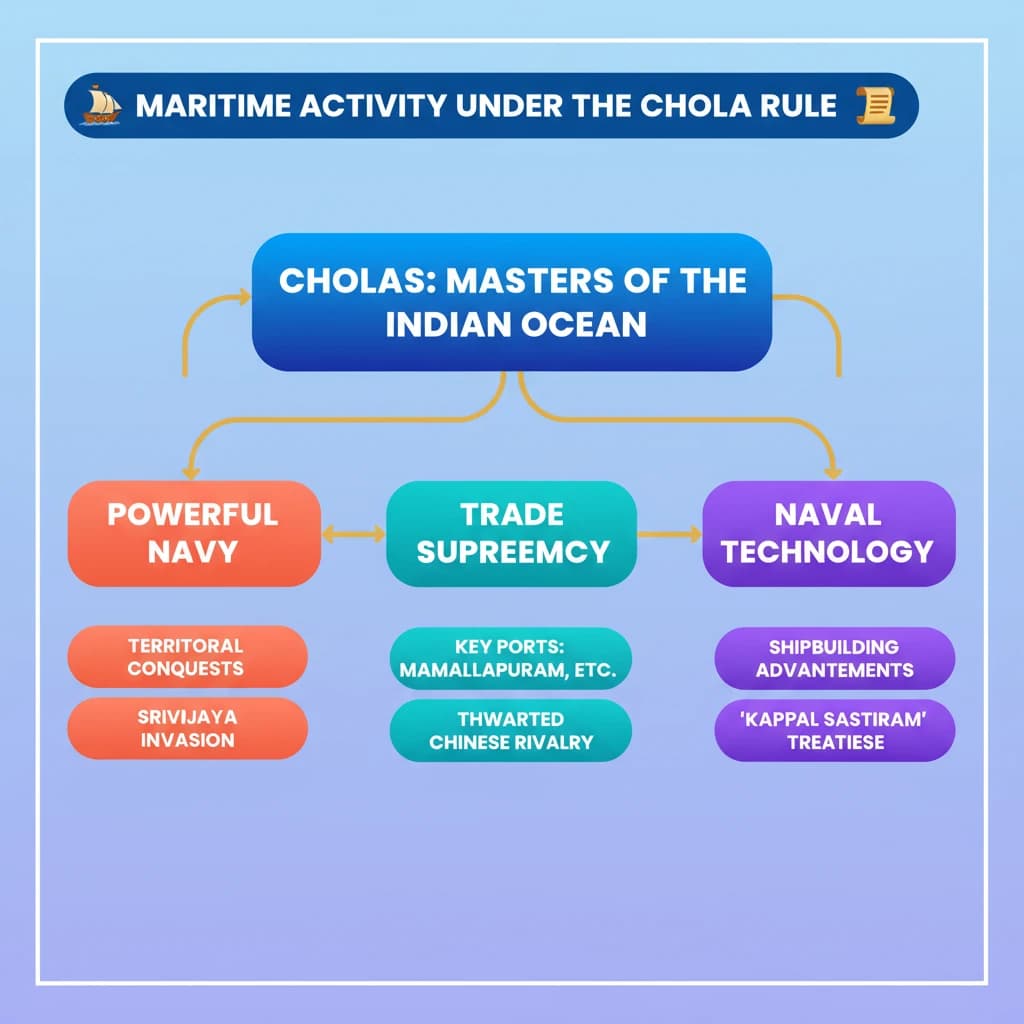
- •Cholas built a powerful navy for territorial conquest and promoting mercantile interests.
- •Key Chola ports included Mamallapuram, Kaveripattinam, Nagapattinam, Kancheepuram, Kulachal, and Thootukudi.
- •King Rajendra I's invasion of the Srivijaya Empire brought Malay Peninsula, Java, and Sumatra under Chola control.
- •Cholas successfully thwarted Chinese attempts to disrupt their trade with Southeast Asia.
- •Advanced shipbuilding technology is evidenced by the treatise 'Kappal Sastiram'.
🧠 Memory Techniques
95% Verified Content
📚 Reference Sources
•NCERT History Textbooks (Class XI/XII - Themes in Indian History Part I)
•Upinder Singh: A History of Ancient and Early Medieval India
•K.A. Nilakanta Sastri: The Cholas