Loading page, please wait…
Mauryan Art: Yaksha-Yakshi Sculptures & NBPW Pottery - UPSC History
What is Mauryan Art: Yaksha-Yakshi Sculptures & NBPW Pottery in UPSC History?
Mauryan Art: Yaksha-Yakshi Sculptures & NBPW Pottery is a key topic under History for UPSC Civil Services Examination. Key points include: Yaksha and Yakshi sculptures were pan-religious deities in Jainism, Hinduism, and Buddhism.. Lohanipur Yaksha and Didargunj Yakshni are prime examples of Mauryan sculptural art.. Mauryan pottery is known as Northern Black Polished Ware (NBPW).. Understanding this topic is essential for both UPSC Prelims and Mains preparation.
Why is Mauryan Art: Yaksha-Yakshi Sculptures & NBPW Pottery important for UPSC exam?
Mauryan Art: Yaksha-Yakshi Sculptures & NBPW Pottery is a Easy-level topic in UPSC History. It is tested in both Prelims (factual MCQs) and Mains (analytical answer writing). Previous year UPSC questions have frequently covered aspects of Mauryan Art: Yaksha-Yakshi Sculptures & NBPW Pottery, making it essential for comprehensive IAS preparation.
How to prepare Mauryan Art: Yaksha-Yakshi Sculptures & NBPW Pottery for UPSC?
To prepare Mauryan Art: Yaksha-Yakshi Sculptures & NBPW Pottery for UPSC: (1) Study the comprehensive notes covering all key concepts on Vaidra. (2) Practice previous year questions on this topic. (3) Connect it with current affairs using daily updates. (4) Revise using key takeaways and mind maps available for History. (5) Write practice answers linking Mauryan Art: Yaksha-Yakshi Sculptures & NBPW Pottery to related GS Paper topics.
Key takeaways of Mauryan Art: Yaksha-Yakshi Sculptures & NBPW Pottery for UPSC
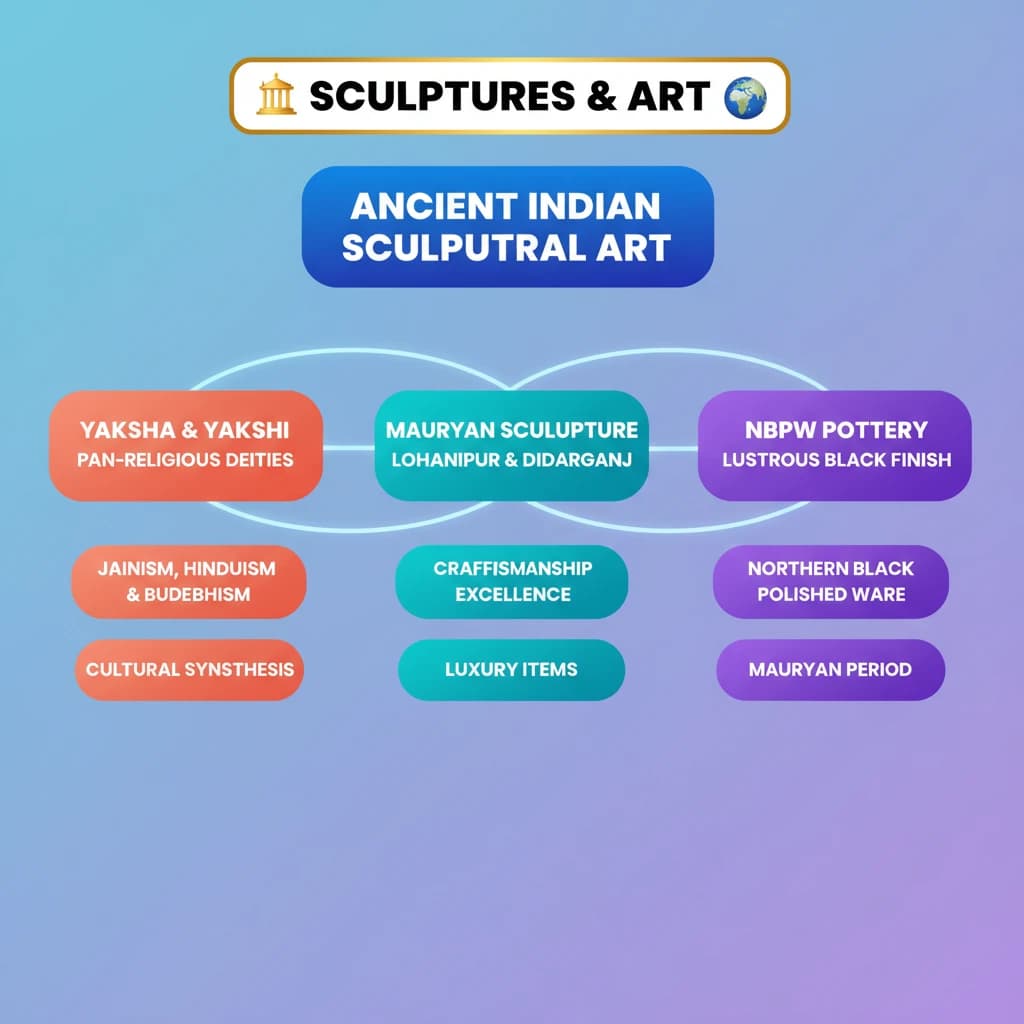
- Yaksha and Yakshi sculptures were pan-religious deities in Jainism, Hinduism, and Buddhism.
- Lohanipur Yaksha and Didargunj Yakshni are prime examples of Mauryan sculptural art.
- Mauryan pottery is known as Northern Black Polished Ware (NBPW).
- NBPW features a lustrous black finish and was used for luxury items.
- These art forms reflect advanced craftsmanship and cultural synthesis of the Mauryan period.
Mauryan Art: Yaksha-Yakshi Sculptures & NBPW Pottery
Easy⏱️ 5 min read
history
📖 Introduction
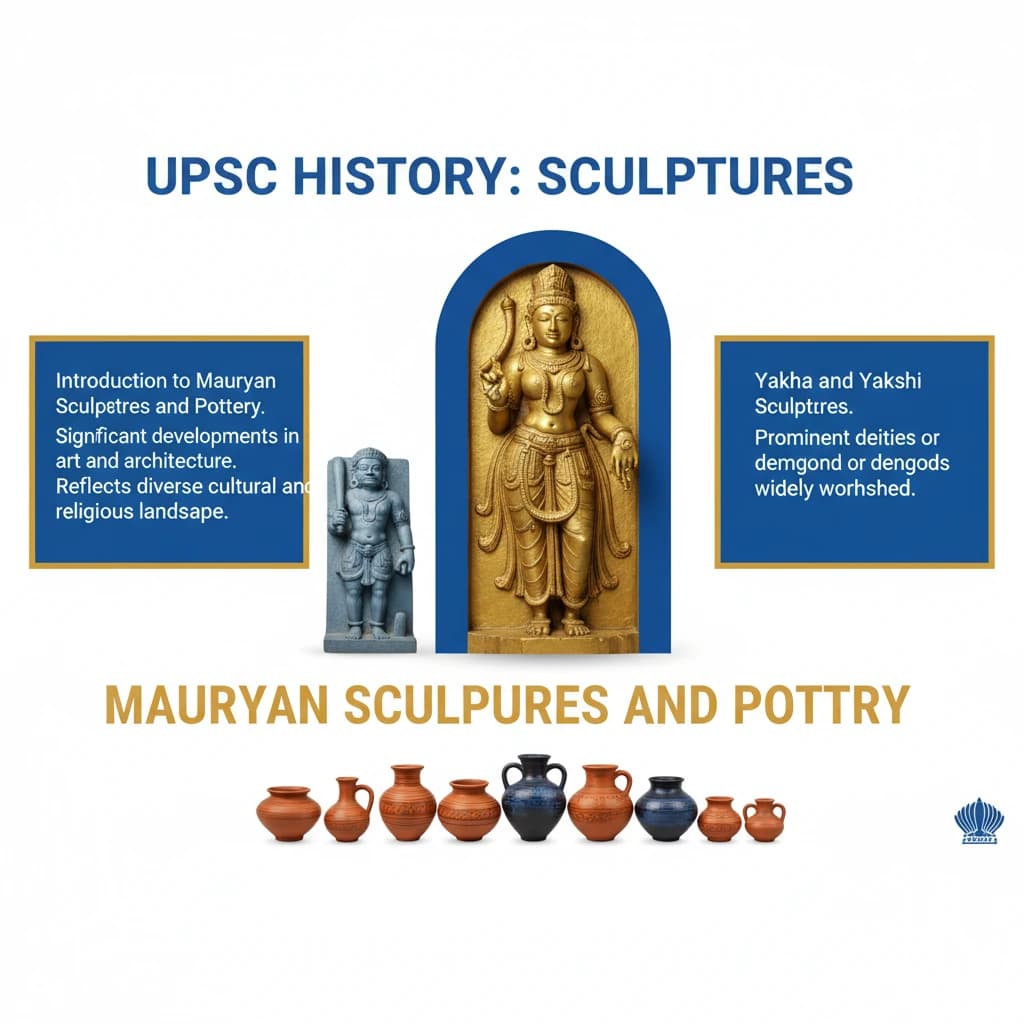
Introduction to Mauryan Sculptures and Pottery
The Mauryan period witnessed significant developments in art and architecture, including distinctive sculptures and pottery styles. These artistic expressions reflect the diverse cultural and religious landscape of ancient India.
Yaksha and Yakshi Sculptures
Yaksha and Yakshi figures were prominent deities or demigods worshipped widely across various ancient Indian religions.
These powerful nature spirits were revered in Jainism, Hinduism, and Buddhism, indicating a shared cultural substratum.
Their sculptures often depicted robust, life-sized figures, symbolizing fertility, wealth, and natural abundance.
- Pan-Indian Worship: The widespread veneration of Yakshas and Yakshis highlights their integral role in the popular religious practices of the time, transcending specific sectarian boundaries.
Key Examples of Yaksha and Yakshi Sculptures
Two notable examples from the Mauryan era include:
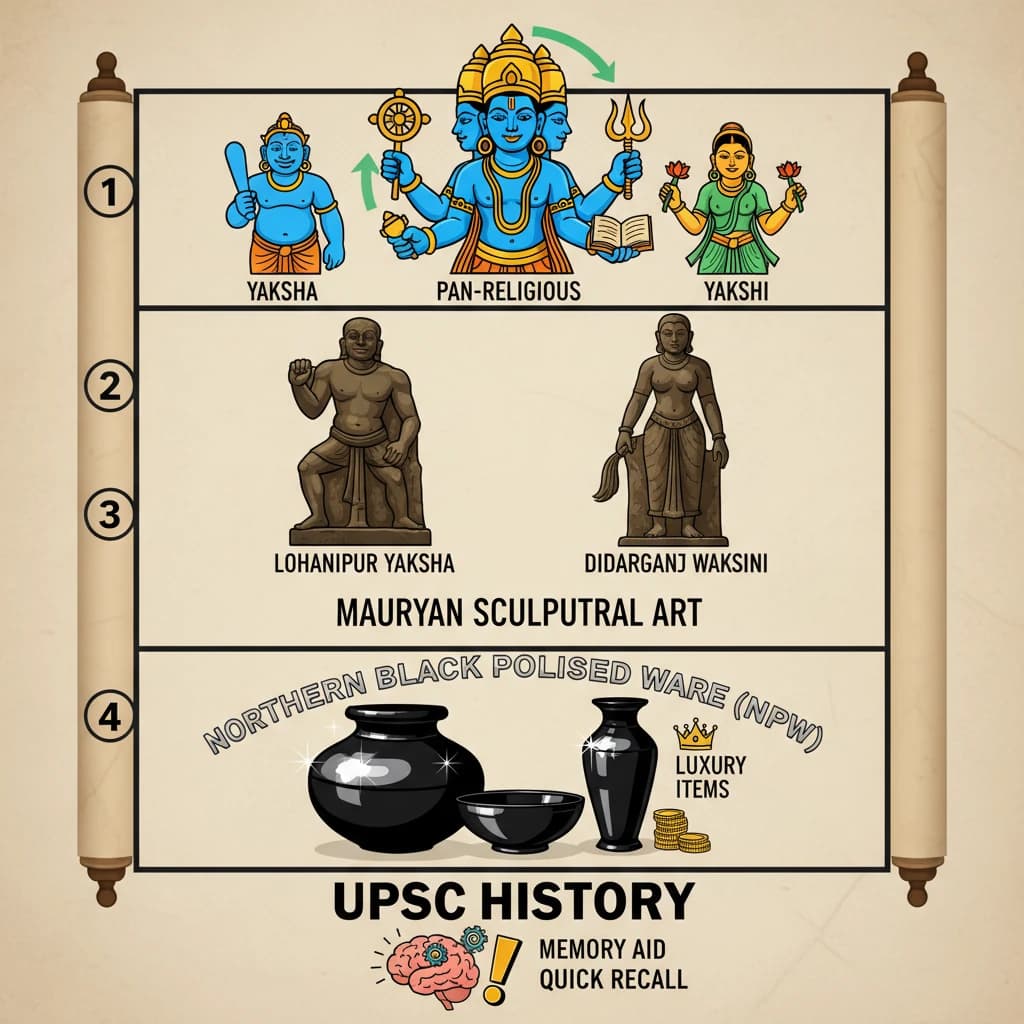
- Lohanipur Yaksha: This sculpture is primarily known for its torso of a nude male figure, showcasing the early mastery of stone carving and anatomical representation.
- Didargunj Yakshni: Found near Patna, this is one of the most celebrated examples, depicting a graceful female figure often holding a fly-whisk (chauri), indicative of royalty or divinity.
For UPSC, remember the Lohanipur Yaksha and Didargunj Yakshni as prime examples of Mauryan sculptural art, often asked in prelims for identification or in mains for discussing art forms.
Mauryan Pottery: Northern Black Polished Ware (NBPW)
The pottery of the Mauryan period is largely characterized by the distinctive Northern Black Polished Ware (NBPW).
NBPW Characteristics:
- Black Paint: Known for its characteristic black surface.
- Lustrous Finish: Possesses a remarkable lustrous, glossy finish, giving it a metallic sheen.
- High Quality: This pottery was typically made from fine clay and fired at high temperatures, resulting in a thin, strong, and durable ware.
Usage: NBPW was often associated with luxury items and used by the elite, indicating its high value and sophisticated production process.
The presence of NBPW sites across the subcontinent is often used by archaeologists as an indicator of Mauryan influence and trade networks.
💡 Key Takeaways
- •Yaksha and Yakshi sculptures were pan-religious deities in Jainism, Hinduism, and Buddhism.
- •Lohanipur Yaksha and Didargunj Yakshni are prime examples of Mauryan sculptural art.
- •Mauryan pottery is known as Northern Black Polished Ware (NBPW).
- •NBPW features a lustrous black finish and was used for luxury items.
- •These art forms reflect advanced craftsmanship and cultural synthesis of the Mauryan period.
🧠 Memory Techniques
95% Verified Content