Loading page, please wait…
Muradabad ki Pahadi - UPSC History
What is Muradabad ki Pahadi in UPSC History?
Muradabad ki Pahadi is a key topic under History for UPSC Civil Services Examination. Key points include: Muradabad ki Pahadi is a historical site in Delhi, recently gaining attention.. It is named after the 14th-century Sufi Saint Syed Murad Ali.. The site features two mosques from different historical periods, showcasing architectural evolution.. Understanding this topic is essential for both UPSC Prelims and Mains preparation.
Why is Muradabad ki Pahadi important for UPSC exam?
Muradabad ki Pahadi is a Medium-level topic in UPSC History. It is tested in both Prelims (factual MCQs) and Mains (analytical answer writing). Previous year UPSC questions have frequently covered aspects of Muradabad ki Pahadi, making it essential for comprehensive IAS preparation.
How to prepare Muradabad ki Pahadi for UPSC?
To prepare Muradabad ki Pahadi for UPSC: (1) Study the comprehensive notes covering all key concepts on Vaidra. (2) Practice previous year questions on this topic. (3) Connect it with current affairs using daily updates. (4) Revise using key takeaways and mind maps available for History. (5) Write practice answers linking Muradabad ki Pahadi to related GS Paper topics.
Key takeaways of Muradabad ki Pahadi for UPSC
- Muradabad ki Pahadi is a historical site in Delhi, recently gaining attention.
- It is named after the 14th-century Sufi Saint Syed Murad Ali.
- The site features two mosques from different historical periods, showcasing architectural evolution.
- It attracts interest from both historians and local communities.
- Highlights Delhi's rich, layered history and the enduring legacy of Sufism.
Muradabad ki Pahadi
Medium⏱️ 6 min read
history
📖 Introduction
Introduction to Muradabad ki Pahadi
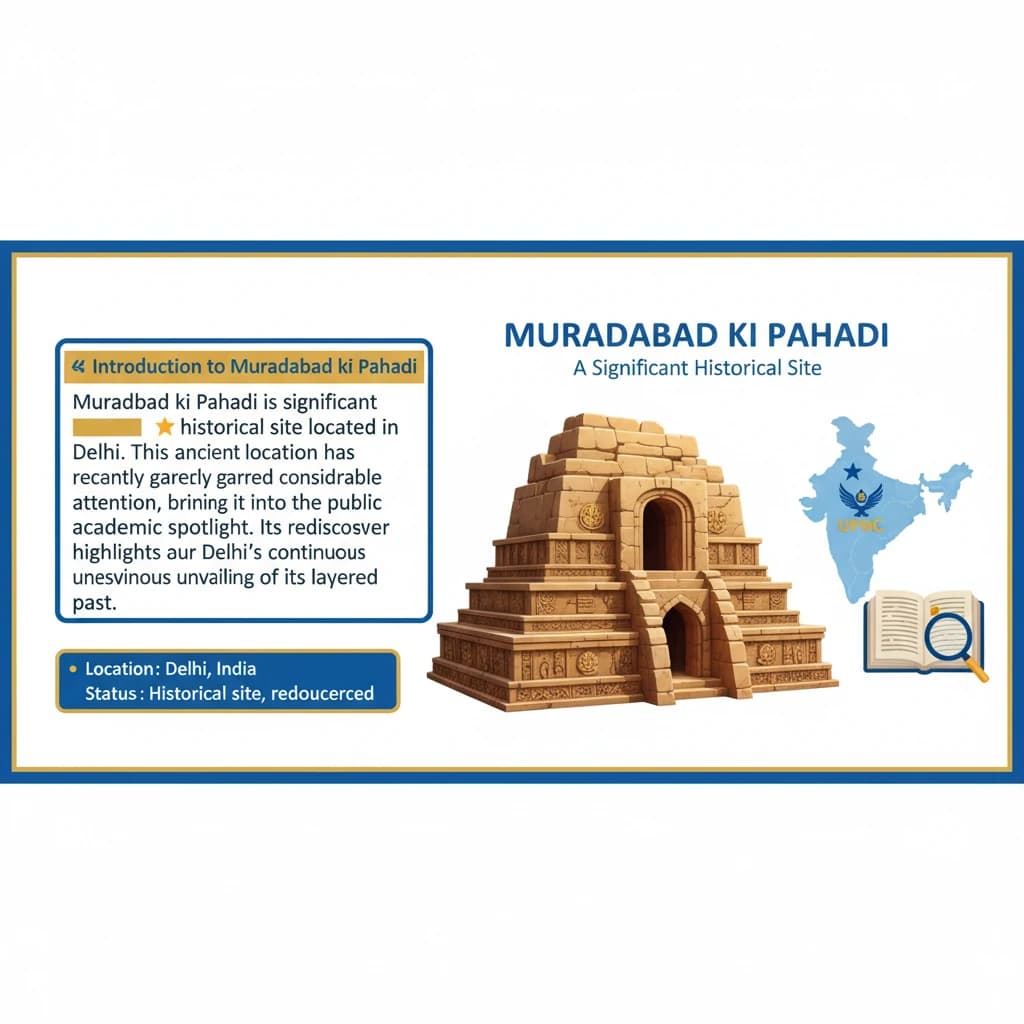
Muradabad ki Pahadi is a significant historical site located in Delhi. This ancient location has recently garnered considerable attention, bringing it into the public and academic spotlight. Its rediscovery or renewed focus highlights Delhi's continuous unveiling of its layered past.
Location: Delhi, India
Status: Historical site, recently in spotlight
Origin of Name
The site is named after the revered 14th-century Sufi Saint, Syed Murad Ali. This naming tradition is common in India, where places often bear the names of spiritual figures who lived or had influence in the area, signifying their lasting legacy.
Key Figure: Syed Murad Ali (14th-century Sufi Saint)
Significance: Connects the site to India's rich Sufi heritage and spiritual traditions.
Architectural Features and Historical Layers
A distinctive characteristic of Muradabad ki Pahadi is the presence of two mosques. These structures originate from different historical periods, offering a unique architectural narrative. This layering of construction from various eras makes it a valuable study for understanding Delhi's historical evolution.
- Feature 1: First mosque, representing an earlier architectural style.
- Feature 2: Second mosque, showcasing a later period's design and construction techniques.
The coexistence of these mosques from distinct times is particularly appealing to historians and locals alike. It provides tangible evidence of successive cultural and religious influences on the landscape of Delhi.
UPSC Insight: Sites like Muradabad ki Pahadi are crucial for GS Paper 1 (Art & Culture, History). Questions often revolve around the significance of historical sites, Sufi traditions, and architectural developments across different periods. Understanding such sites helps in analyzing India's composite culture.
💡 Key Takeaways
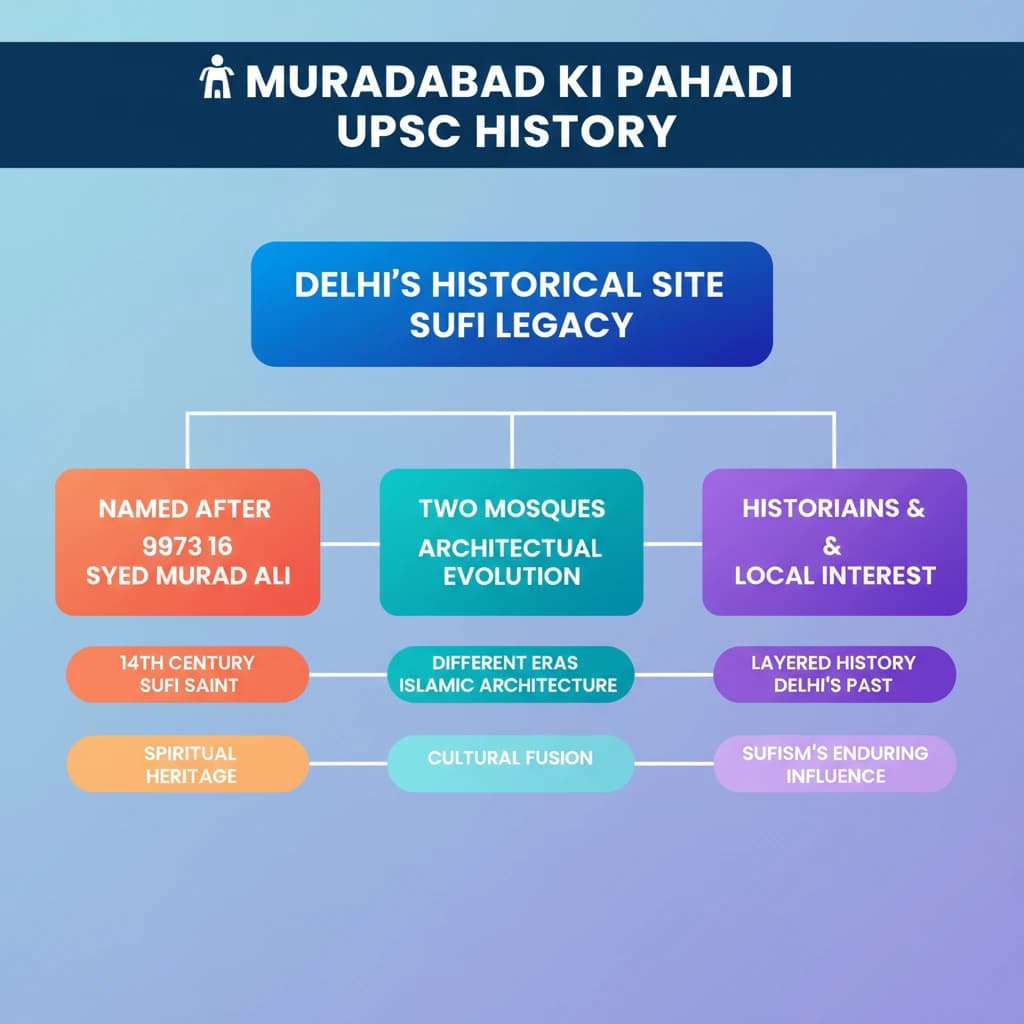
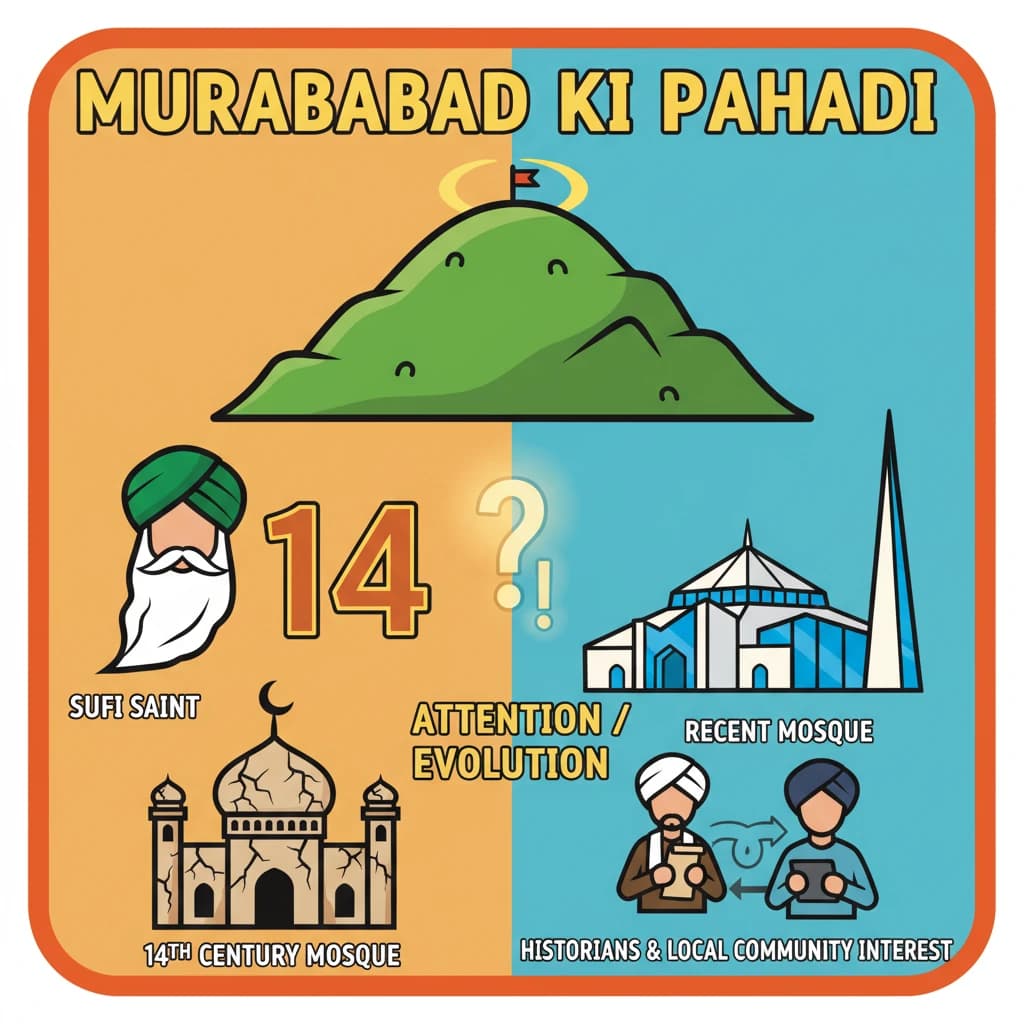
- •Muradabad ki Pahadi is a historical site in Delhi, recently gaining attention.
- •It is named after the 14th-century Sufi Saint Syed Murad Ali.
- •The site features two mosques from different historical periods, showcasing architectural evolution.
- •It attracts interest from both historians and local communities.
- •Highlights Delhi's rich, layered history and the enduring legacy of Sufism.
🧠 Memory Techniques
95% Verified Content
📚 Reference Sources
•Archaeological Survey of India (ASI) records (general reference for Delhi's heritage)
•Academic texts on Delhi's history and Sufism in India