Loading page, please wait…
Nalanda Mahavihara: Huna & Gauda Attacks and Restoration - UPSC History
What is Nalanda Mahavihara: Huna & Gauda Attacks and Restoration in UPSC History?
Nalanda Mahavihara: Huna & Gauda Attacks and Restoration is a key topic under History for UPSC Civil Services Examination. Key points include: Nalanda Mahavihara faced two significant attacks in its early history.. The first attack (455-470 AD) was by the Hunas, motivated by loot, during Emperor Samudragupta's reign.. Emperor Skanda Gupta later re-established Nalanda, fostering a period where librarian Abhayadeva thrived.. Understanding this topic is essential for both UPSC Prelims and Mains preparation.
Why is Nalanda Mahavihara: Huna & Gauda Attacks and Restoration important for UPSC exam?
Nalanda Mahavihara: Huna & Gauda Attacks and Restoration is a Medium-level topic in UPSC History. It is tested in both Prelims (factual MCQs) and Mains (analytical answer writing). Previous year UPSC questions have frequently covered aspects of Nalanda Mahavihara: Huna & Gauda Attacks and Restoration, making it essential for comprehensive IAS preparation.
How to prepare Nalanda Mahavihara: Huna & Gauda Attacks and Restoration for UPSC?
To prepare Nalanda Mahavihara: Huna & Gauda Attacks and Restoration for UPSC: (1) Study the comprehensive notes covering all key concepts on Vaidra. (2) Practice previous year questions on this topic. (3) Connect it with current affairs using daily updates. (4) Revise using key takeaways and mind maps available for History. (5) Write practice answers linking Nalanda Mahavihara: Huna & Gauda Attacks and Restoration to related GS Paper topics.
Key takeaways of Nalanda Mahavihara: Huna & Gauda Attacks and Restoration for UPSC
- Nalanda Mahavihara faced two significant attacks in its early history.
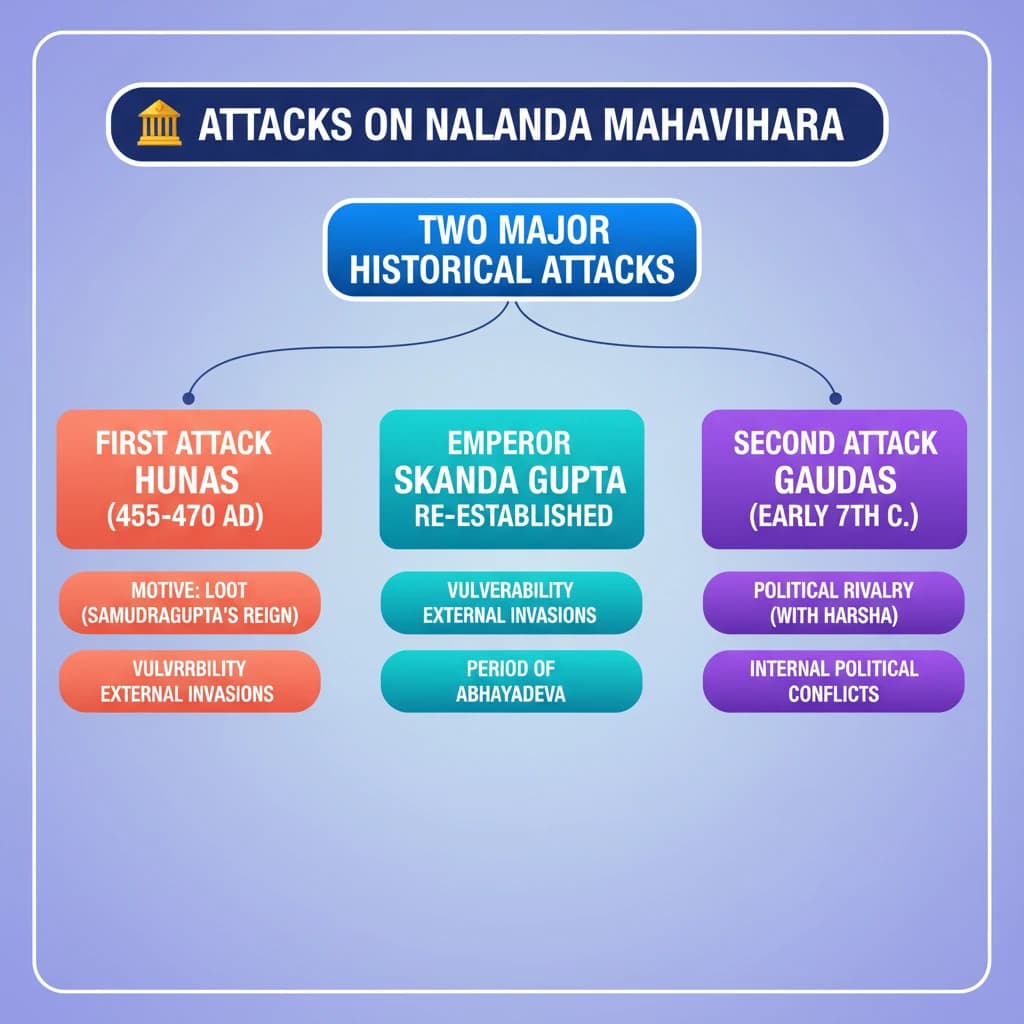
- The first attack (455-470 AD) was by the Hunas, motivated by loot, during Emperor Samudragupta's reign.
- Emperor Skanda Gupta later re-established Nalanda, fostering a period where librarian Abhayadeva thrived.
- The second attack (early 7th century) was by Gaudas emperors of Bengal, driven by political rivalry with Emperor Harshavardhana.
- These attacks highlight the vulnerability of ancient learning centers to external invasions and internal political conflicts.

Nalanda Mahavihara: Huna & Gauda Attacks and Restoration
Medium⏱️ 6 min read
history
📖 Introduction
Introduction to Attacks on Nalanda Mahavihara
The esteemed ancient learning center, Nalanda Mahavihara, faced significant periods of destruction throughout its history. These attacks highlight the vulnerability of educational institutions to both external invasions and internal political strife.
Understanding these attacks provides crucial insight into the socio-political dynamics of ancient India and the challenges faced by centers of knowledge.
The First Huna Attack (455-470 AD)
The first major attack on Nalanda Mahavihara occurred between 455-470 AD. This period coincided with the reign of Emperor Samudragupta of the Gupta Empire, as per the source material.
Attackers: The Hunas, a formidable Central Asian tribal group, were responsible for this initial assault.
Motivation: Their primary objective was to loot the university’s valuable resources, including its vast collection of manuscripts and precious artifacts.
Re-establishment by Skanda Gupta
Following the devastating Huna attack, the task of restoring Nalanda Mahavihara fell to Emperor Skanda Gupta. He played a pivotal role in its re-establishment and revitalization.
During Emperor Skanda Gupta’s reign, the renowned librarian Abhayadeva flourished, contributing significantly to the academic resurgence of the university.
The Second Gauda Attack (Early 7th Century)
A second significant assault on Nalanda Mahavihara took place in the early 7th century. This attack stemmed from different motivations compared to the first.
Planners: The attack was orchestrated by the Gaudas emperors of Bengal.
Motivation: The primary driver behind this assault was political tensions and rivalry with Emperor Harshavardhana of Kannauj, rather than mere plunder.
UPSC Insight: Questions on Nalanda Mahavihara often focus on its academic contributions and patronage. However, understanding the attacks provides a complete picture of its historical trajectory, relevant for GS-I Ancient History.
💡 Key Takeaways
- •Nalanda Mahavihara faced two significant attacks in its early history.
- •The first attack (455-470 AD) was by the Hunas, motivated by loot, during Emperor Samudragupta's reign.
- •Emperor Skanda Gupta later re-established Nalanda, fostering a period where librarian Abhayadeva thrived.
- •The second attack (early 7th century) was by Gaudas emperors of Bengal, driven by political rivalry with Emperor Harshavardhana.
- •These attacks highlight the vulnerability of ancient learning centers to external invasions and internal political conflicts.
🧠 Memory Techniques

90% Verified Content
📚 Reference Sources
•General historical accounts of Nalanda Mahavihara and Gupta/Post-Gupta periods