Loading page, please wait…
Rashtrakutas: Military, Religious Tolerance, and Cultural Contributions - UPSC History
What is Rashtrakutas: Military, Religious Tolerance, and Cultural Contributions in UPSC History?
Rashtrakutas: Military, Religious Tolerance, and Cultural Contributions is a key topic under History for UPSC Civil Services Examination. Key points include: Ancient Indian rulers maintained robust militaries (infantry, cavalry, elephants, navy) for defense and stability.. Many Hindu rulers practiced significant religious tolerance, supporting Buddhism and Jainism.. Kannada and Telugu literature saw advanced developments under royal patronage.. Understanding this topic is essential for both UPSC Prelims and Mains preparation.
Why is Rashtrakutas: Military, Religious Tolerance, and Cultural Contributions important for UPSC exam?
Rashtrakutas: Military, Religious Tolerance, and Cultural Contributions is a Medium-level topic in UPSC History. It is tested in both Prelims (factual MCQs) and Mains (analytical answer writing). Previous year UPSC questions have frequently covered aspects of Rashtrakutas: Military, Religious Tolerance, and Cultural Contributions, making it essential for comprehensive IAS preparation.
How to prepare Rashtrakutas: Military, Religious Tolerance, and Cultural Contributions for UPSC?
To prepare Rashtrakutas: Military, Religious Tolerance, and Cultural Contributions for UPSC: (1) Study the comprehensive notes covering all key concepts on Vaidra. (2) Practice previous year questions on this topic. (3) Connect it with current affairs using daily updates. (4) Revise using key takeaways and mind maps available for History. (5) Write practice answers linking Rashtrakutas: Military, Religious Tolerance, and Cultural Contributions to related GS Paper topics.
Key takeaways of Rashtrakutas: Military, Religious Tolerance, and Cultural Contributions for UPSC
- Ancient Indian rulers maintained robust militaries (infantry, cavalry, elephants, navy) for defense and stability.
- Many Hindu rulers practiced significant religious tolerance, supporting Buddhism and Jainism.
- Kannada and Telugu literature saw advanced developments under royal patronage.
- Coins were vital historical records, featuring Nagari/Kannada inscriptions and symbols like lions, boars, and lotuses.
- These administrative and cultural contributions highlight a sophisticated and pluralistic historical India.
Rashtrakutas: Military, Religious Tolerance, and Cultural Contributions
Medium⏱️ 8 min read
history
📖 Introduction
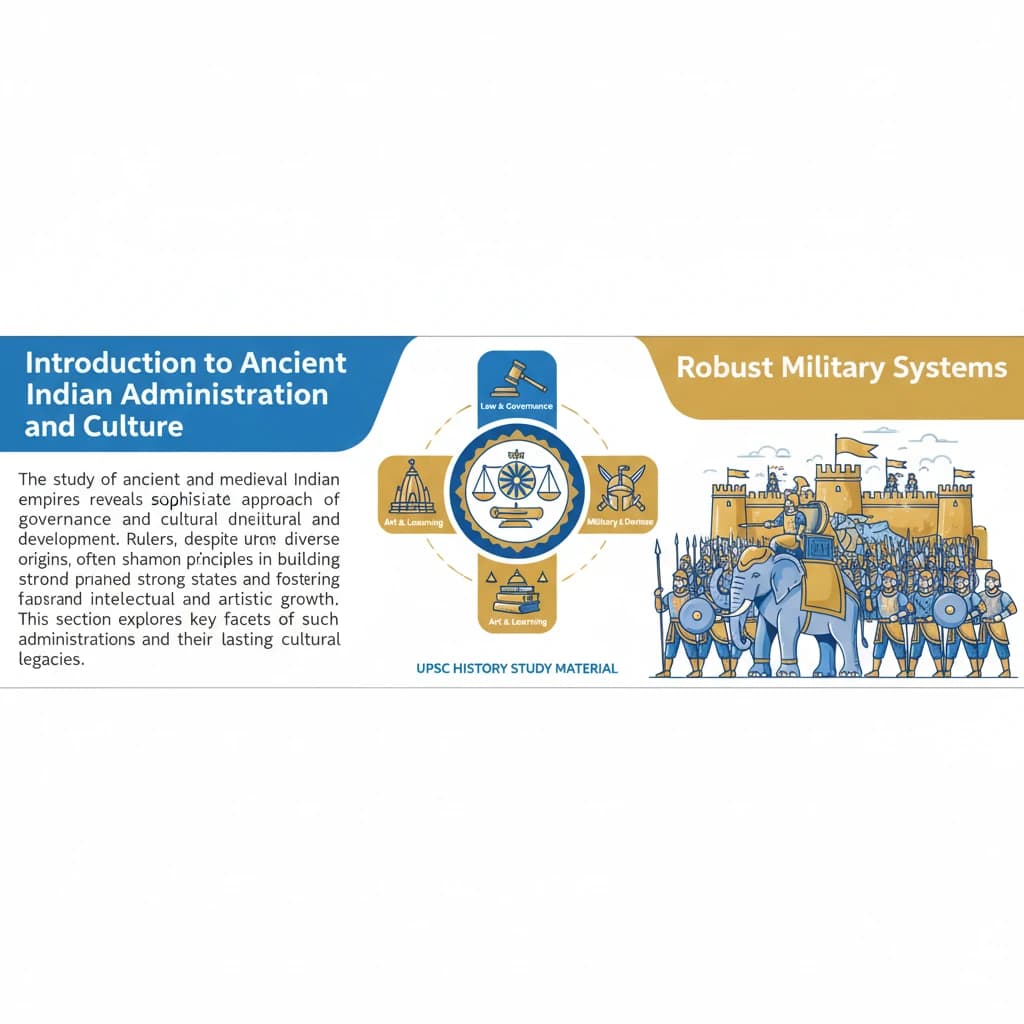
Introduction to Ancient Indian Administration and Culture
The study of ancient and medieval Indian empires reveals a sophisticated approach to both governance and cultural development. Rulers, despite their diverse origins, often shared common principles in building strong states and fostering intellectual and artistic growth. This section explores key facets of such administrations and their lasting cultural legacies.
Robust Military Systems
Many prominent Indian dynasties maintained a comprehensive and robust military. This was crucial for defense, expansion, and maintaining internal order. These armies were typically structured with multiple specialized units.
Key Military Components:
- Infantry: The backbone of any army, comprising foot soldiers.
- Cavalry: Mounted soldiers, vital for swift maneuvers and charges.
- Elephant Unit: A formidable force, used for breaking enemy lines and psychological impact.
- Strong Navy: Coastal empires, particularly in South India, maintained powerful naval forces for trade protection and overseas expeditions.
A strong military ensured the stability and longevity of empires, allowing for the flourishing of other aspects of society, including culture and economy.
Religious Tolerance as a State Policy
A remarkable feature of many ancient and medieval Indian rulers, including Hindu monarchs, was their practice of religious tolerance. This approach fostered social harmony and allowed diverse faiths to coexist and thrive within their realms.
Despite their own adherence to Hinduism, these rulers often extended patronage and protection to other religions. This included significant support for Buddhism and Jainism, leading to the construction of monasteries, temples, and the flourishing of their respective philosophies and arts.
UPSC often asks about the syncretic nature of Indian culture and the role of rulers in promoting religious harmony. This tolerance is a recurring theme in various dynasties, from the Mauryas to the Mughals.
Literary Contributions and Patronage
The period saw advanced developments in regional languages, particularly Kannada and Telugu literature. Rulers actively patronized scholars, poets, and writers, leading to a rich output of literary works.
This patronage wasn't limited to religious texts but also included secular works, epics, and poetic compositions. The growth of regional languages reflected a vibrant intellectual environment and contributed significantly to India's diverse linguistic heritage.
Numismatic Contributions: Coins as Historical Records
Coins served as more than just currency; they were vital historical documents, reflecting the political, economic, and cultural facets of an empire. Indian rulers made significant numismatic contributions, providing insights into their reign.
Features of Historical Coins:
- Inscriptions: Often featured scripts like Nagari and Kannada, providing linguistic evidence.
- Temple Cryptograms: Symbols or codes related to religious institutions, indicating royal patronage.
- Symbols: Common motifs included powerful animals like lions and boars, representing strength and royal authority, and auspicious symbols like lotuses.
The study of numismatics is crucial for reconstructing historical timelines, understanding economic systems, and gleaning information about religious beliefs and artistic styles of past empires.
💡 Key Takeaways
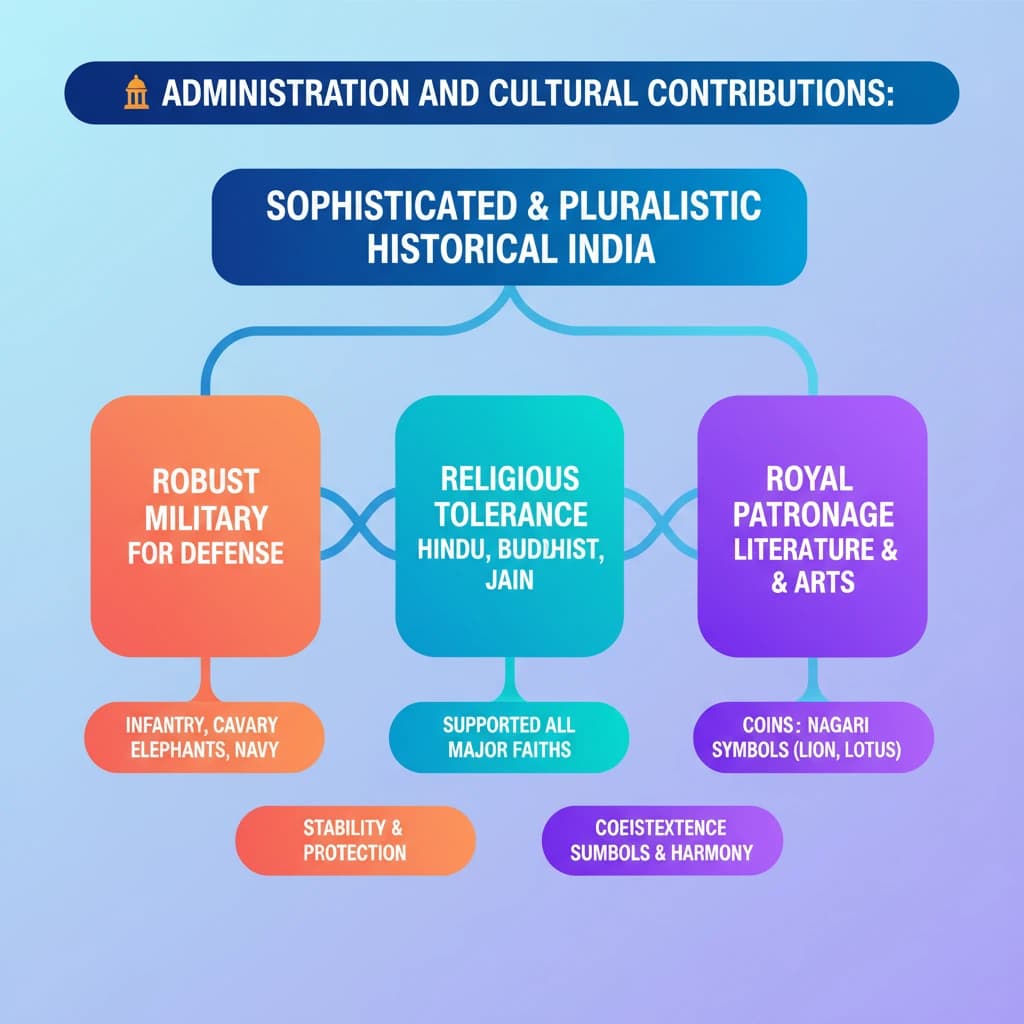
- •Ancient Indian rulers maintained robust militaries (infantry, cavalry, elephants, navy) for defense and stability.
- •Many Hindu rulers practiced significant religious tolerance, supporting Buddhism and Jainism.
- •Kannada and Telugu literature saw advanced developments under royal patronage.
- •Coins were vital historical records, featuring Nagari/Kannada inscriptions and symbols like lions, boars, and lotuses.
- •These administrative and cultural contributions highlight a sophisticated and pluralistic historical India.
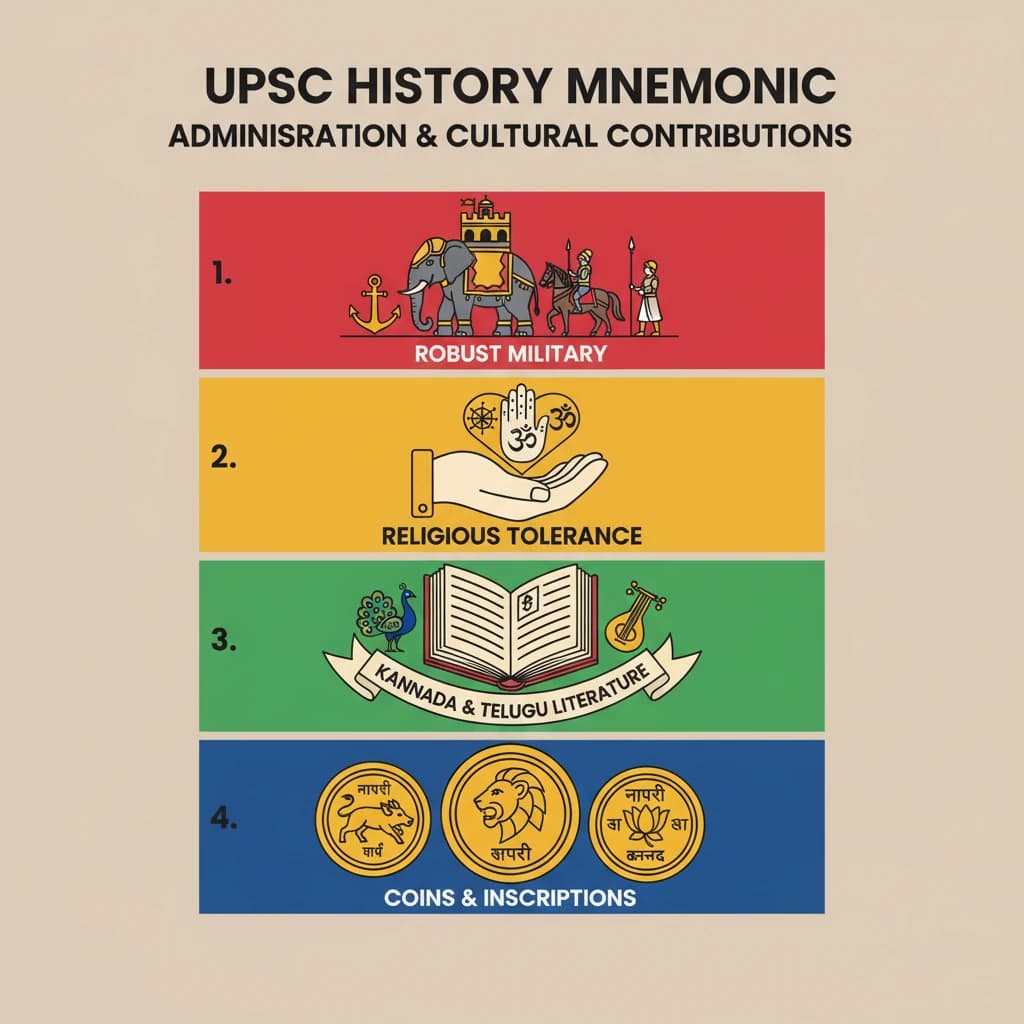
🧠 Memory Techniques
95% Verified Content
📚 Reference Sources
•NCERT History Textbooks (Class XI, XII)
•A History of South India by K.A. Nilakanta Sastri
•The Wonder That Was India by A.L. Basham