Loading page, please wait…
Read More: Sikhism - UPSC History
What is Read More: Sikhism in UPSC History?
Read More: Sikhism is a key topic under History for UPSC Civil Services Examination. Key points include: Sikhism, founded by Guru Nanak Dev Ji, is a monotheistic religion emphasizing one God (Ik Onkar) and universal equality.. The teachings are enshrined in the Guru Granth Sahib, the eternal living Guru, and propagated by ten Gurus.. Core tenets include Naam Japna (meditation), Kirat Karni (honest living), and Vand Chhakna (sharing).. Understanding this topic is essential for both UPSC Prelims and Mains preparation.
Why is Read More: Sikhism important for UPSC exam?
Read More: Sikhism is a Medium-level topic in UPSC History. It is tested in both Prelims (factual MCQs) and Mains (analytical answer writing). Previous year UPSC questions have frequently covered aspects of Read More: Sikhism, making it essential for comprehensive IAS preparation.
How to prepare Read More: Sikhism for UPSC?
To prepare Read More: Sikhism for UPSC: (1) Study the comprehensive notes covering all key concepts on Vaidra. (2) Practice previous year questions on this topic. (3) Connect it with current affairs using daily updates. (4) Revise using key takeaways and mind maps available for History. (5) Write practice answers linking Read More: Sikhism to related GS Paper topics.
Key takeaways of Read More: Sikhism for UPSC
- Sikhism, founded by Guru Nanak Dev Ji, is a monotheistic religion emphasizing one God (Ik Onkar) and universal equality.
- The teachings are enshrined in the Guru Granth Sahib, the eternal living Guru, and propagated by ten Gurus.
- Core tenets include Naam Japna (meditation), Kirat Karni (honest living), and Vand Chhakna (sharing).
- The Khalsa Panth, established by Guru Gobind Singh Ji, created a distinct identity and martial tradition.
- Key institutions like Langar (community kitchen) promote social equality and selfless service (Sewa).
- Sikh history includes periods of Mughal persecution, the rise of Misls, and the powerful Sikh Empire under Maharaja Ranjit Singh.
Read More: Sikhism
Medium⏱️ 10 min read
history
📖 Introduction
Introduction to Sikhism
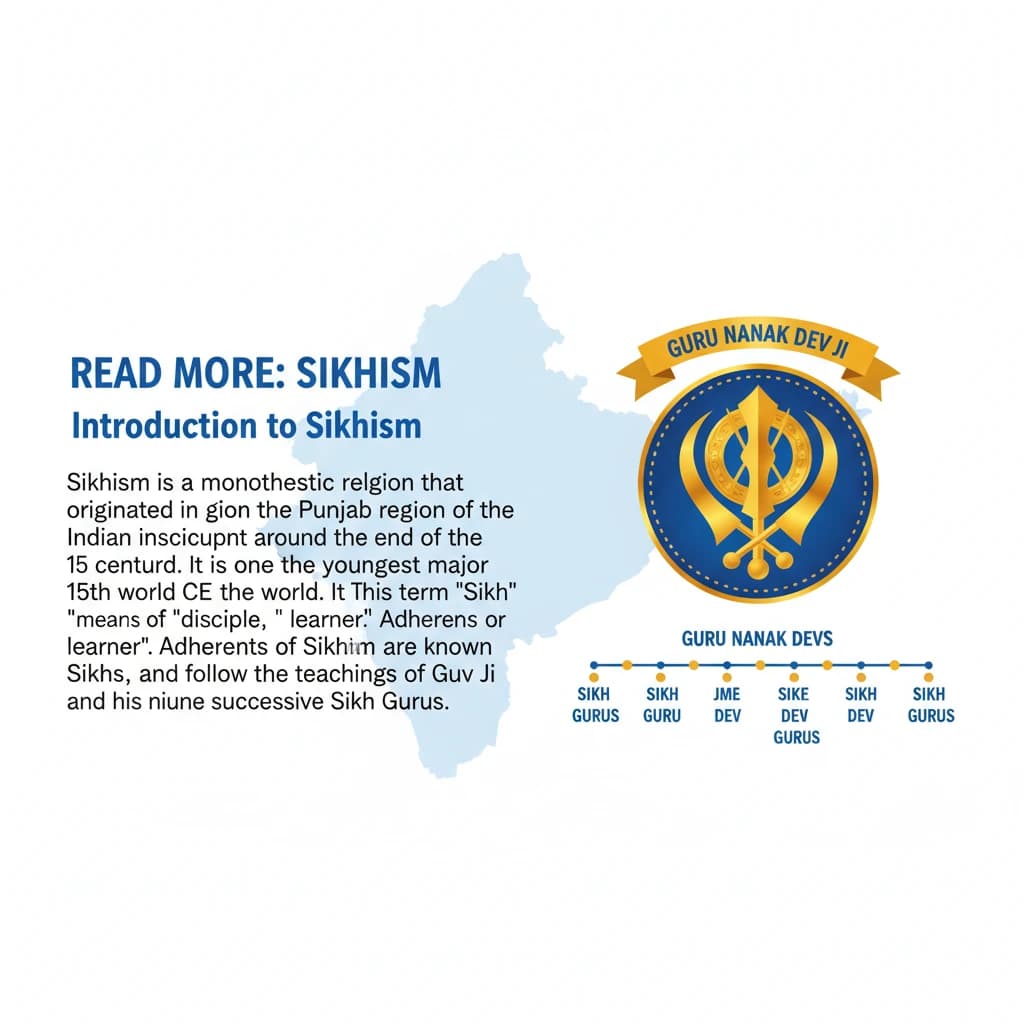
Sikhism is a monotheistic religion that originated in the Punjab region of the Indian subcontinent around the end of the 15th century CE. It is one of the youngest major religions in the world.
The term 'Sikh' means 'disciple' or 'learner'. Adherents of Sikhism are known as Sikhs, and they follow the teachings of Guru Nanak Dev Ji and his nine successive Sikh Gurus.
Origin: Punjab, India
Founder: Guru Nanak Dev Ji
Holy Scripture: Guru Granth Sahib
Core Principles and Beliefs
Sikhism is founded on the belief in one God (Ik Onkar), who is the creator and sustainer of the universe. This God is considered formless, eternal, and all-pervading.
A central tenet is the pursuit of spiritual growth through meditation on God's name (Naam Simran) and living an ethical life. Sikhs believe in the equality of all humanity, rejecting discrimination based on caste, creed, gender, or race.
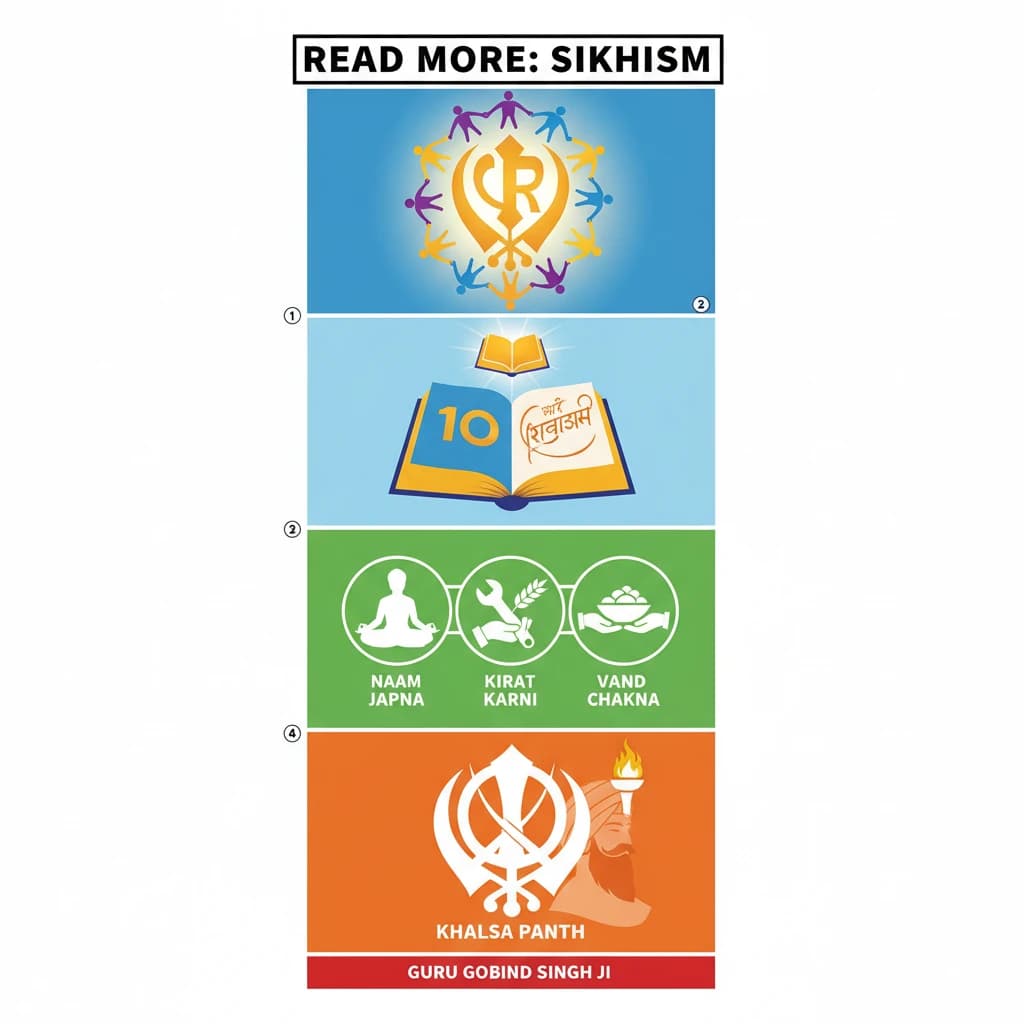
The three pillars of Sikhism are: Naam Japna (meditating on God's name), Kirat Karni (earning an honest living), and Vand Chhakna (sharing earnings with the needy).
The Ten Gurus and the Guru Granth Sahib
The teachings of Sikhism were established by a succession of ten Gurus, starting with Guru Nanak Dev Ji. Each Guru contributed to the spiritual and social development of the community.
The tenth Guru, Guru Gobind Singh Ji, declared that after him, the Guru Granth Sahib, the holy scripture, would be the eternal and living Guru for Sikhs. It contains the teachings of the Gurus and various other saints.
The Khalsa Panth
In 1699, Guru Gobind Singh Ji formally established the Khalsa Panth, a collective body of initiated Sikhs. Members of the Khalsa commit to a strict code of conduct and wear the Five Ks (Kakkars).
The Five Ks are: Kesh (uncut hair), Kangha (wooden comb), Kara (iron bracelet), Kachera (cotton underwear), and Kirpan (short sword).
Understanding the contributions of each Guru and the significance of the Guru Granth Sahib and the Khalsa is crucial for UPSC. Questions often relate to their social reform aspects and resistance against oppression.
💡 Key Takeaways
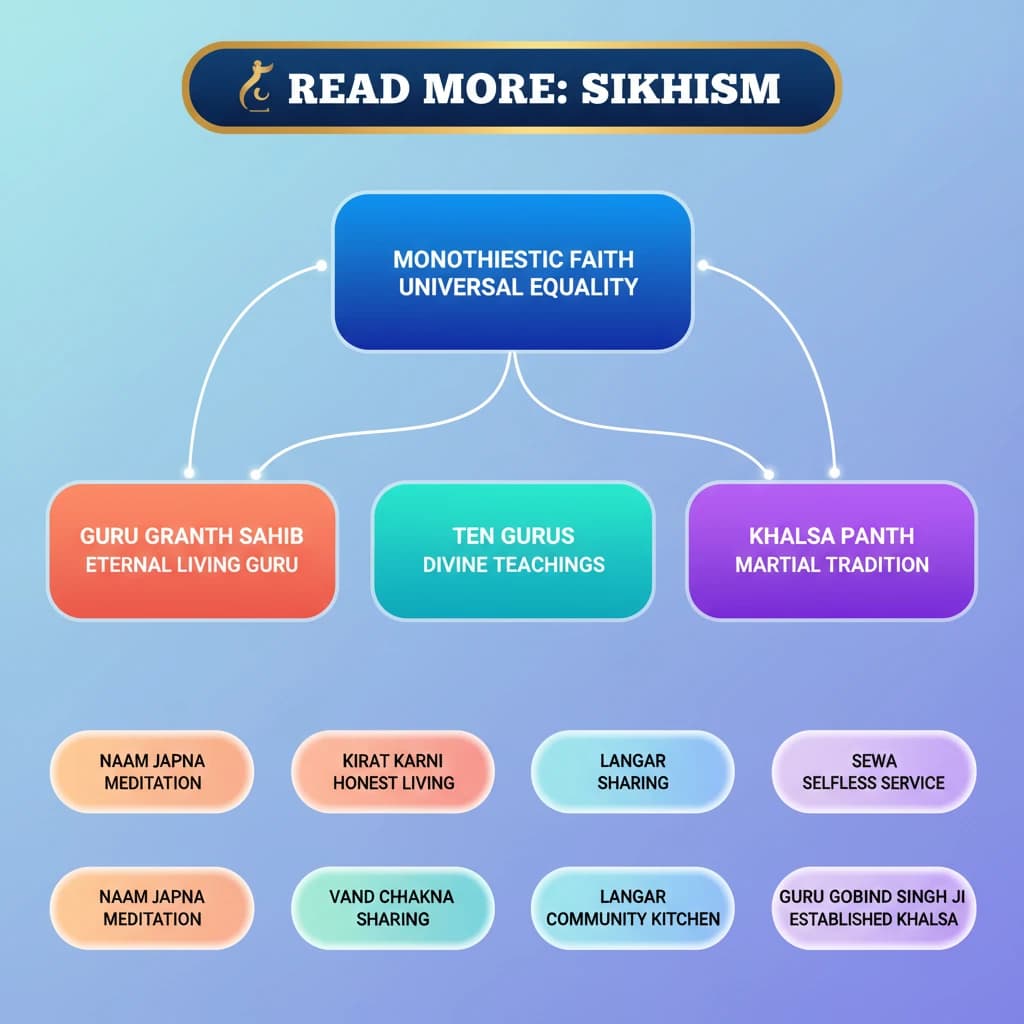
- •Sikhism, founded by Guru Nanak Dev Ji, is a monotheistic religion emphasizing one God (Ik Onkar) and universal equality.
- •The teachings are enshrined in the Guru Granth Sahib, the eternal living Guru, and propagated by ten Gurus.
- •Core tenets include Naam Japna (meditation), Kirat Karni (honest living), and Vand Chhakna (sharing).
- •The Khalsa Panth, established by Guru Gobind Singh Ji, created a distinct identity and martial tradition.
- •Key institutions like Langar (community kitchen) promote social equality and selfless service (Sewa).
- •Sikh history includes periods of Mughal persecution, the rise of Misls, and the powerful Sikh Empire under Maharaja Ranjit Singh.
🧠 Memory Techniques
98% Verified Content
📚 Reference Sources
•A History of the Sikhs, Vol. 1 & 2 by Khushwant Singh
•Sikhism: A Very Short Introduction by Eleanor Nesbitt
•Drishti IAS study materials on Indian History and Culture