Loading page, please wait…
Shivaji Maharaj and Surat Raid - UPSC History
What is Shivaji Maharaj and Surat Raid in UPSC History?
Shivaji Maharaj and Surat Raid is a key topic under History for UPSC Civil Services Examination. Key points include: A 35-foot statue of Chhatrapati Shivaji Maharaj at Rajkot Fort, Malvan, collapsed within a year of its unveiling.. The incident raises concerns about construction quality, public accountability, and oversight in government projects.. Shivaji Maharaj was a pivotal 17th-century Maratha ruler, known for establishing the Maratha Empire and strategic raids like those on Surat.. Understanding this topic is essential for both UPSC Prelims and Mains preparation.
Why is Shivaji Maharaj and Surat Raid important for UPSC exam?
Shivaji Maharaj and Surat Raid is a Medium-level topic in UPSC History. It is tested in both Prelims (factual MCQs) and Mains (analytical answer writing). Previous year UPSC questions have frequently covered aspects of Shivaji Maharaj and Surat Raid, making it essential for comprehensive IAS preparation.
How to prepare Shivaji Maharaj and Surat Raid for UPSC?
To prepare Shivaji Maharaj and Surat Raid for UPSC: (1) Study the comprehensive notes covering all key concepts on Vaidra. (2) Practice previous year questions on this topic. (3) Connect it with current affairs using daily updates. (4) Revise using key takeaways and mind maps available for History. (5) Write practice answers linking Shivaji Maharaj and Surat Raid to related GS Paper topics.
Key takeaways of Shivaji Maharaj and Surat Raid for UPSC
- A 35-foot statue of Chhatrapati Shivaji Maharaj at Rajkot Fort, Malvan, collapsed within a year of its unveiling.
- The incident raises concerns about construction quality, public accountability, and oversight in government projects.
- Shivaji Maharaj was a pivotal 17th-century Maratha ruler, known for establishing the Maratha Empire and strategic raids like those on Surat.
- Public memorials are crucial for national identity but require stringent quality control and maintenance.
- The event highlights the contemporary relevance of historical figures and the need for robust governance in infrastructure development.
Shivaji Maharaj and Surat Raid
Medium⏱️ 8 min read
history
📖 Introduction
Introduction to Chhatrapati Shivaji Maharaj
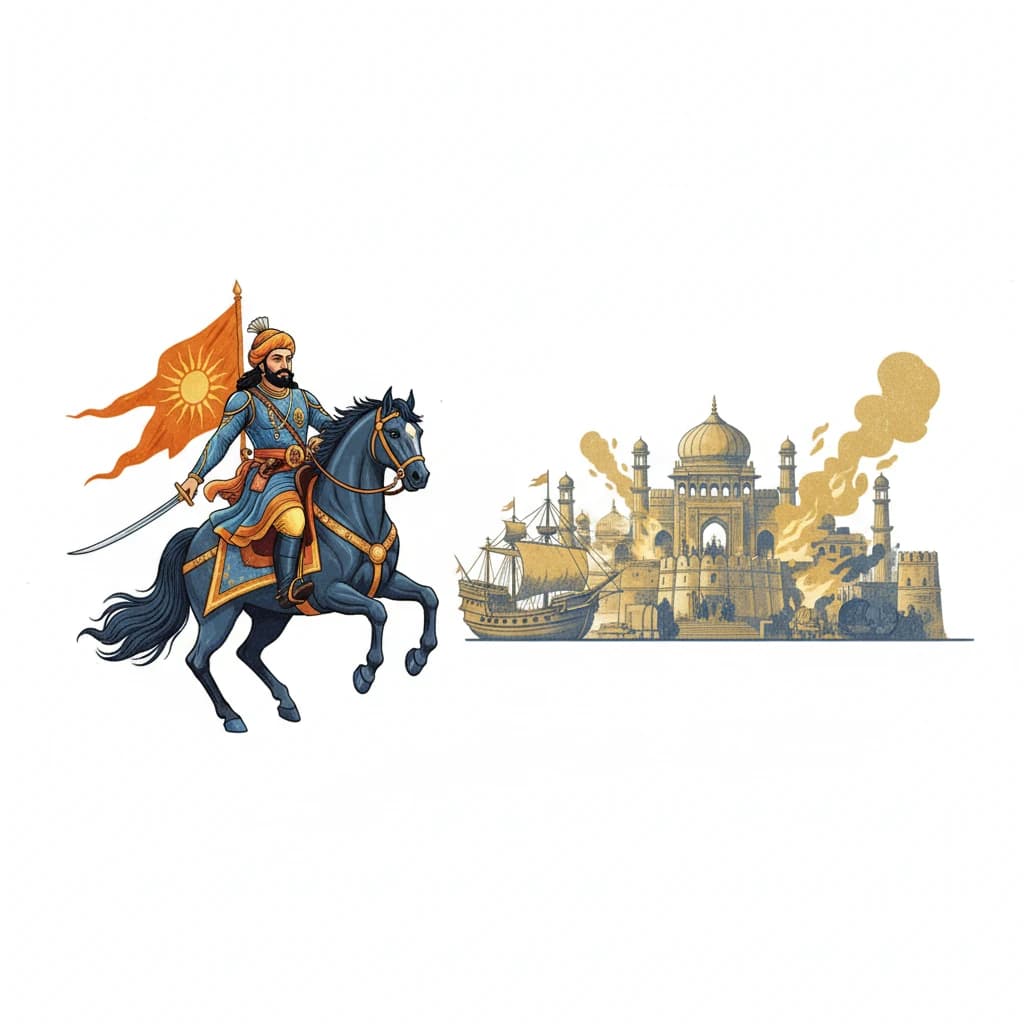
Chhatrapati Shivaji Maharaj, a revered figure in Indian history, is celebrated for establishing the independent Maratha Empire. His strategic brilliance and administrative acumen laid the foundation for a powerful regional kingdom in the 17th century.
Key Point: Shivaji Maharaj is remembered as a symbol of Maratha pride and a pioneer of guerrilla warfare tactics against larger adversaries.
The Significance of Surat Raids
The Surat Raids, particularly the first one in 1664, were pivotal events in Shivaji's military career. Surat, a wealthy port city under Mughal control, was a crucial target for its immense riches, which helped fund the nascent Maratha state.
These raids showcased Shivaji's daring leadership and his ability to challenge the formidable Mughal authority, thereby enhancing his reputation and bolstering his resources.
Recent Event: Collapse of Shivaji Maharaj's Statue
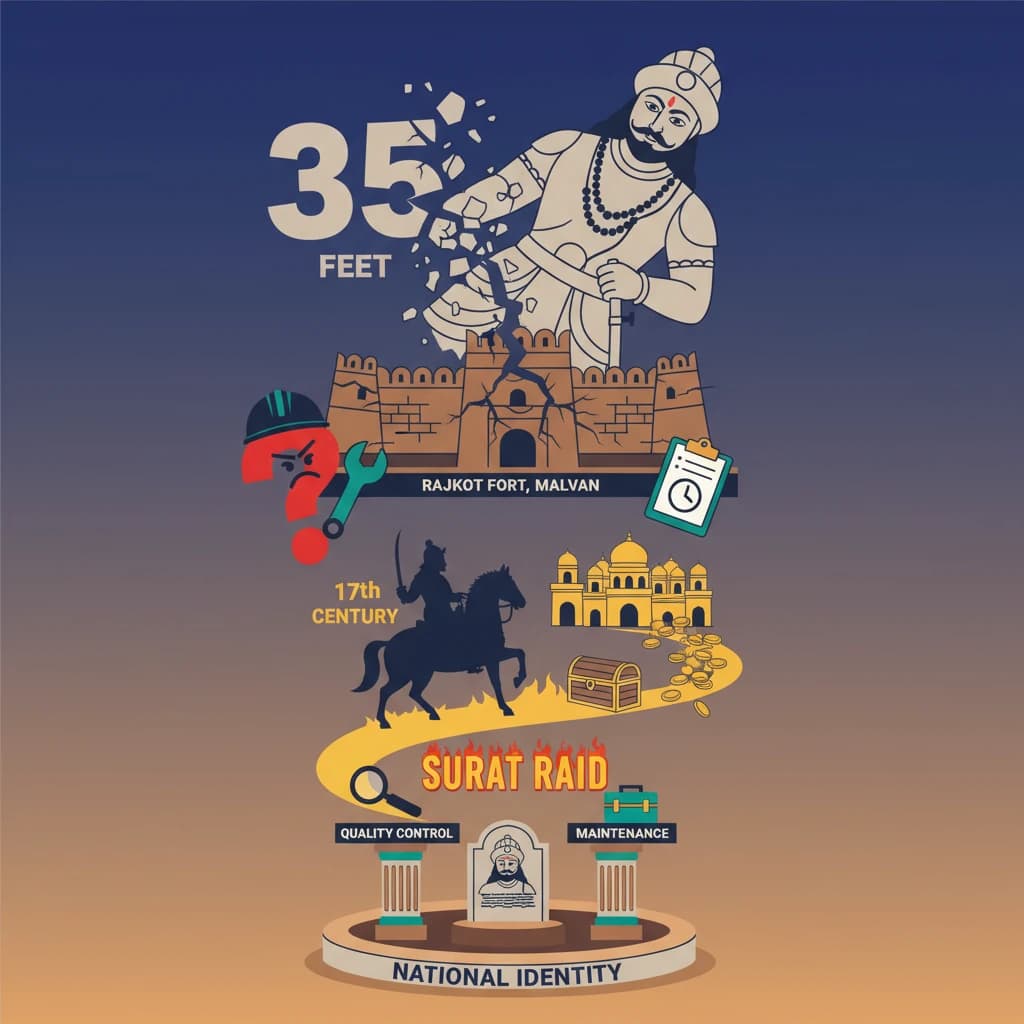
A recent incident highlighted concerns regarding the quality and maintenance of public memorials. A 35-foot statue of Chhatrapati Shivaji Maharaj, located at Rajkot Fort in Malvan, within the Sindhudurg district, collapsed.
Statue Details:
- Height: 35 feet
- Location: Rajkot Fort, Malvan, Sindhudurg district
- Event: Collapsed in less than a year after its unveiling
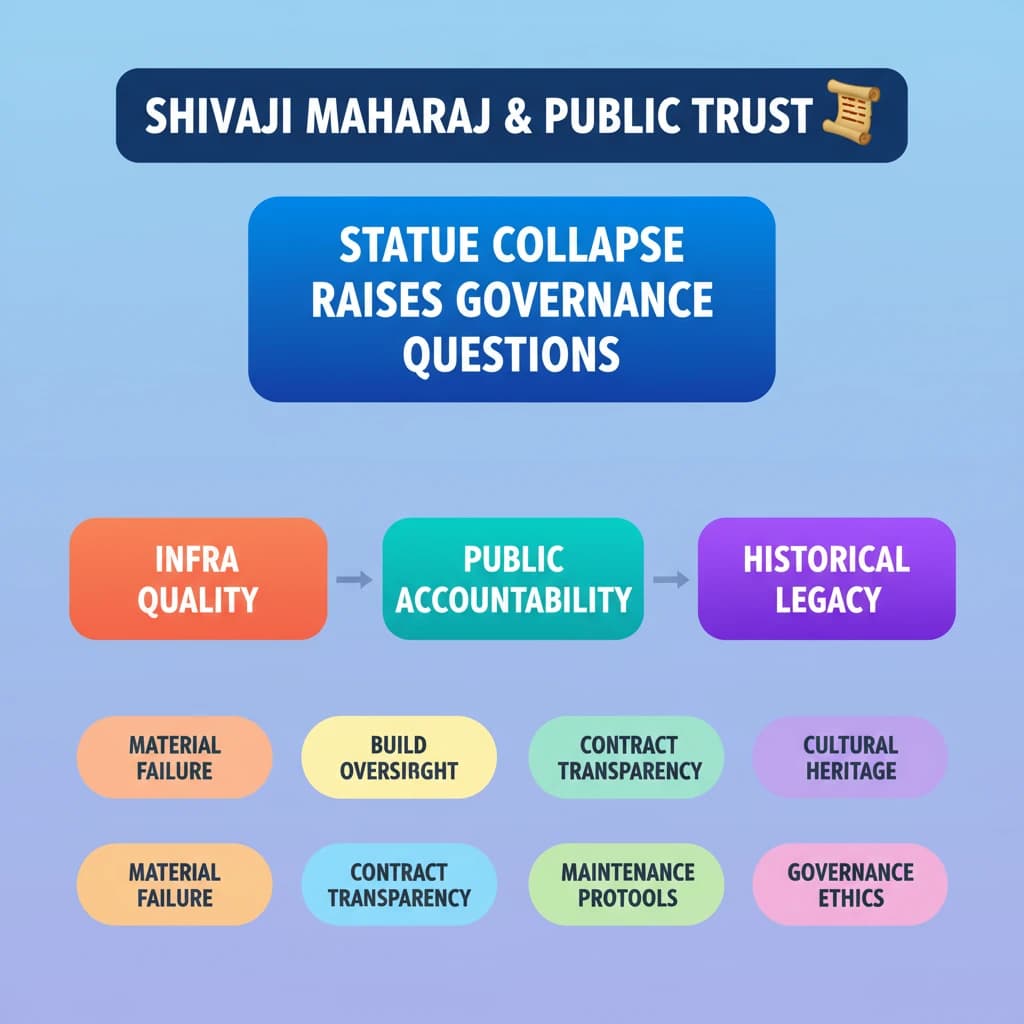
The premature collapse of the statue, unveiled less than a year prior, has raised questions about construction standards, material quality, and the oversight mechanisms for public projects dedicated to national heroes.
UPSC Insight: Such incidents can be linked to topics like governance, public accountability, infrastructure quality, and the preservation of cultural heritage in GS Paper II and III.
💡 Key Takeaways
- •A 35-foot statue of Chhatrapati Shivaji Maharaj at Rajkot Fort, Malvan, collapsed within a year of its unveiling.
- •The incident raises concerns about construction quality, public accountability, and oversight in government projects.
- •Shivaji Maharaj was a pivotal 17th-century Maratha ruler, known for establishing the Maratha Empire and strategic raids like those on Surat.
- •Public memorials are crucial for national identity but require stringent quality control and maintenance.
- •The event highlights the contemporary relevance of historical figures and the need for robust governance in infrastructure development.
🧠 Memory Techniques
95% Verified Content
📚 Reference Sources
•General historical knowledge on Chhatrapati Shivaji Maharaj and the Maratha Empire
•Public domain information on significant Indian memorials