Loading page, please wait…
Vijayanagar Empire: Geographical Extent and Boundaries - UPSC History
What is Vijayanagar Empire: Geographical Extent and Boundaries in UPSC History?
Vijayanagar Empire: Geographical Extent and Boundaries is a key topic under History for UPSC Civil Services Examination. Key points include: The Vijayanagar Empire covered a vast area from the Krishna River in the north to the southernmost tip of the Indian Peninsula.. Its rule extended from the Arabian Sea on the west to the Bay of Bengal on the east.. The empire encompassed significant parts of modern Karnataka, Andhra Pradesh, Tamil Nadu, Kerala, and Telangana.. Understanding this topic is essential for both UPSC Prelims and Mains preparation.
Why is Vijayanagar Empire: Geographical Extent and Boundaries important for UPSC exam?
Vijayanagar Empire: Geographical Extent and Boundaries is a Medium-level topic in UPSC History. It is tested in both Prelims (factual MCQs) and Mains (analytical answer writing). Previous year UPSC questions have frequently covered aspects of Vijayanagar Empire: Geographical Extent and Boundaries, making it essential for comprehensive IAS preparation.
How to prepare Vijayanagar Empire: Geographical Extent and Boundaries for UPSC?
To prepare Vijayanagar Empire: Geographical Extent and Boundaries for UPSC: (1) Study the comprehensive notes covering all key concepts on Vaidra. (2) Practice previous year questions on this topic. (3) Connect it with current affairs using daily updates. (4) Revise using key takeaways and mind maps available for History. (5) Write practice answers linking Vijayanagar Empire: Geographical Extent and Boundaries to related GS Paper topics.
Key takeaways of Vijayanagar Empire: Geographical Extent and Boundaries for UPSC
- The Vijayanagar Empire covered a vast area from the Krishna River in the north to the southernmost tip of the Indian Peninsula.
- Its rule extended from the Arabian Sea on the west to the Bay of Bengal on the east.
- The empire encompassed significant parts of modern Karnataka, Andhra Pradesh, Tamil Nadu, Kerala, and Telangana.
- The Krishna River served as a crucial northern boundary and a frequent zone of conflict.
- The empire reached its maximum territorial extent and cultural flourishing under Krishnadevaraya in the 16th century.
Vijayanagar Empire: Geographical Extent and Boundaries
Medium⏱️ 8 min read
history
📖 Introduction
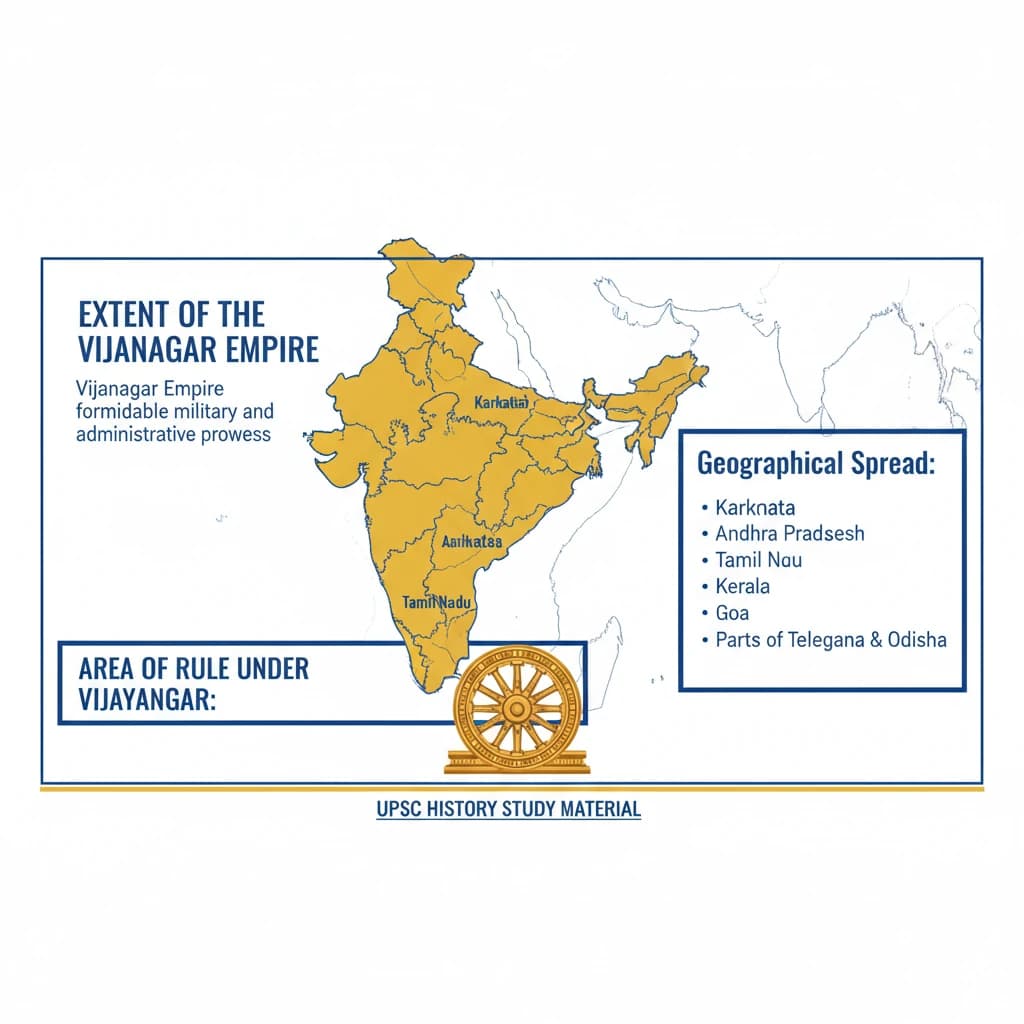
Extent of the Vijayanagar Empire
The Vijayanagar Empire, at its zenith, commanded a vast dominion across the southern reaches of the Indian Peninsula. Its territorial reach was a testament to its formidable military and administrative prowess.
Geographical Spread: The empire encompassed significant portions of modern-day Karnataka, Andhra Pradesh, Tamil Nadu, Kerala, and Telangana.
Northern and Southern Boundaries
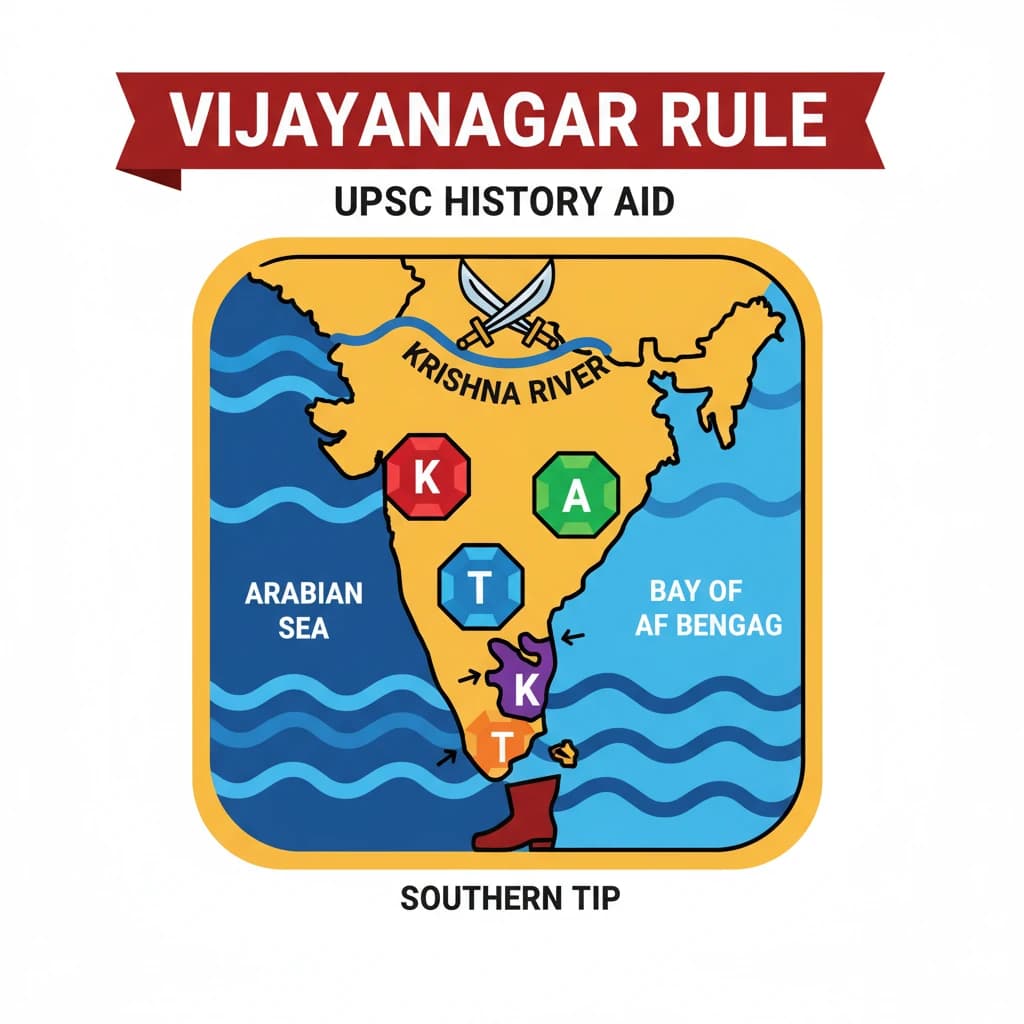
The northern frontier of the Vijayanagar Empire was demarcated by the mighty Krishna River. This river often served as a natural boundary and a point of contention with northern sultanates.
To the south, the empire extended all the way to the southernmost tip of the Indian Peninsula, effectively controlling the entire southern landmass of India.
Eastern and Western Limits
On its western flank, the Vijayanagar Empire stretched to the shores of the Arabian Sea, facilitating maritime trade and strategic control over coastal regions.
Towards the east, its influence reached the Bay of Bengal, further solidifying its control over peninsular India and opening avenues for eastern trade routes.
The empire's extensive control over peninsular India allowed for significant cultural, economic, and political influence, making it a dominant power in South India for centuries.
💡 Key Takeaways
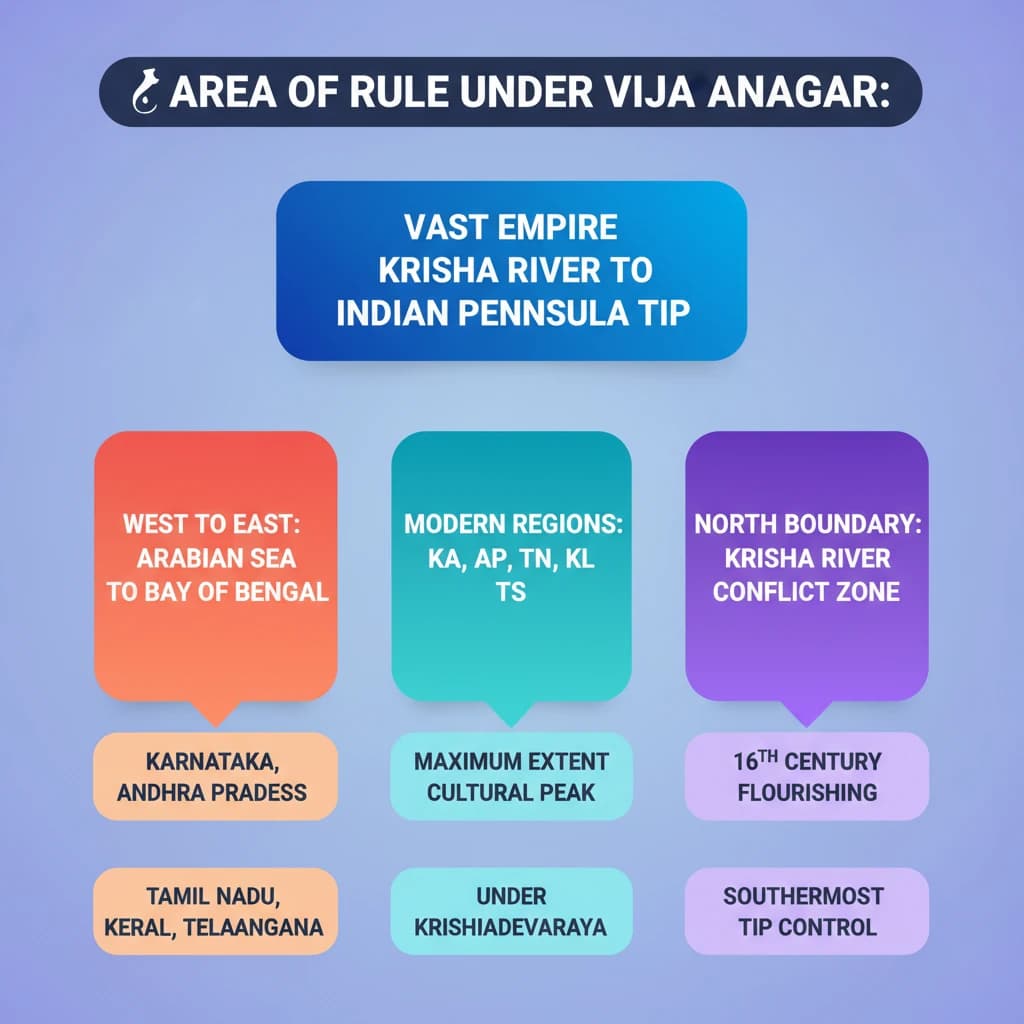
- •The Vijayanagar Empire covered a vast area from the Krishna River in the north to the southernmost tip of the Indian Peninsula.
- •Its rule extended from the Arabian Sea on the west to the Bay of Bengal on the east.
- •The empire encompassed significant parts of modern Karnataka, Andhra Pradesh, Tamil Nadu, Kerala, and Telangana.
- •The Krishna River served as a crucial northern boundary and a frequent zone of conflict.
- •The empire reached its maximum territorial extent and cultural flourishing under Krishnadevaraya in the 16th century.
🧠 Memory Techniques
95% Verified Content
📚 Reference Sources
•NCERT History Textbooks (Class XI & XII)
•A History of South India by K.A. Nilakanta Sastri