Loading page, please wait…
Vijayanagara Empire: Decline After the Battle of Talikota, 1565 - UPSC History
What is Vijayanagara Empire: Decline After the Battle of Talikota, 1565 in UPSC History?
Vijayanagara Empire: Decline After the Battle of Talikota, 1565 is a key topic under History for UPSC Civil Services Examination. Key points include: The <strong>Battle of Talikota</strong> (<strong>1565</strong>) was a decisive defeat for the <strong>Vijayanagara Empire</strong>.. It is also known as the <strong>Battle of Rakkasagi-Tangadagi</strong>.. The <strong>Vijayanagara army</strong> was defeated by an alliance of four <strong>Deccan Sultanates</strong> (Ahmednagar, Bijapur, Golconda, Bidar).. Understanding this topic is essential for both UPSC Prelims and Mains preparation.
Why is Vijayanagara Empire: Decline After the Battle of Talikota, 1565 important for UPSC exam?
Vijayanagara Empire: Decline After the Battle of Talikota, 1565 is a Medium-level topic in UPSC History. It is tested in both Prelims (factual MCQs) and Mains (analytical answer writing). Previous year UPSC questions have frequently covered aspects of Vijayanagara Empire: Decline After the Battle of Talikota, 1565, making it essential for comprehensive IAS preparation.
How to prepare Vijayanagara Empire: Decline After the Battle of Talikota, 1565 for UPSC?
To prepare Vijayanagara Empire: Decline After the Battle of Talikota, 1565 for UPSC: (1) Study the comprehensive notes covering all key concepts on Vaidra. (2) Practice previous year questions on this topic. (3) Connect it with current affairs using daily updates. (4) Revise using key takeaways and mind maps available for History. (5) Write practice answers linking Vijayanagara Empire: Decline After the Battle of Talikota, 1565 to related GS Paper topics.
Key takeaways of Vijayanagara Empire: Decline After the Battle of Talikota, 1565 for UPSC
- The <strong>Battle of Talikota</strong> (<strong>1565</strong>) was a decisive defeat for the <strong>Vijayanagara Empire</strong>.
- It is also known as the <strong>Battle of Rakkasagi-Tangadagi</strong>.
- The <strong>Vijayanagara army</strong> was defeated by an alliance of four <strong>Deccan Sultanates</strong> (Ahmednagar, Bijapur, Golconda, Bidar).
- The battle led to the sacking and destruction of the capital city, <strong>Hampi</strong>.
- This event marked the beginning of the empire's decline and subsequent fragmentation of South India.
Vijayanagara Empire: Decline After the Battle of Talikota, 1565
Medium⏱️ 6 min read
history
📖 Introduction
Introduction to the Decline of Vijayanagara
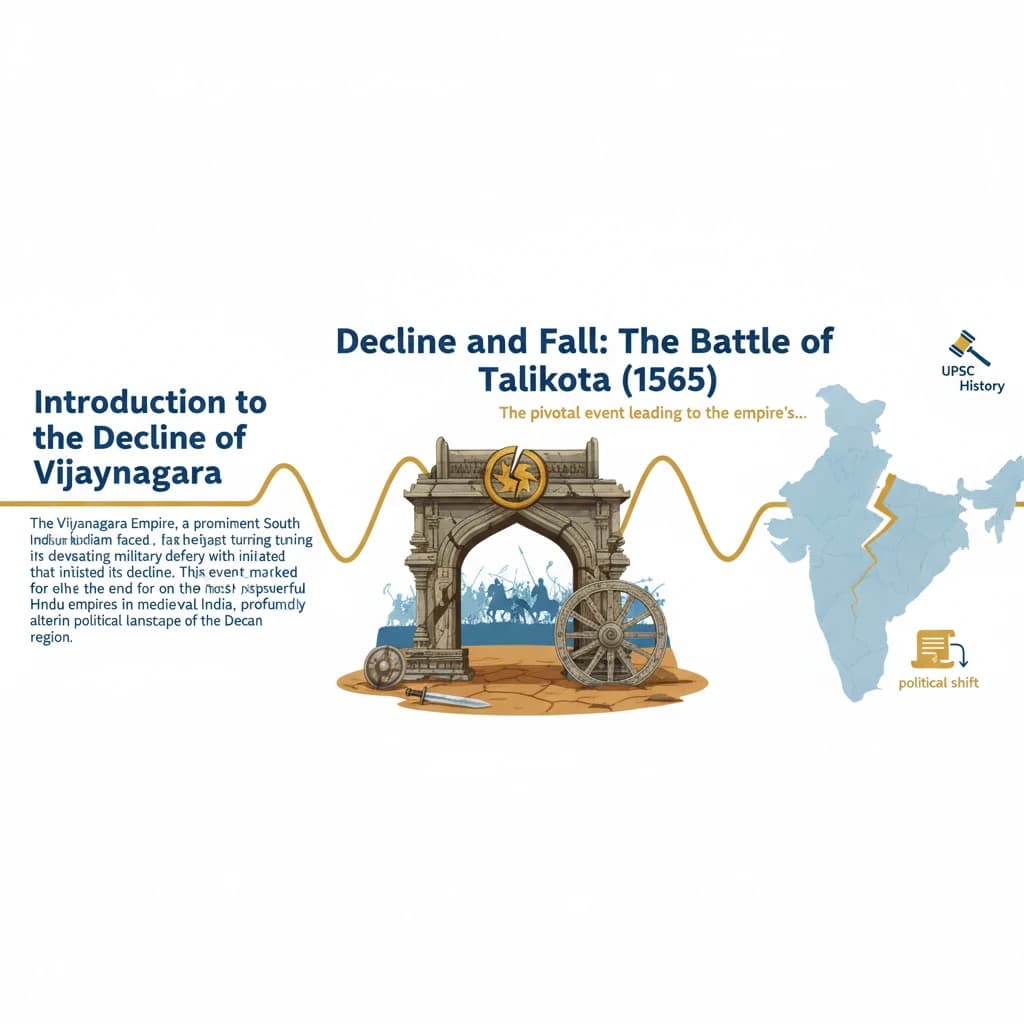
The Vijayanagara Empire, a prominent South Indian kingdom, faced a significant turning point in its history with a devastating military defeat that initiated its decline.
This event marked the beginning of the end for one of the most powerful Hindu empires in medieval India, profoundly altering the political landscape of the Deccan region.
The Battle of Talikota (1565)
The pivotal event leading to the empire's downfall was the Battle of Talikota, fought in 1565. This battle is also known by other names, reflecting its historical significance and geographical context.
Alternative Names: The Battle of Talikota is also referred to as the Battle of Rakkasagi-Tangadagi. These names derive from the villages near which the conflict took place.
The battle saw the Vijayanagara army suffer a decisive defeat at the hands of an alliance of the Deccan Sultanates. This coalition represented a formidable challenge to Vijayanagara's dominance.
Key Outcome: The Vijayanagara army was comprehensively routed, leading to the sacking of its capital, Hampi, and marking a critical juncture in the empire's history.
The Allied Deccan Sultanates
The alliance that confronted Vijayanagara comprised several powerful Muslim kingdoms of the Deccan plateau. Their combined strength proved overwhelming.
- Ahmednagar Sultanate
- Bijapur Sultanate
- Golconda Sultanate
- Bidar Sultanate
The fifth sultanate, Berar, did not participate in this alliance, maintaining its neutrality during the conflict.
UPSC Insight: Understanding the Battle of Talikota is crucial for Mains (GS Paper I: Indian History) as it signifies a major shift in power dynamics in South India. Focus on its causes, key players, and long-term consequences for the Vijayanagara Empire and the Deccan region.
💡 Key Takeaways
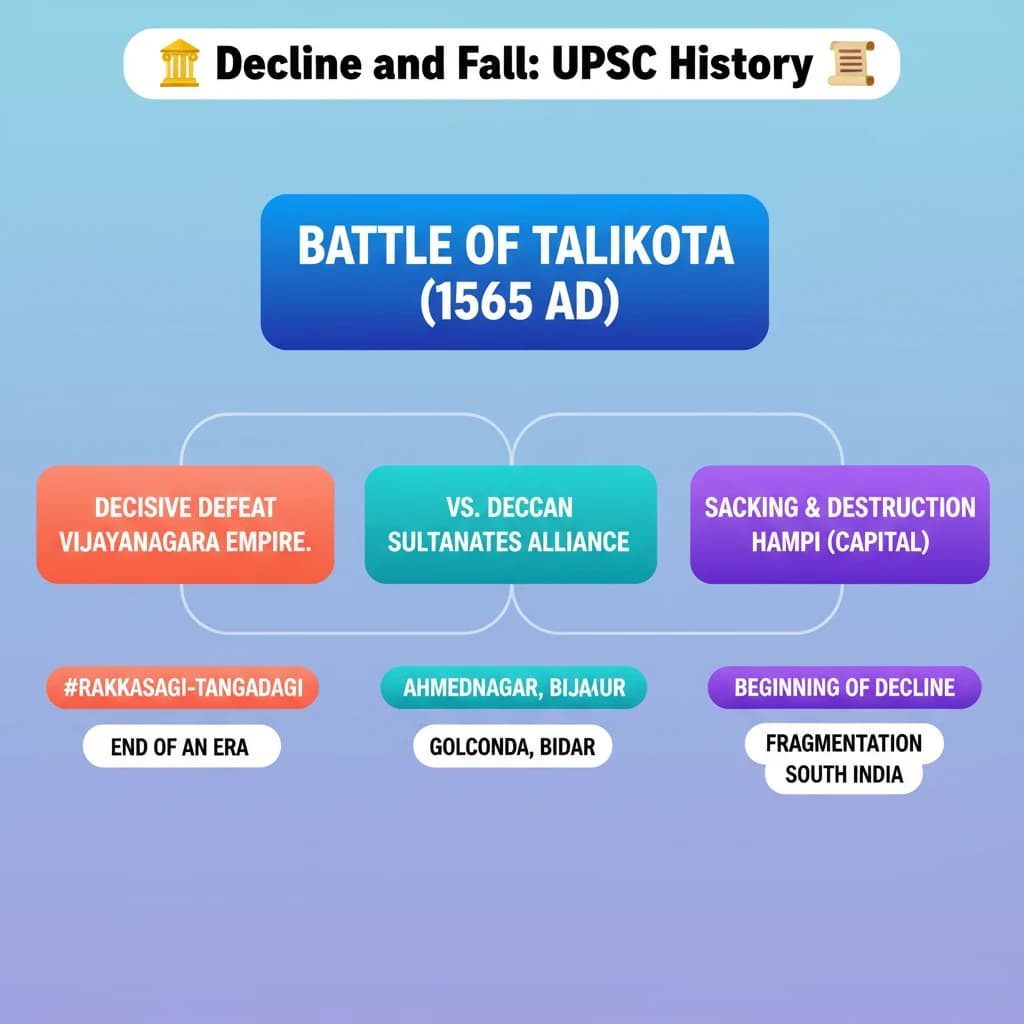
- •The <strong>Battle of Talikota</strong> (<strong>1565</strong>) was a decisive defeat for the <strong>Vijayanagara Empire</strong>.
- •It is also known as the <strong>Battle of Rakkasagi-Tangadagi</strong>.
- •The <strong>Vijayanagara army</strong> was defeated by an alliance of four <strong>Deccan Sultanates</strong> (Ahmednagar, Bijapur, Golconda, Bidar).
- •The battle led to the sacking and destruction of the capital city, <strong>Hampi</strong>.
- •This event marked the beginning of the empire's decline and subsequent fragmentation of South India.
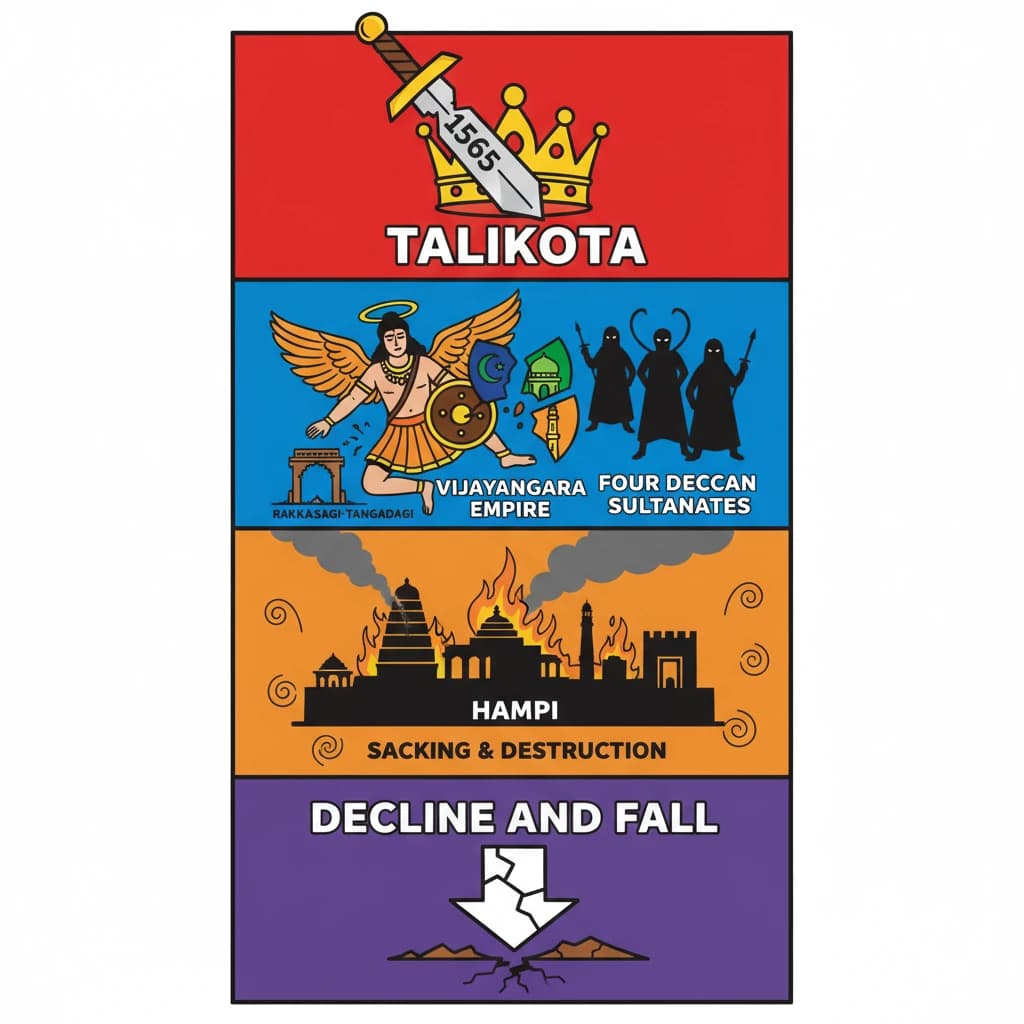
🧠 Memory Techniques
95% Verified Content
📚 Reference Sources
•A History of South India by K.A. Nilakanta Sastri
•The Cambridge Economic History of India, Vol. I
•NCERT History Textbooks (Class XI & XII)