Loading page, please wait…
Vijayanagara School of Temple Architecture - UPSC History
What is Vijayanagara School of Temple Architecture in UPSC History?
Vijayanagara School of Temple Architecture is a key topic under History for UPSC Civil Services Examination. Key points include: Vijayanagara architecture encompassed diverse structures, including temples, palaces, and advanced civic infrastructure.. A hallmark was the unique blend of Hindu (Dravidian) and Islamic architectural styles.. Key temple features included highly decorated walls, gopurams on all four sides, and monolithic rock pillars.. Understanding this topic is essential for both UPSC Prelims and Mains preparation.
Why is Vijayanagara School of Temple Architecture important for UPSC exam?
Vijayanagara School of Temple Architecture is a Medium-level topic in UPSC History. It is tested in both Prelims (factual MCQs) and Mains (analytical answer writing). Previous year UPSC questions have frequently covered aspects of Vijayanagara School of Temple Architecture, making it essential for comprehensive IAS preparation.
How to prepare Vijayanagara School of Temple Architecture for UPSC?
To prepare Vijayanagara School of Temple Architecture for UPSC: (1) Study the comprehensive notes covering all key concepts on Vaidra. (2) Practice previous year questions on this topic. (3) Connect it with current affairs using daily updates. (4) Revise using key takeaways and mind maps available for History. (5) Write practice answers linking Vijayanagara School of Temple Architecture to related GS Paper topics.
Key takeaways of Vijayanagara School of Temple Architecture for UPSC
- Vijayanagara architecture encompassed diverse structures, including temples, palaces, and advanced civic infrastructure.
- A hallmark was the unique blend of Hindu (Dravidian) and Islamic architectural styles.
- Key temple features included highly decorated walls, gopurams on all four sides, and monolithic rock pillars.
- The empire's capital, Hampi, is a UNESCO World Heritage Site, showcasing the pinnacle of this style.
- The period of Krishnadevaraya marked the zenith of Vijayanagara architectural development.
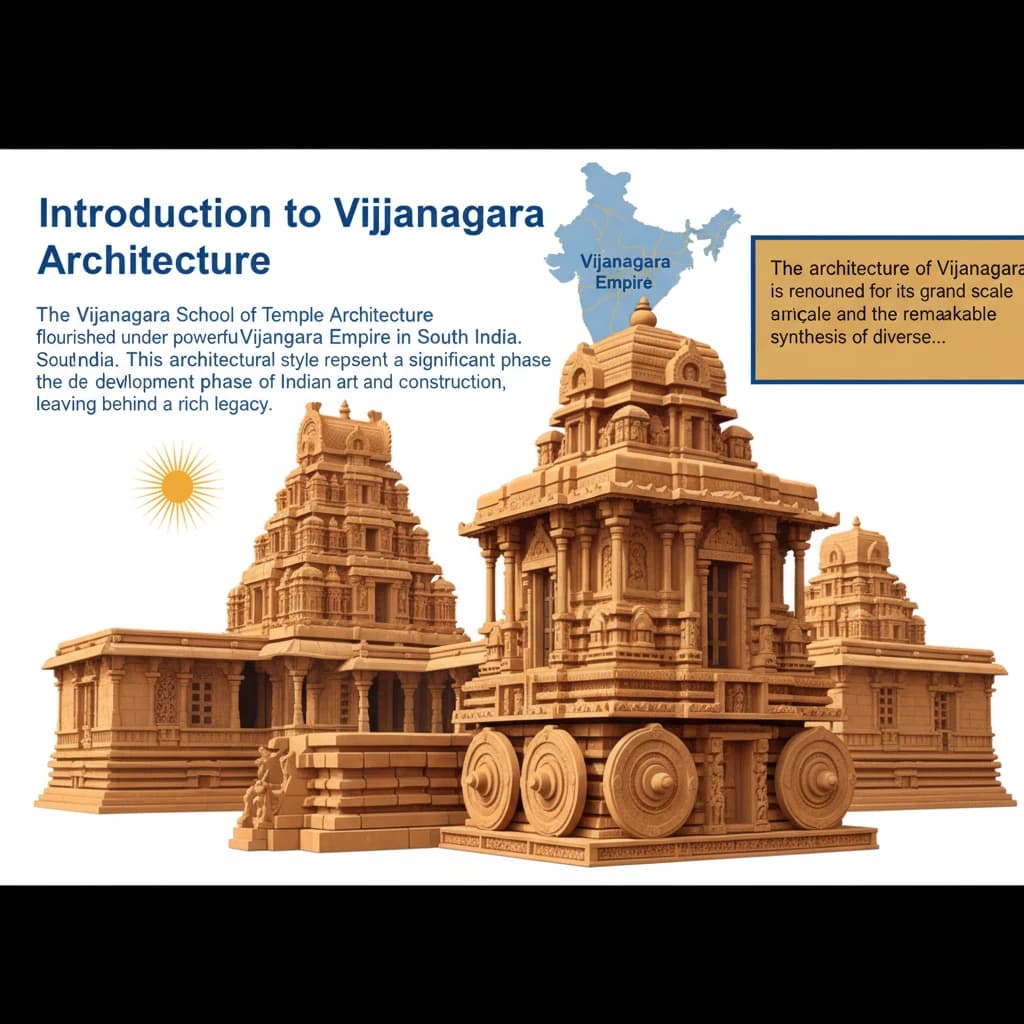
Vijayanagara School of Temple Architecture
Medium⏱️ 7 min read
history
📖 Introduction
Introduction to Vijayanagara Architecture
The Vijayanagara School of Temple Architecture flourished under the powerful Vijayanagara Empire in South India. This architectural style represents a significant phase in the development of Indian art and construction, leaving behind a rich legacy.
The architecture of Vijayanagara is renowned for its grand scale and the remarkable synthesis of diverse styles, reflecting the empire's cultural dynamism.
Diverse Structural Forms
The architectural output of the Vijayanagara Empire was incredibly varied, extending beyond just religious structures. It encompassed a wide range of constructions designed for both sacred and secular purposes.
- Temples: The most prominent structures, often large and elaborately decorated.
- Monolithic Sculptures: Carved from single blocks of stone, showcasing immense skill.
- Palaces: Royal residences, though many are now in ruins, their foundations reveal grandeur.
- Official Buildings: Administrative structures necessary for governing the vast empire.
- Cities: Well-planned urban centers like Hampi, the capital.
- Irrigation Systems: Advanced systems for water management, crucial for agriculture.
- Step Wells and Tanks: Essential for water storage and public use, often architecturally impressive.
The sheer diversity of structures highlights the comprehensive approach to urban planning and public works adopted by the Vijayanagara rulers.
Unique Blend of Styles
A defining characteristic of Vijayanagara architecture is its distinctive integration of various architectural traditions. This synthesis created a unique aesthetic that set it apart from earlier styles.
The architecture uniquely integrated elements from both Hindu (primarily Dravidian) and Islamic architectural styles, a testament to the empire's cultural interactions and adaptability.
This blend is visible in decorative motifs, structural elements, and overall planning, showcasing a harmonious fusion rather than mere imitation.
Key Features of Vijayanagara Temples
The temples built during the Vijayanagara period exhibit several distinct features that contribute to their grandeur and artistic merit. These elements are crucial for identifying the style.
- Highly Decorated Walls: The exterior walls of the temples were extensively adorned with intricate carvings and sophisticated geometrical patterns. These depicted mythological scenes, deities, and daily life.
- Gopurams on All Sides: Unlike earlier Dravidian temples where gopurams (ornate entrance towers) were typically on one or two sides, Vijayanagara temples often featured prominent gopurams on all four sides, enhancing their imposing appearance.
- Monolithic Rock Pillars: A hallmark feature was the extensive use of monolithic rock pillars, often highly sculpted and forming grand colonnades within temple complexes. These pillars frequently featured rearing horses or mythical beasts.
For UPSC, remember the three key temple features: decorated walls, multi-sided gopurams, and monolithic pillars. These are strong distinguishing points for descriptive answers.
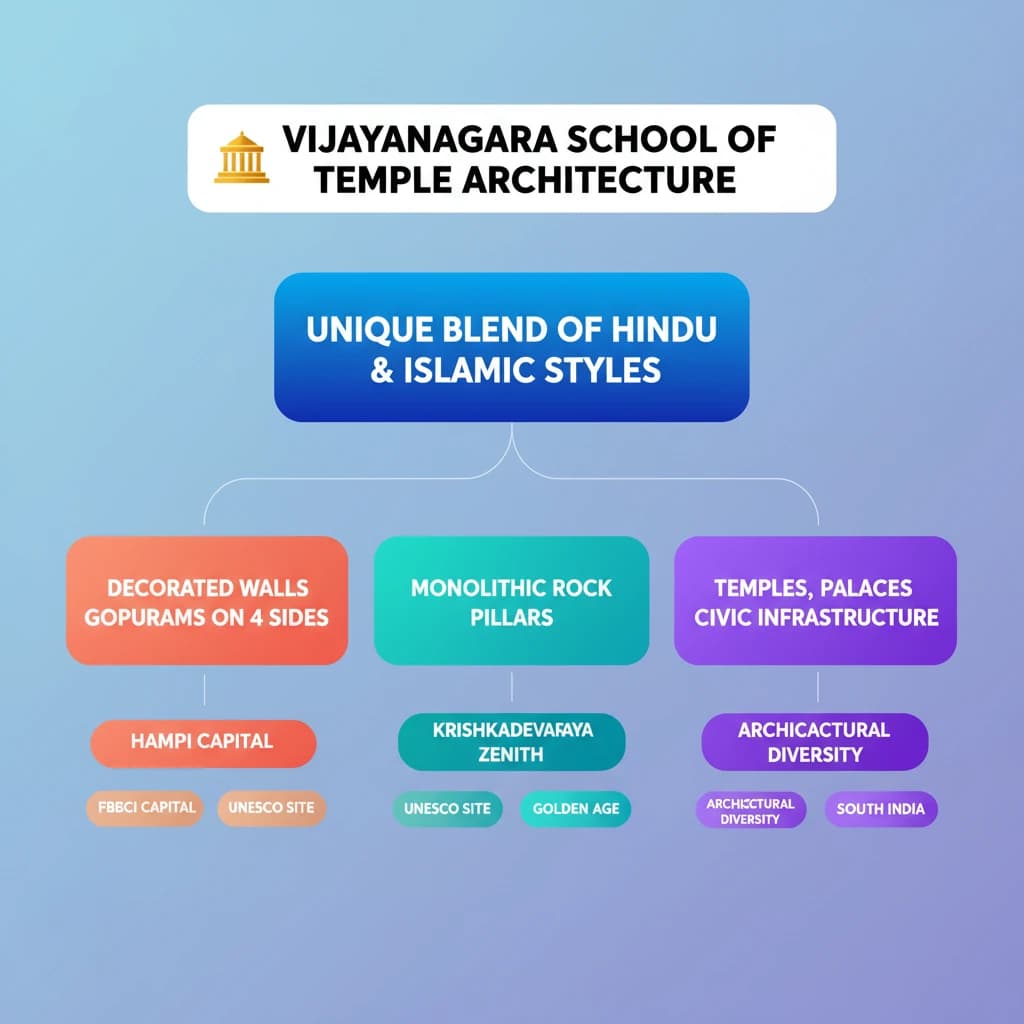
💡 Key Takeaways
- •Vijayanagara architecture encompassed diverse structures, including temples, palaces, and advanced civic infrastructure.
- •A hallmark was the unique blend of Hindu (Dravidian) and Islamic architectural styles.
- •Key temple features included highly decorated walls, gopurams on all four sides, and monolithic rock pillars.
- •The empire's capital, Hampi, is a UNESCO World Heritage Site, showcasing the pinnacle of this style.
- •The period of Krishnadevaraya marked the zenith of Vijayanagara architectural development.
🧠 Memory Techniques
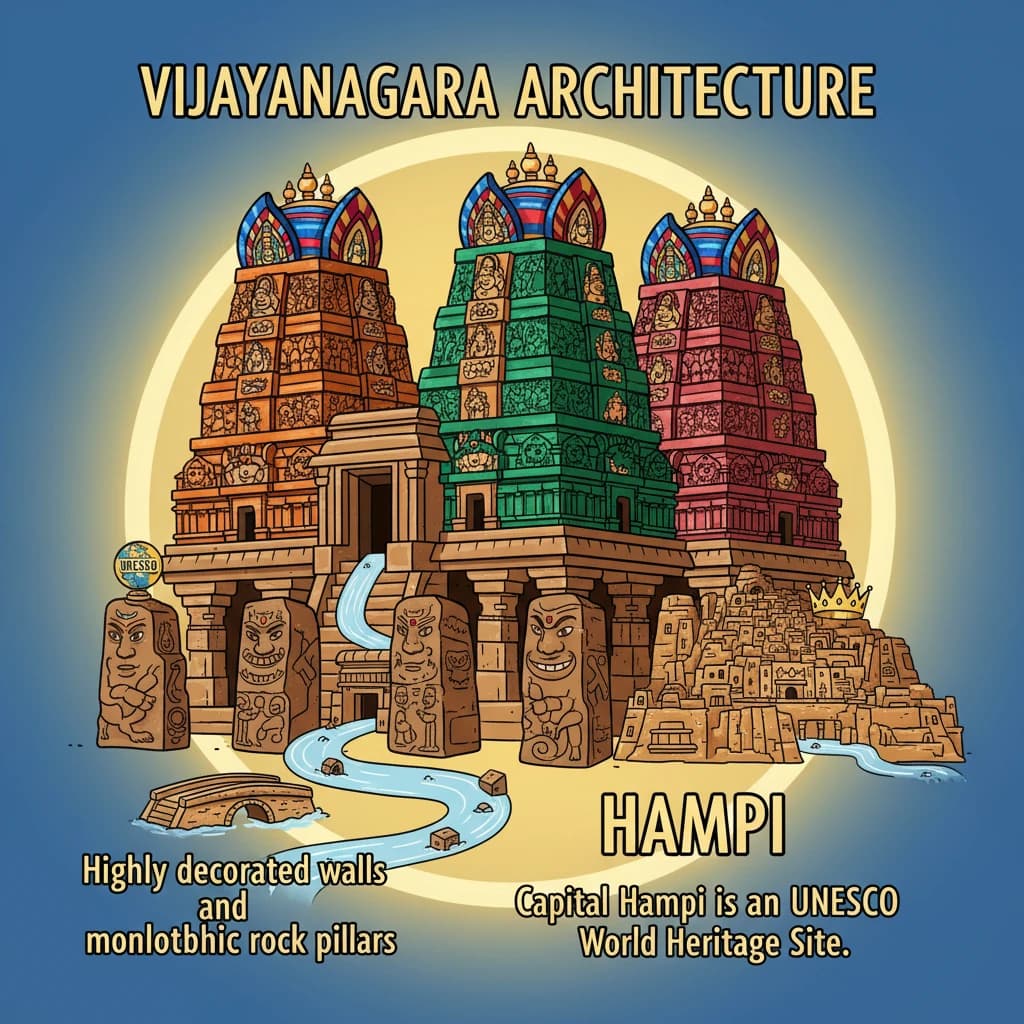
95% Verified Content
📚 Reference Sources
•NCERT Class XI - An Introduction to Indian Art
•Wikipedia (Hampi, Vijayanagara Empire, Vijayanagara Architecture)
•Cultural India (Indian Architecture - Vijayanagara)