Loading page, please wait…
Virupaksha Temple, Hampi: Vijayanagara Architecture & Deva Raya II - UPSC History
What is Virupaksha Temple, Hampi: Vijayanagara Architecture & Deva Raya II in UPSC History?
Virupaksha Temple, Hampi: Vijayanagara Architecture & Deva Raya II is a key topic under History for UPSC Civil Services Examination. Key points include: Virupaksha Temple: 7th-century Shiva temple in Hampi, Central Karnataka.. Main deity: Lord Virupaksha, also known as Pampapathi.. Architectural style: Predominantly Vijayanagara style.. Understanding this topic is essential for both UPSC Prelims and Mains preparation.
Why is Virupaksha Temple, Hampi: Vijayanagara Architecture & Deva Raya II important for UPSC exam?
Virupaksha Temple, Hampi: Vijayanagara Architecture & Deva Raya II is a Easy-level topic in UPSC History. It is tested in both Prelims (factual MCQs) and Mains (analytical answer writing). Previous year UPSC questions have frequently covered aspects of Virupaksha Temple, Hampi: Vijayanagara Architecture & Deva Raya II, making it essential for comprehensive IAS preparation.
How to prepare Virupaksha Temple, Hampi: Vijayanagara Architecture & Deva Raya II for UPSC?
To prepare Virupaksha Temple, Hampi: Vijayanagara Architecture & Deva Raya II for UPSC: (1) Study the comprehensive notes covering all key concepts on Vaidra. (2) Practice previous year questions on this topic. (3) Connect it with current affairs using daily updates. (4) Revise using key takeaways and mind maps available for History. (5) Write practice answers linking Virupaksha Temple, Hampi: Vijayanagara Architecture & Deva Raya II to related GS Paper topics.
Key takeaways of Virupaksha Temple, Hampi: Vijayanagara Architecture & Deva Raya II for UPSC
- Virupaksha Temple: 7th-century Shiva temple in Hampi, Central Karnataka.
- Main deity: Lord Virupaksha, also known as Pampapathi.
- Architectural style: Predominantly Vijayanagara style.
- Key builder: Lakhan Dandesha, a nayaka under ruler Deva Raya II.
- Part of the UNESCO World Heritage Site 'Group of Monuments at Hampi'.
- Remains an active place of worship, blending history with living tradition.
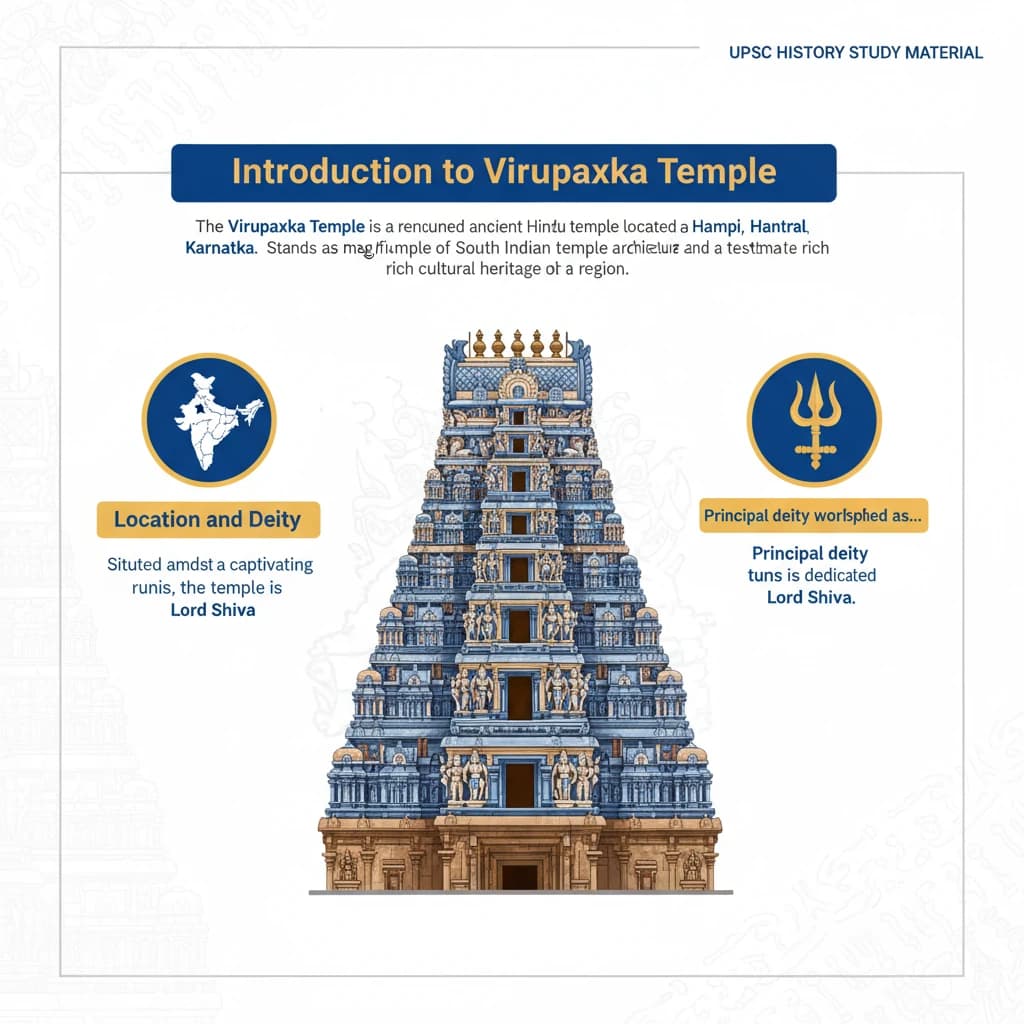
Virupaksha Temple, Hampi: Vijayanagara Architecture & Deva Raya II
Easy⏱️ 6 min read
history
📖 Introduction
Introduction to Virupaksha Temple
The Virupaksha Temple is a renowned ancient Hindu temple located in Hampi, Central Karnataka. It stands as a magnificent example of South Indian temple architecture and a testament to the rich cultural heritage of the region.
Location and Deity
Situated amidst the captivating ruins of Hampi, the temple is dedicated to Lord Shiva. The principal deity worshipped here is Lord Virupaksha, who is also reverently known as Pampapathi.
Location: Hampi, Central Karnataka, India
Main Deity: Lord Virupaksha (Pampapathi), a form of Lord Shiva
Architectural Style
The temple showcases the distinctive Vijayanagara style of architecture, which flourished under the powerful Vijayanagara Empire. This style is characterized by its grandeur, intricate carvings, and unique structural elements.
Architectural Style: Vijayanagara Architecture
Known for its robust yet ornate structures, massive gopurams, pillared mandapas, and detailed sculptural work.
Construction and Patronage
While the temple's origins trace back to the 7th century CE, its current majestic form largely developed during the Vijayanagara period. It was significantly built and expanded by Lakhan Dandesha.
Lakhan Dandesha was a prominent nayaka (chief or military governor) serving under the illustrious ruler Deva Raya II of the Vijayanagara Empire.
Original Foundation: 7th Century CE
Major Construction/Expansion: During the Vijayanagara Empire
Builder: Lakhan Dandesha (a nayaka)
Patron Ruler: Deva Raya II (Vijayanagara Empire)
UPSC Insight: Understanding the specific architectural styles like Vijayanagara and identifying key patrons like Deva Raya II and builders like Lakhan Dandesha are crucial for GS Paper I (Art & Culture). Note the temple's dual identity as a 7th-century shrine expanded later.
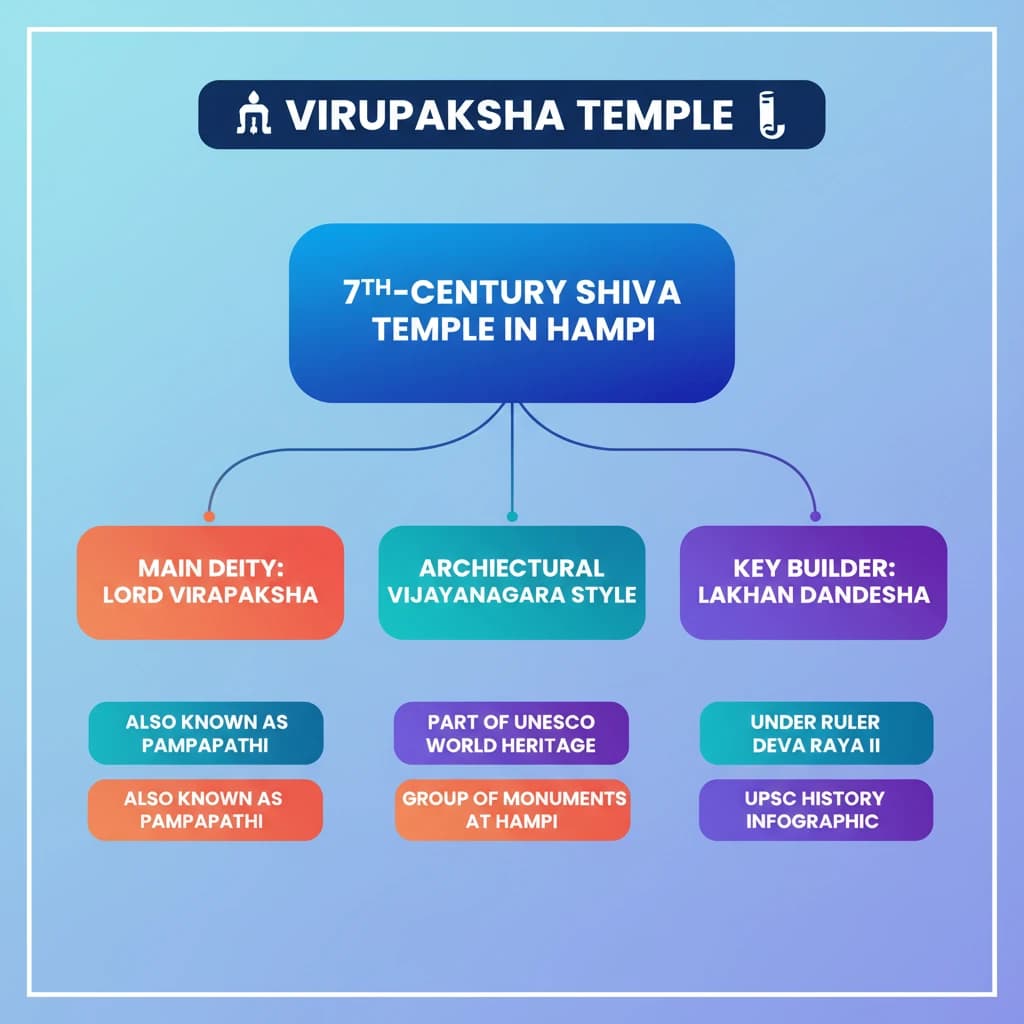
💡 Key Takeaways
- •Virupaksha Temple: 7th-century Shiva temple in Hampi, Central Karnataka.
- •Main deity: Lord Virupaksha, also known as Pampapathi.
- •Architectural style: Predominantly Vijayanagara style.
- •Key builder: Lakhan Dandesha, a nayaka under ruler Deva Raya II.
- •Part of the UNESCO World Heritage Site 'Group of Monuments at Hampi'.
- •Remains an active place of worship, blending history with living tradition.
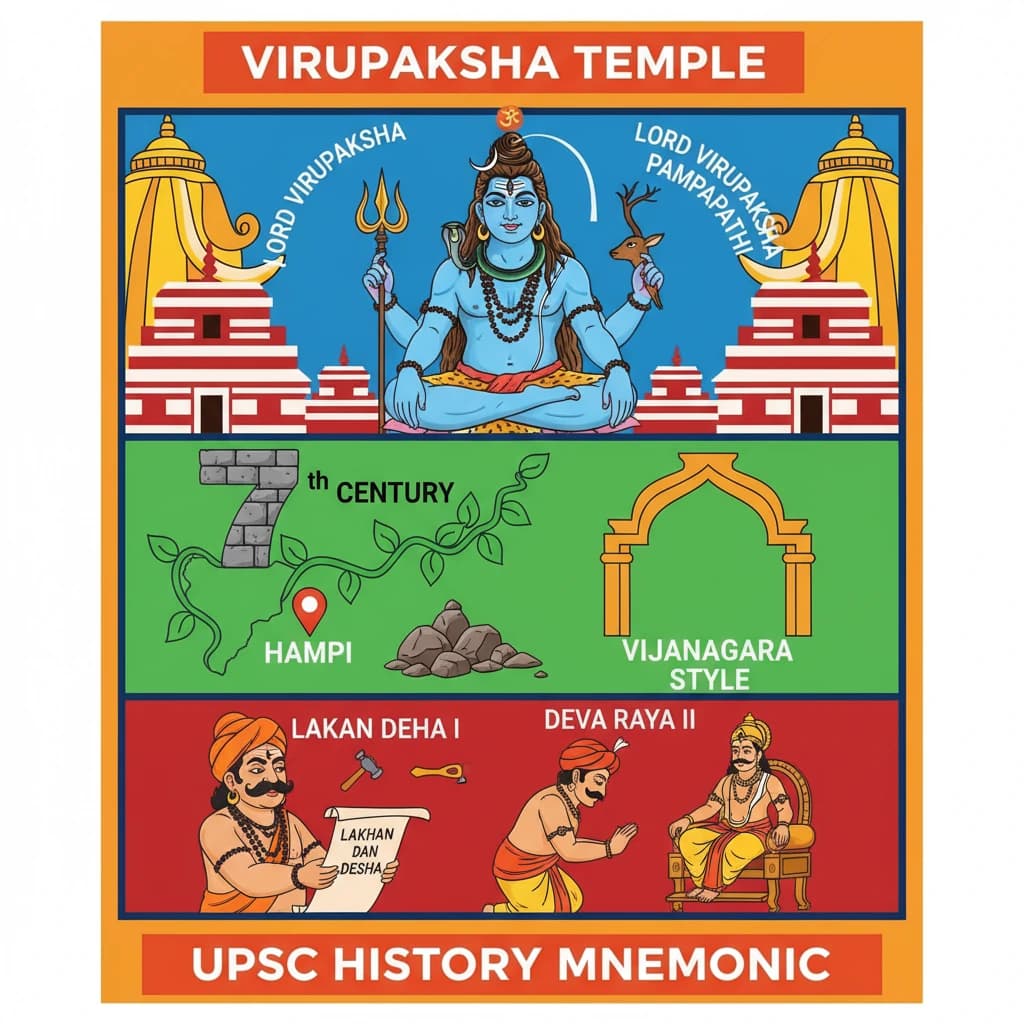
🧠 Memory Techniques
98% Verified Content
📚 Reference Sources
•NCERT Textbooks on Indian Art and Culture
•Official UNESCO World Heritage Centre documentation for Hampi
•Reputable historical and architectural journals/websites