Loading page, please wait…
What are India’s Key Initiatives Supporting Tribal Development? - UPSC History
What is What are India’s Key Initiatives Supporting Tribal Development? in UPSC History?
What are India’s Key Initiatives Supporting Tribal Development? is a key topic under History for UPSC Civil Services Examination. Key points include: India allocates significant funds for tribal development, with a 73.6% increase in 2024-25 budget for Ministry of Tribal Affairs.. DAIGUA initiative targets social infrastructure gaps in 83,843 tribal villages with Rs 79,156 crore outlay, benefiting over 5.38 crore people.. PM-JANMAN (2023) is a specialized mission for Particularly Vulnerable Tribal Groups (PVTGs), focusing on basic amenities and livelihoods.. Understanding this topic is essential for both UPSC Prelims and Mains preparation.
Why is What are India’s Key Initiatives Supporting Tribal Development? important for UPSC exam?
What are India’s Key Initiatives Supporting Tribal Development? is a Medium-level topic in UPSC History. It is tested in both Prelims (factual MCQs) and Mains (analytical answer writing). Previous year UPSC questions have frequently covered aspects of What are India’s Key Initiatives Supporting Tribal Development?, making it essential for comprehensive IAS preparation.
How to prepare What are India’s Key Initiatives Supporting Tribal Development? for UPSC?
To prepare What are India’s Key Initiatives Supporting Tribal Development? for UPSC: (1) Study the comprehensive notes covering all key concepts on Vaidra. (2) Practice previous year questions on this topic. (3) Connect it with current affairs using daily updates. (4) Revise using key takeaways and mind maps available for History. (5) Write practice answers linking What are India’s Key Initiatives Supporting Tribal Development? to related GS Paper topics.
Key takeaways of What are India’s Key Initiatives Supporting Tribal Development? for UPSC
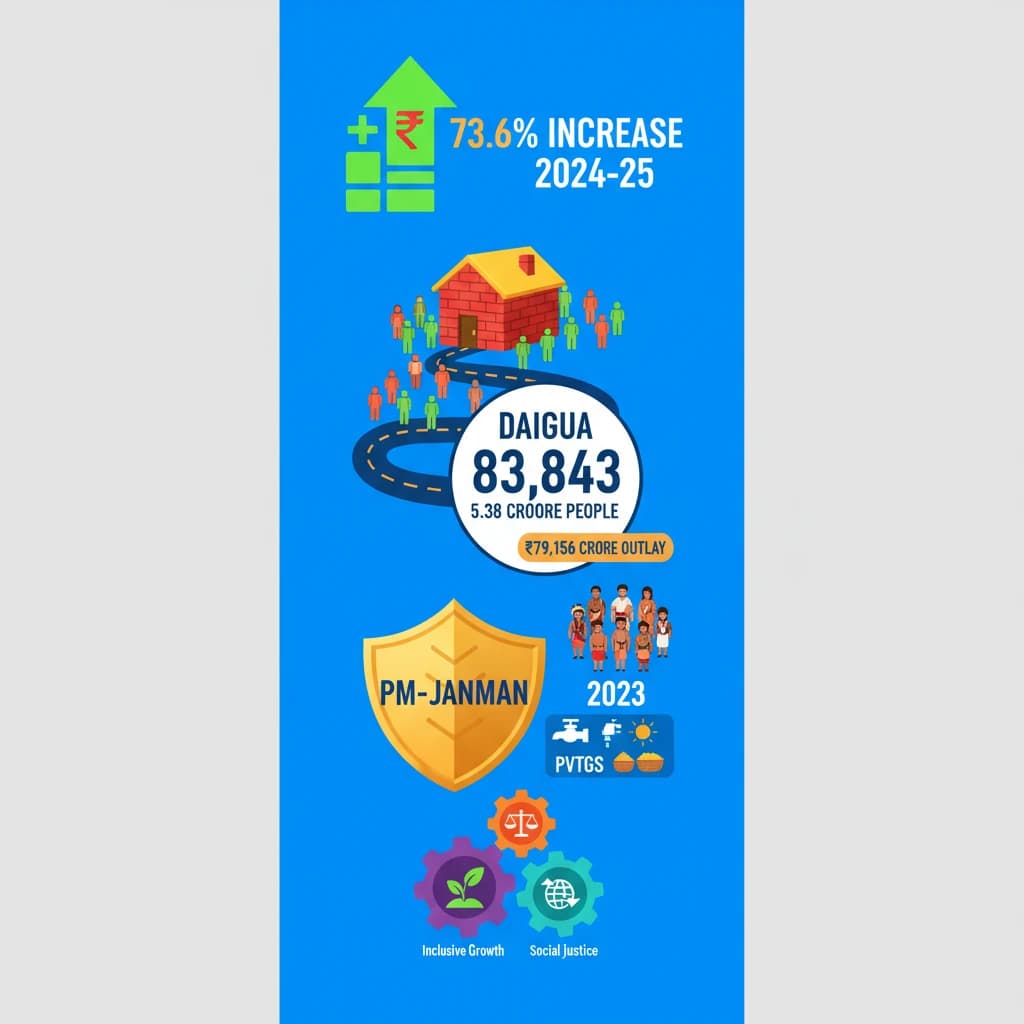
- India allocates significant funds for tribal development, with a 73.6% increase in 2024-25 budget for Ministry of Tribal Affairs.
- DAIGUA initiative targets social infrastructure gaps in 83,843 tribal villages with Rs 79,156 crore outlay, benefiting over 5.38 crore people.
- PM-JANMAN (2023) is a specialized mission for Particularly Vulnerable Tribal Groups (PVTGs), focusing on basic amenities and livelihoods.
- These initiatives are crucial for inclusive growth, social justice, and achieving Sustainable Development Goals for tribal communities.
- Constitutional safeguards (Fifth/Sixth Schedules, PESA Act) form the historical backbone of tribal welfare policies.
What are India’s Key Initiatives Supporting Tribal Development?
Medium⏱️ 7 min read
history
📖 Introduction
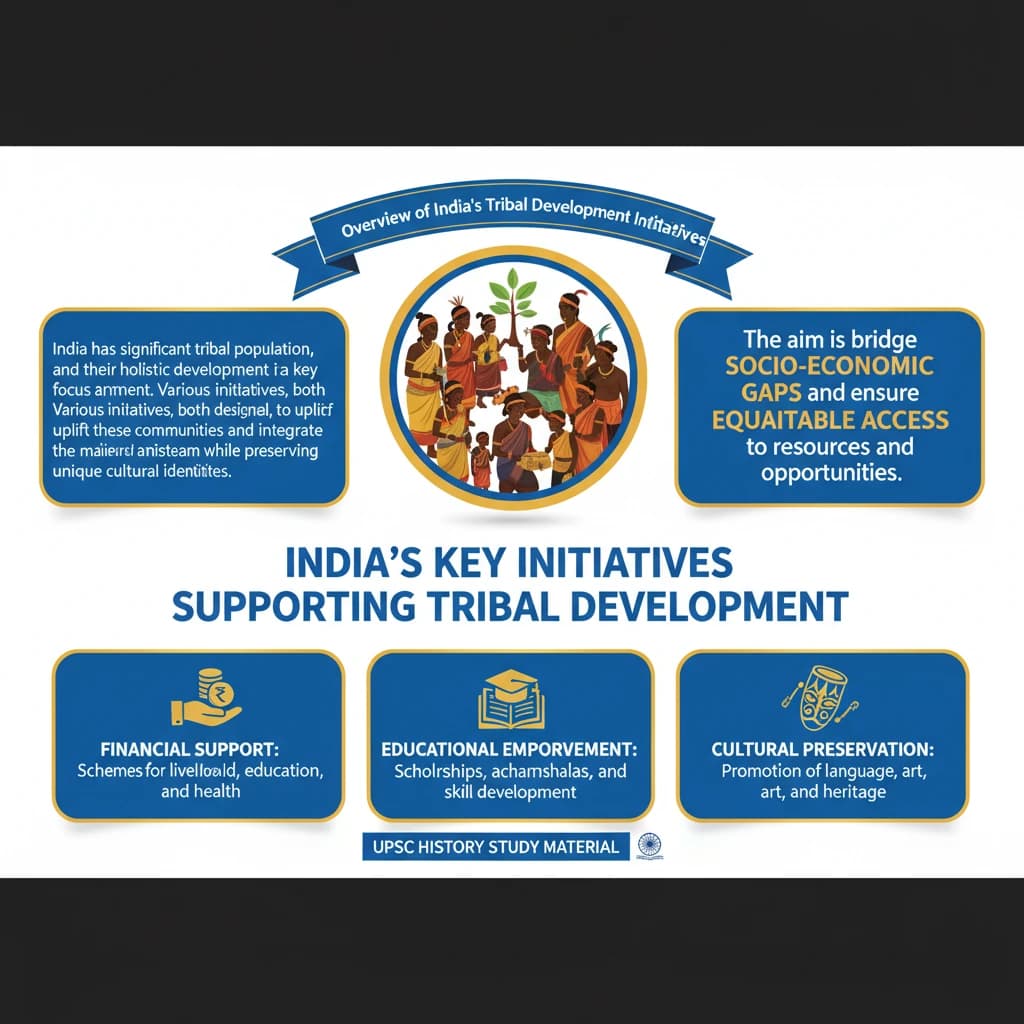
Overview of India's Tribal Development Initiatives
India has a significant **tribal population**, and their holistic development is a key focus area for the government. Various initiatives, both financial and social, are designed to uplift these communities and integrate them into the mainstream while preserving their unique cultural identities.
The aim is to bridge **socio-economic gaps** and ensure **equitable access** to resources and opportunities for tribal communities across the nation.
Financial Commitments for Tribal Welfare
The **Union Budget** reflects the government's increasing commitment to tribal development. Significant allocations are made to the **Ministry of Tribal Affairs** to fund various schemes and programs.
For the fiscal year **2024-25**, the **Union Budget** allocated **Rs 13,000 crore** to the **Ministry of Tribal Affairs**. This represents a substantial increase of **73.6%** compared to the allocation in **2023-24**, highlighting a renewed focus.
DAIGUA: Addressing Social Infrastructure Gaps
The **DAIGUA** initiative is a comprehensive program launched to tackle critical deficiencies in social infrastructure within tribal areas. It aims to improve the living conditions and access to essential services for tribal populations.
The **DAIGUA** initiative has a massive outlay of **Rs 79,156 crore**. It is designed to benefit over **5.38 crore people** across **83,843 villages** by addressing social infrastructure gaps.
PM-JANMAN: Supporting Particularly Vulnerable Tribal Groups (PVTGs)
The **PM-JANMAN** scheme, launched in **2023**, specifically targets the **Particularly Vulnerable Tribal Groups (PVTGs)**. These groups are among the most marginalized and require focused interventions due to their unique challenges.
Understanding initiatives like **DAIGUA** and **PM-JANMAN** is crucial for **UPSC Mains GS Paper 2 (Social Justice)** and **GS Paper 3 (Inclusive Growth)**. Be prepared to discuss their objectives, outlay, and impact.
💡 Key Takeaways
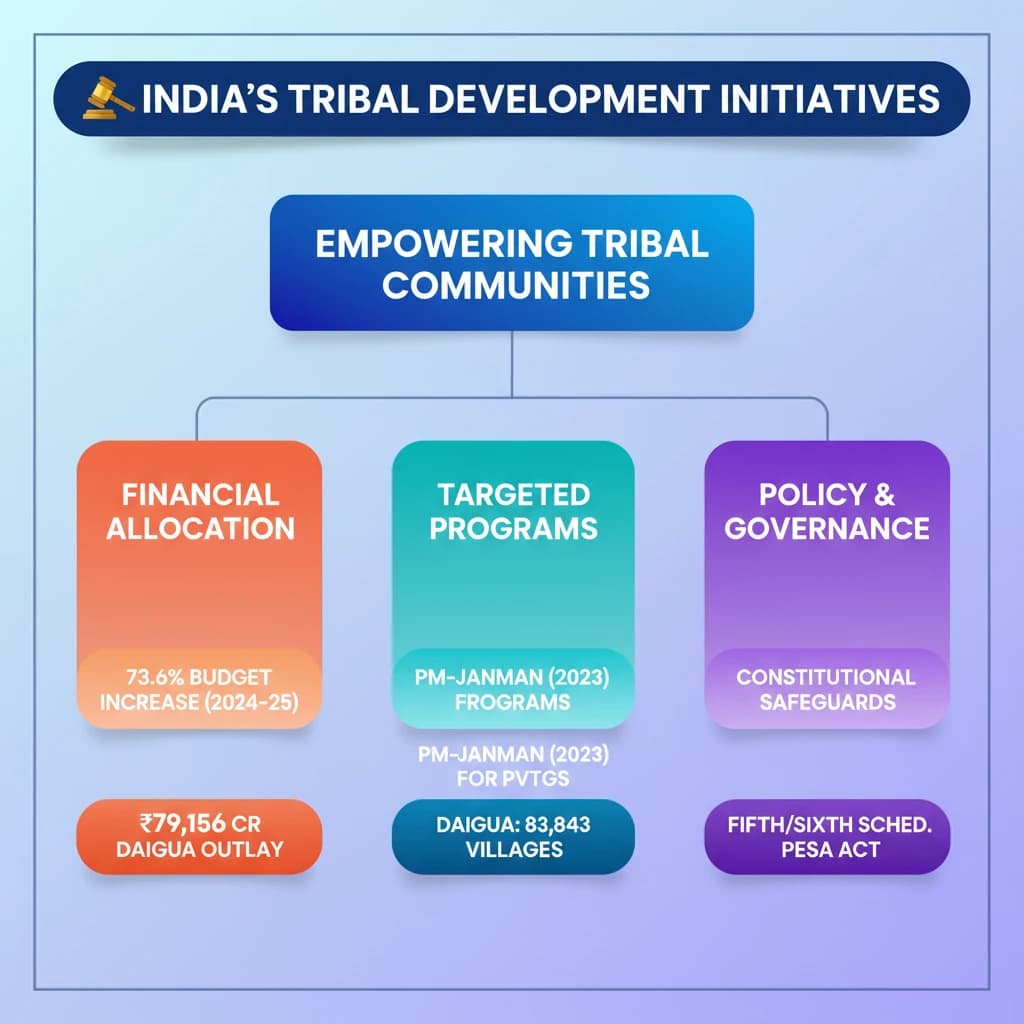
- •India allocates significant funds for tribal development, with a 73.6% increase in 2024-25 budget for Ministry of Tribal Affairs.
- •DAIGUA initiative targets social infrastructure gaps in 83,843 tribal villages with Rs 79,156 crore outlay, benefiting over 5.38 crore people.
- •PM-JANMAN (2023) is a specialized mission for Particularly Vulnerable Tribal Groups (PVTGs), focusing on basic amenities and livelihoods.
- •These initiatives are crucial for inclusive growth, social justice, and achieving Sustainable Development Goals for tribal communities.
- •Constitutional safeguards (Fifth/Sixth Schedules, PESA Act) form the historical backbone of tribal welfare policies.
🧠 Memory Techniques
95% Verified Content